
The Enermax Revolution III S 1000W (ERV1000P-AHP) is offered with an ultra long, 13-year warranty, but is this enough to make you prefer over other offering? Read the full review to learn more!
The Enermax Revolution III S 1000W is (or will be) included in my best ATX v3.x & PCIe 5.x PSU picks article.
Unlike in other reviews, I believe I should break down Enermax’s history rather than focus my prologue on the product under review. This way, you will learn more about this company, which used to be the reference for PSU products!
Back in the day, when I first started messing with power supplies, Enermax was among the strongest brands, with its own R&D and manufacturing lines. But today it’s a shadow of its former self. Here’s a clear, factual breakdown of how that happened:
The Rise (late 1990s–2010s)
Enermax was founded in 1990 in Taiwan and quickly gained a reputation for building high-quality, innovative power supplies.
- Their Noisetaker, Liberty, and Revolution series in the 2000s were among the best consumer PSUs available.
- They were known for excellent voltage regulation, durable internals, and quiet operation—qualities that appealed to enthusiasts and system builders.
- Unlike many brands, Enermax actually designed and built its own platforms instead of rebadging OEM products, which gave the brand prestige and credibility.
They also expanded into cooling and cases, but PSUs remained their core identity. In the early 2010s, they were in the same conversation as Seasonic, Corsair, and Antec.
The Decline Begins (mid-2010s)
Around the mid-2010s, Enermax started losing ground to more aggressive competitors. Several things contributed:
- OEM Shift:
Enermax gradually moved away from manufacturing its own PSU platforms, outsourcing some designs to more affordable OEMs. Quality and innovation suffered, while competitors like Seasonic, Super Flower, Corsair, and others continued to improve. - Stagnation:
Their designs failed to evolve fast enough to match changing efficiency standards (Gold/Platinum) and the new ATX 3.0 era. Their products began to look dated compared to modular, high-efficiency units from Corsair, EVGA, and be quiet!. - Poor Thermal Design / Failures:
Around 2017–2019, Enermax released Revolution D.F. and LIQTECH AIO coolers, but many of these products were plagued with reliability issues. - The LIQTECH TR4 AIOs in particular suffered massive failure rates due to coolant gunking up the loop—this seriously damaged Enermax’s reputation among enthusiasts.
- Their PSU line, while still functional, no longer offered standout performance and especially value (performance-per-price).
- Brand Erosion:
Enthusiast trust eroded, reviews turned lukewarm, and Enermax started to feel like an old name coasting on its past. The brand lost visibility in Western markets as newer, trendier names (Corsair, EVGA, Cooler Master, MSI) dominated shelf space and influencer coverage.
Today (2020s–2025)
Today, Enermax still exists, but unfortunately, it’s no longer a premium PSU manufacturer.
- They mainly sell mid-tier, OEM-based units under familiar brands like Revolution, MarbleBron, or CyberBron, but these are budget-oriented and often rebranded versions of platforms from other manufacturers.
- Their presence in the enthusiast market is minimal, with limited distribution in the U.S. and the EU.
- Their cooling and case products continue, but none lead their categories.
Essentially, Enermax went from being an engineering leader to a value-brand survivor. It is really sad for me to see a brand that was a pioneer back in the day in the PSU market trying to keep up nowadays.
Enermax Revolution III S 1000W (ERV1000P-AHP)
Today’s review concerns the Enermax Revolution III S 1000W (ERV1000P-AHP), manufactured by ShenZhen RUISHENGYUAN Technology CO., LTD. [RSY] (深圳市瑞声元科技有限公司) actually makes. This is a Cybenetics Platinum-certified PSU and is also ATX v3.1-compliant. According to Enermax, this unit will be available in all major market regions: the US, Europe, and Asia. It will come in black and white flavors, priced at $180 and $190 in the US, respectively. In Europe, the black version will cost €160, and the white version will cost €10 more.

Check out our top ATX v3.1 PSU guide before purchasing your next PSU.
ATX v3.x 1000W PSU Reviews:
- 1st Player NGDP 1000W PSU Review
- ASUS ROG Thor 1000W Platinum III ATX v3.1 PSU Review
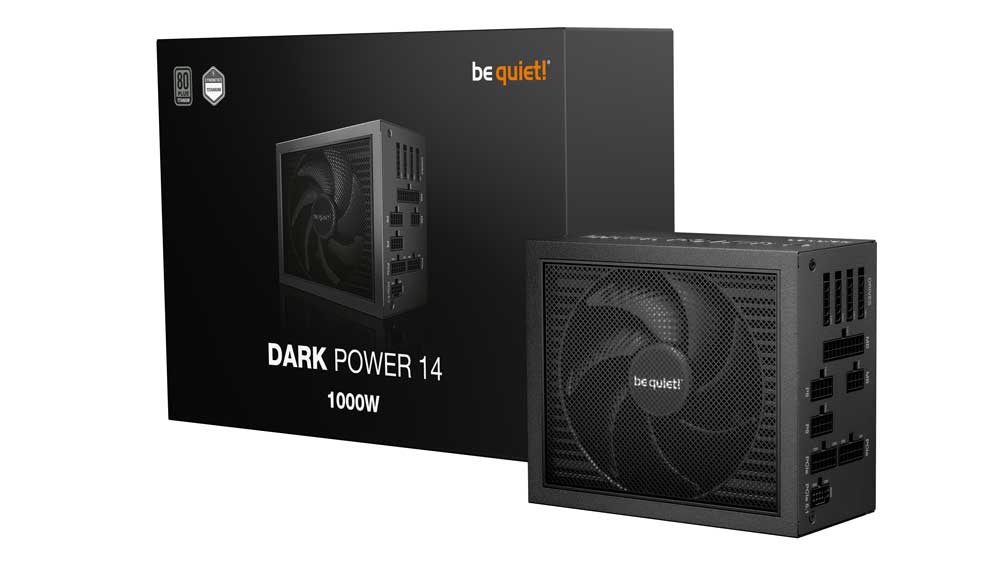
- be quiet! Dark Power 14 1000W ATX v3.1 PSU Review
- be quiet! Pure Power 13 M 1000W ATX v3.1 PSU Review
- be quiet! Pure Power 11 FM 1000W PSU Review
- be quiet! Power Zone 2 1000W ATX v3.1 PSU Review
- be quiet! Dark Power 13 1000W PSU Review
- Corsair RM1000x Shift ATX v3.1 PSU Review
- Corsair HX1000i Shift ATX v3.1 PSU Review
- Cougar GEX X2 1000W PSU Review
- Endorfy Supremo FM6 1000W ATX v3.1 PSU Review
- FSP Hydro Ti Pro 1000W PSU Review
- FSP Hydro G Pro 1000W ATX v3.0 PSU Review
- FSP VITA GM 1000W ATX v3.1 PSU Review
- Gamer Storm PQ1000M-V2 ATX v3.1 PSU Review
- Montech Titan Gold 1000W PSU Review
- Micronics Wizmax G 1000W ATX v3.1 PSU Review
- MSI MAG A1000GLS PCIE5 ATX v3.1 PSU Review
- PCCooler YT1000 ATX v3.1 PSU Review
- Seasonic Vertex PX-1000 ATX v3.0 PSU Review
- Super Flower Leadex VII Gold 1000W (SF-1000F14XG) PSU Review
- Super Flower Leadex VII PRO 1000W ATX v3.1 PSU Review
- Sharkoon Rebel P20 1000W ATX v3.1 PSU Review
- Thermaltake Toughpower PT 1000 ATX v3.1 PSU Review
- Thermaltake Toughpower GF3 1000W ATX v3.0 PSU Review
- Vetroo 1000W ATX v3.0 PSU Review
- Manufacturer (OEM): ShenZhen RUISHENGYUAN Technology CO., LTD. [RSY] (深圳市瑞声元科技有限公司)
- Max Power: 1000W
- Cybenetics Efficiency: [115V] Cybenetics Platinum (90.256%), [230V] Cybenetics Platinum (92.196%)
- Noise: [115V] Cybenetics Standard++ (33.13 dB[A]), [230V] Cybenetics Standard++ (32.79 dB[A])
- Compliance: ATX v3.1, EPS 2.92
- Operating Temperature (Continuous Full Load): 0 – 50 °C
- Alternative Low Power Mode support: ✓
- Power 12V combined: 1000W
- Number of 12V rails: 1
- Power 5V + 3.3v: 100W
- Power 5VSB: 15W
- Cooling: 120mm Fluid Dynamic Bearing Fan (Globe Fan S1202512L)
- Semi-Passive Operation: ✓
- Modular Design: Yes (Fully)
- High Power Connectors: 2x EPS (2x cables), 1x 12+4 pin (600W), 4x PCIe 6+2 pin (4x cables)
- Peripheral Connectors: 9x SATA (3x cables), 3x 4-pin Molex (3x cables)
- ATX Cable Length: 600mm
- EPS Cable Length: 650mm
- 12+4 pin PCIe Cable Length: 600mm
- 6+2 pin PCIe Cable Length: 600mm
- Distance between SATA/4-pin Molex: 150mm
- In-cable capacitors: No
- Dimensions (W x H x D): 150 mm x 85 mm x 140mm
- Weight: 1.41 kg (3.11 lb)
- Warranty: 13 Years
- MSRP (excluding VAT): $179.99/159.99€, White: $189.99/169.99€
Power Specifications
| Rail | 3.3V | 5V | 12V | 5VSB | -12V | |
| Max. Power | Amps | 20 | 20 | 83.3 | 3 | 0.4 |
| Watts | 100 | 999.6 | 15 | 4.8 | ||
| Total Max. Power (W) | 1000 | |||||
The Cybenetics report indicates that this power supply is compliant with ATX 3.1; however, the transient testing results show issues on the 3.3 V rail.
Could you clarify how ATX 3.1 pass/fail determinations are defined in your methodology? Specifically, how are transient deviations on secondary rails, such as the 3.3 V rail, evaluated when concluding overall ATX 3.1 compliance?
Reference:
Cybenetics ATX 3.1 PASS Report
https://www.cybenetics.com/evaluations/psus/2971/
Which transient response results are you referring to? The transient response tests with normal loads, which I do, and without capacitors? These are my tests; they are not included in any ATX spec. I have been conducting these for many years now, and they are there to compare all PSUs with load on all rails directly.
The ATX v3.1 uses an entirely different transient response load scheme, which Cybenetics adopts, to check against this standard.
This standard is open, so you can study it and look at what it says about transient report testing.
based on your experience did unicon caps was better than toshin kogyo or similar with nippon chemicon, rubycon or nichicon ?
I don’t think they are better than the well-known caps, especially the last three brands you mention.
so it’s basically same tier as TK ?
I don’t have a clue unless I check enough capacitors from Unicon and TK
Interestingly, SAMA P uses a different RSY platform and shows excellent results.
Hi, Aris, do you have any idea why BeQuiet lists Cybenetics Gold efficiency and Noise A+ in its marketing materials, when all Pure Power 13 M PSUs achieved Platinum and A++?
Did they change anything after your tests or why?
They can always downgrade the badges, but never upgrade them.
…they certainly can, but what’s the point, from a marketing point of view,
…probably none.
Maybe they’re not sure about the manufacturing tolerances, who knows 👀