Transient Response
Transient response in power supplies refers to how quickly and effectively the PSU stabilizes its output voltage during sudden changes in load demand, such as when a CPU or GPU increases its power draw. It’s measured by the time and voltage deviation during these shifts. A faster, smaller transient response ensures stable power, preventing instability and component damage.
20% Load – 20ms
| Advanced Transient Response 20% - 50 Hz - No Caps | ||||
| Voltage | Before | After | Change | Pass/Fail |
| 12V | 12.075V | 11.948V | 1.05% | Pass |
| 5V | 5.042V | 4.926V | 2.30% | Pass |
| 3.3V | 3.325V | 3.176V | 4.50% | Pass |
| 5VSB | 5.015V | 4.967V | 0.95% | Pass |
50% Load -20ms
| Advanced Transient Response 50% - 50 Hz - No Caps | ||||
| Voltage | Before | After | Change | Pass/Fail |
| 12V | 12.055V | 11.927V | 1.06% | Pass |
| 5V | 5.038V | 4.917V | 2.41% | Pass |
| 3.3V | 3.319V | 3.164V | 4.68% | Pass |
| 5VSB | 4.986V | 4.936V | 1.01% | Pass |
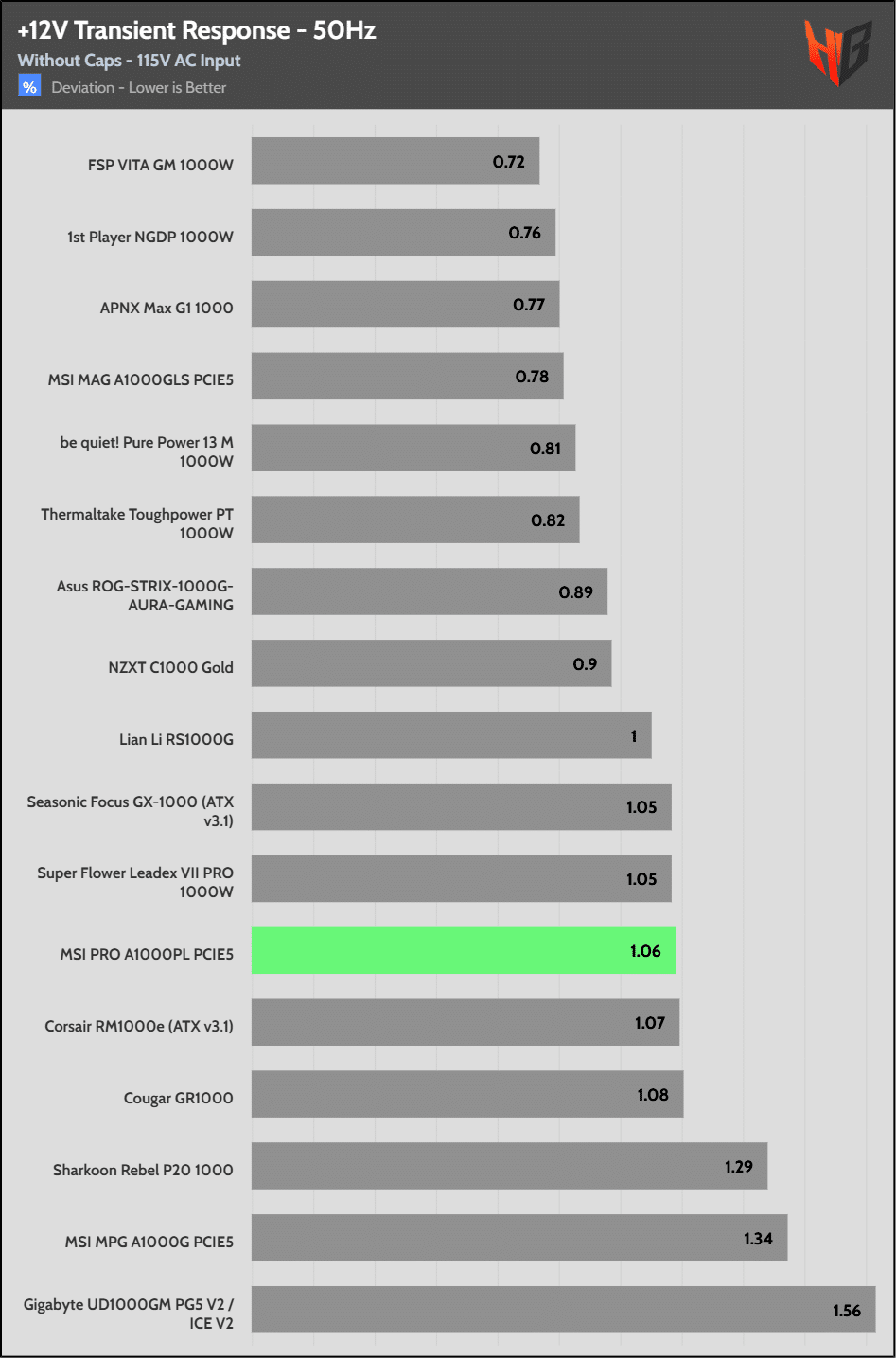
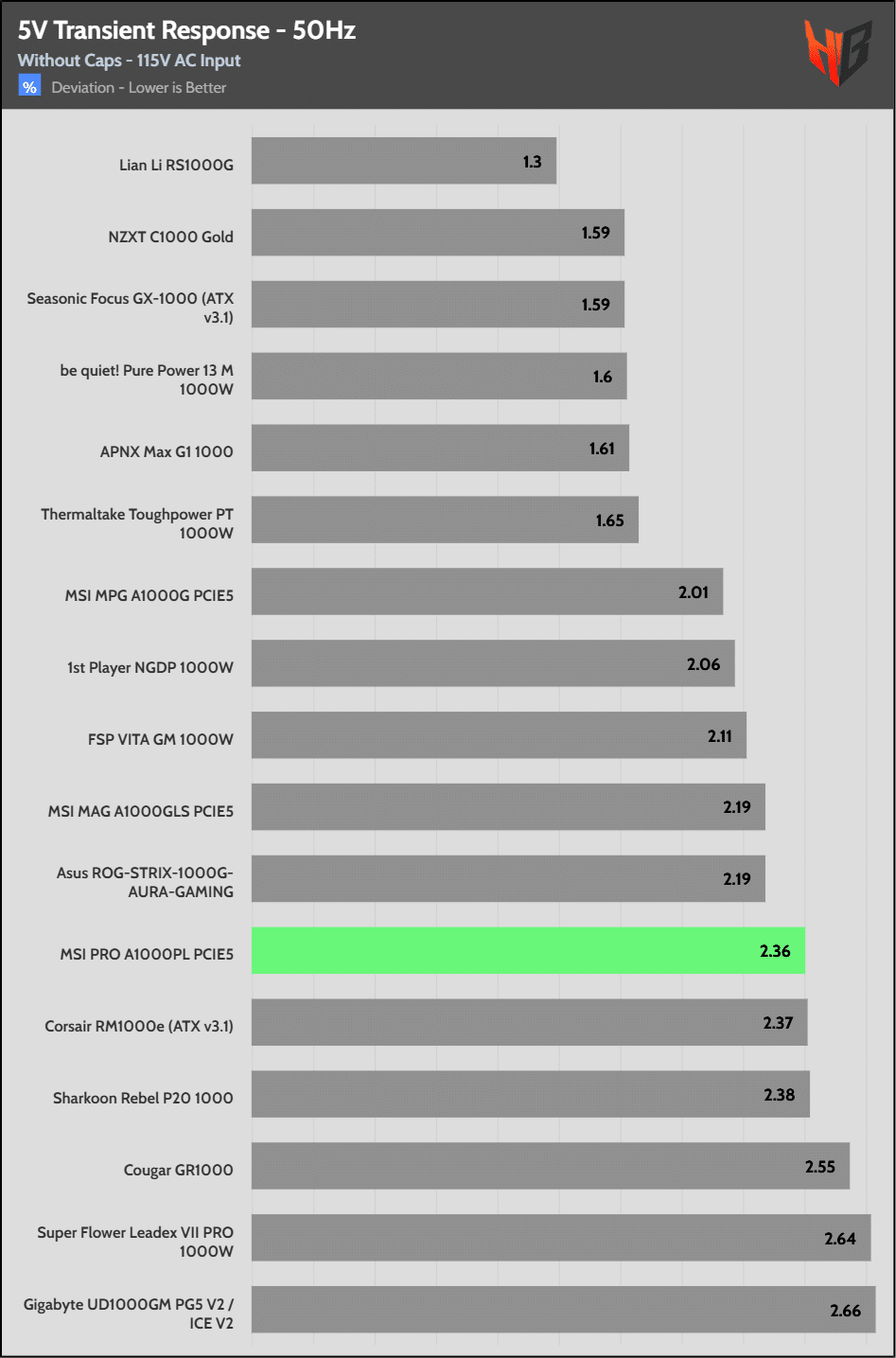
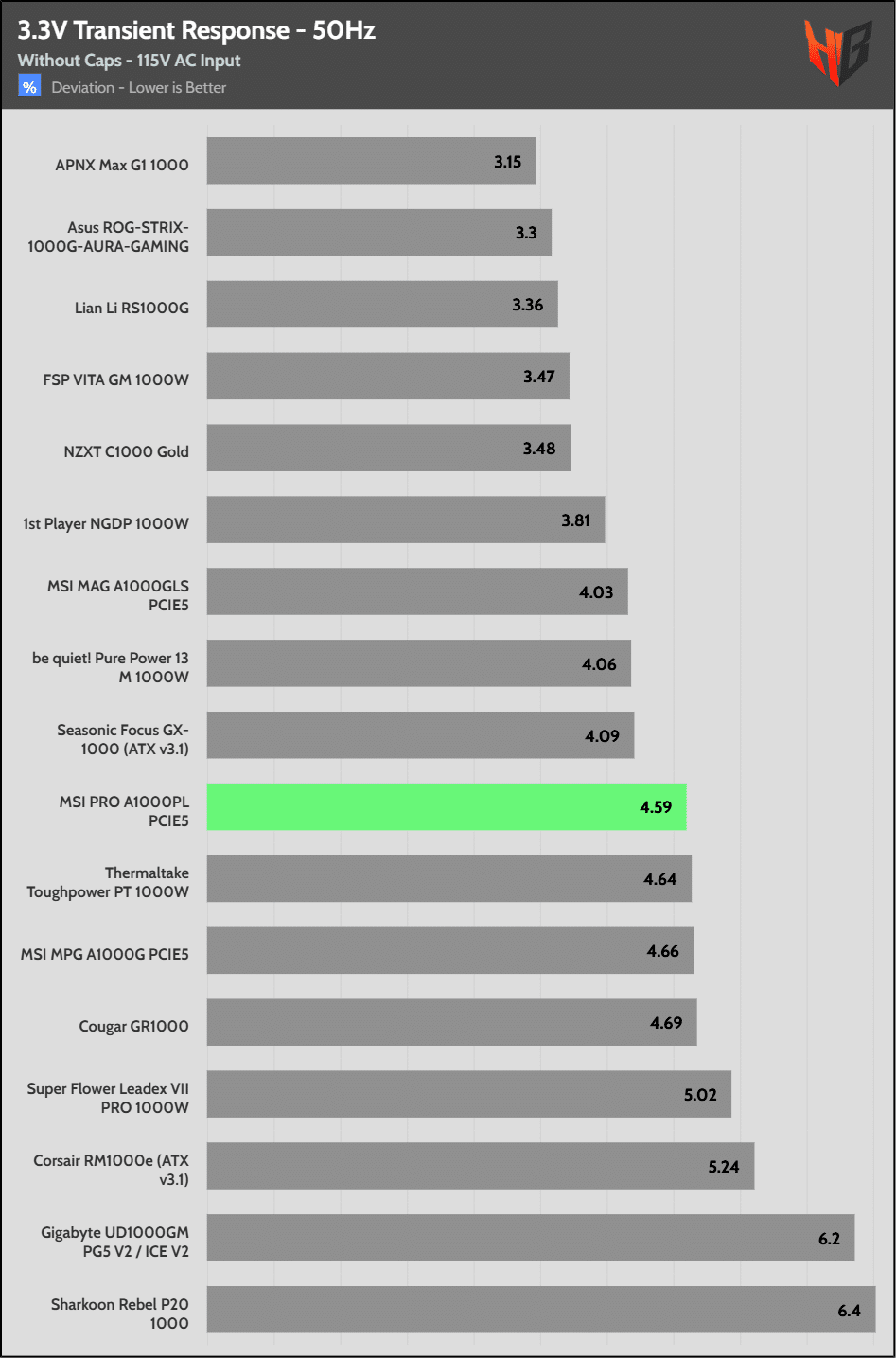
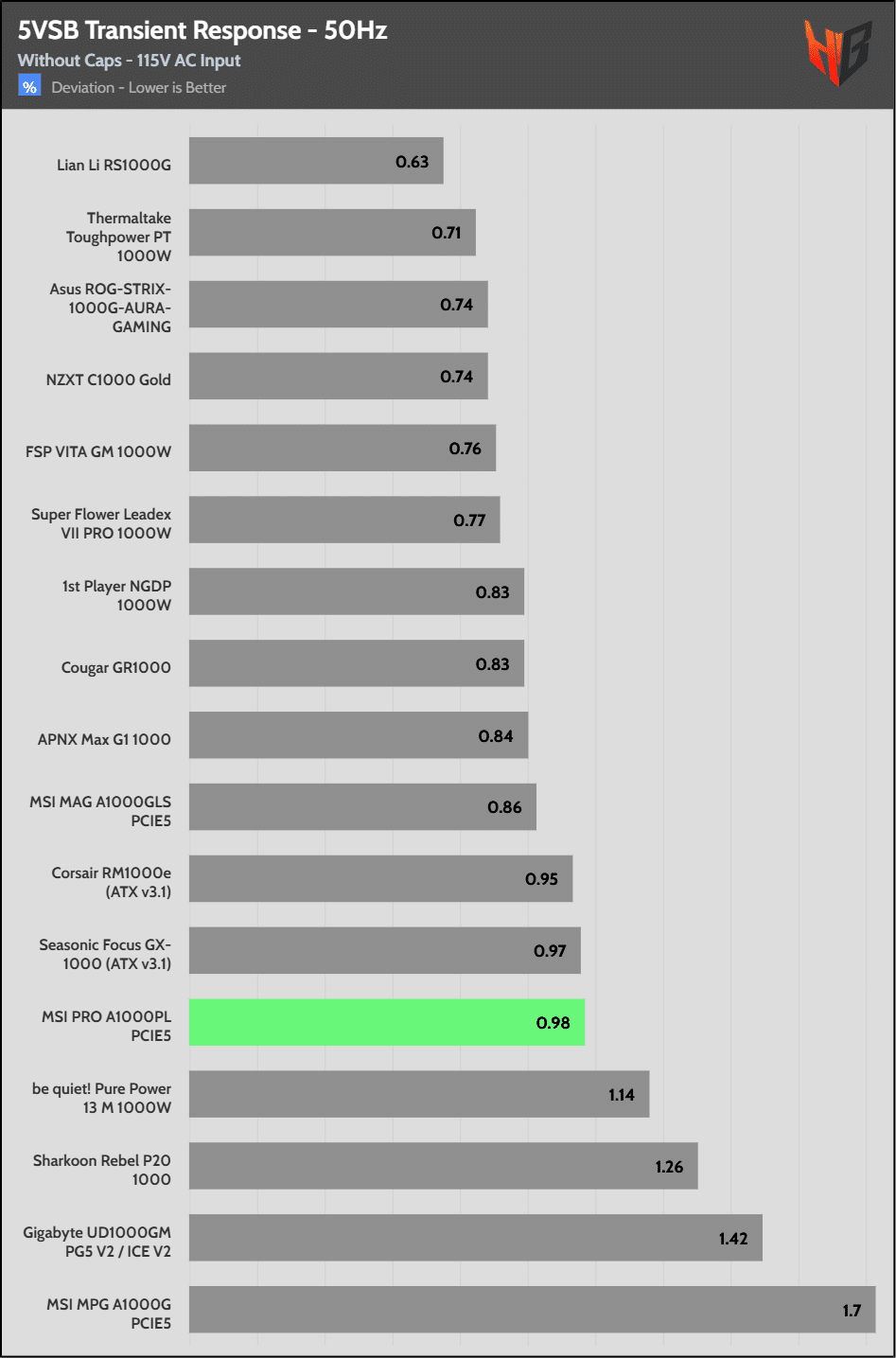
The transient response is decent at 12V and 5V, and mediocre at 3.3V.
Transient Response ATX v3.1 Tests
[Note] For PSUs without a 12+4 pin connector, the maximum applied load for the transient response tests is 150%, rather than 200%.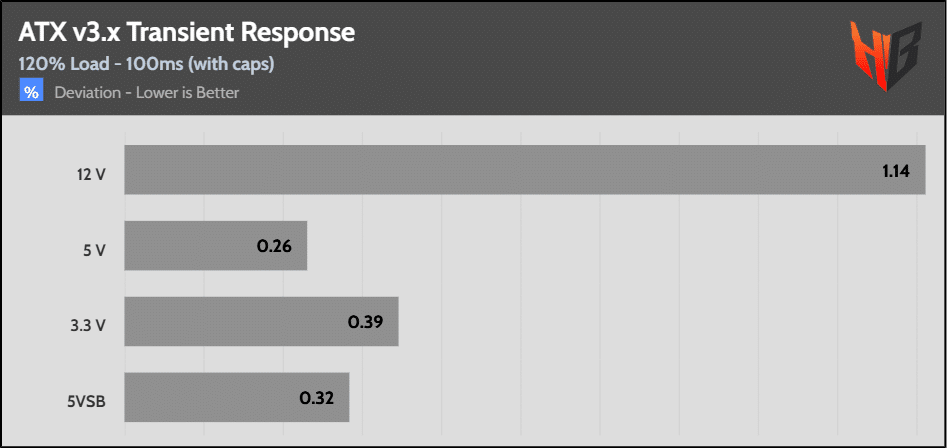
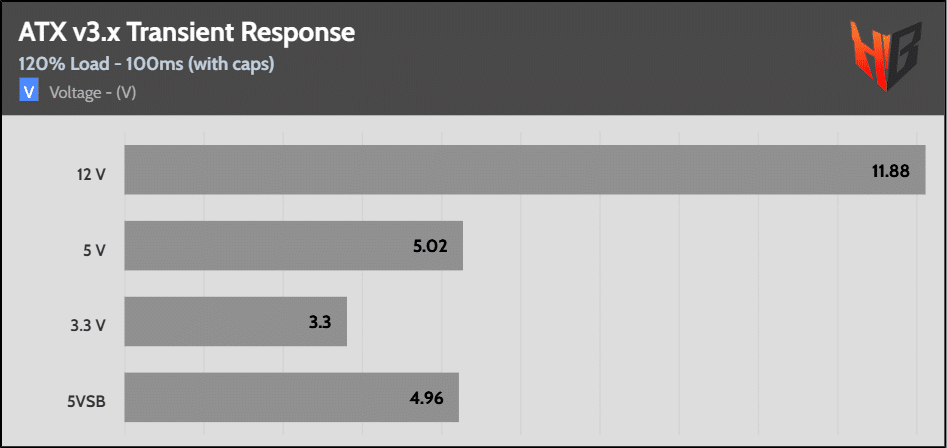
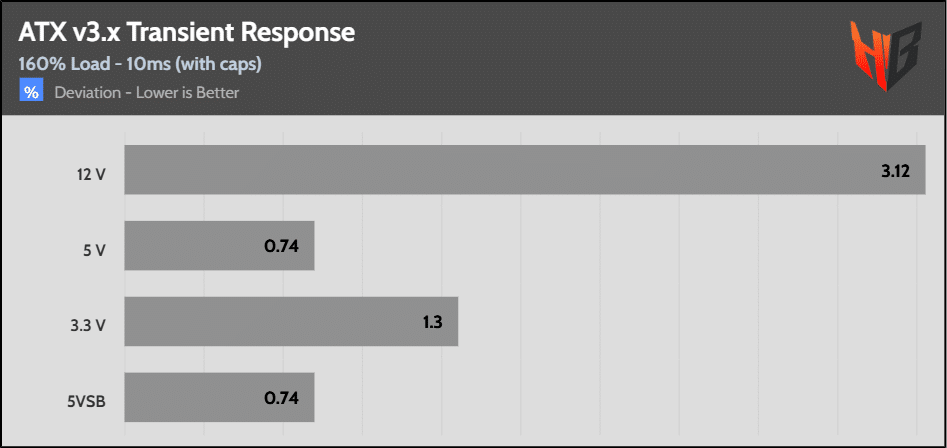
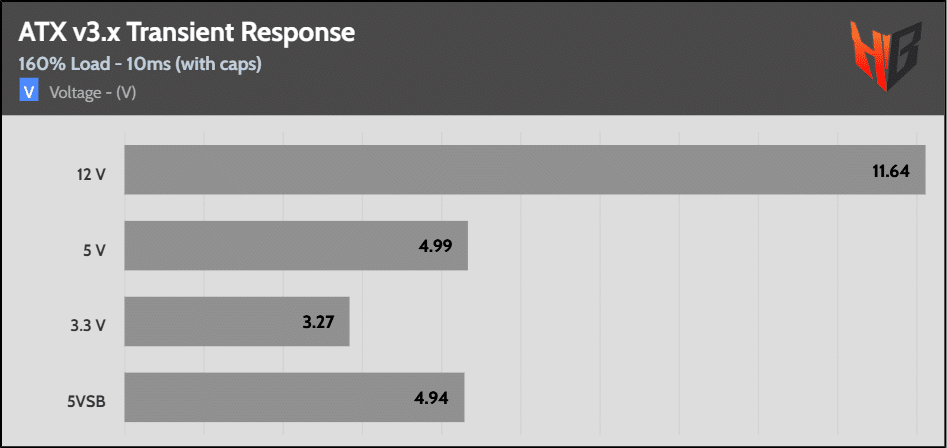
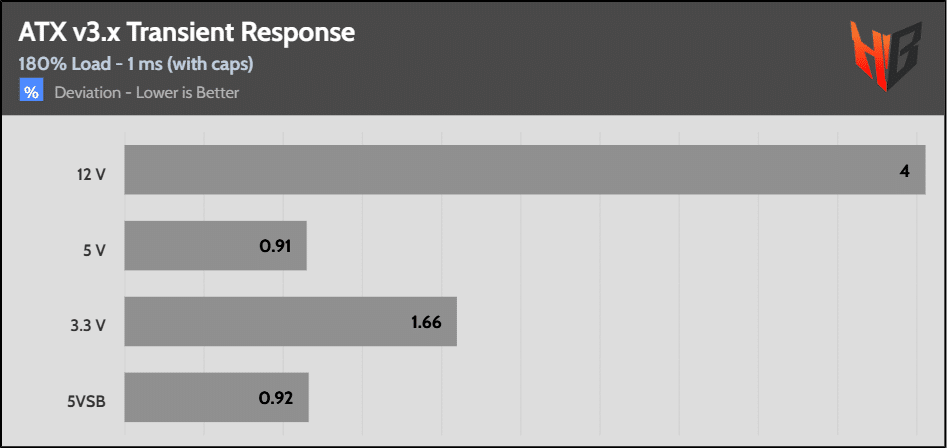
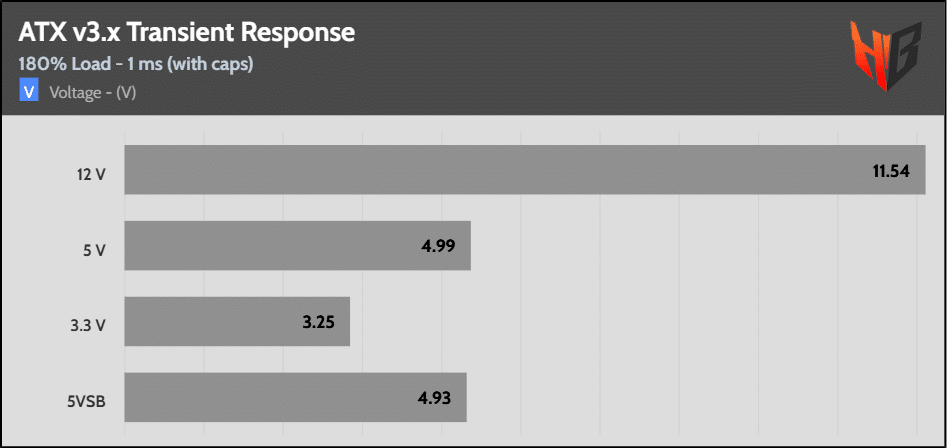
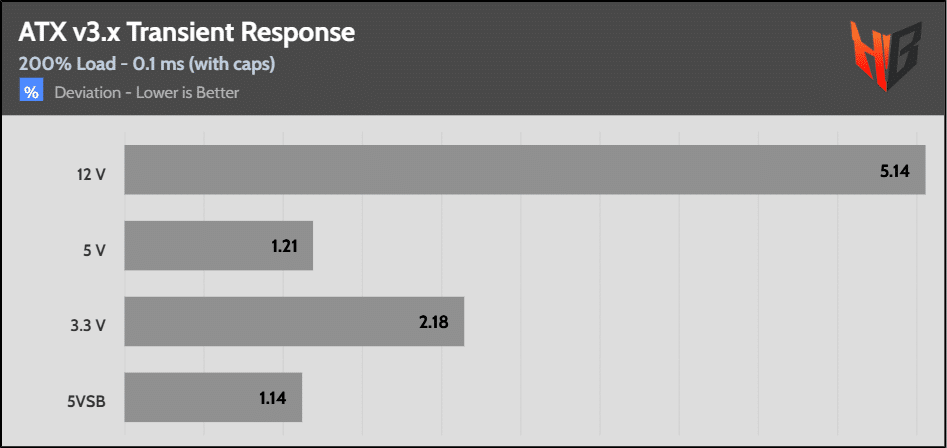
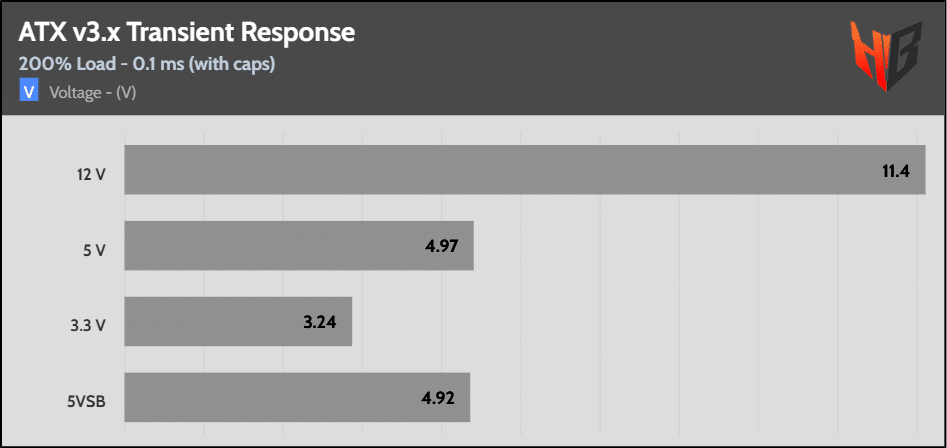
The PSU passes all ATX v3.1 transient response tests.
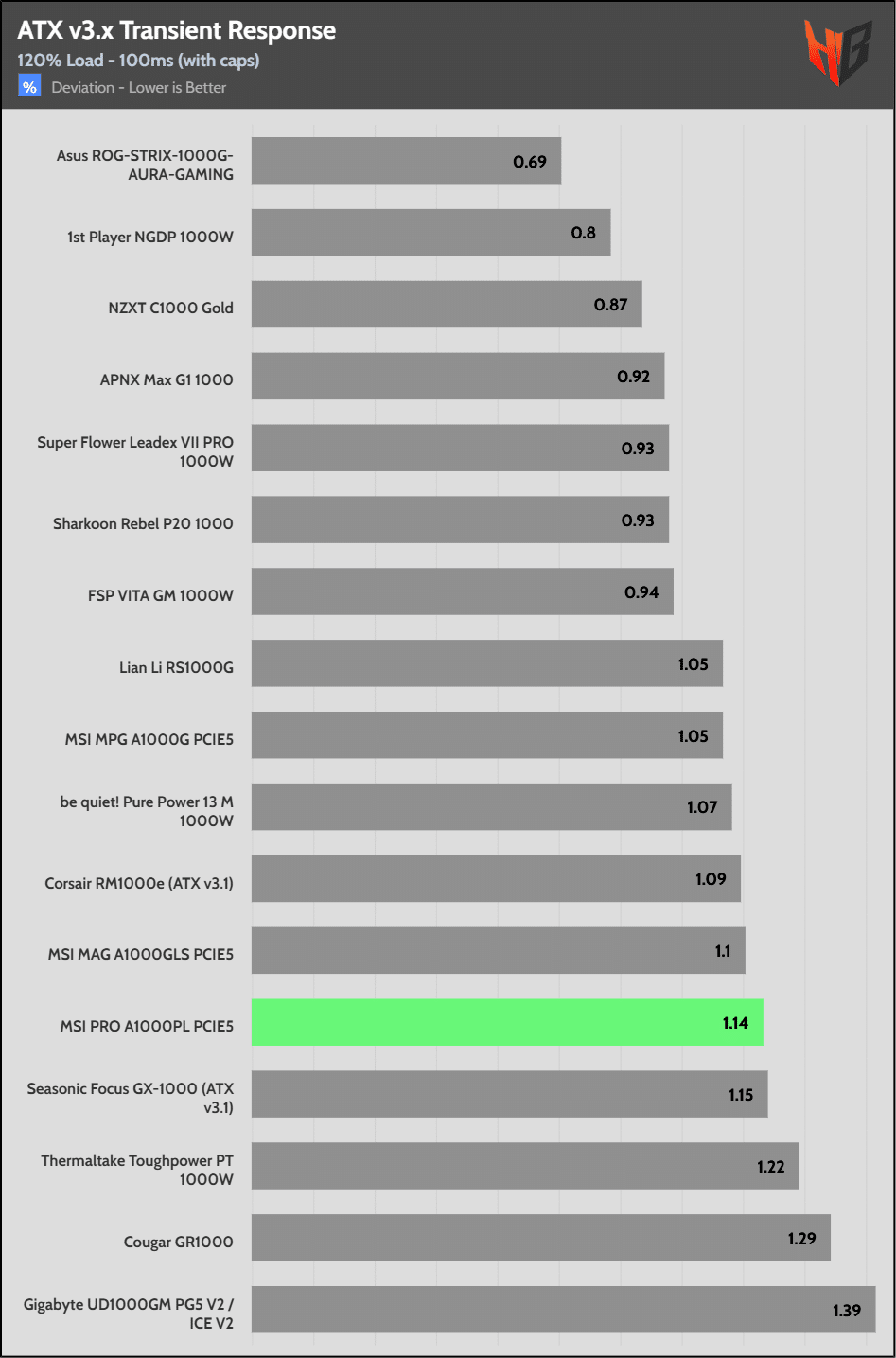
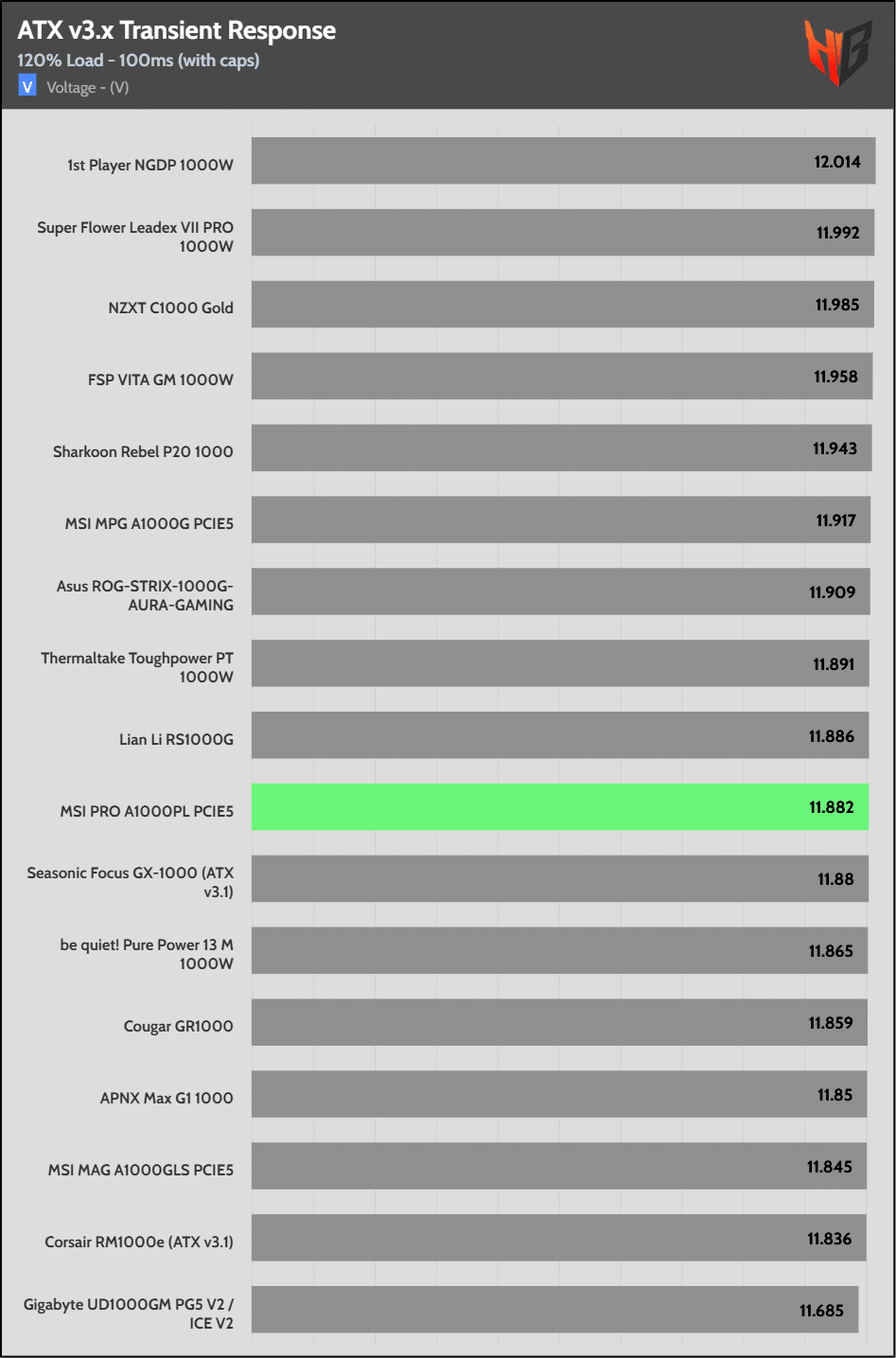
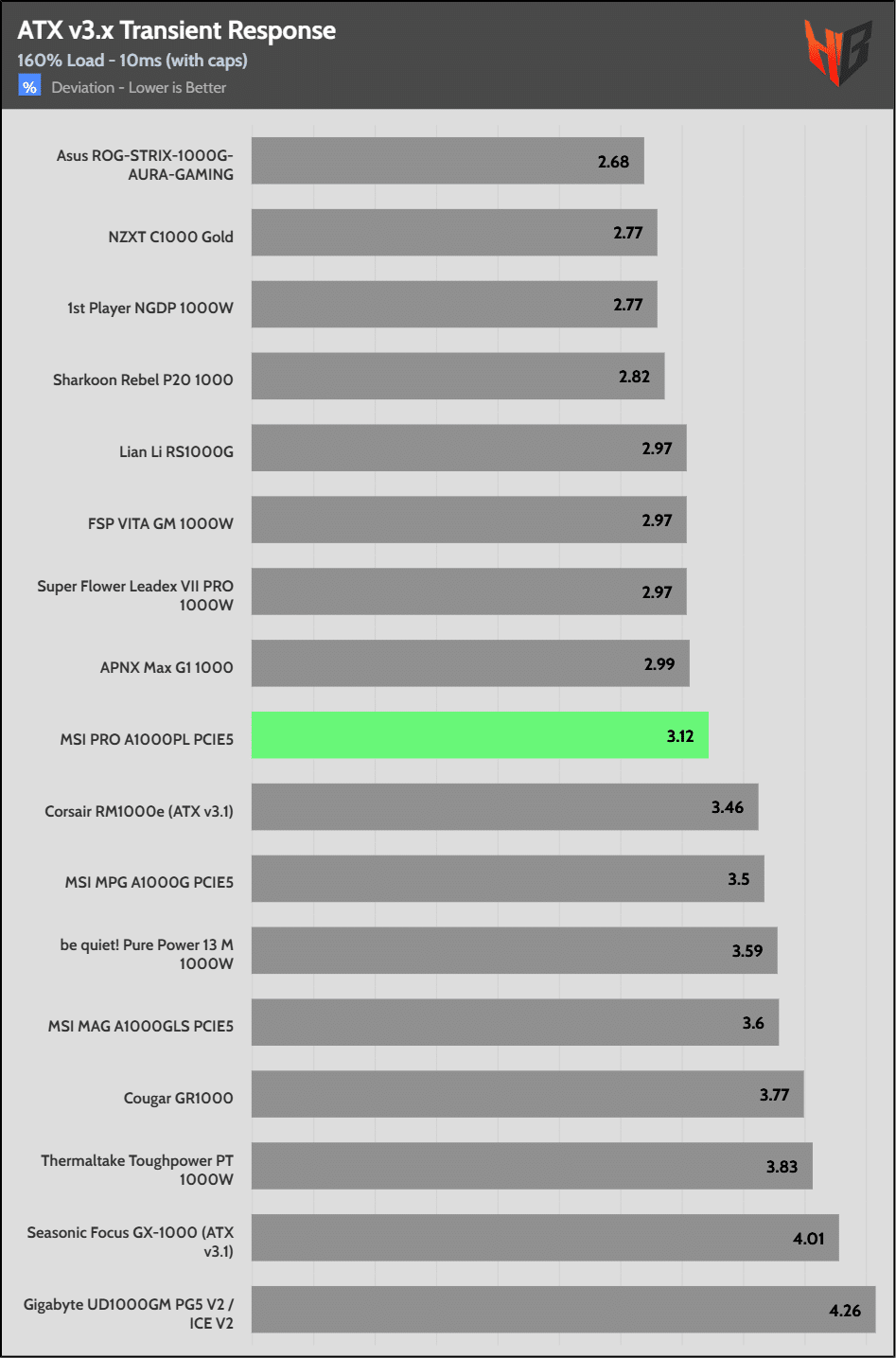
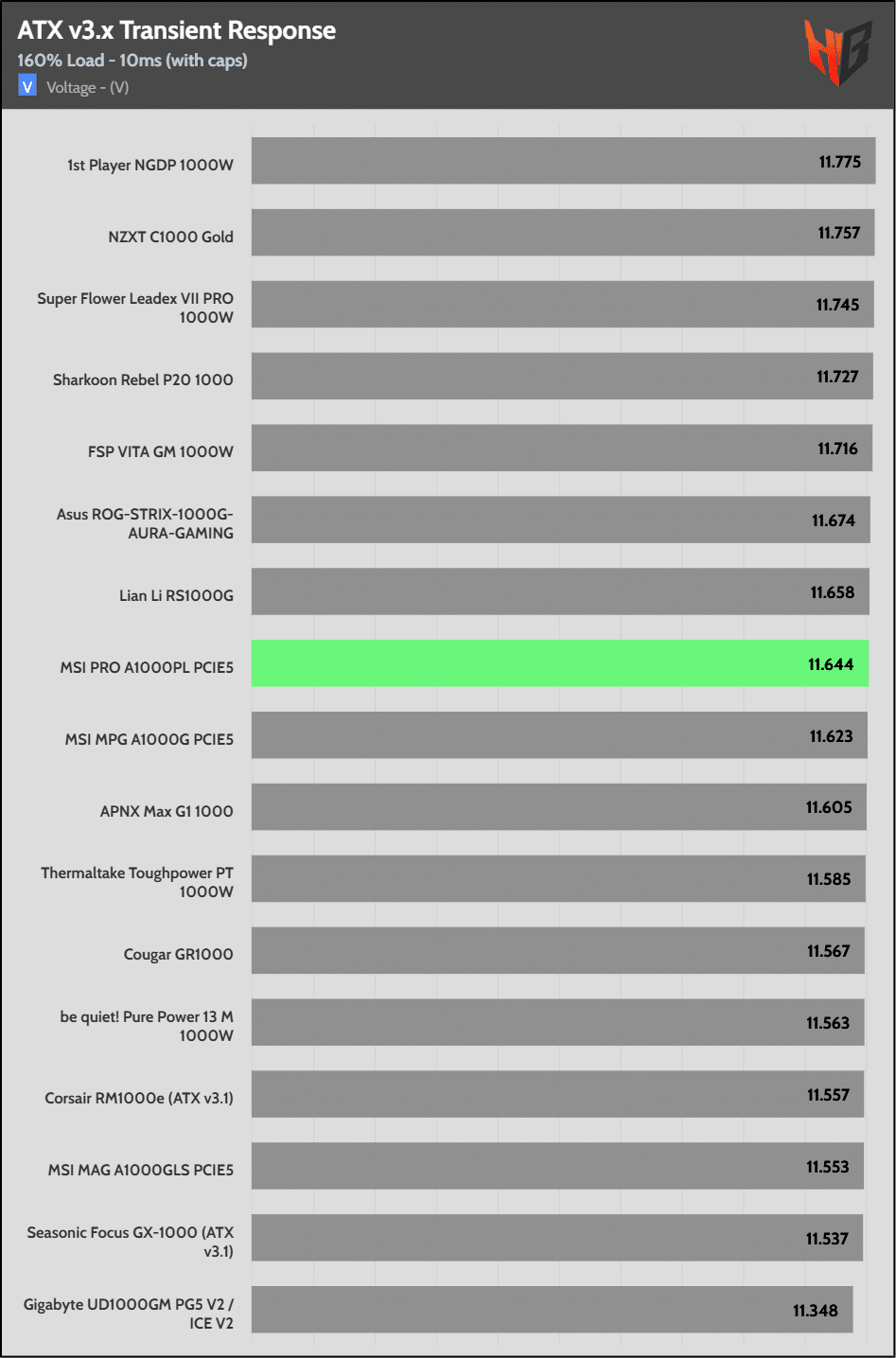
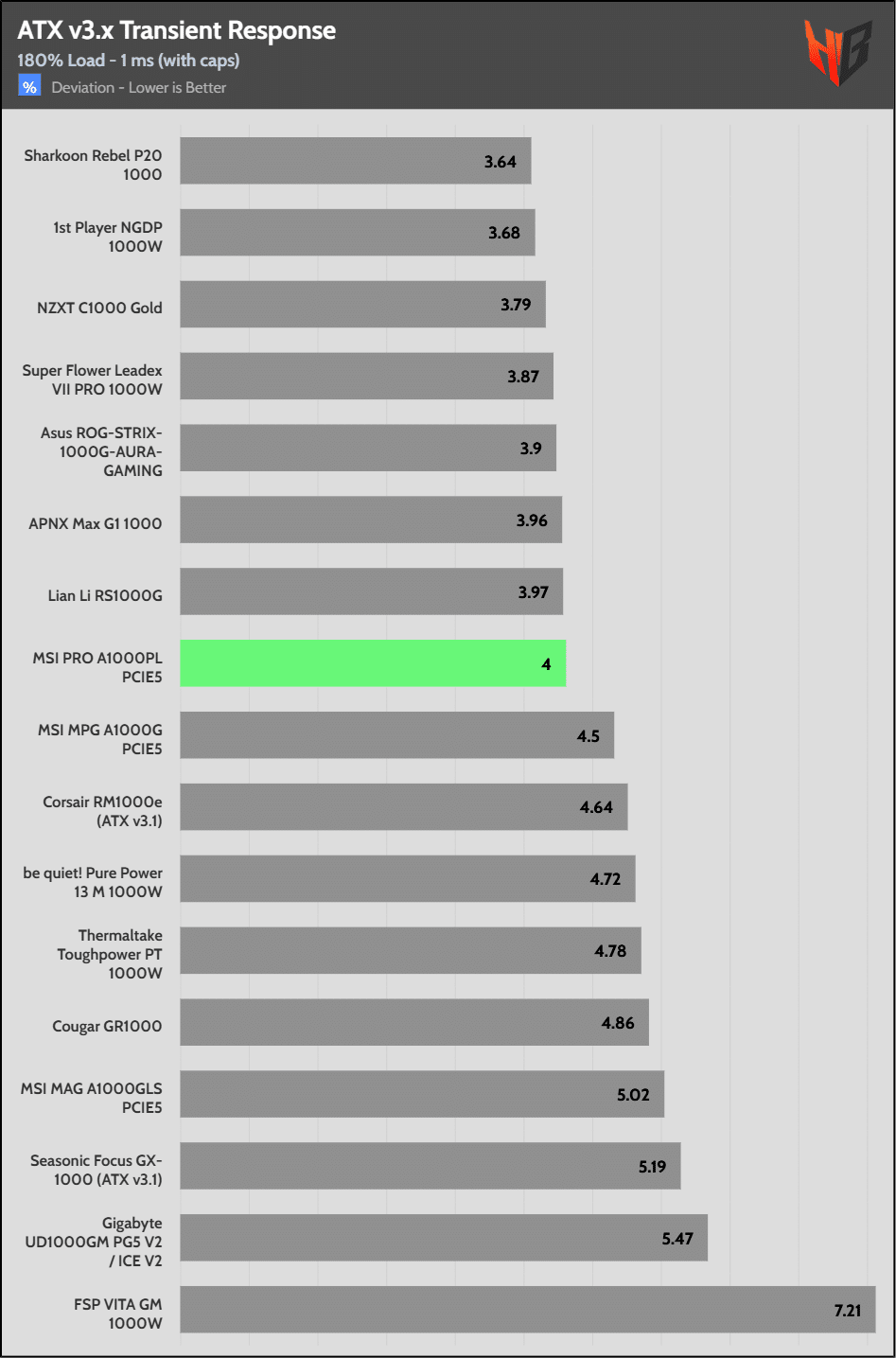
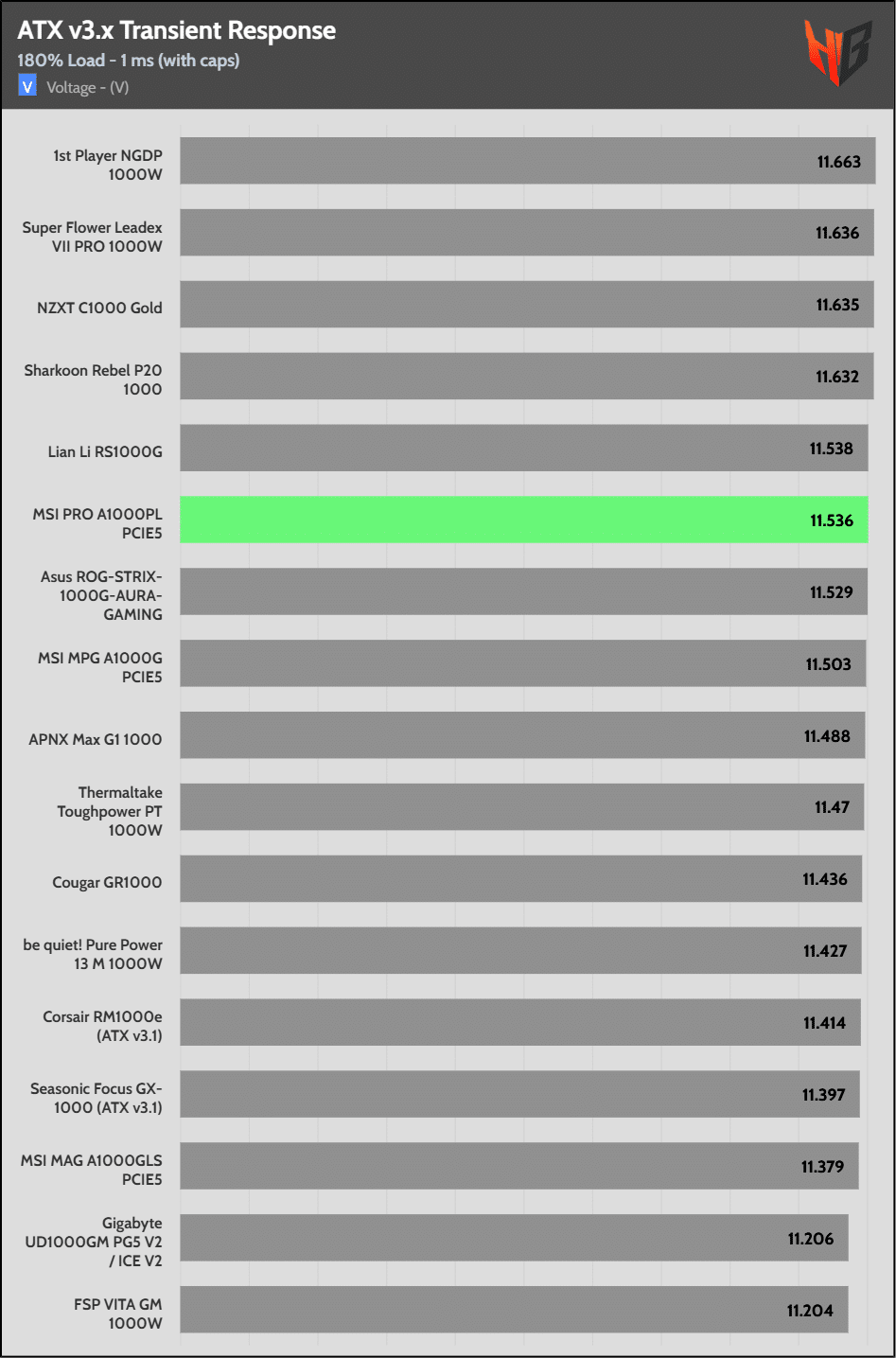
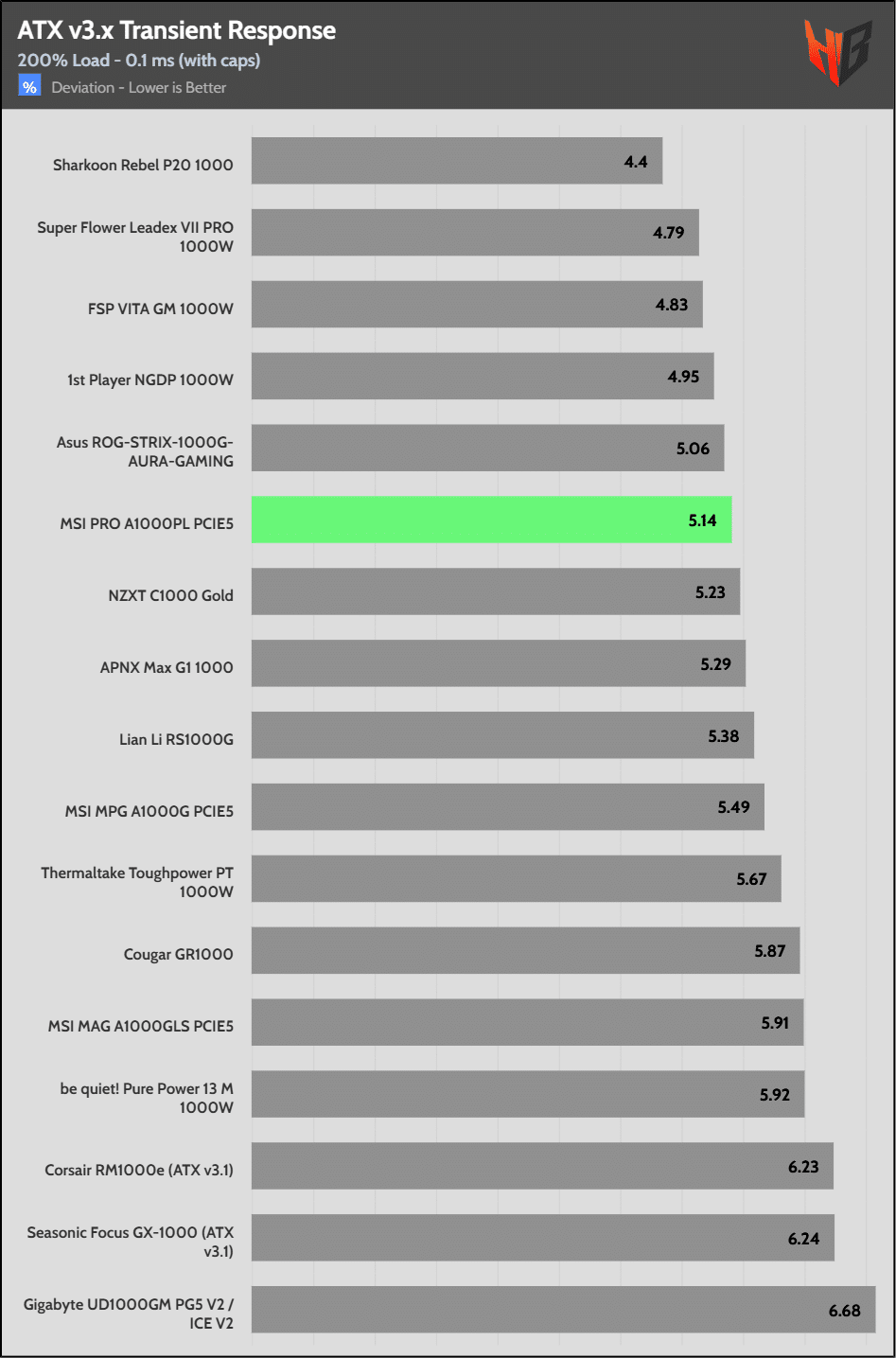
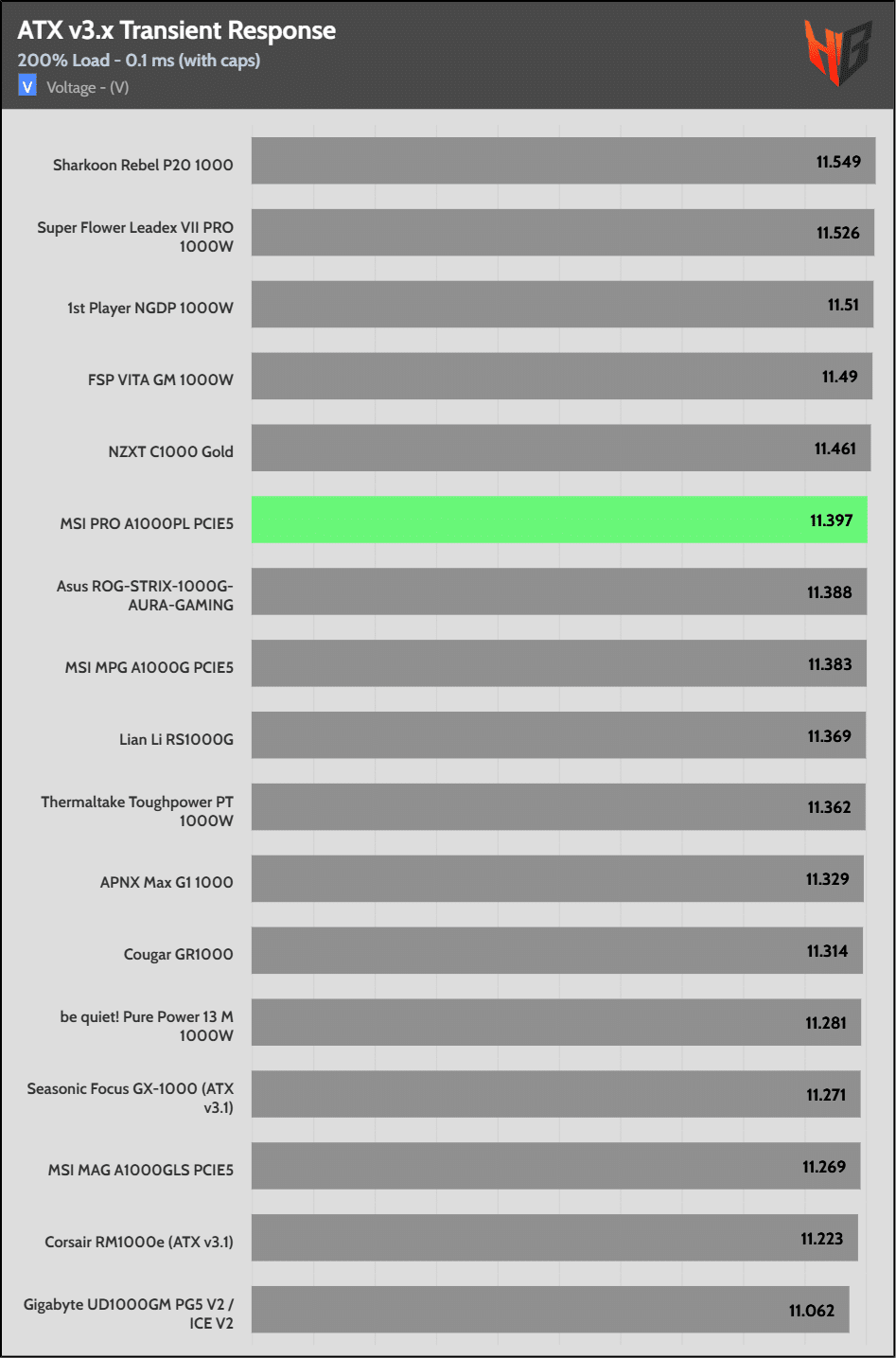
The 12V rail’s performance is decent in the high-power transient tests.
Pages: