Transient Response
Transient response in power supplies refers to how quickly and effectively the PSU stabilizes its output voltage during sudden changes in load demand, such as when a CPU or GPU increases its power draw. It’s measured by the time and voltage deviation during these shifts. A faster, smaller transient response ensures stable power, preventing instability and component damage.
20% Load – 20ms
| Advanced Transient Response 20% - 50 Hz - No Caps | ||||
| Voltage | Before | After | Change | Pass/Fail |
| 12V | 12.055V | 11.956V | 0.82% | Pass |
| 5V | 5.020V | 4.912V | 2.15% | Pass |
| 3.3V | 3.347V | 3.203V | 4.31% | Pass |
| 5VSB | 5.107V | 5.060V | 0.92% | Pass |
50% Load -20ms
| Advanced Transient Response 50% - 50 Hz - No Caps | ||||
| Voltage | Before | After | Change | Pass/Fail |
| 12V | 12.047V | 11.977V | 0.58% | Pass |
| 5V | 5.018V | 4.968V | 0.99% | Pass |
| 3.3V | 3.351V | 3.263V | 2.63% | Pass |
| 5VSB | 5.080V | 5.047V | 0.64% | Pass |
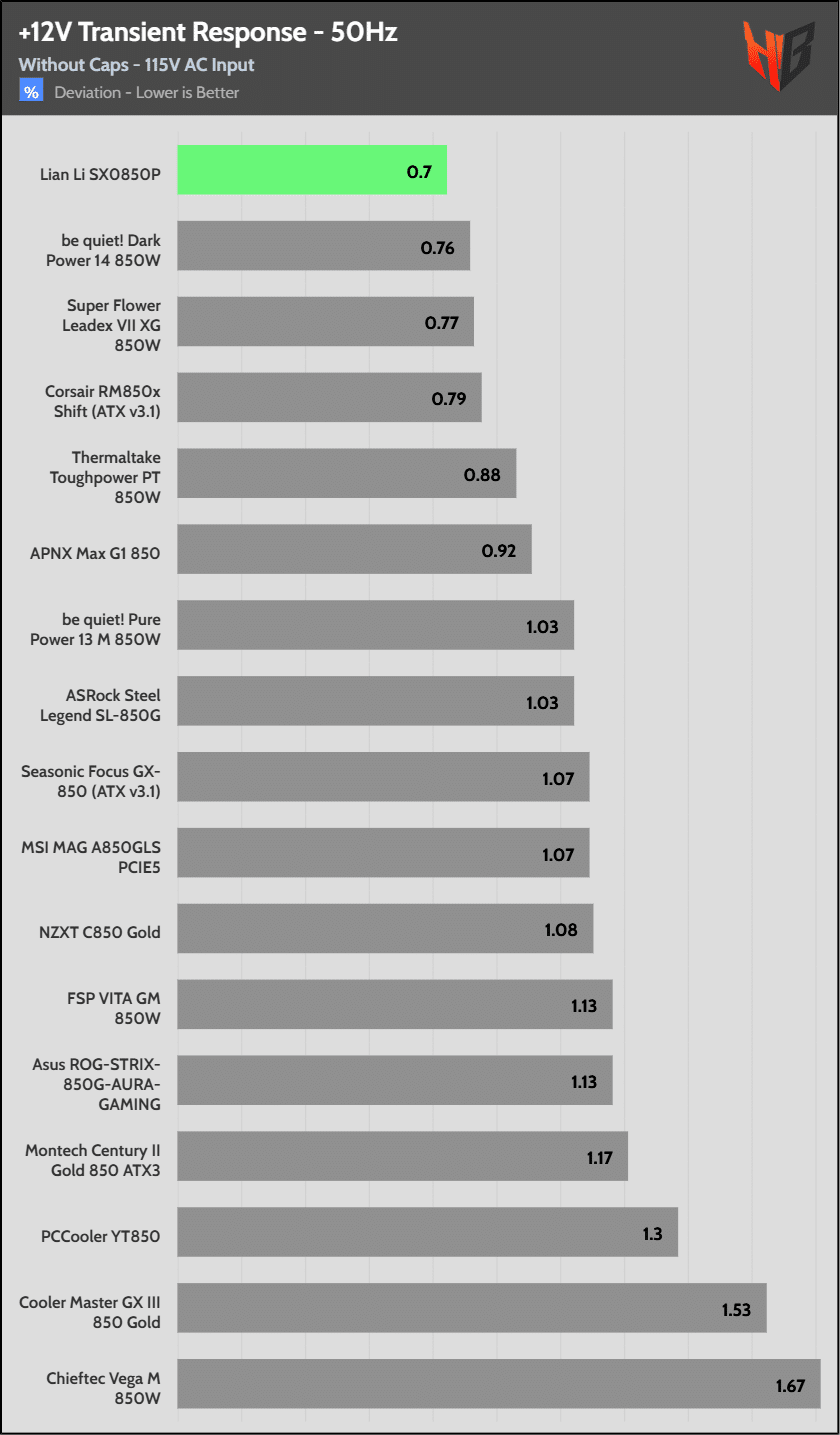
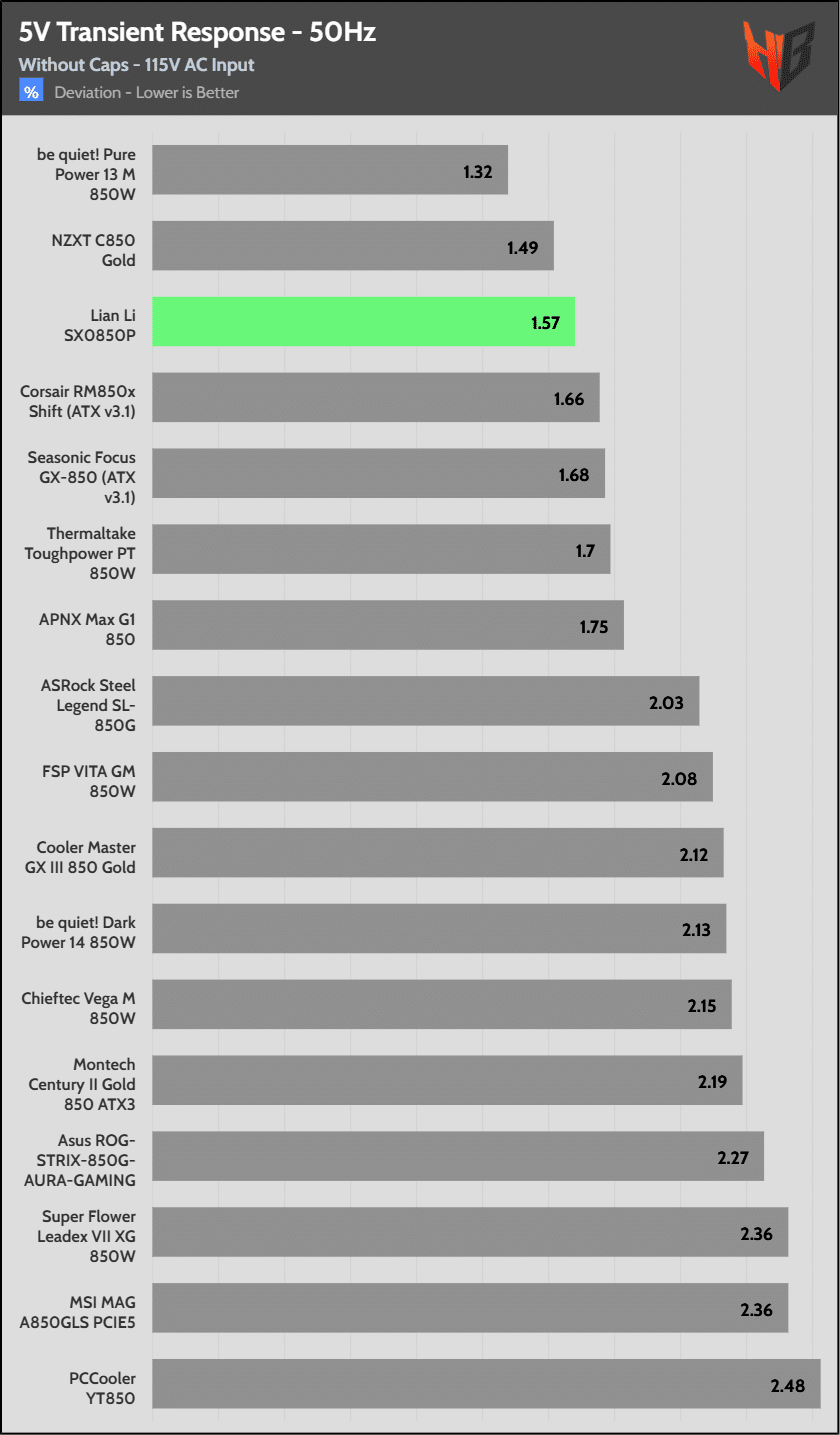
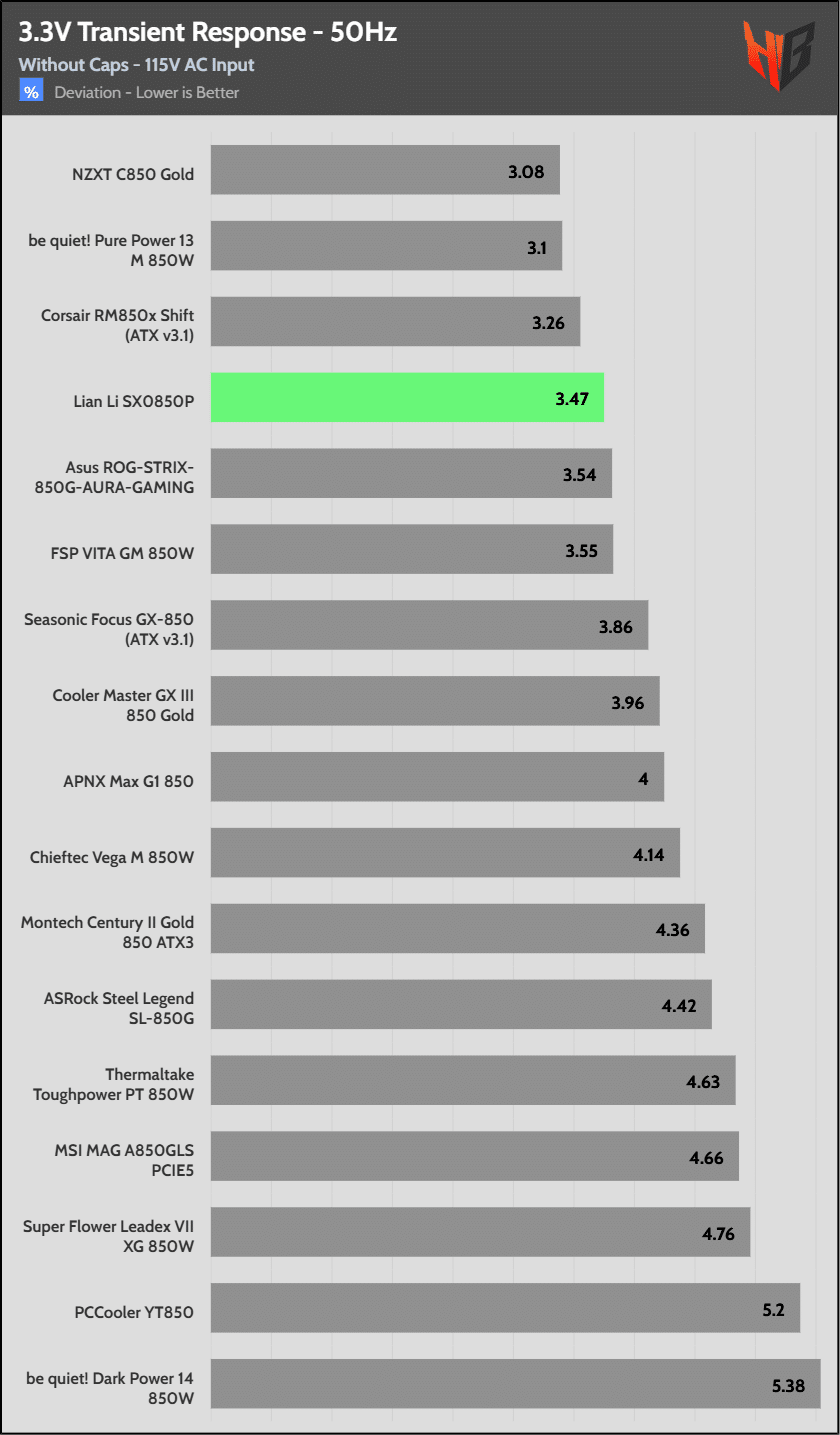
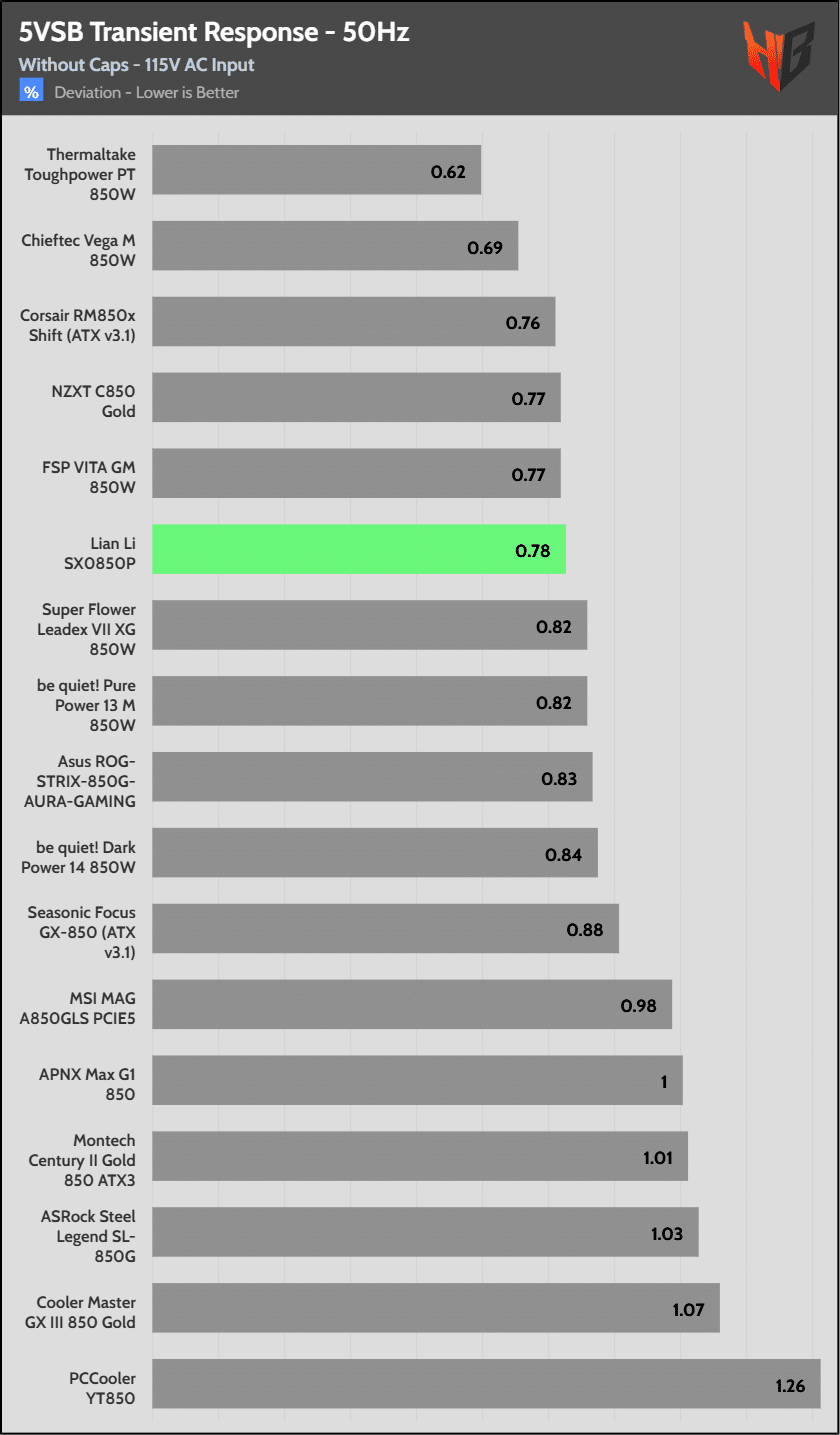
The transient response with normal loads is good on all rails, especially at 12V.
Note that the ATX spec requires additional capacitance for these tests, which helps boost voltage levels. In contrast, the results you see above are without any additional capacitance on any of the rails, so the stress is way higher.
Transient Response ATX v3.1 Tests
[Note] For PSUs without a 12+4 pin connector, the maximum applied load for the transient response tests is 150%, rather than 200%.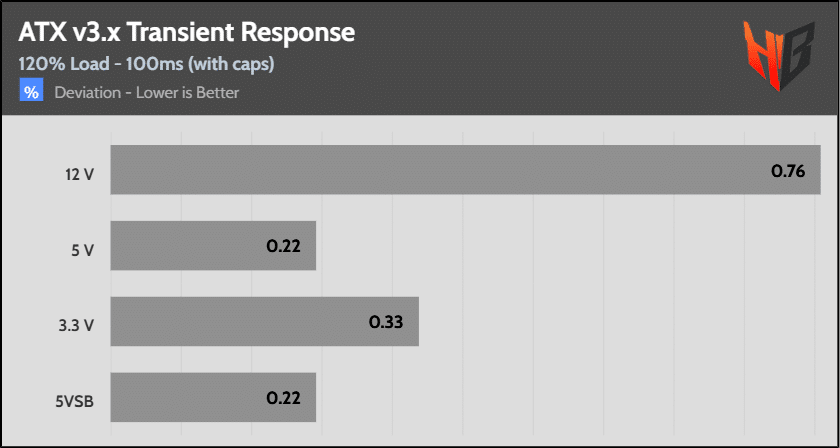
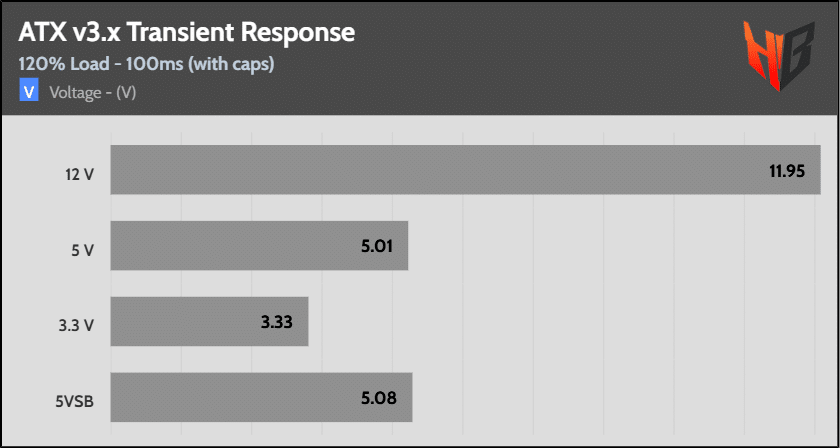
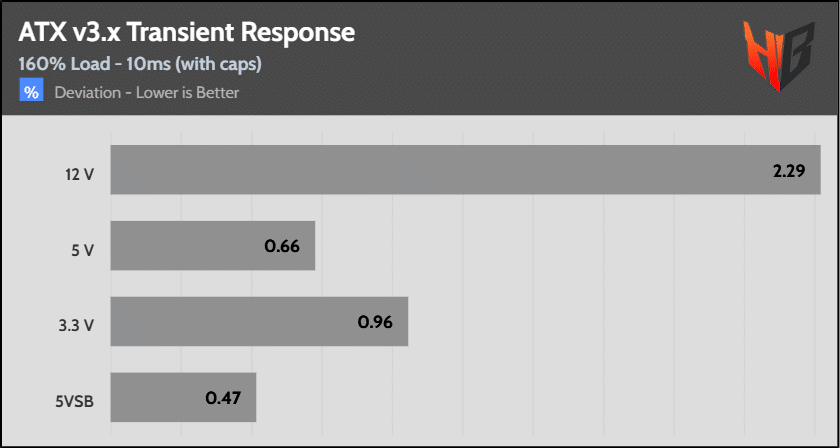
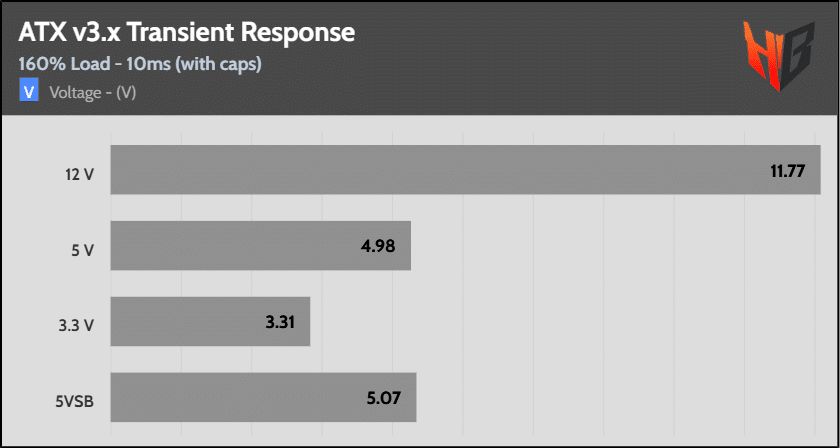
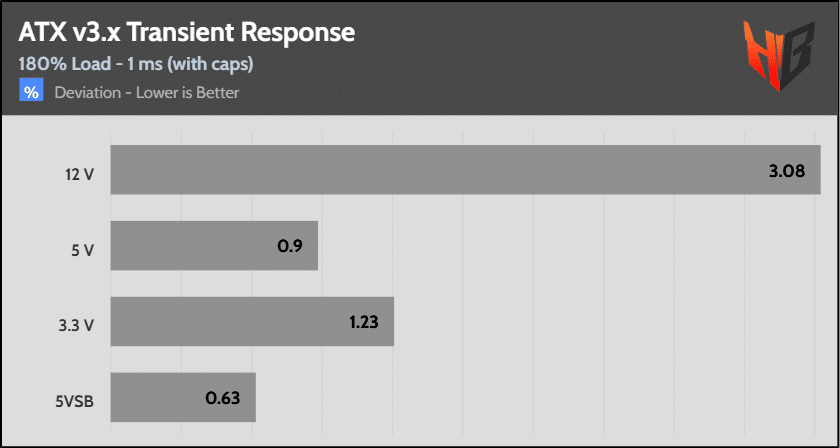
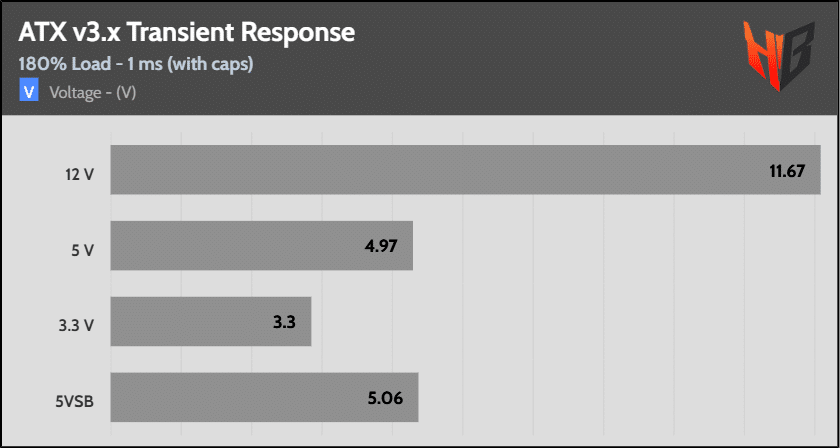
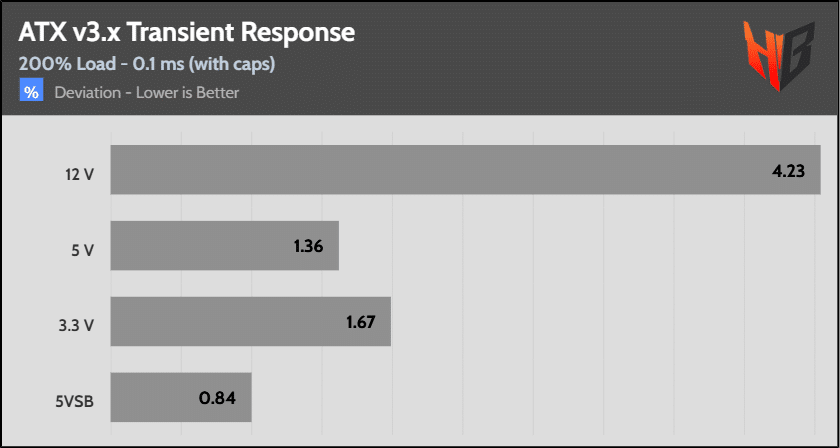
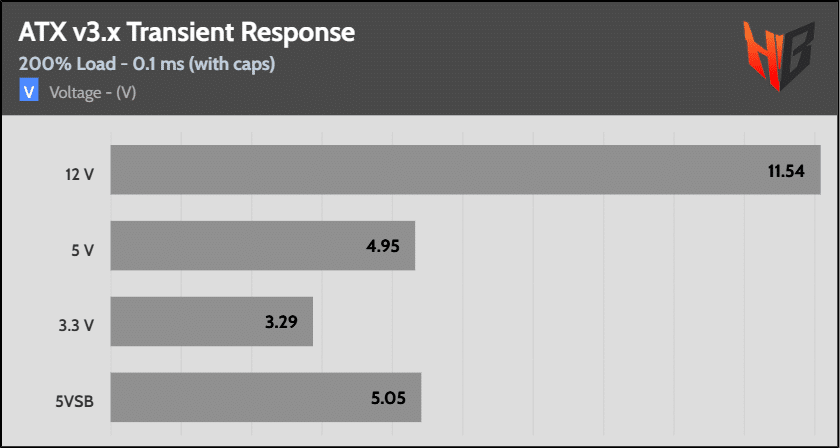
The PSU passes all ATX v3.1 transient response tests.
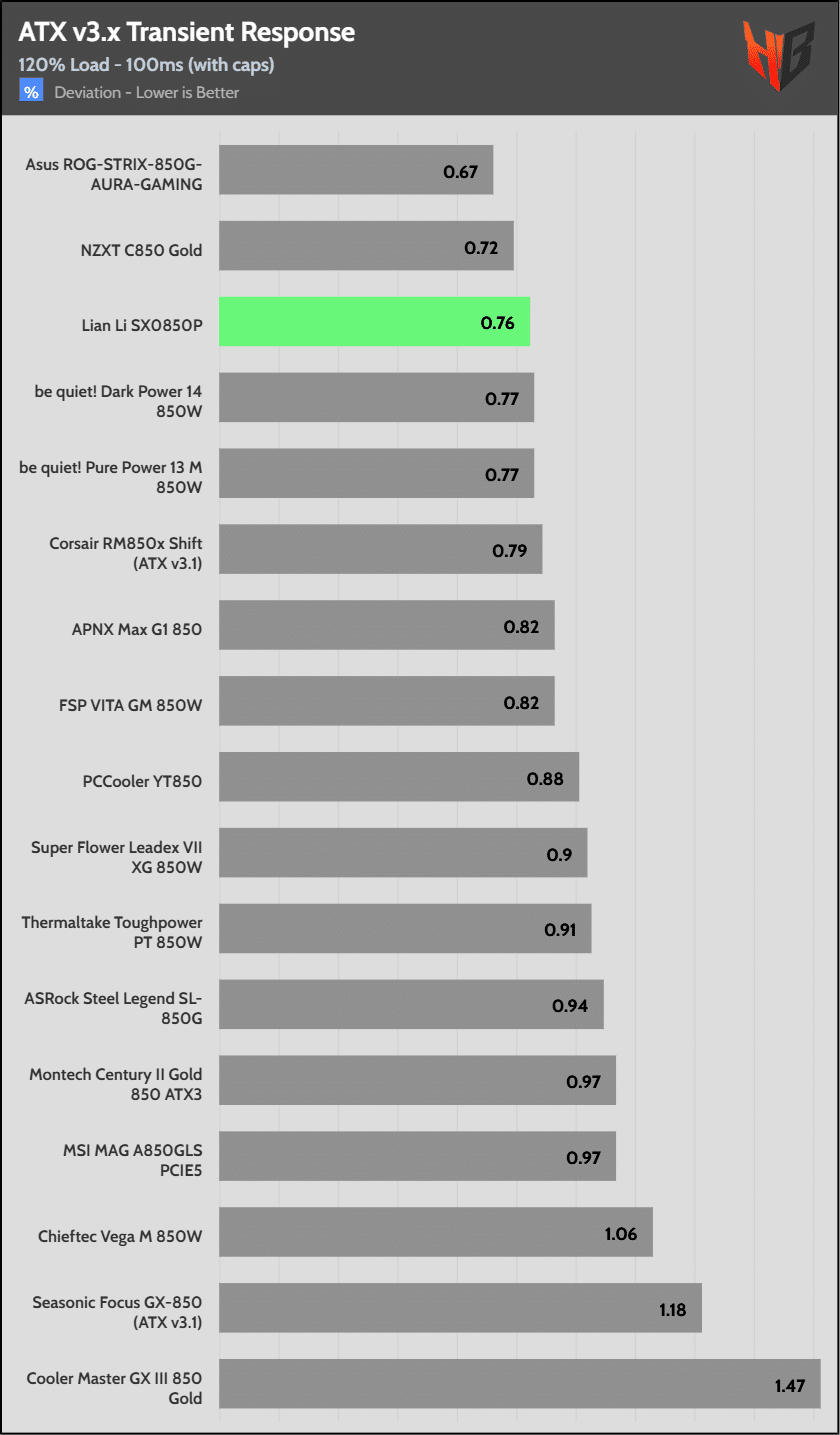

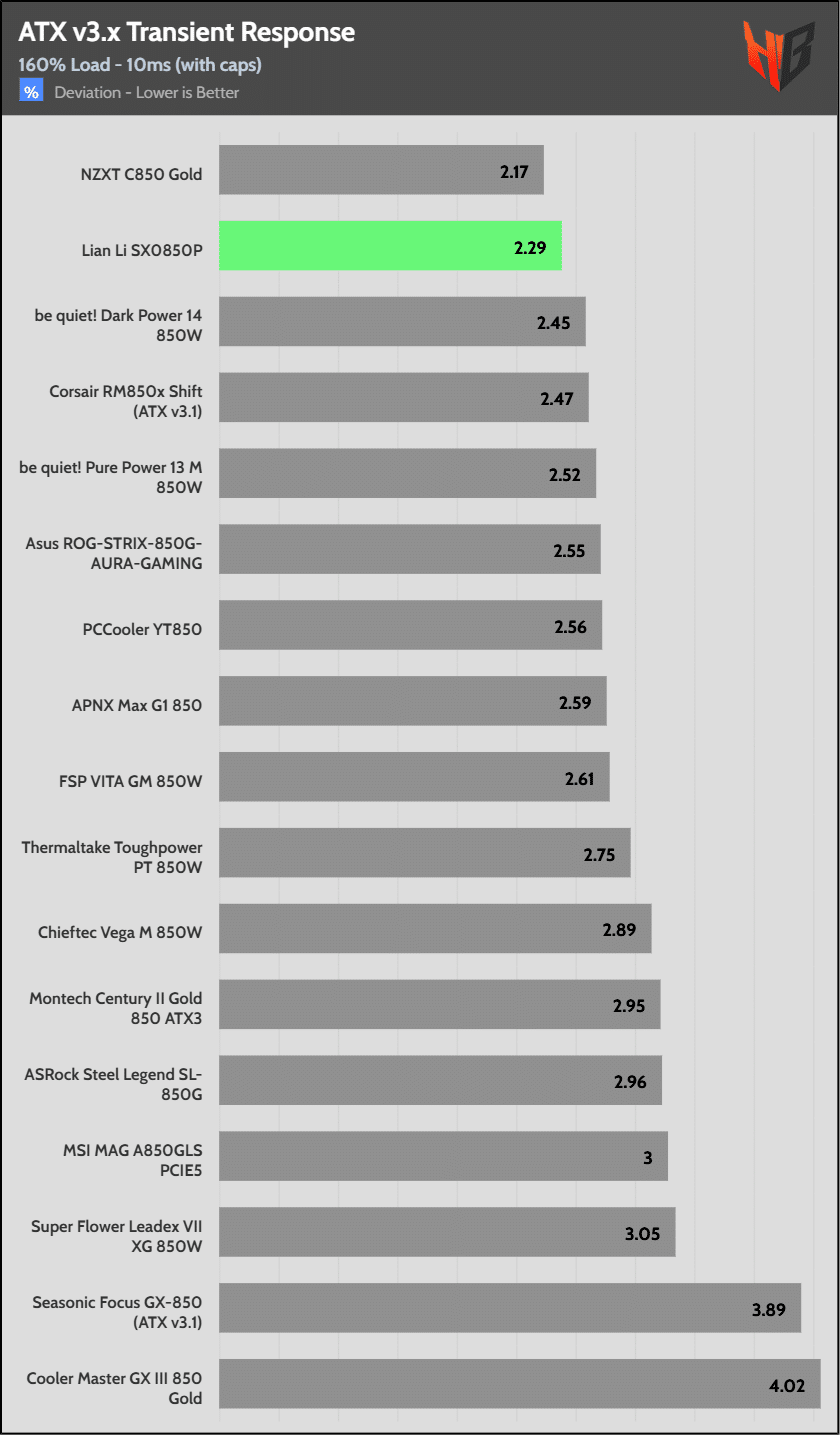
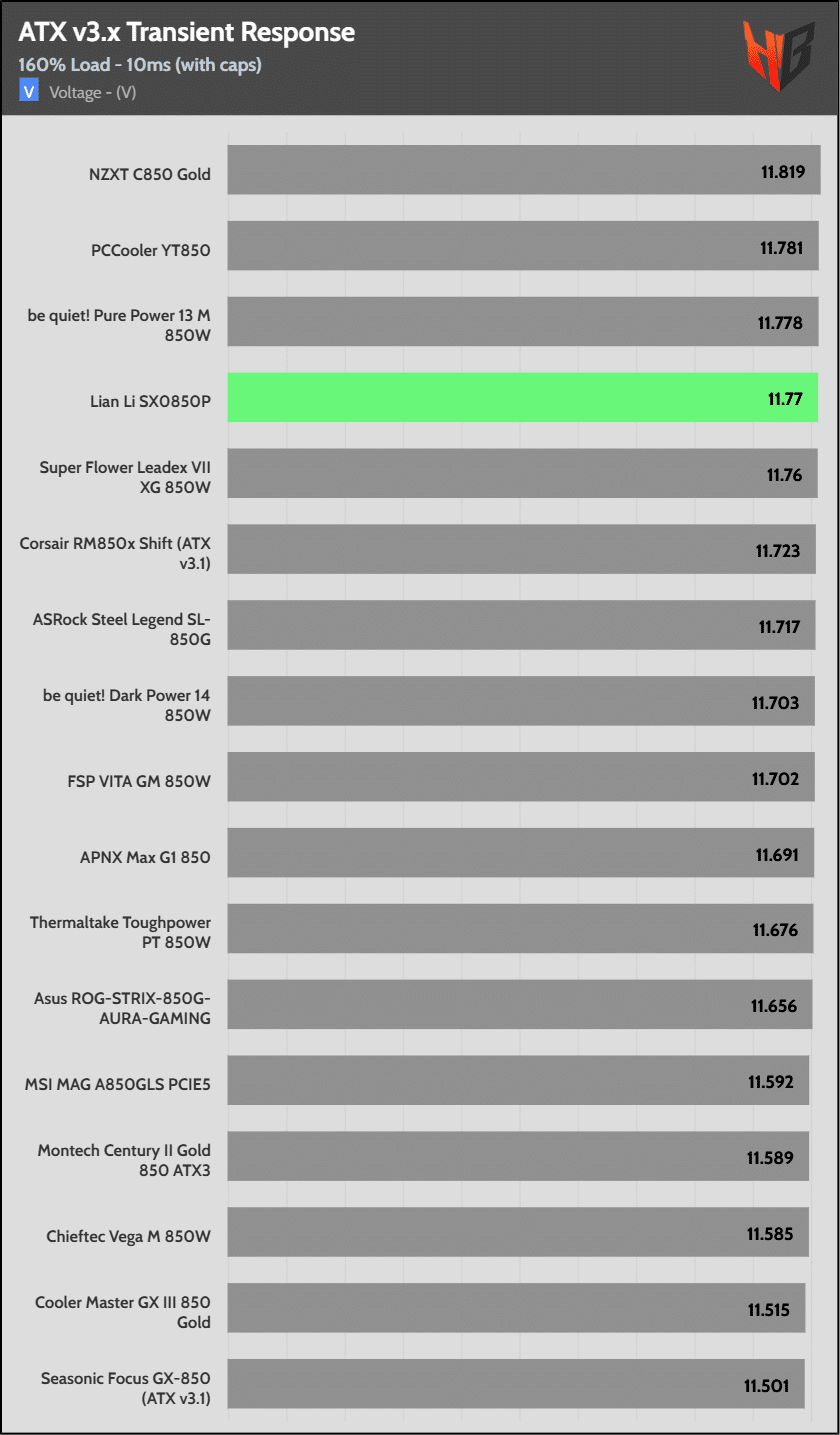
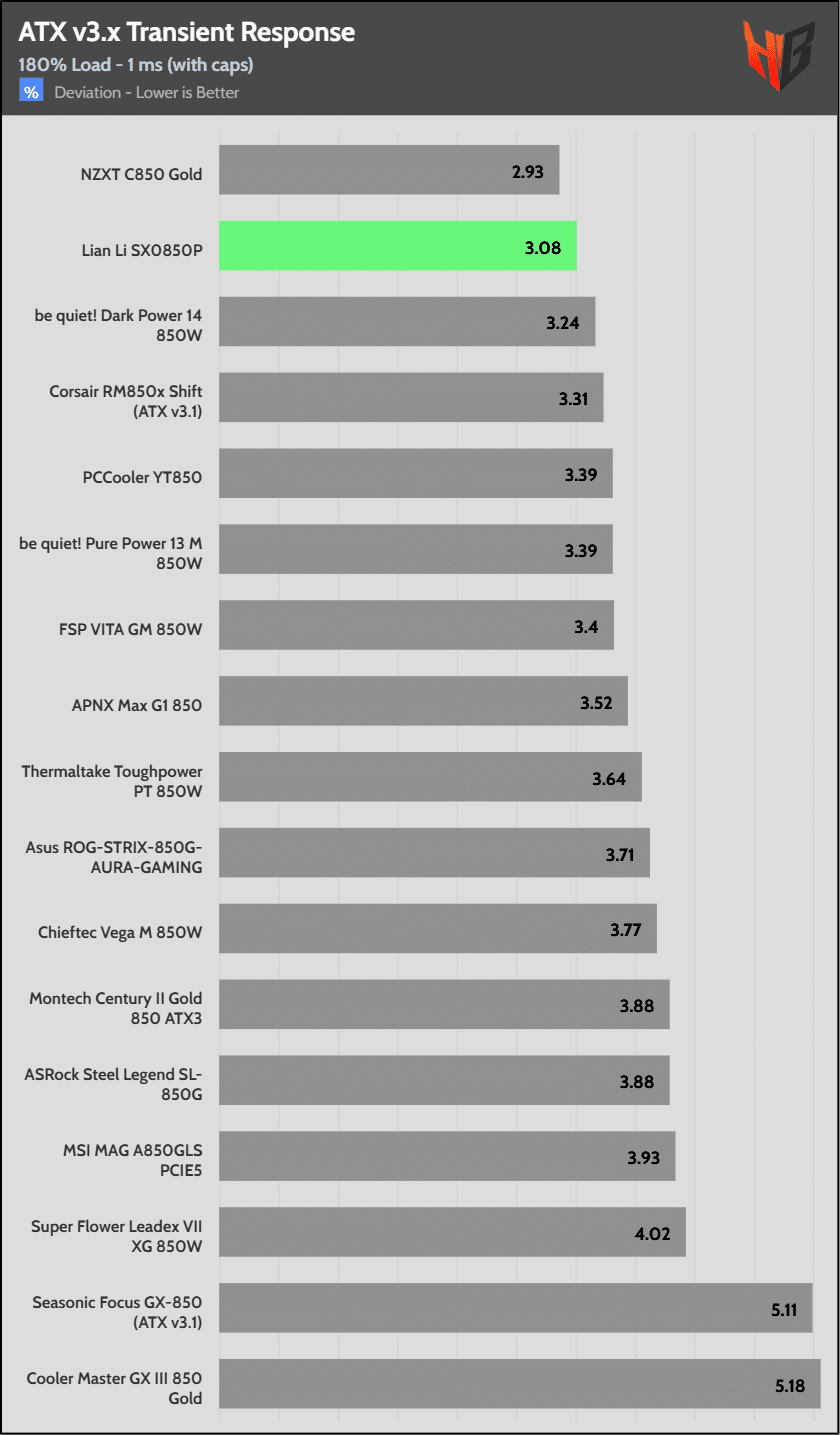

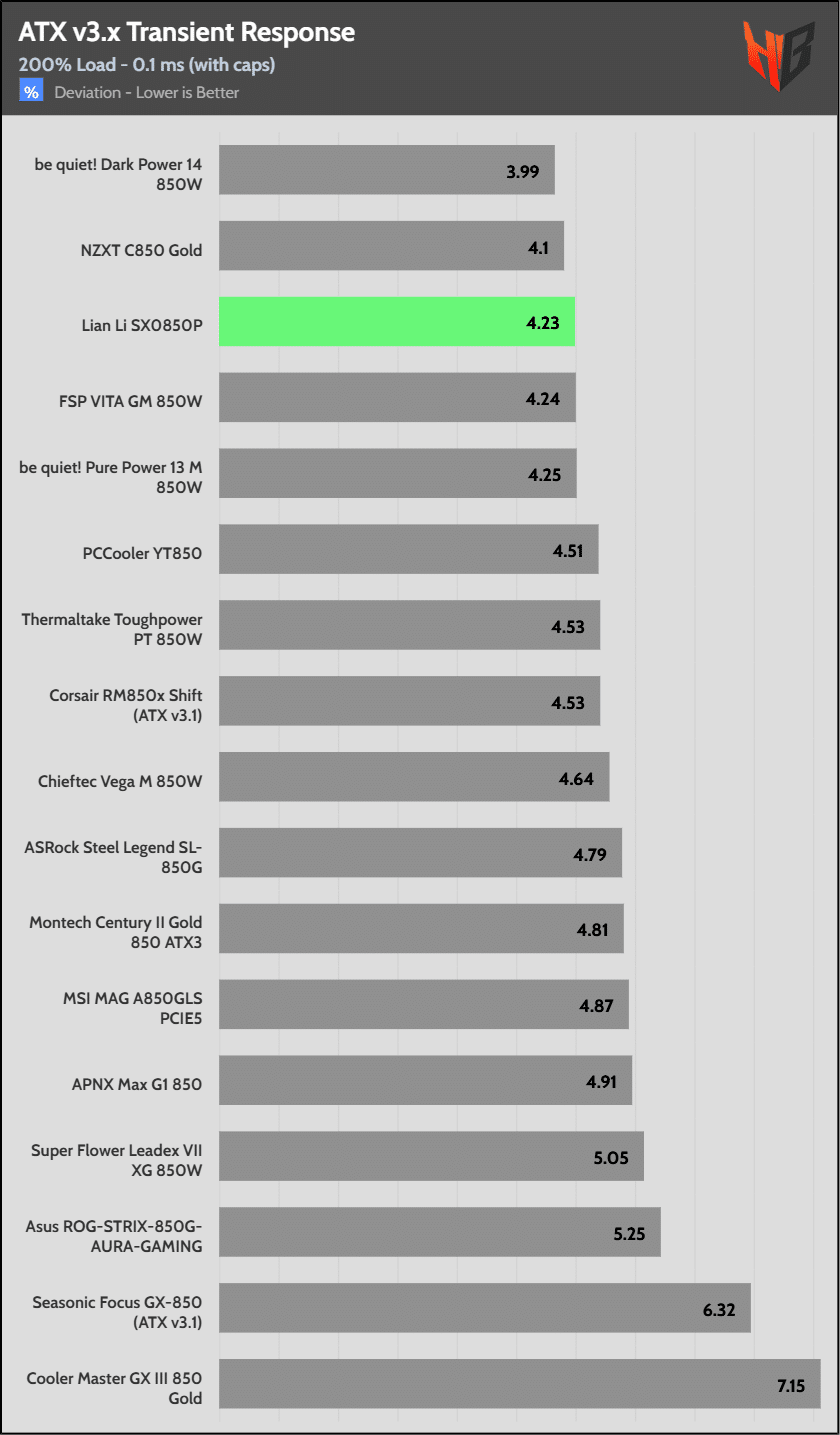
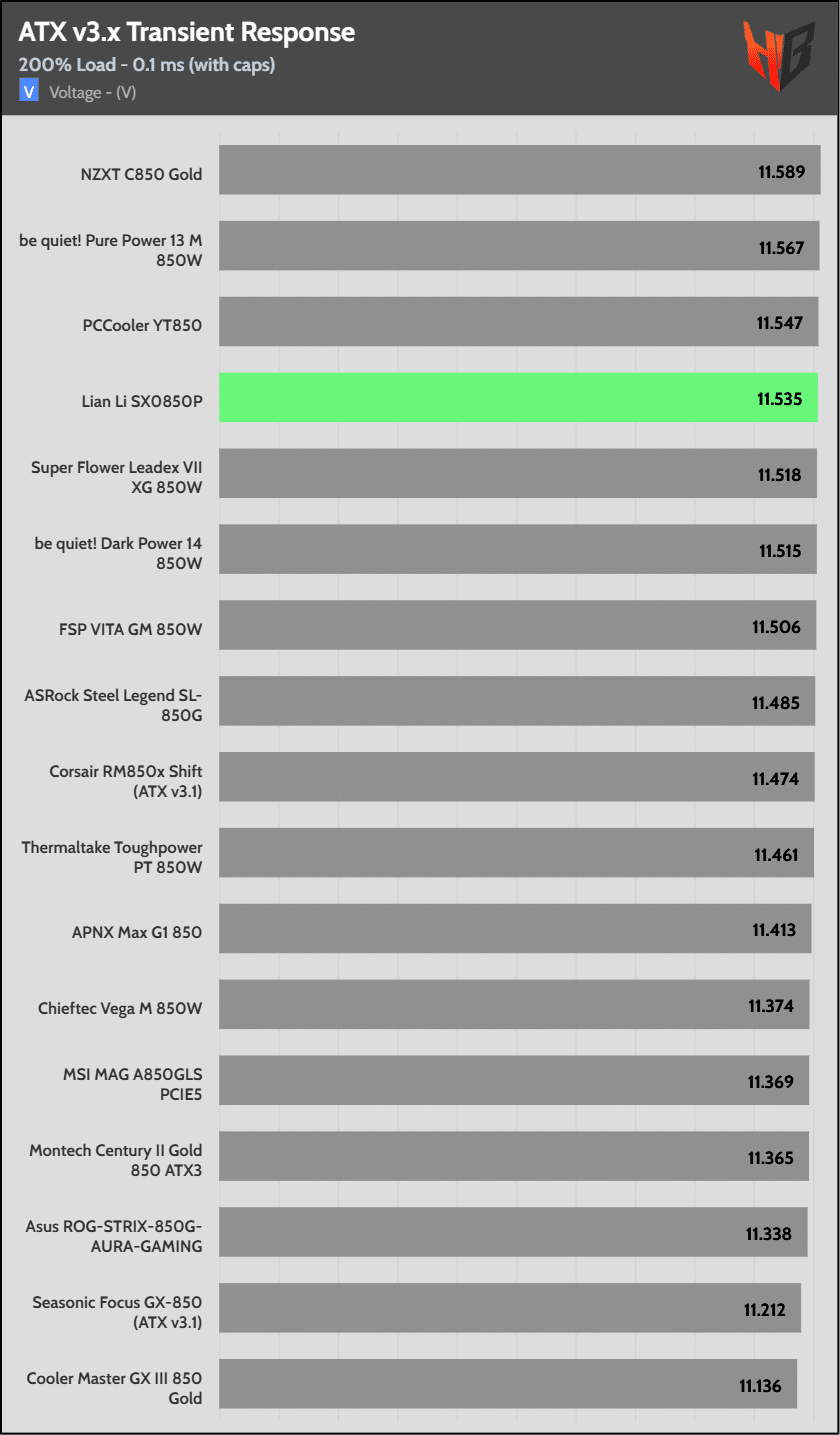
The 12V rail performs well in these tests.
such a good unit, price to performance was one of the best can’t wait to see in my country marketplace