
Hold Up Time
Hold-up time in power supplies is the duration a PSU can maintain a stable output voltage after a power interruption, allowing the system to shut down or ride out brief outages safely. It’s typically measured in milliseconds. A longer hold-up time is better, as it ensures continued operation during power fluctuations, preventing data loss or hardware damage.
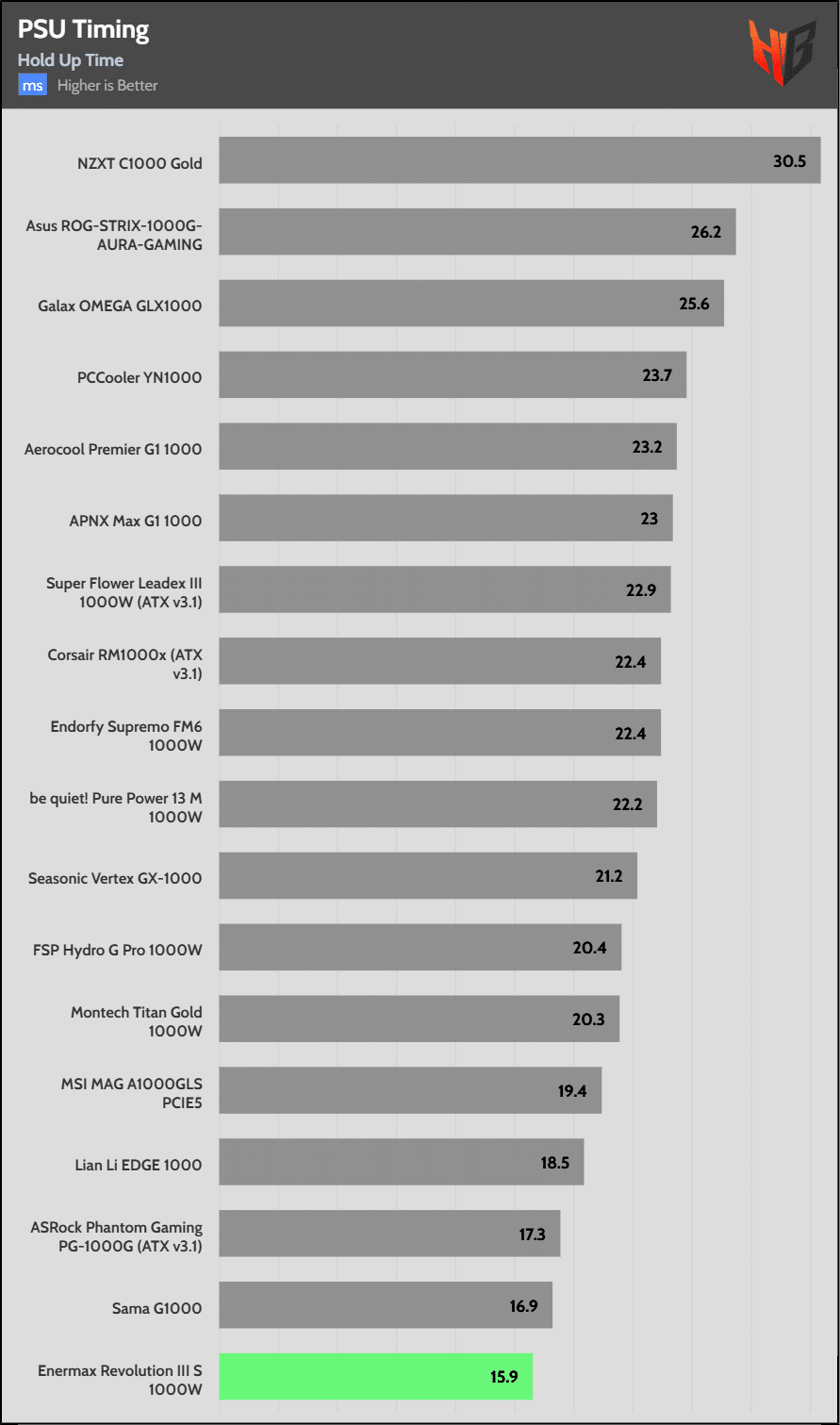
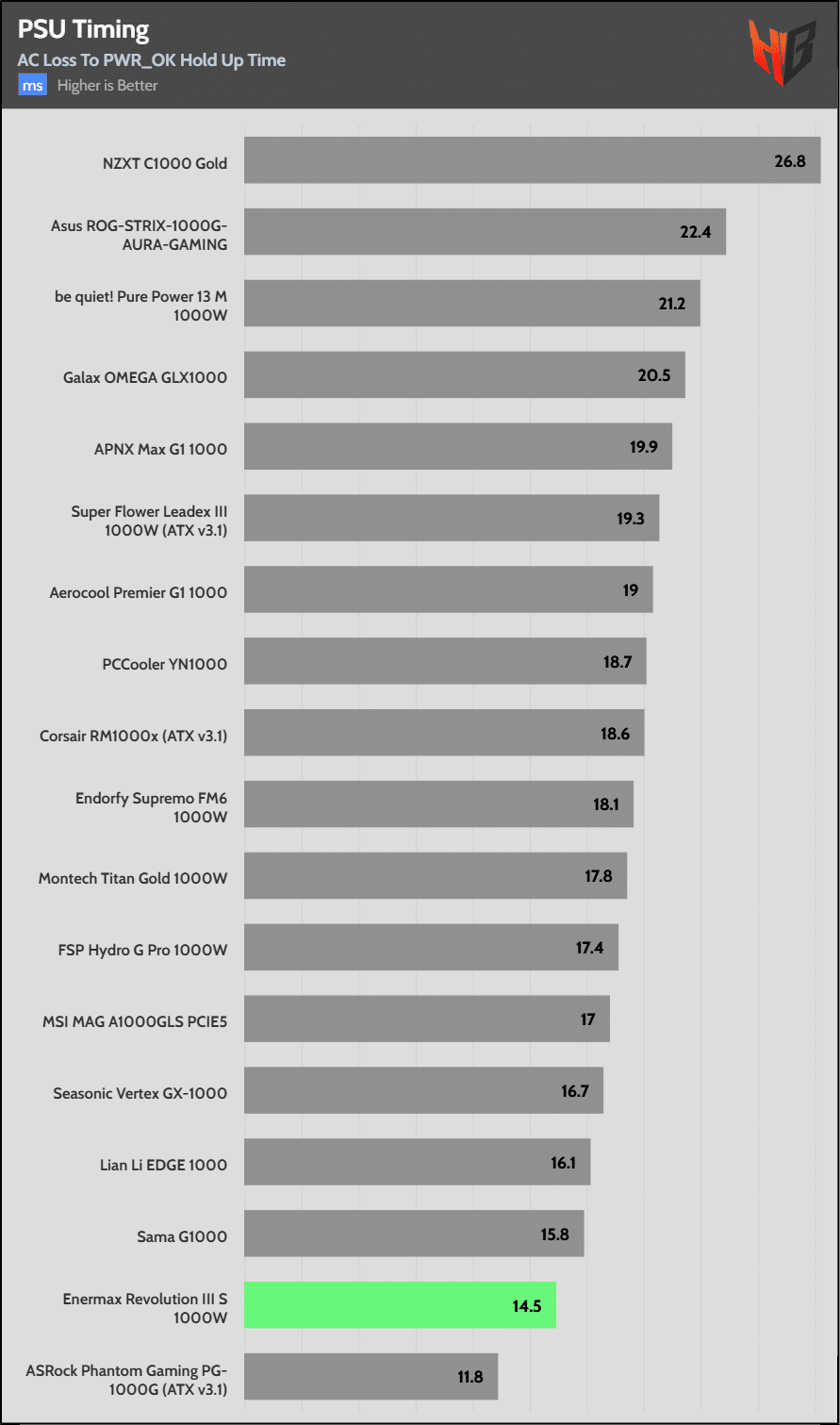
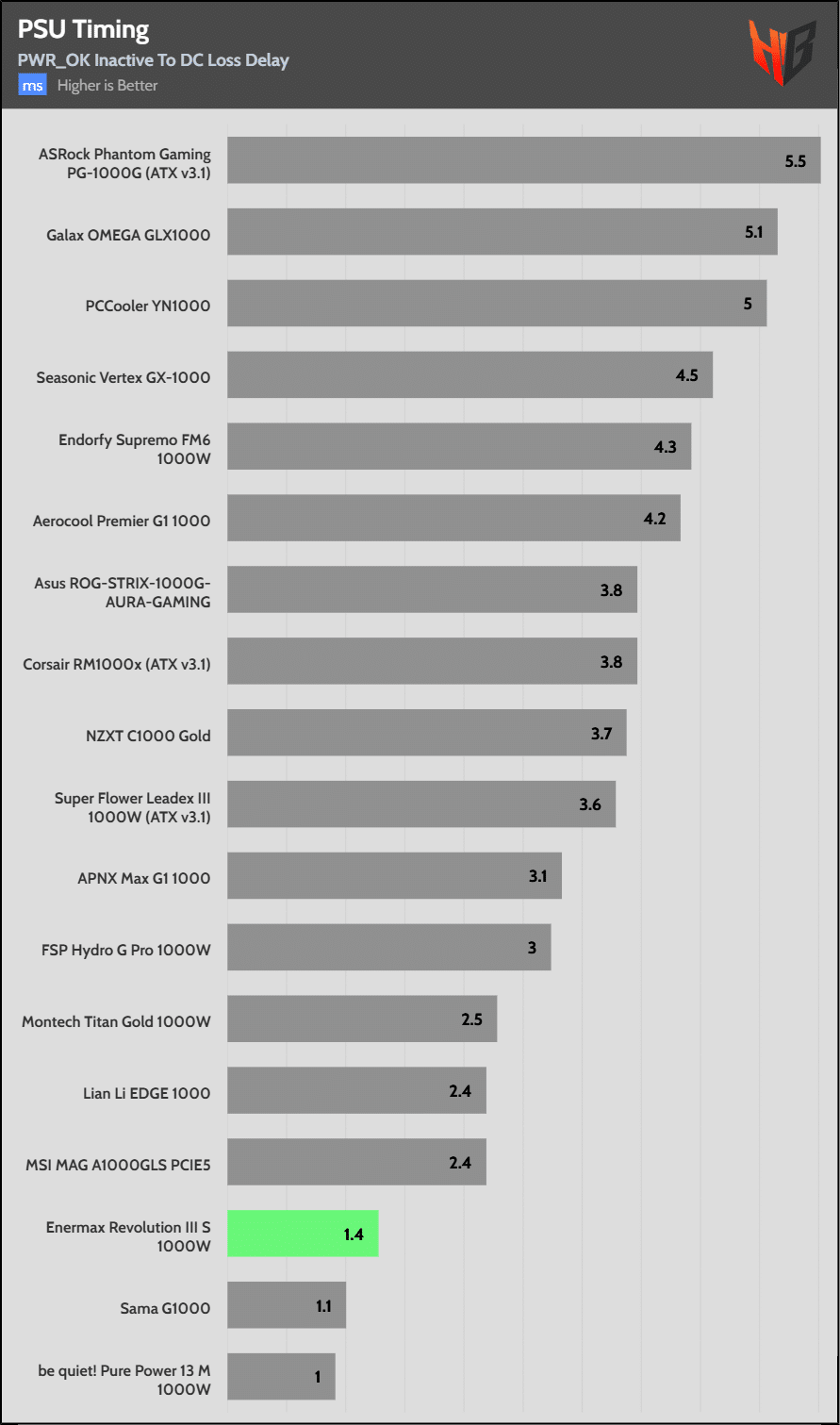
The hold-up time meets the ATX v3.1 spec’s requirements, but it is among the shortest in this category.
Inrush Current
Inrush current in power supplies is the initial surge of current drawn when a PSU is first powered on, caused by the charging of capacitors and other components. It’s typically much higher than normal operating current and lasts briefly. A lower inrush current is preferable, as high surges can stress components, trip circuit breakers, or cause wear over time.
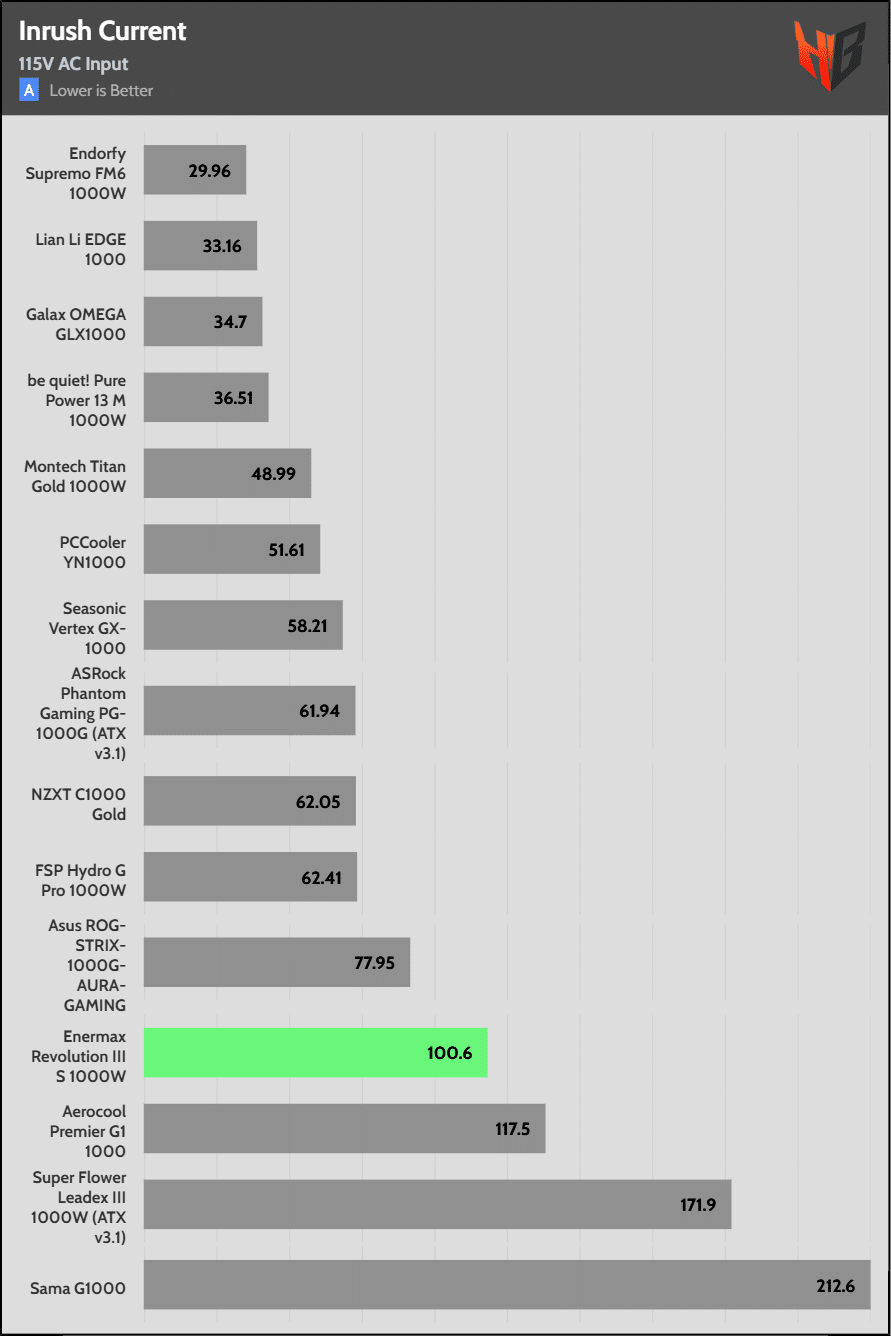
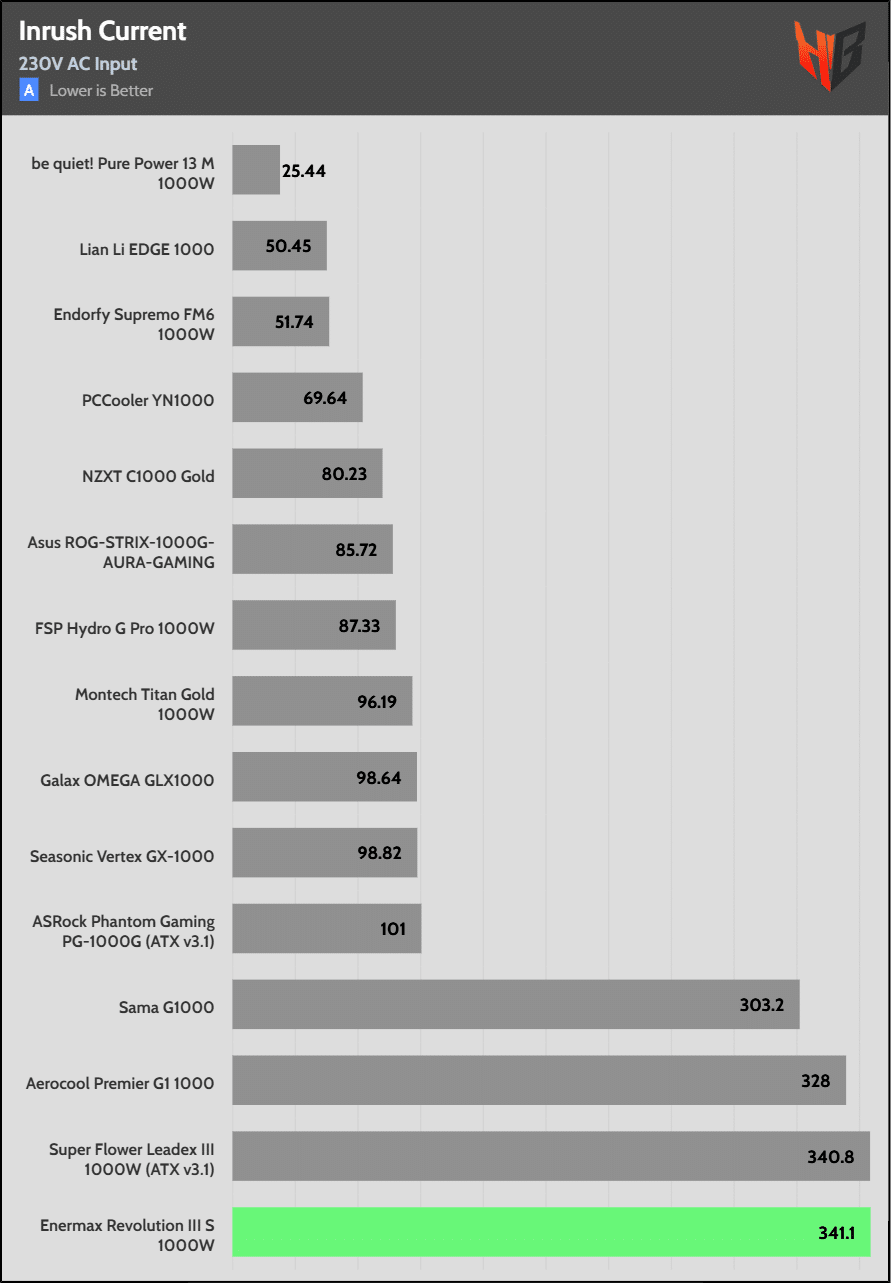
Inrush currents are higher, especially at 230V. That said, I will soon change my inrush current equipment and the technique used to obtain the results.
Leakage Current
Leakage current refers to the small amount of current that flows through an insulating material or a semiconductor device when it is ideally supposed to be non-conductive. It is typically observed in electronic components, such as transistors, capacitors, and insulators, where current leaks through imperfections or unintended pathways, even when the device is “off.”
Leakage current in power circuits is an alternating current that flows through the earthing conductor, primarily caused by the EMC filter’s Y capacitors (Cy). The more Y capacitors, the higher the leakage current can be!
The IEC 62368-1, which replaces the IEC 60950 OFF (Office Equipment) and IEC 60065 TRON (Electronics, entertainment), defines the limits for maximum leakage (touch) current.
- Normal Condition: Maximum touch current = 3.5 mA
- Single Fault Condition: Maximum touch current = 10 mA
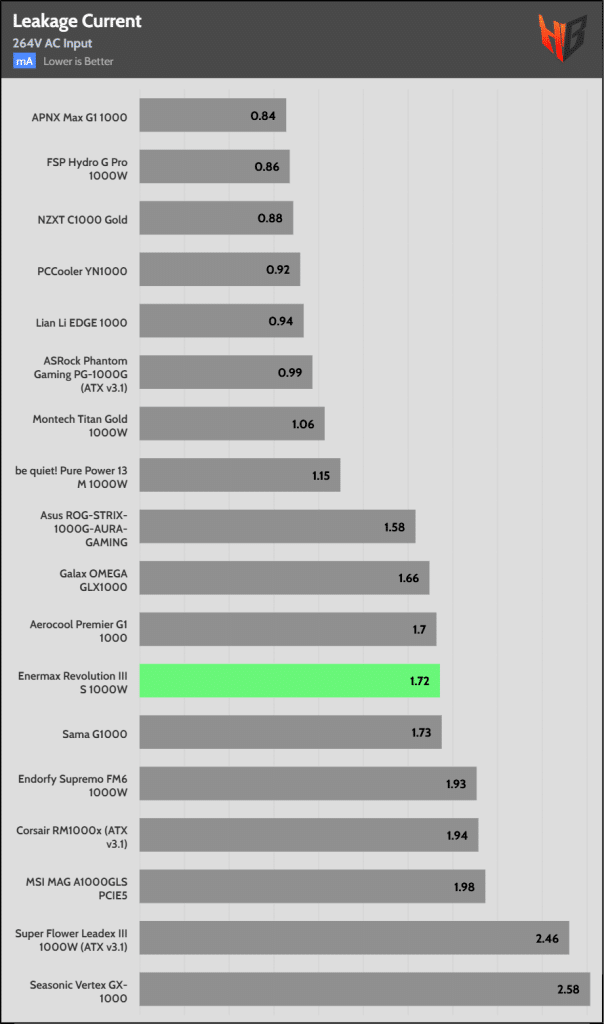
The leakage current is close to the average.
PSU Timings
Desktop PSU timings refer to the specific durations and sequences of electrical signals that a power supply unit (PSU) must maintain to ensure the proper operation of a computer system, as defined by the ATX specification. Proper timings are critical for system stability, preventing crashes or damage by ensuring components receive consistent, timely power.
In desktop power supply units (PSUs), Alternative Low Power Modes (ALPM), as defined in the ATX specification (e.g., ATX v3.1), are designed to improve energy efficiency by reducing power consumption during low-load or idle states, such as when a computer is in sleep or standby mode. These modes are closely tied to the T1 and T3 timings, which are critical for ensuring proper PSU behavior during transitions between power states.
T1 and T3 Timings Explained
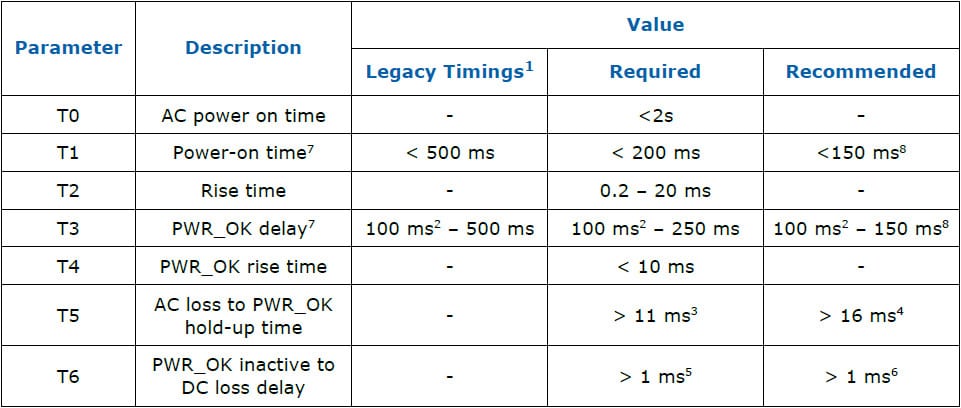
- T1 (Power-On Time): This is the time from when the PSU is turned on (via the PS_ON# signal going low) to when the output voltages are stable and within specification, and the Power Good (PWR_OK) signal is asserted. Typically, T1 is less than 500 ms, but it must be below 200 ms for ALPM compliance, and Intel recommends a value of below 150 ms. It ensures the system receives stable power quickly during startup or when waking from a low-power state.
- T3 (Power Good Delay): The time interval between when the output voltages reach their nominal levels and when the PWR_OK signal is asserted, typically 100-500 ms. For ALPM compliance, it must be between 100 and 250 ms, with Intel recommending 100-150 ms. T3 ensures the PSU signals the system only when the power output is fully stable.
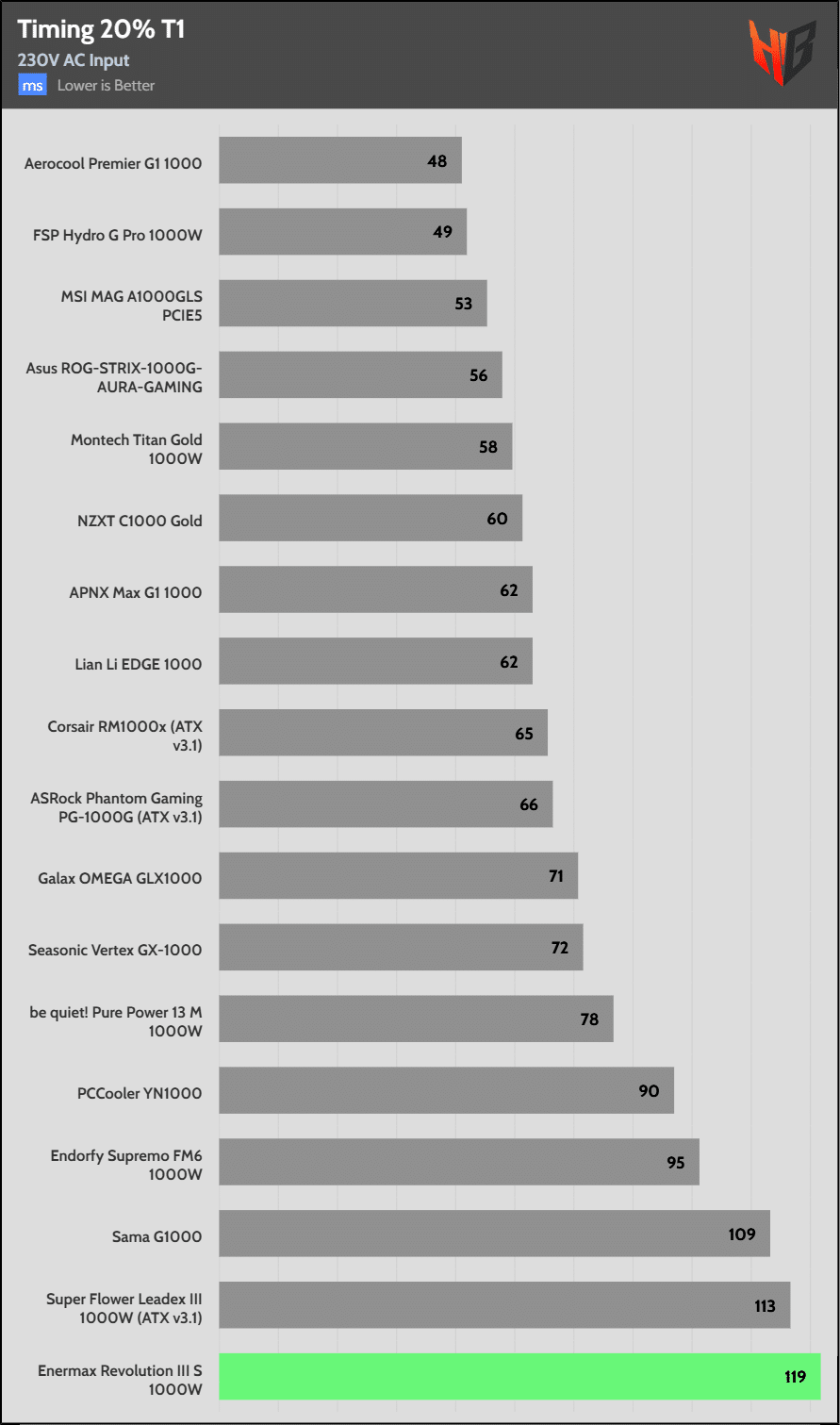
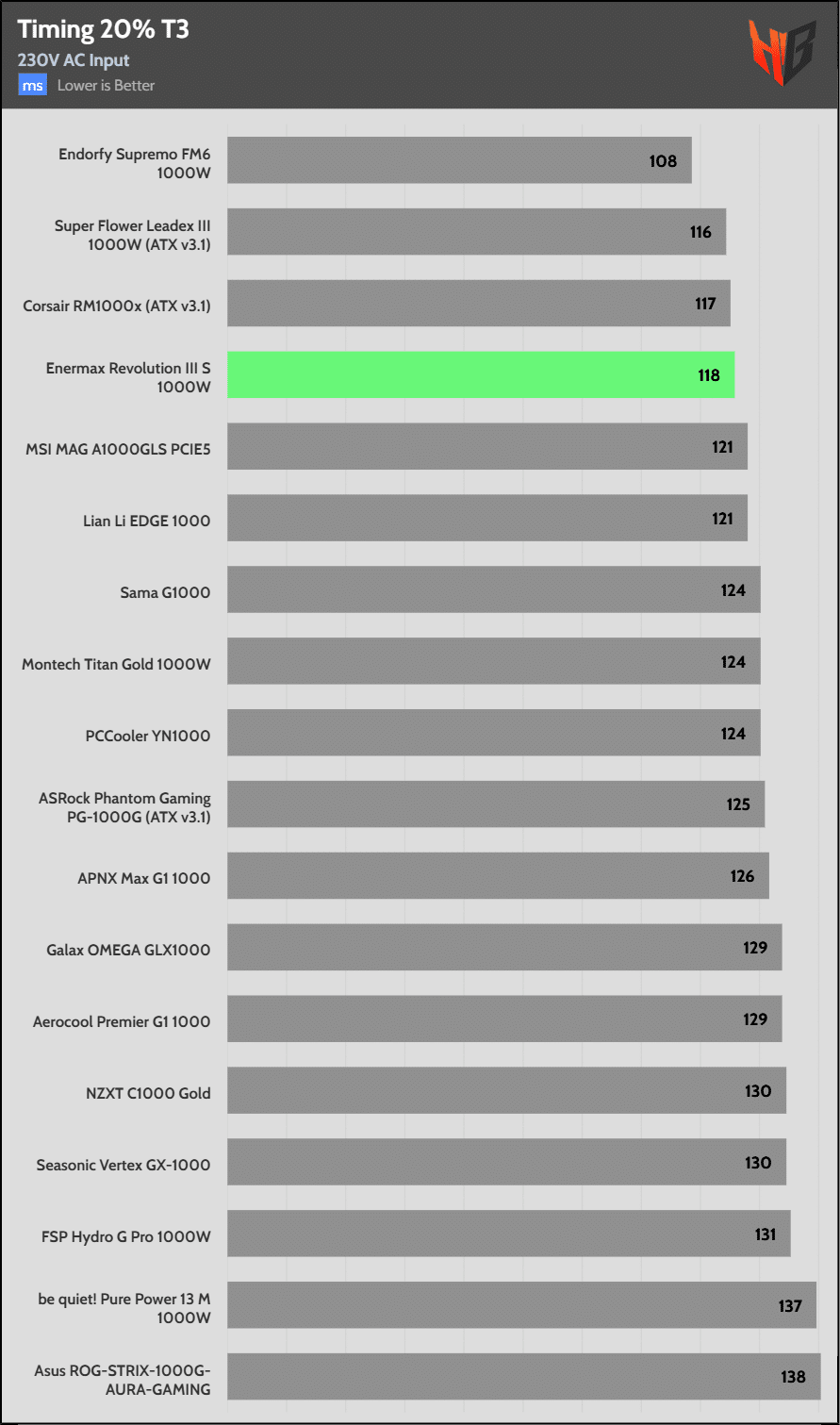
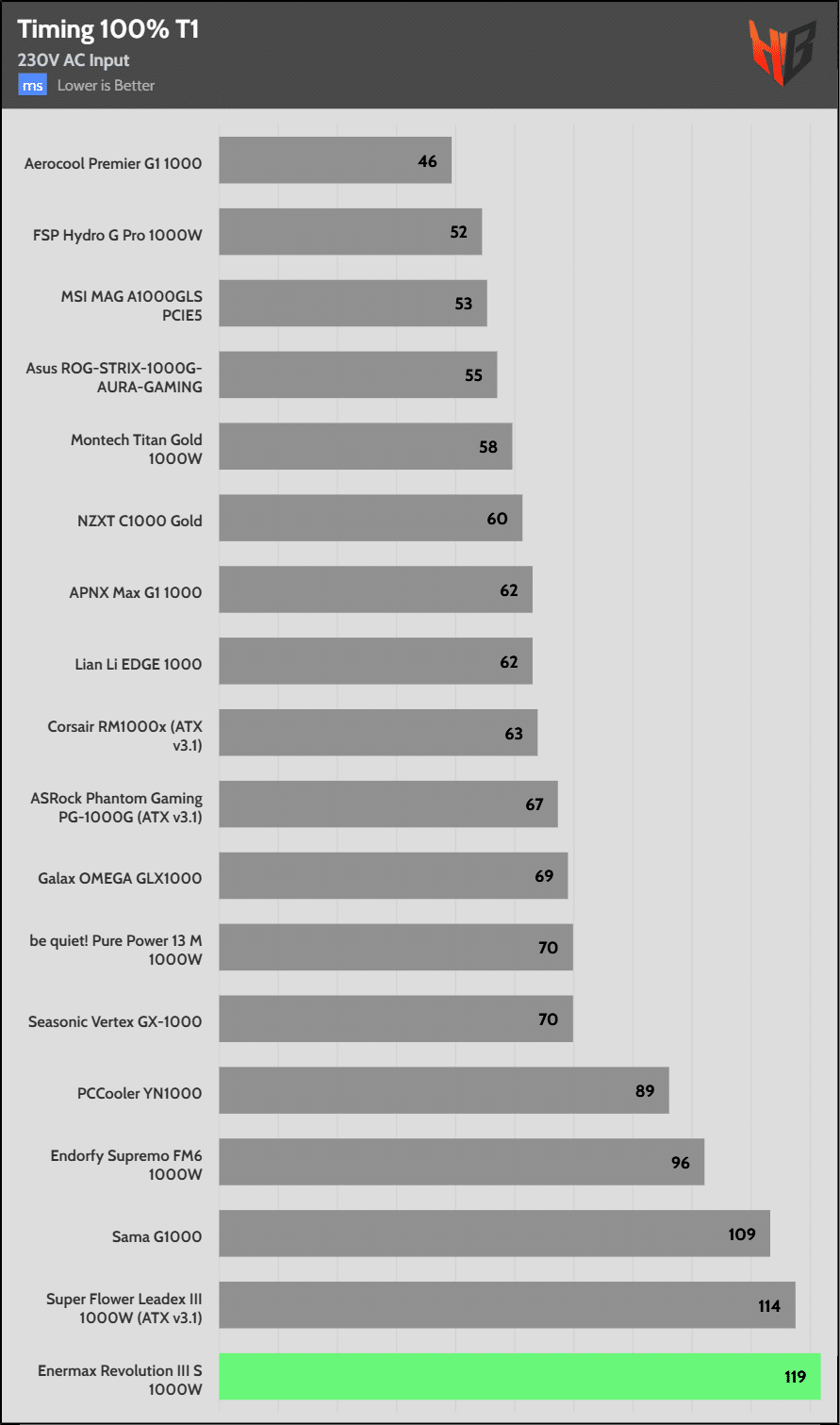

The PSU supports Alternative Low Power Modes.
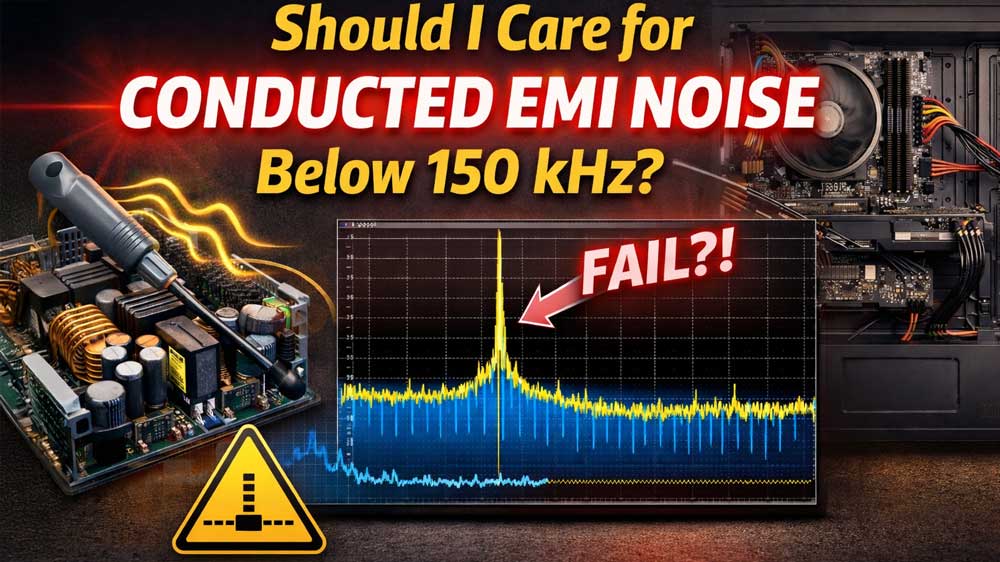
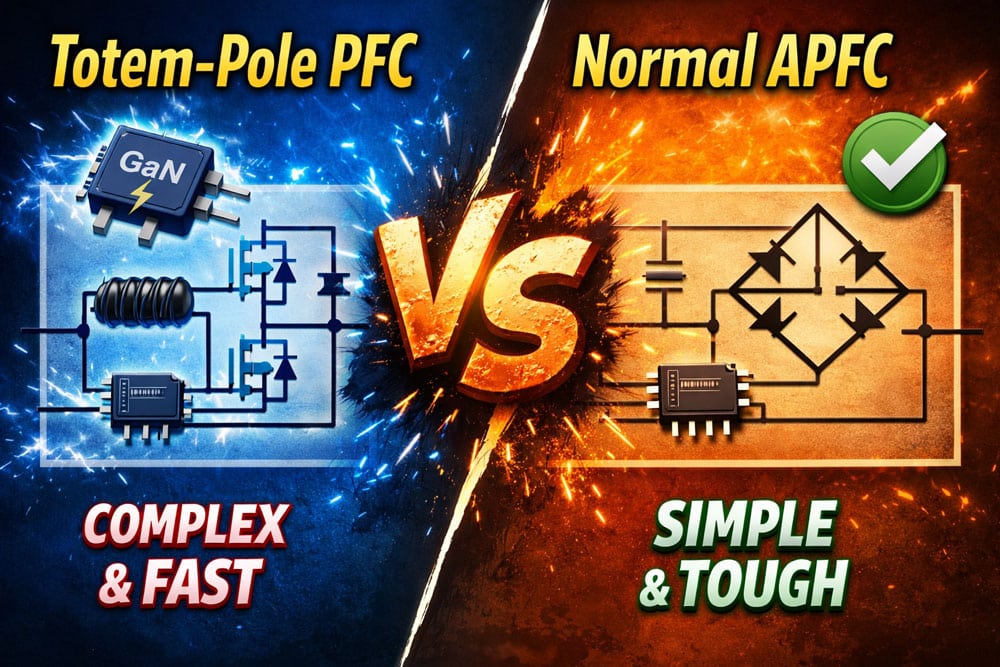
The Cybenetics report indicates that this power supply is compliant with ATX 3.1; however, the transient testing results show issues on the 3.3 V rail.
Could you clarify how ATX 3.1 pass/fail determinations are defined in your methodology? Specifically, how are transient deviations on secondary rails, such as the 3.3 V rail, evaluated when concluding overall ATX 3.1 compliance?
Reference:
Cybenetics ATX 3.1 PASS Report
https://www.cybenetics.com/evaluations/psus/2971/
Which transient response results are you referring to? The transient response tests with normal loads, which I do, and without capacitors? These are my tests; they are not included in any ATX spec. I have been conducting these for many years now, and they are there to compare all PSUs with load on all rails directly.
The ATX v3.1 uses an entirely different transient response load scheme, which Cybenetics adopts, to check against this standard.
This standard is open, so you can study it and look at what it says about transient report testing.
based on your experience did unicon caps was better than toshin kogyo or similar with nippon chemicon, rubycon or nichicon ?
I don’t think they are better than the well-known caps, especially the last three brands you mention.
so it’s basically same tier as TK ?
I don’t have a clue unless I check enough capacitors from Unicon and TK
but did it basically same as TK, japan caps made in chinese factory ?
Interestingly, SAMA P uses a different RSY platform and shows excellent results.
Hi, Aris, do you have any idea why BeQuiet lists Cybenetics Gold efficiency and Noise A+ in its marketing materials, when all Pure Power 13 M PSUs achieved Platinum and A++?
Did they change anything after your tests or why?
They can always downgrade the badges, but never upgrade them.
…they certainly can, but what’s the point, from a marketing point of view,
…probably none.
Maybe they’re not sure about the manufacturing tolerances, who knows 👀