
Part Analysis
| General Data | |
| Manufacturer (OEM) | RSY |
| PCB Type | Double-Sided |
| Primary Side | |
| Transient Filter | 4x Y caps, 2x X caps, 2x CM chokes, 1x MOV |
| Inrush Protection | NTC Thermistor NTC 5D-20 (5 Ohm @ 25°C) & Relay |
| Bridge Rectifier |
1x
|
| APFC MOSFETs |
2x Maple Semi SLF60R090E7
|
| APFC Boost Diode |
Diodes Incorporated DSC10065 (650V, 10A @ 25°C)
|
| Bulk Cap(s) |
Rubycon (420V, 560uF, 2000h @ 105°C, MXE)
|
| Main Switchers |
4x Convert CS25N50FF (500V, 25A @ 25°C, Rds(on): 0.24Ohm)
|
|
APFC Controller |
Texas Instruments UCC28180 & |
| Resonant Controller |
Texas Instruments UCC25600
|
| Topology | Primary side: APFC, Full-Bridge & LLC Resonant Converter Secondary side: [12V] Synchronous Rectification & [Minor Rails] DC-DC converters |
| Secondary Side | |
| +12V MOSFETs | 4x AGMSemi AGM4012C (40V, 154A @ 100°C, Rds(on): 1.4mOhm) |
| 5V & 3.3V | DC-DC Converters: 4x Infineon BSC0906NS (30V, 40A @ 100°C, Rds(on): 4.5mOhm) PWM Controller(s): 2x Anpec APW7164 |
| Filtering Capacitors | Electrolytic: 8x Rubycon (3-6,000 @ 105°C, YXS) 4x Rubycon (4-10,000 @ 105°C, YXJ) Rubycon (6-10,000 @ 105°C, ZLH) 7x UNICON (105°C, KXM) Polymer: 10x Teapo, 2x Unknown brand |
| Supervisor IC | IN1S313I-SAG |
| Fan Model | Globe Fan S1202512L (120mm, 12V, 0.18A, Fluid Dynamic Bearing Fan) |
| 5VSB Circuit | |
| Rectifiers |
First Semiconductor FIR4N70L VDMOSFET (700V, 2.5A)
Pingwei PS1060L (60V, 10A)
|
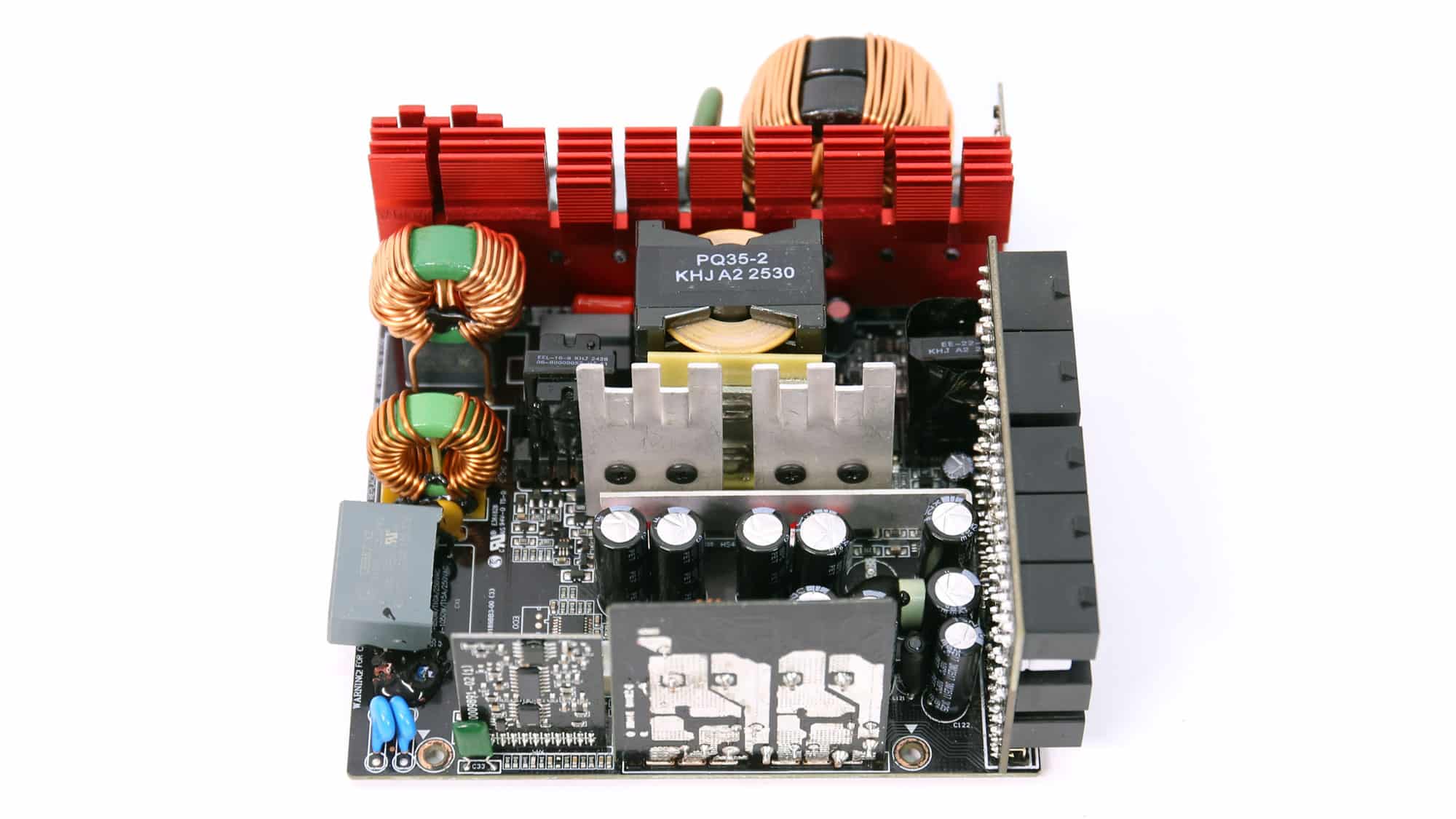
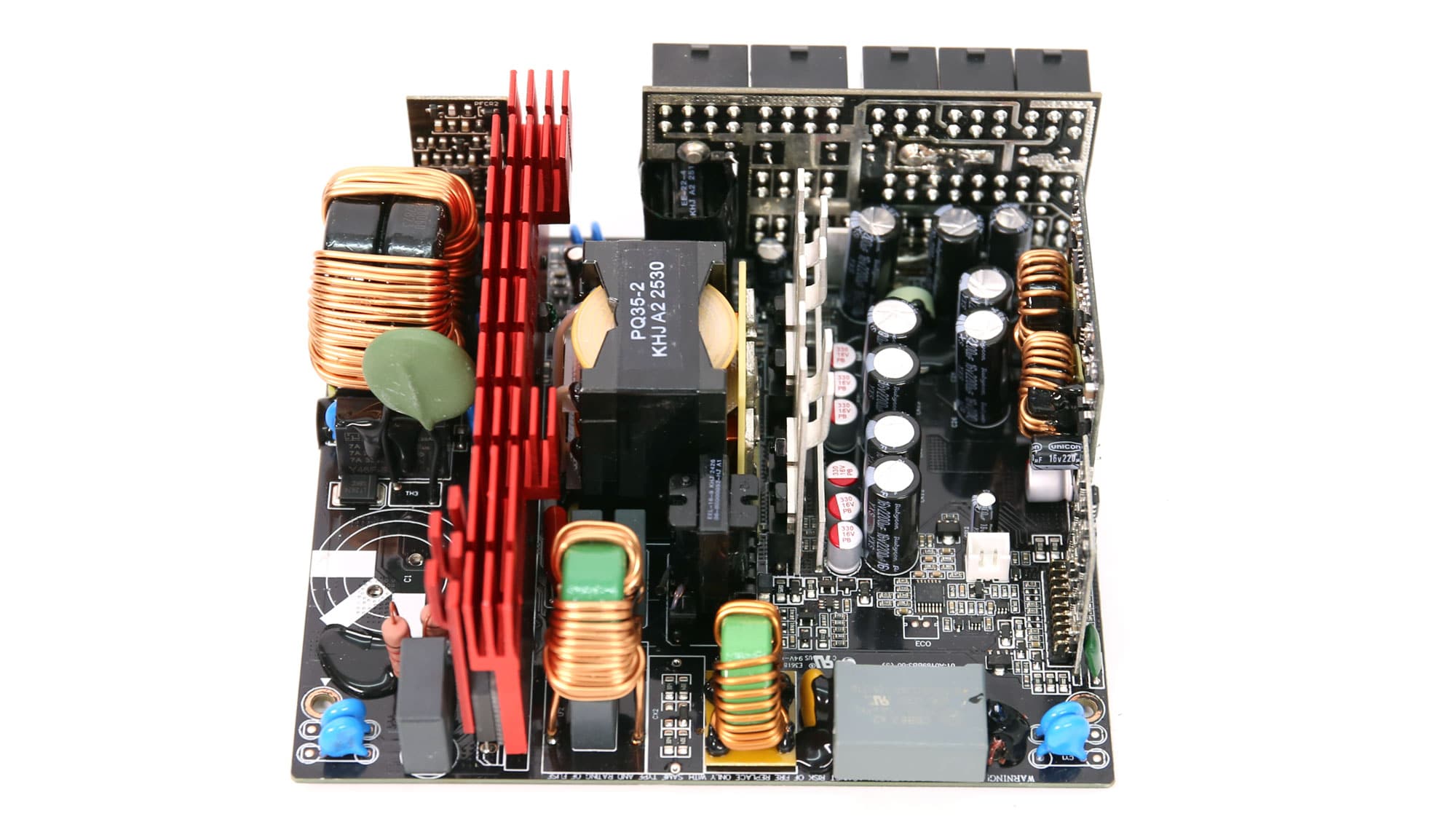
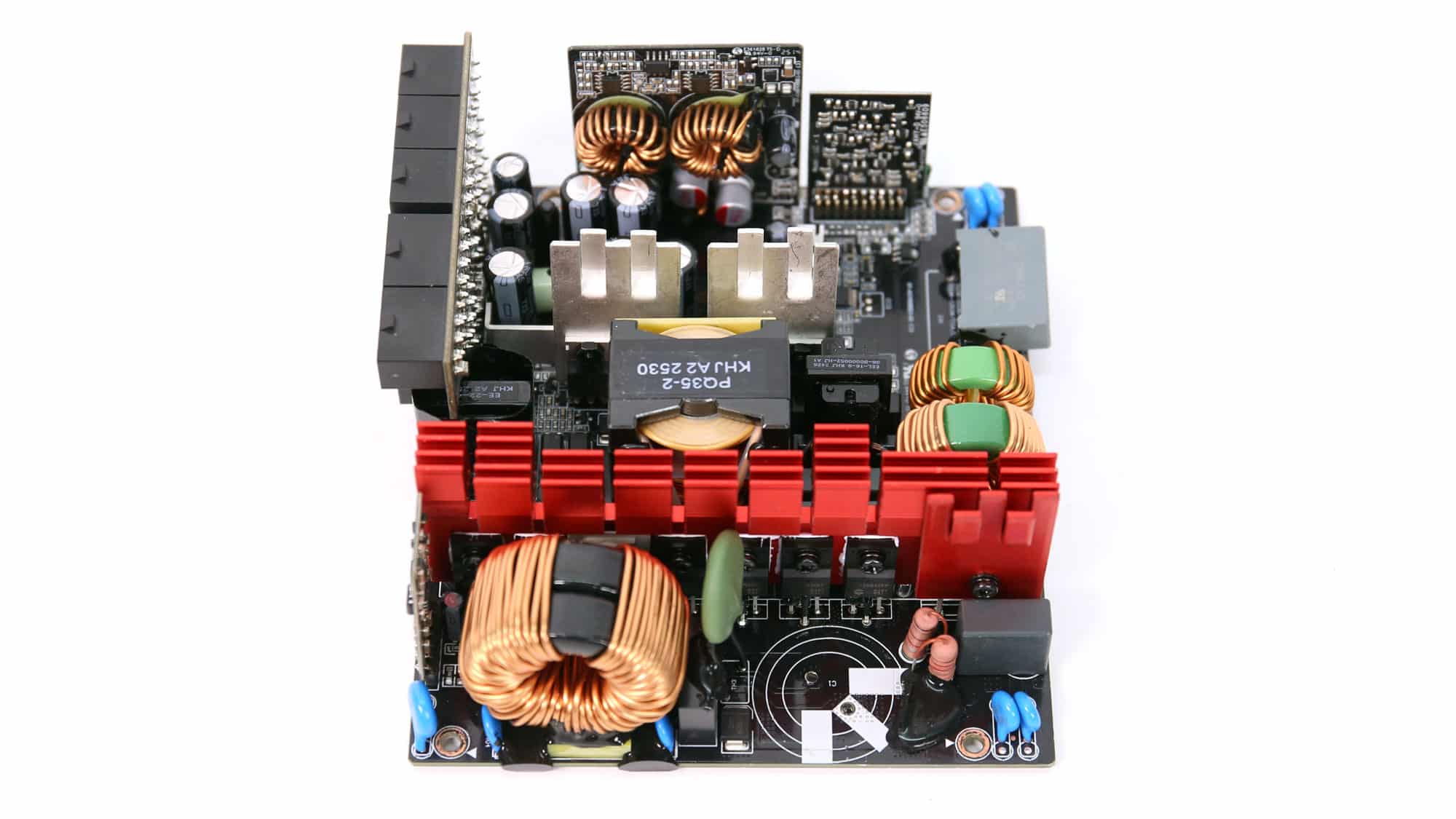

RSY designed and built this PSU for Enermax. It uses a contemporary design with Texas Instruments controllers instead of the typical Champion controllers. On the primary side, we find an APFC converter, a full-bridge topology, and an LLC resonant converter. The secondary side employs synchronous rectification for the 12V rail and DC-DC converters for the minor rails. The colored heatsink of the primary side makes a nice impression, while the secondary side uses smaller, non-colored heatsinks. The build quality is decent overall, with good caps used on the primary and secondary sides. The FETs on the primary side and on the 12V rail are not from well-known manufacturers (e.g., Infineon, Vishay). Still, for Enermax to provide an extended warranty to this platform, they must be reliable enough. Lastly, the fan is by Globe Fan. While this brand definitely offers better fans than Yate Loon, its products are not as good as Hong Hua’s. But cost and availability also play a role in the fan selection (and not only).
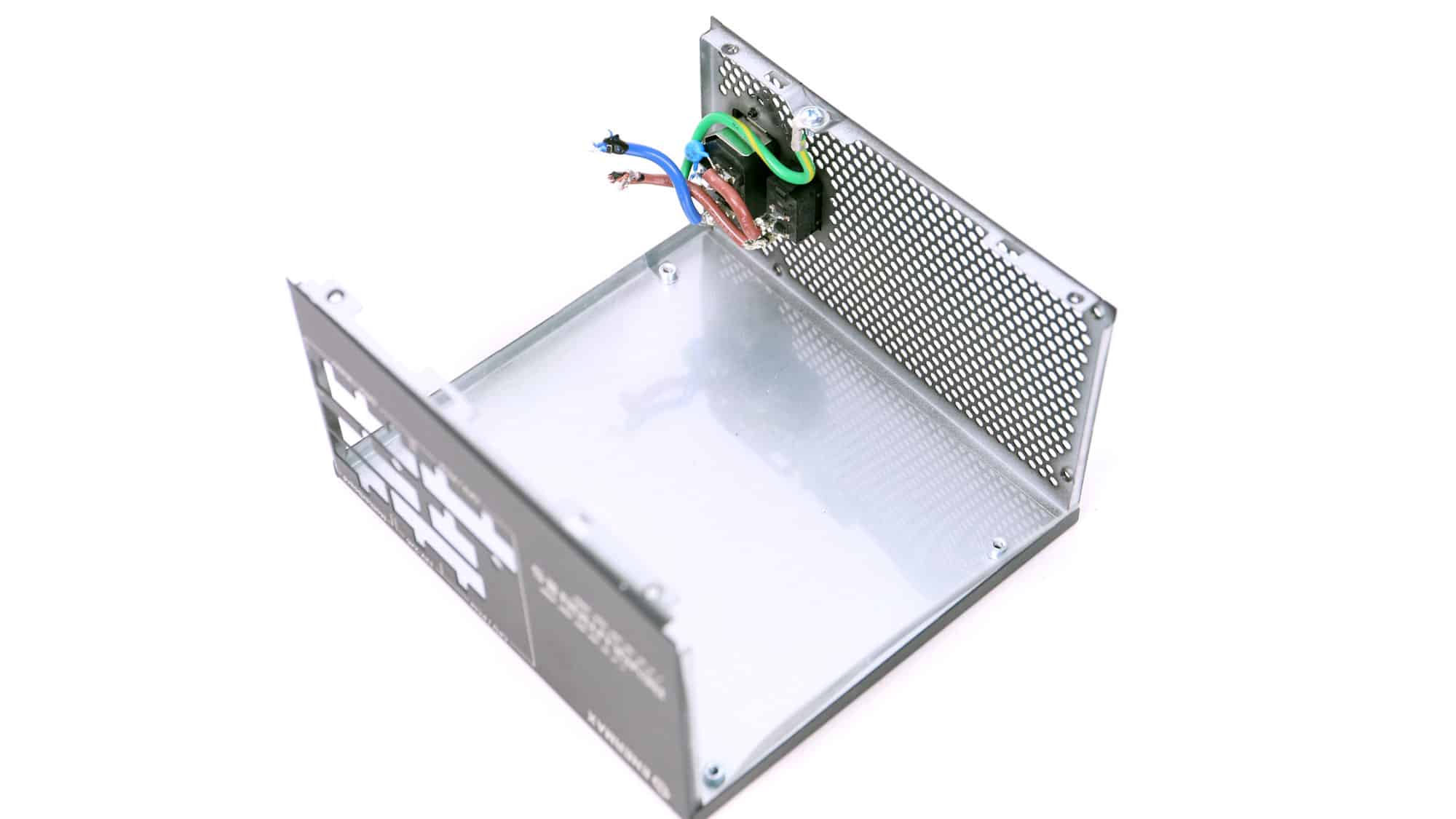
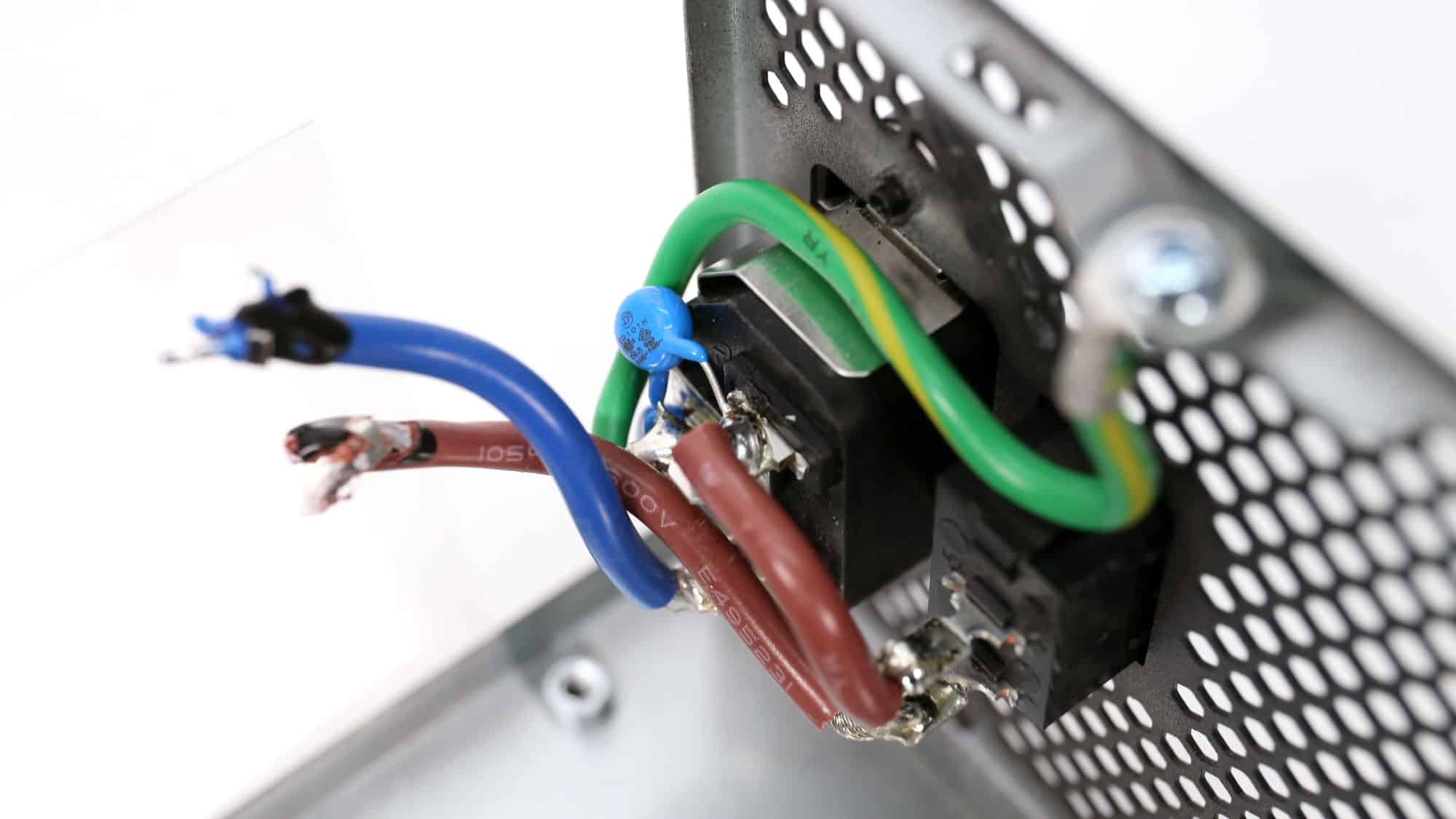
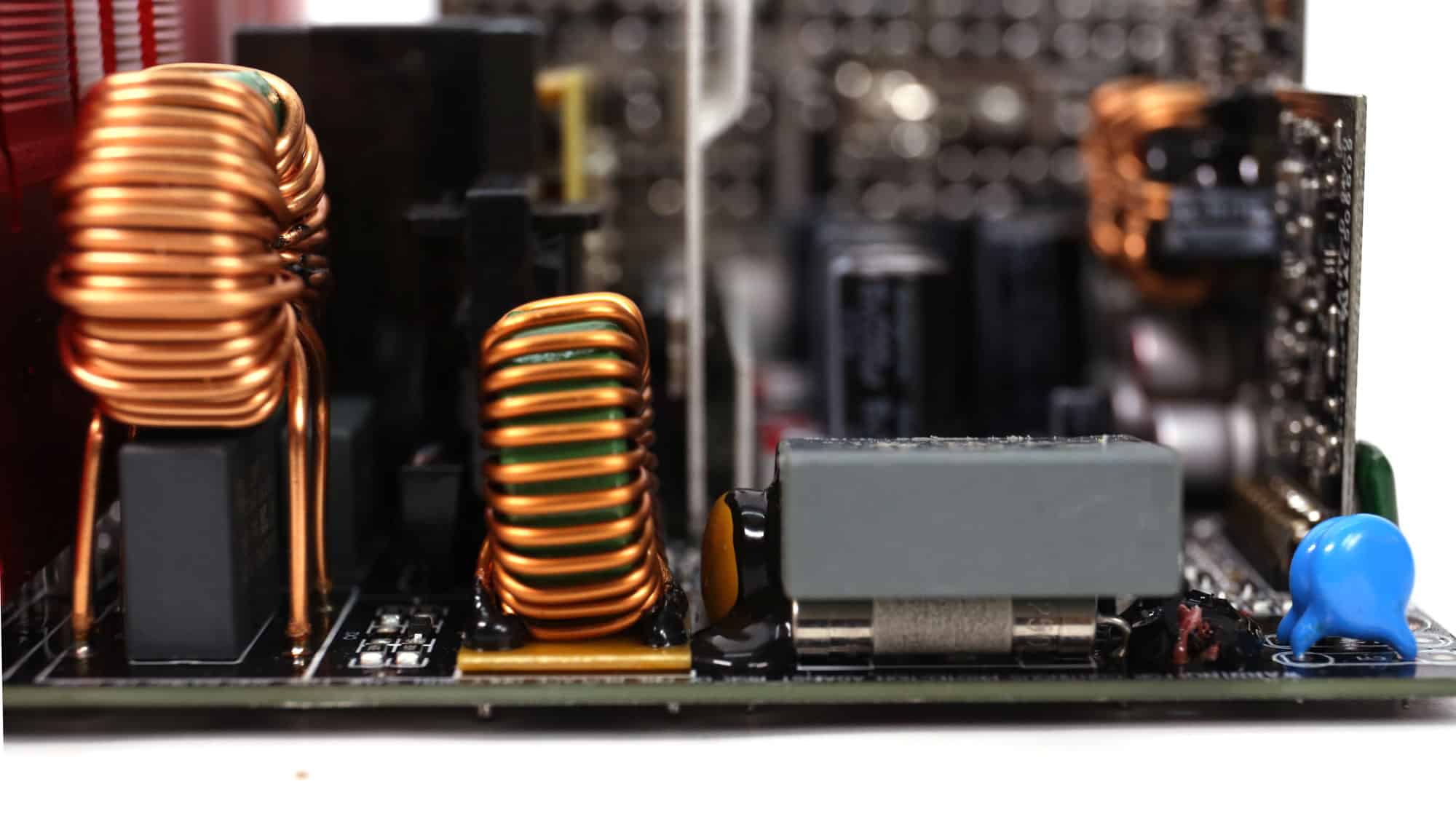
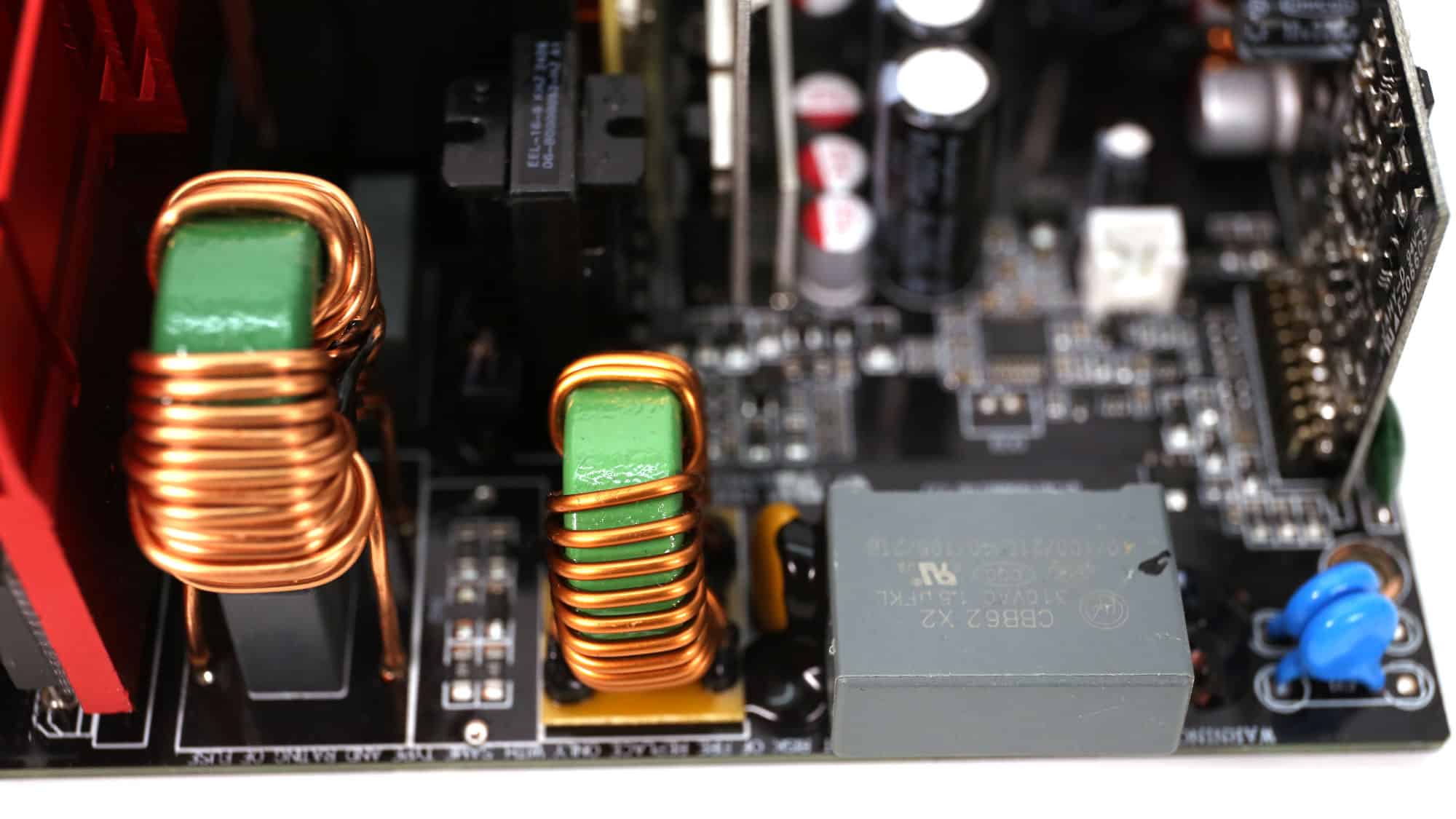
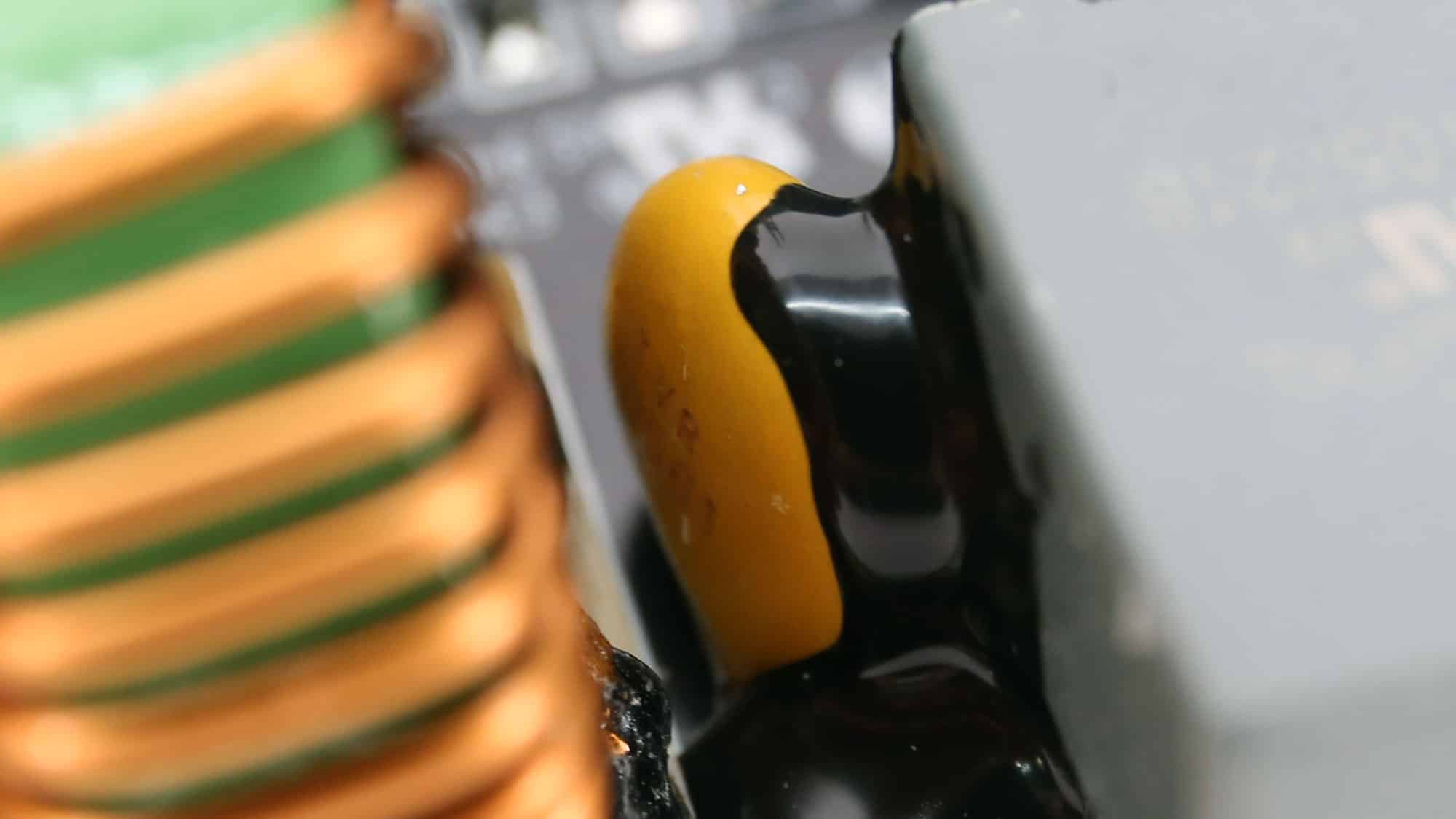
The transient filtering stage contains all the necessary components to block both incoming and outgoing EMI emissions. Typically, it starts at the AC receptacle and continues on the main PCB.
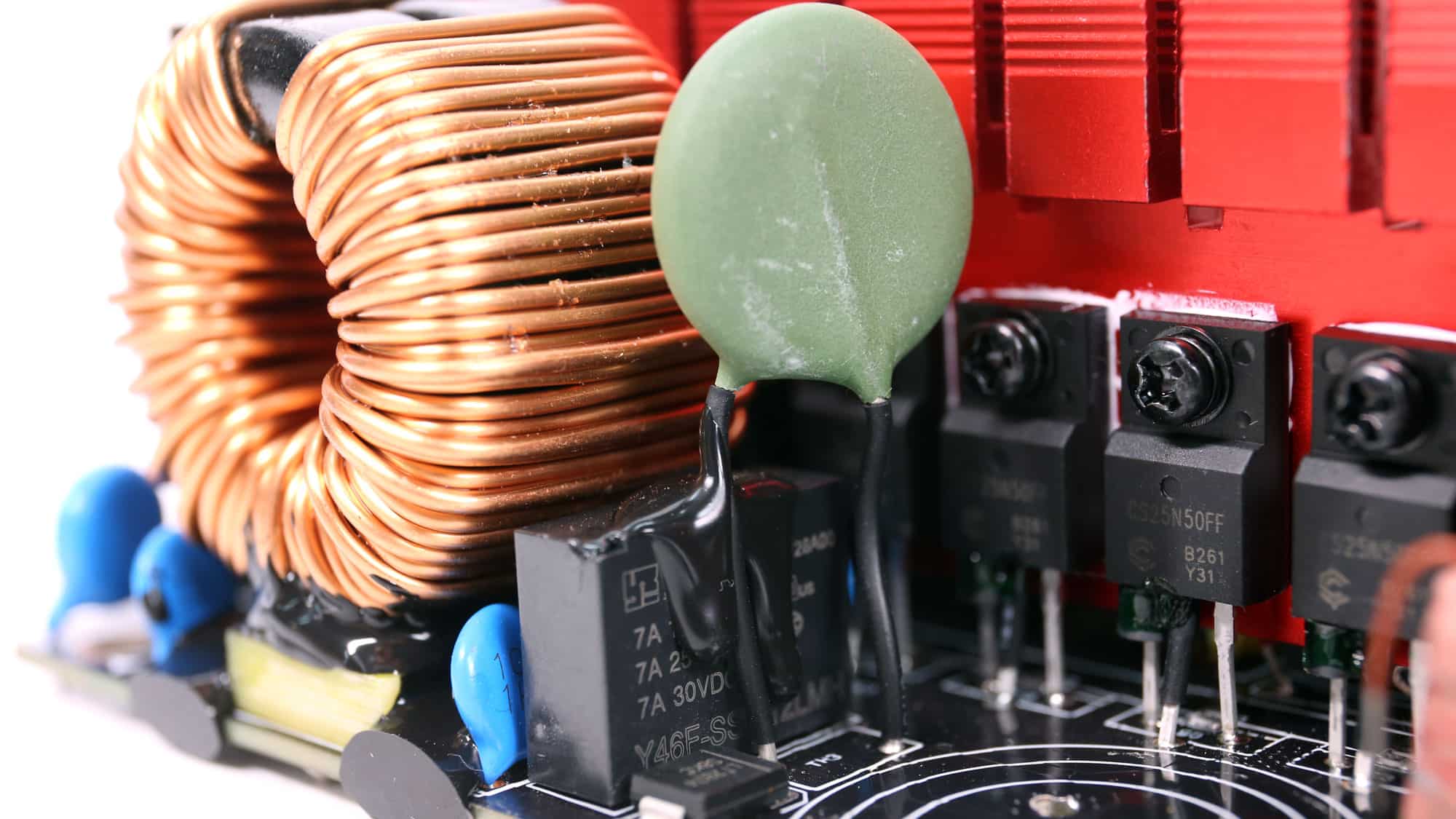
There is an MOV to protect from voltage surges and an NTC thermistor with a resistance of 15 ohms. Moreover, a bypass relay supports the NTC thermistor.
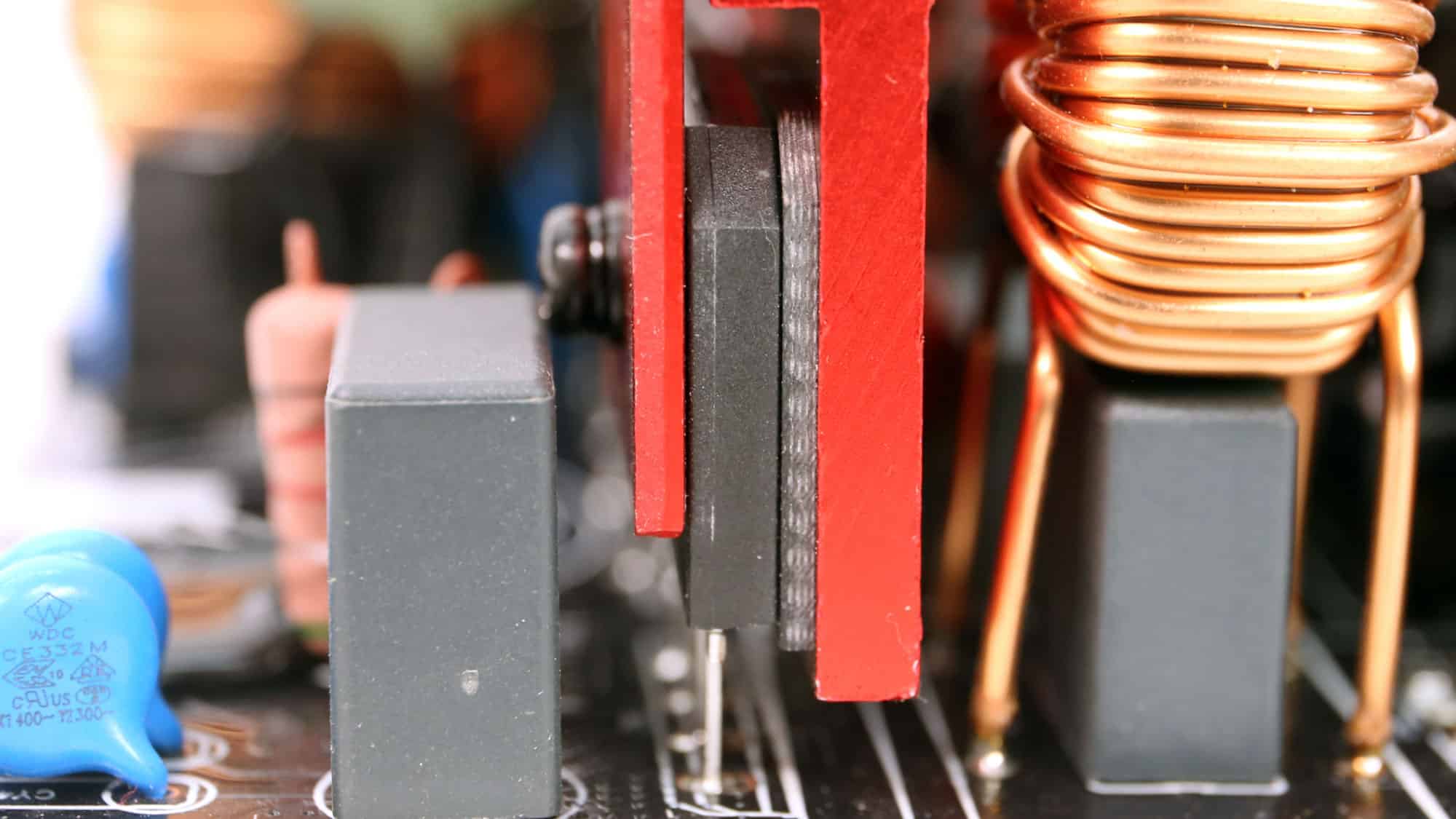
One bridge rectifier is used in this design. Typically, we split the current in half to reduce power losses, but that is not the case here.
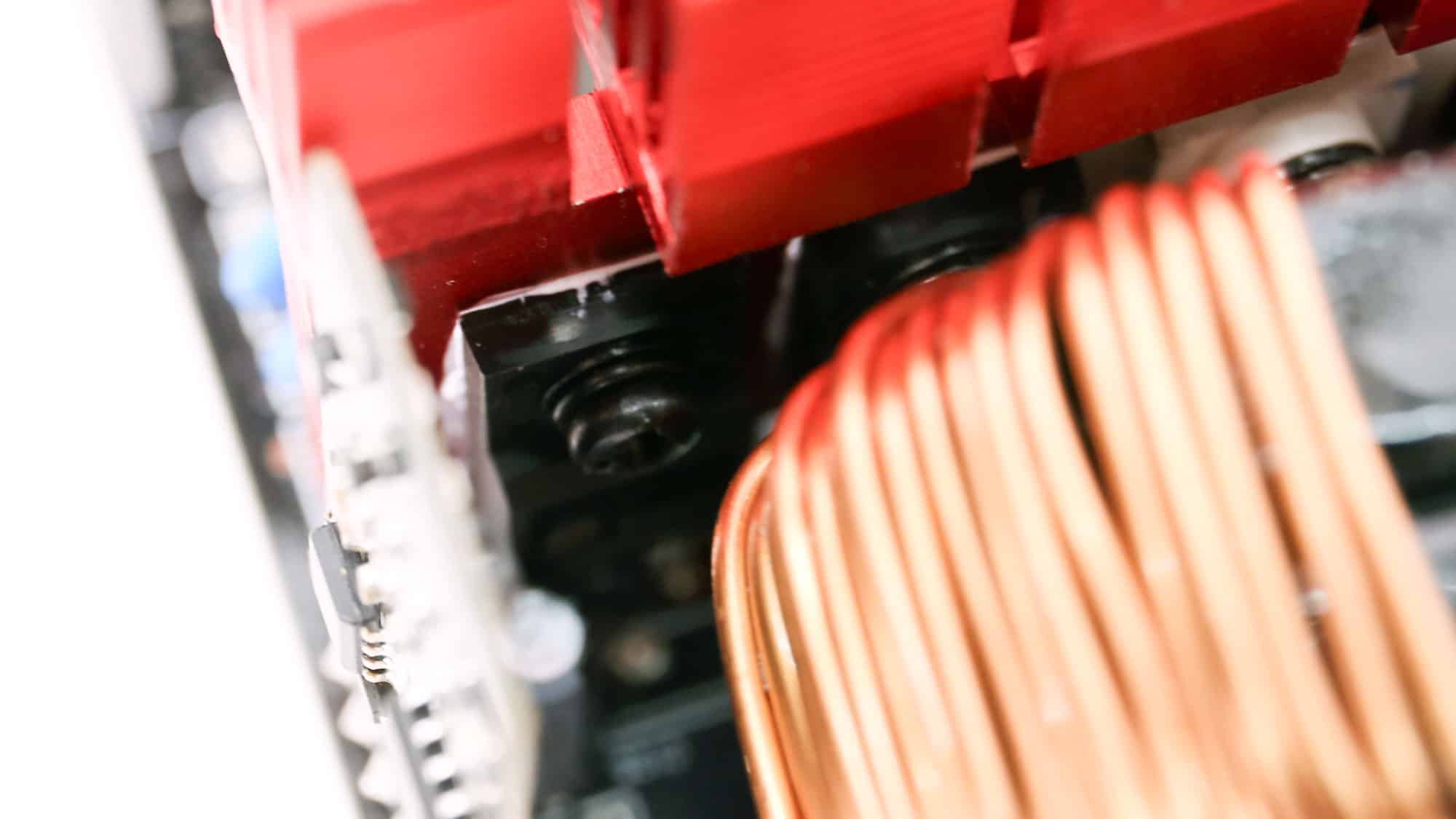

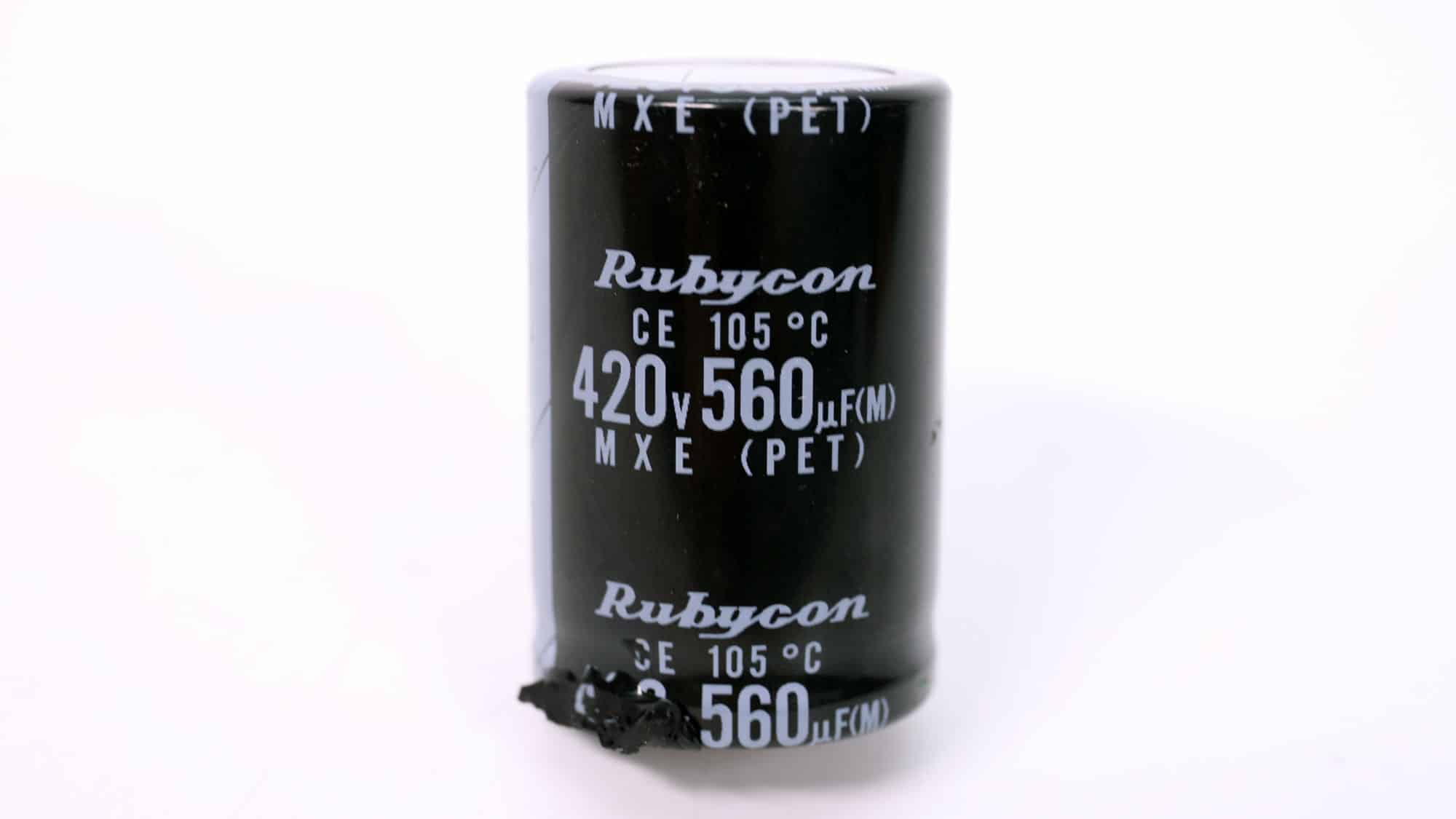
The APFC converter uses two Maple Semi SLF60R090E7 FETs and a single Diodes Incorporated DSC10065 boost diode. Rubycon manufactures the bulk capacitor. Its capacity is 560 μF, and it is rated for 2,000 hours at 105 °C. The voltage rating is 420V, which is higher than the APFC’s DC bus voltage (approximately 380-400V DC).
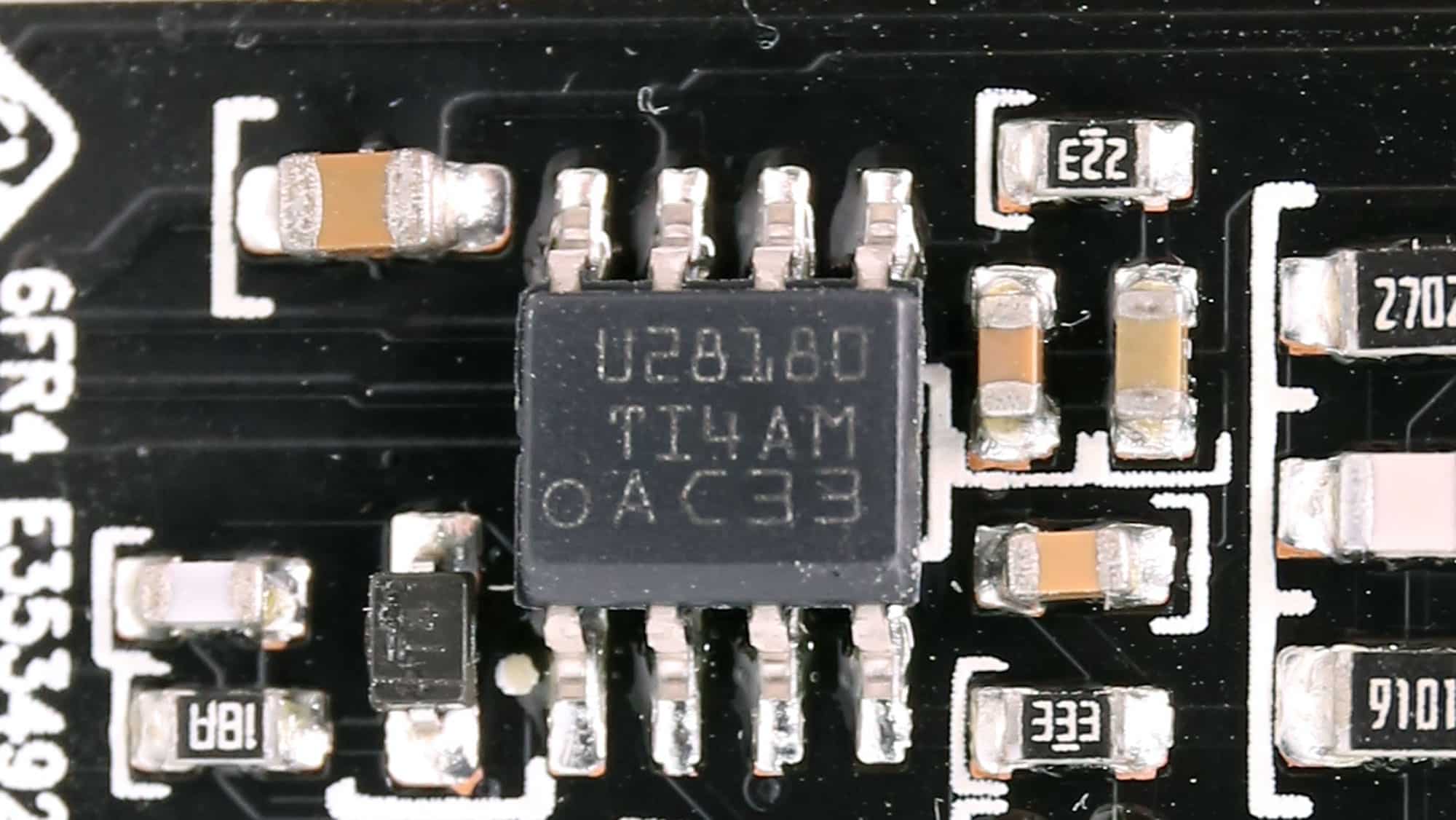
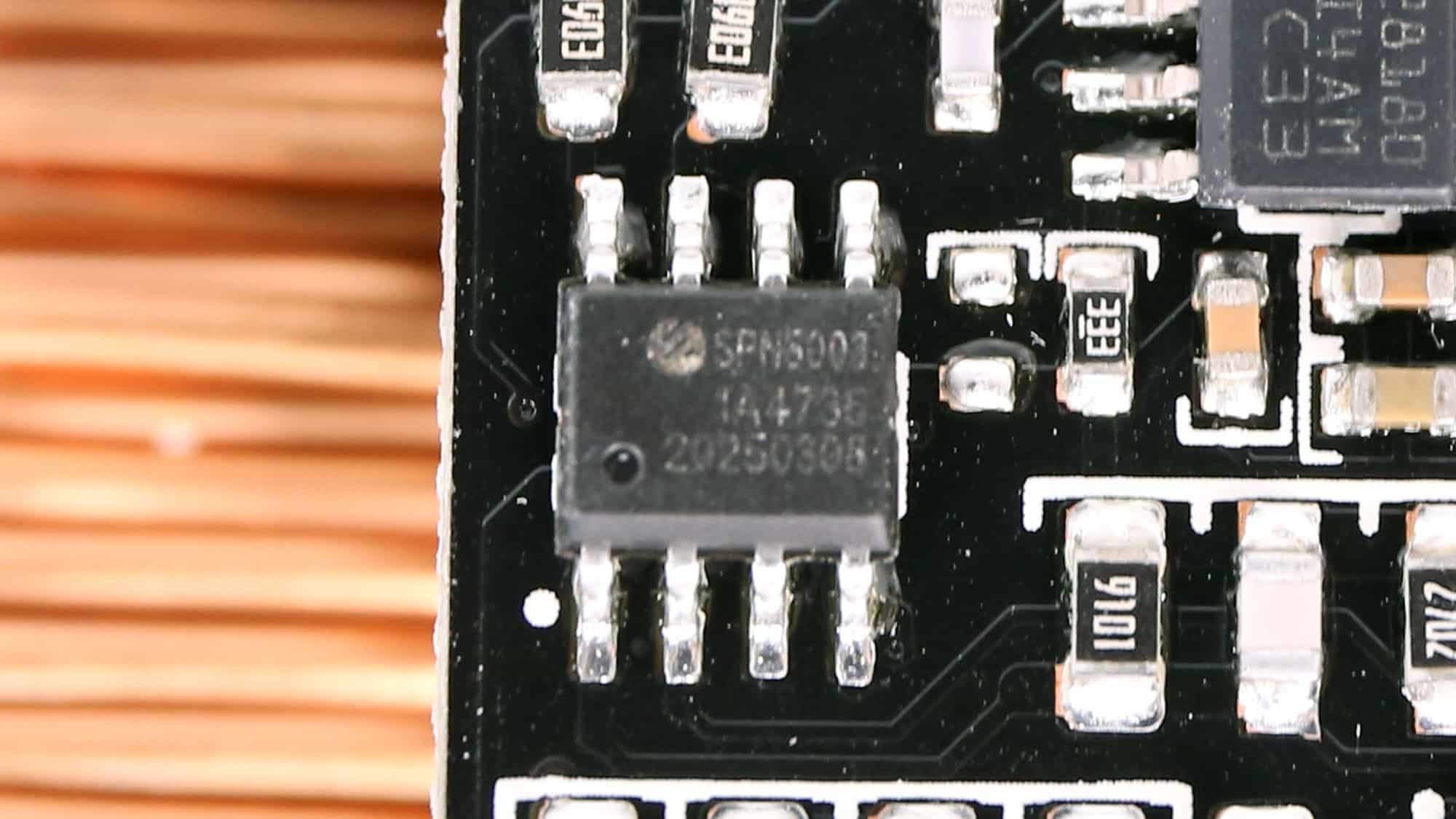
The APFC controller is a Texas Instruments UCC28180. It is supported by a Sync Power SPN5003, which lowers the PSU’s vampire power by isolating the APFC converter when it is not required.
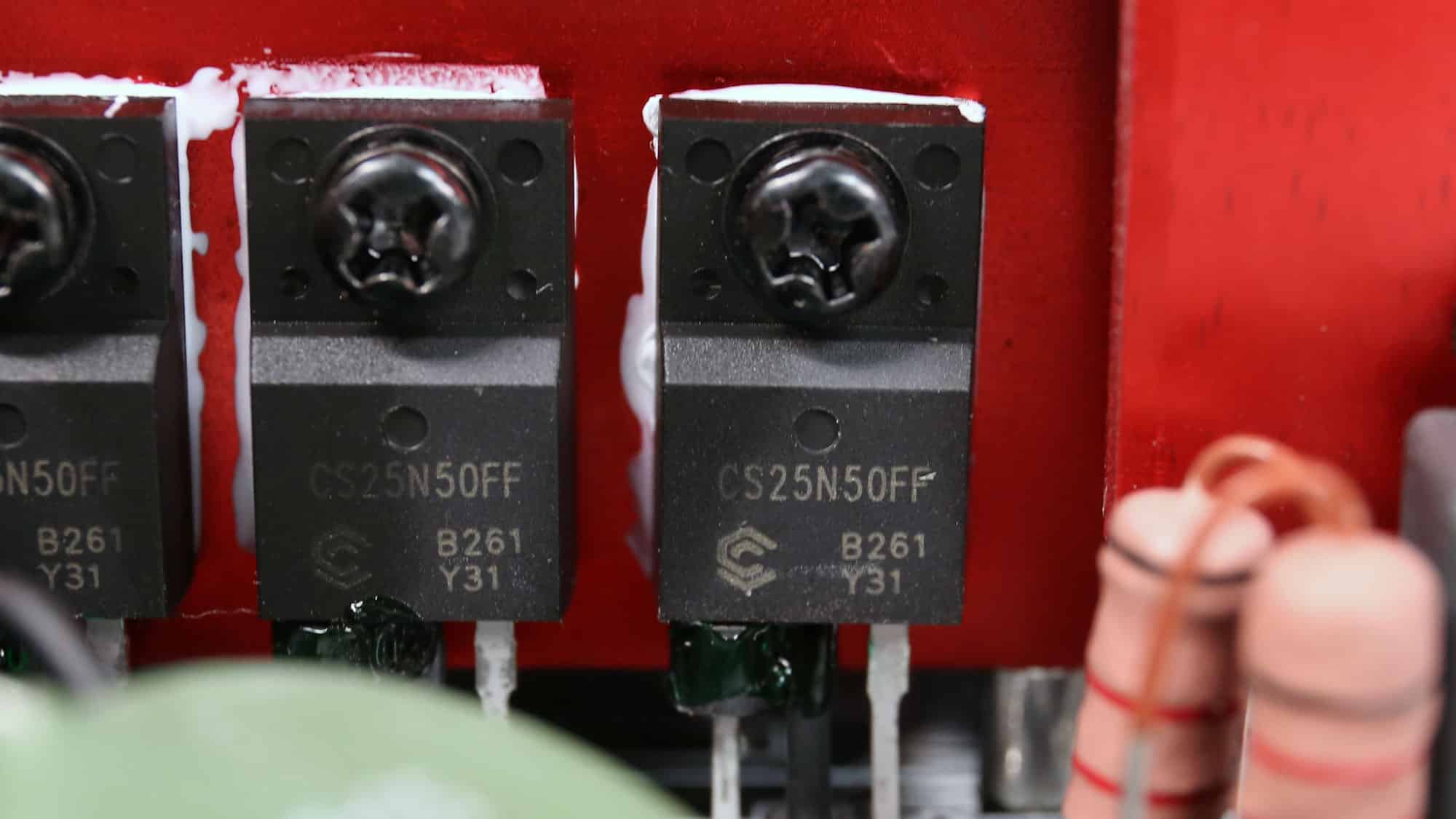
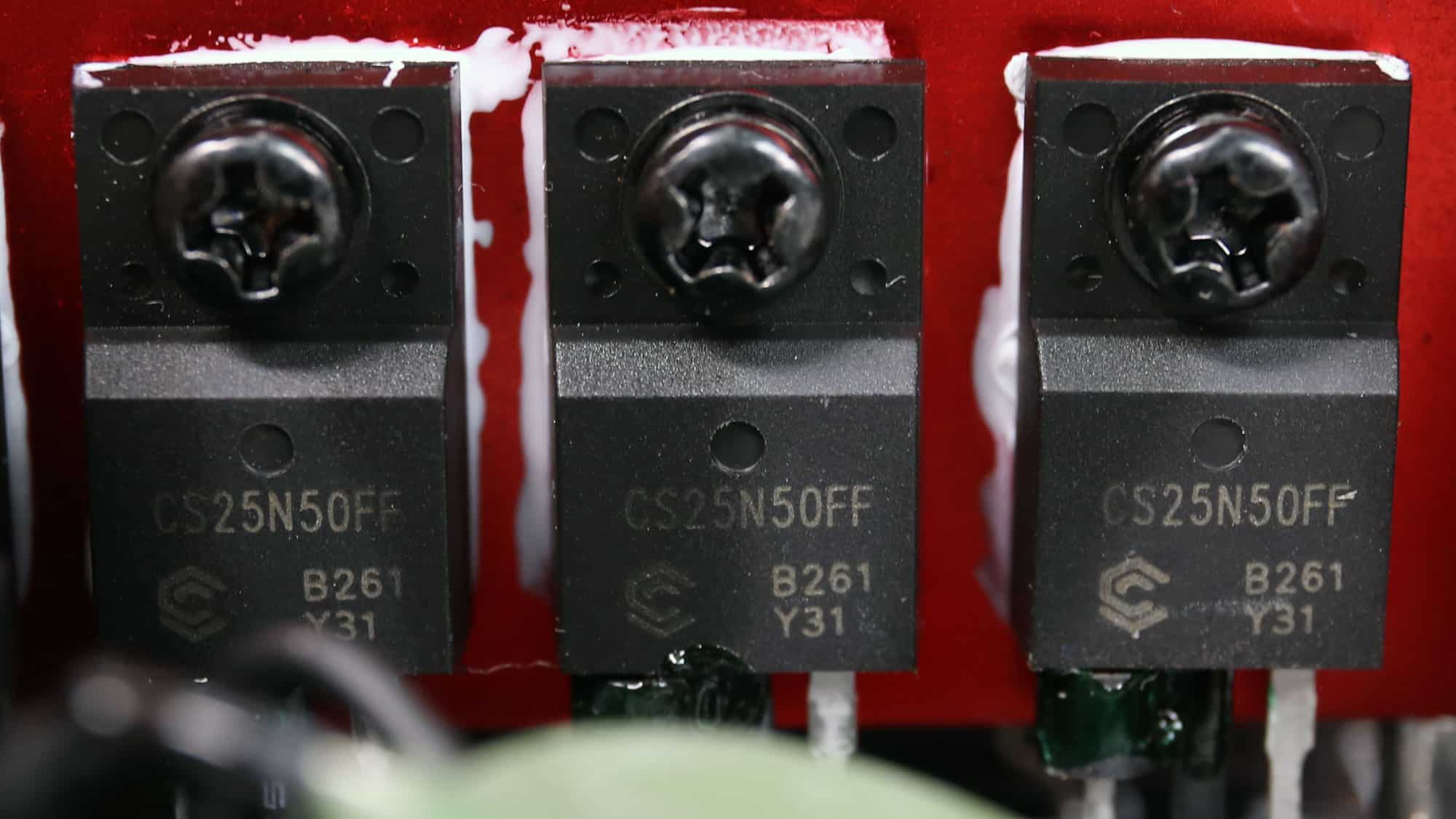
Four Convert CS25N50FF primary-switching FETs are used in a full-bridge topology, and an LLC resonant converter is employed for enhanced efficiency.
The LLC resonant controller is a Texas Instruments UCC25600.
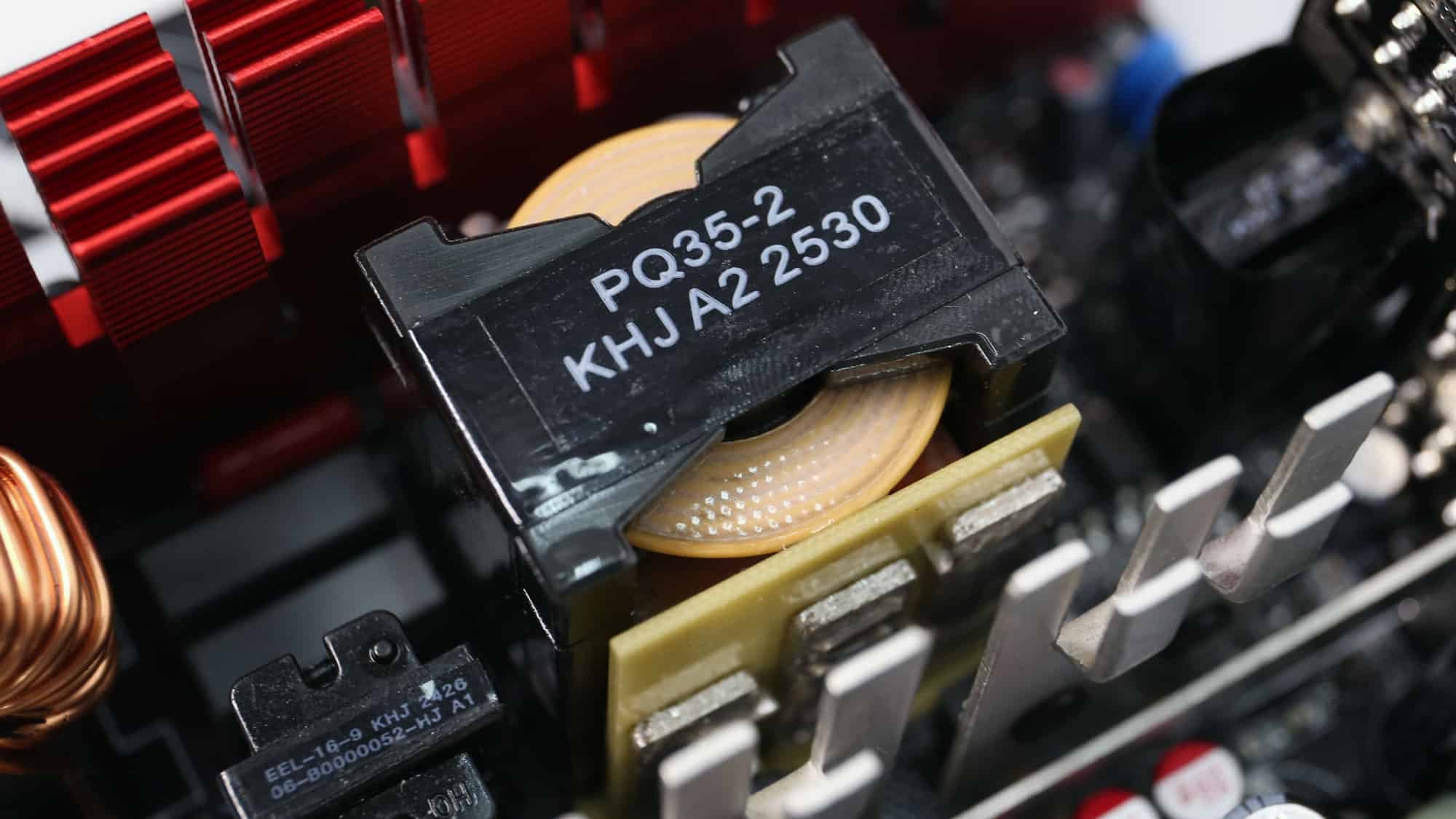
The PSU’s main transformer. One of its main functions is to isolate the primary and secondary sides electrically.
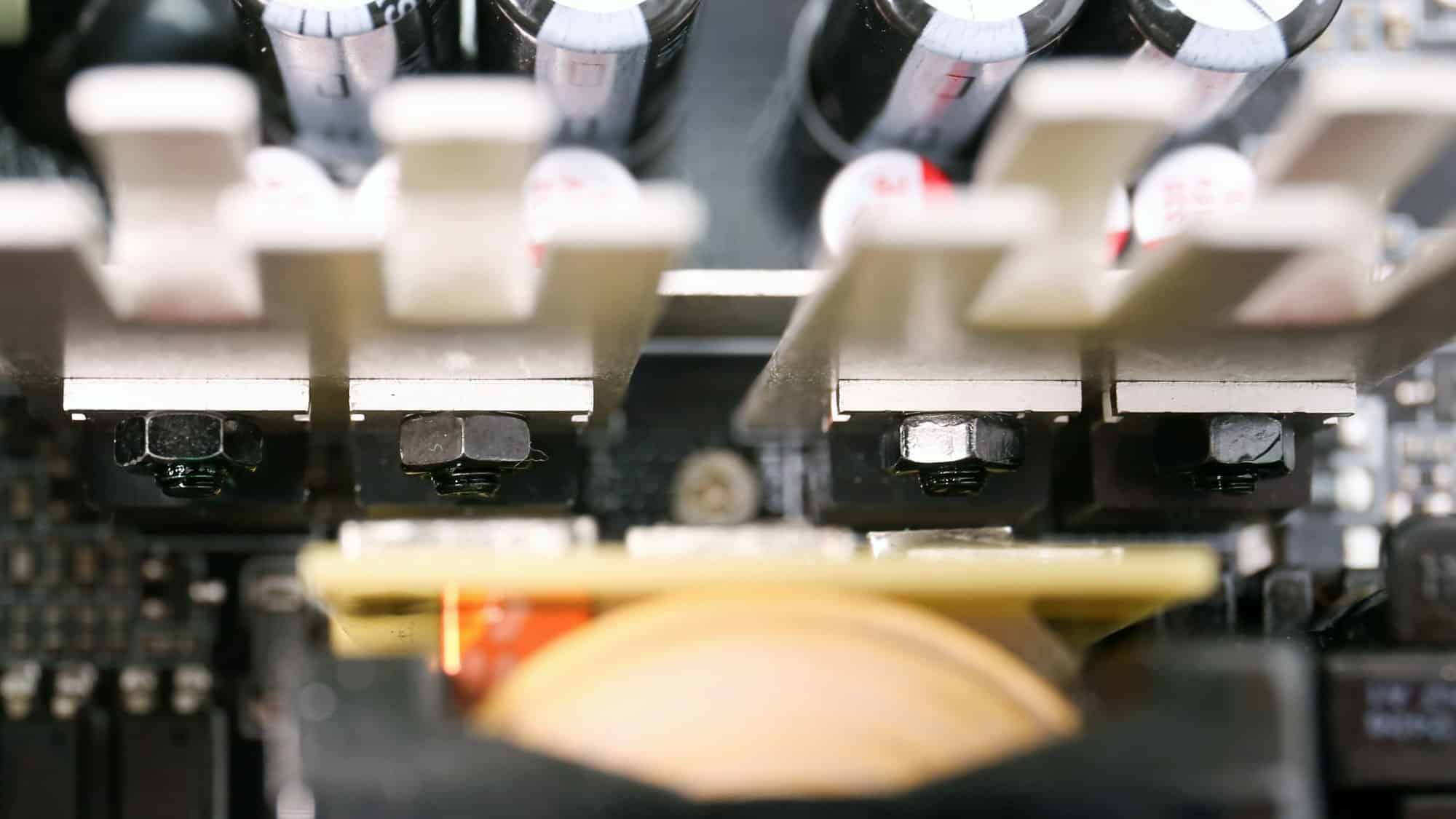
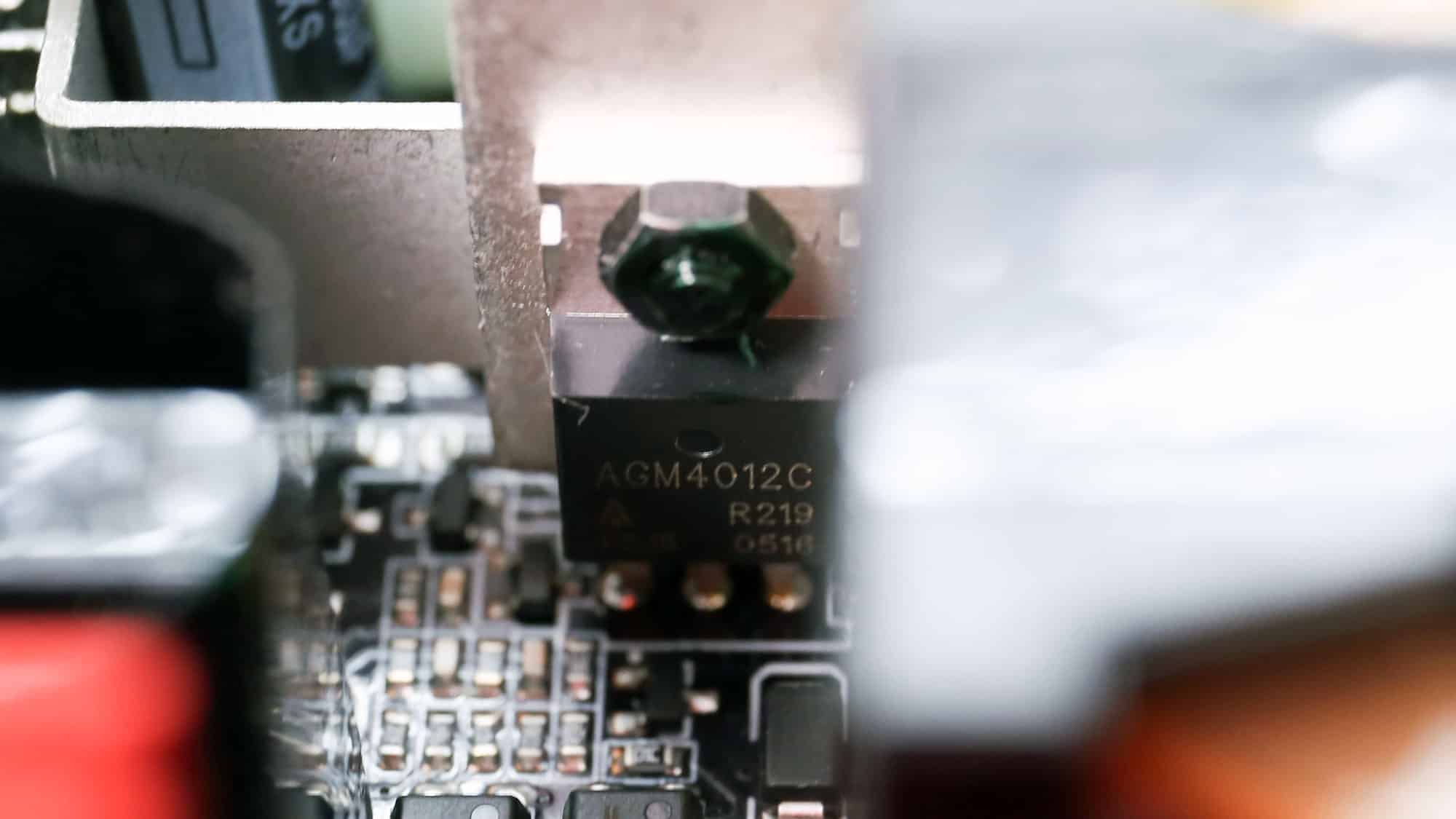
Four AGMSemi AGM4012C FETs regulate the 12V rail.
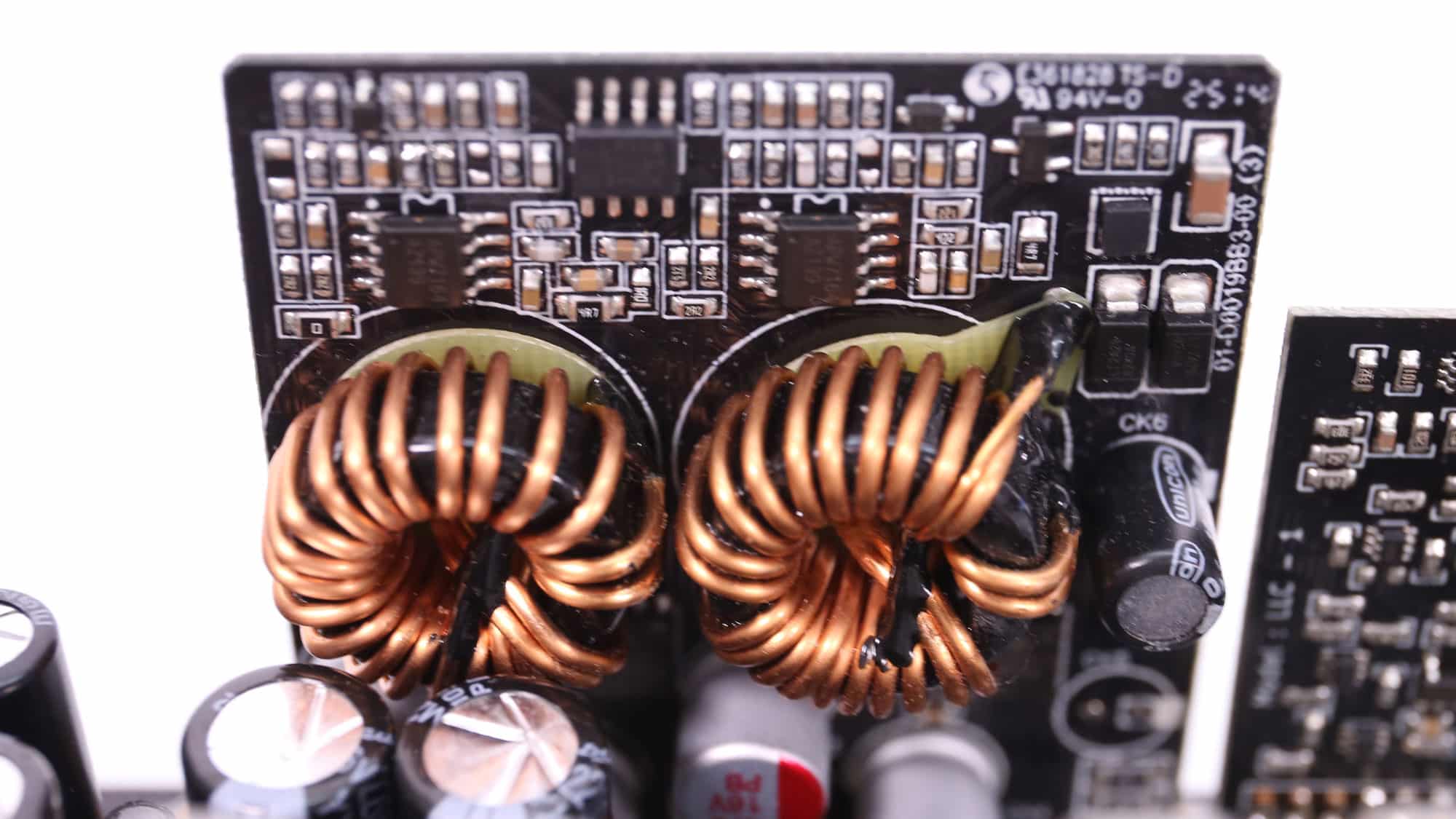
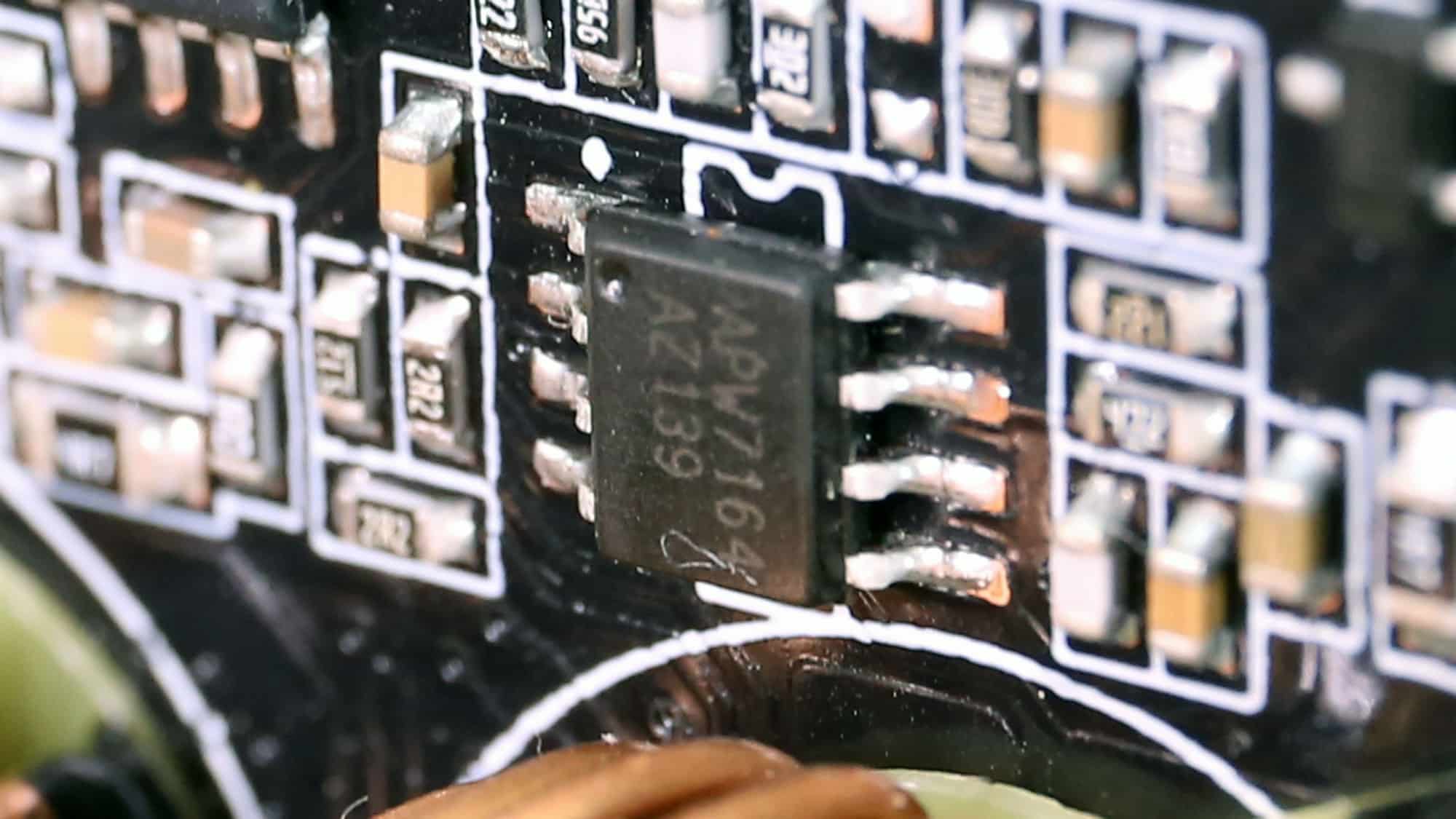
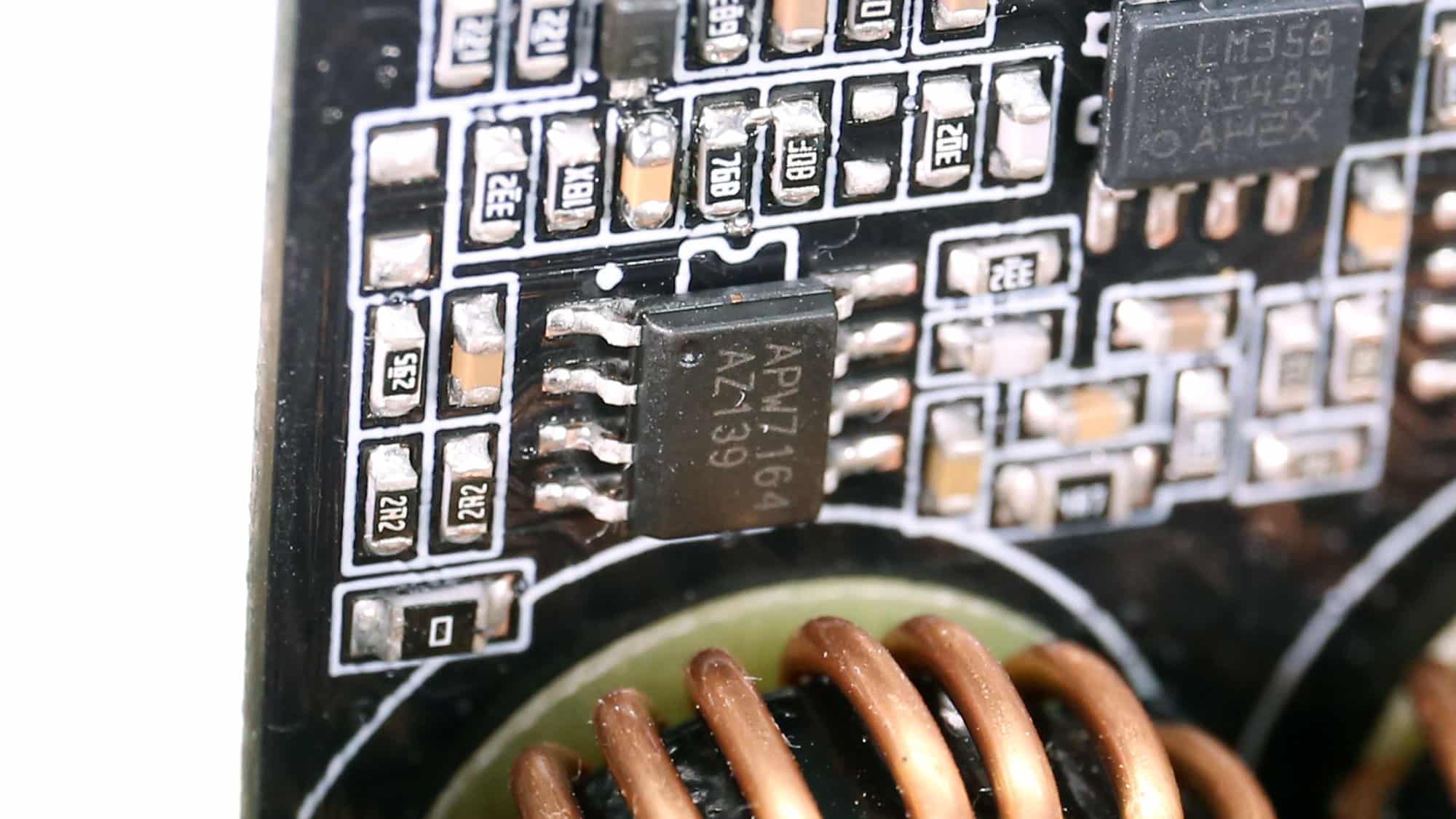
Two DC-DC converters generate the minor rails. They use four Infineon BSC0906NS FETs. The PWM controllers are a pair of Anpec APW7164.
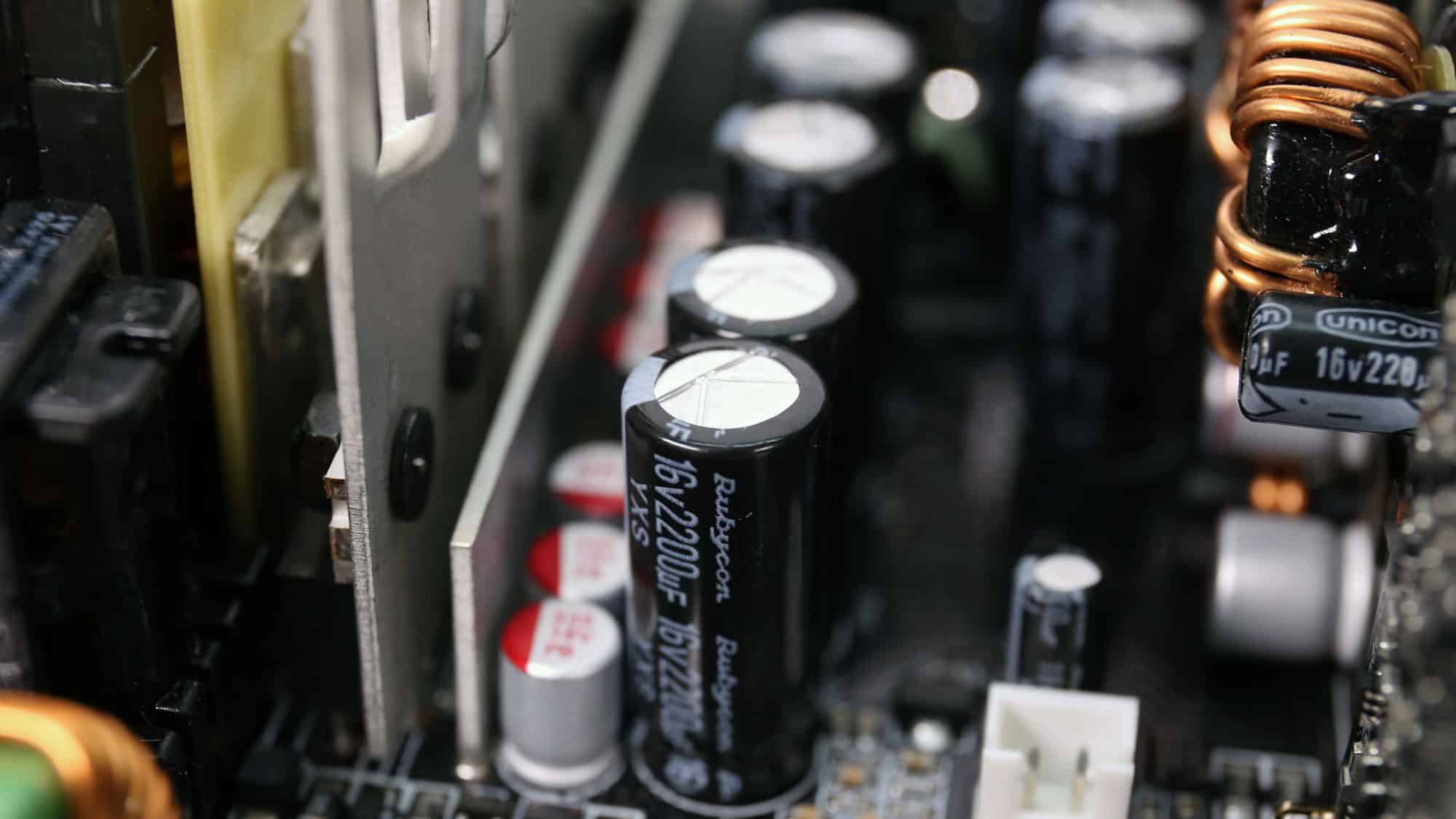
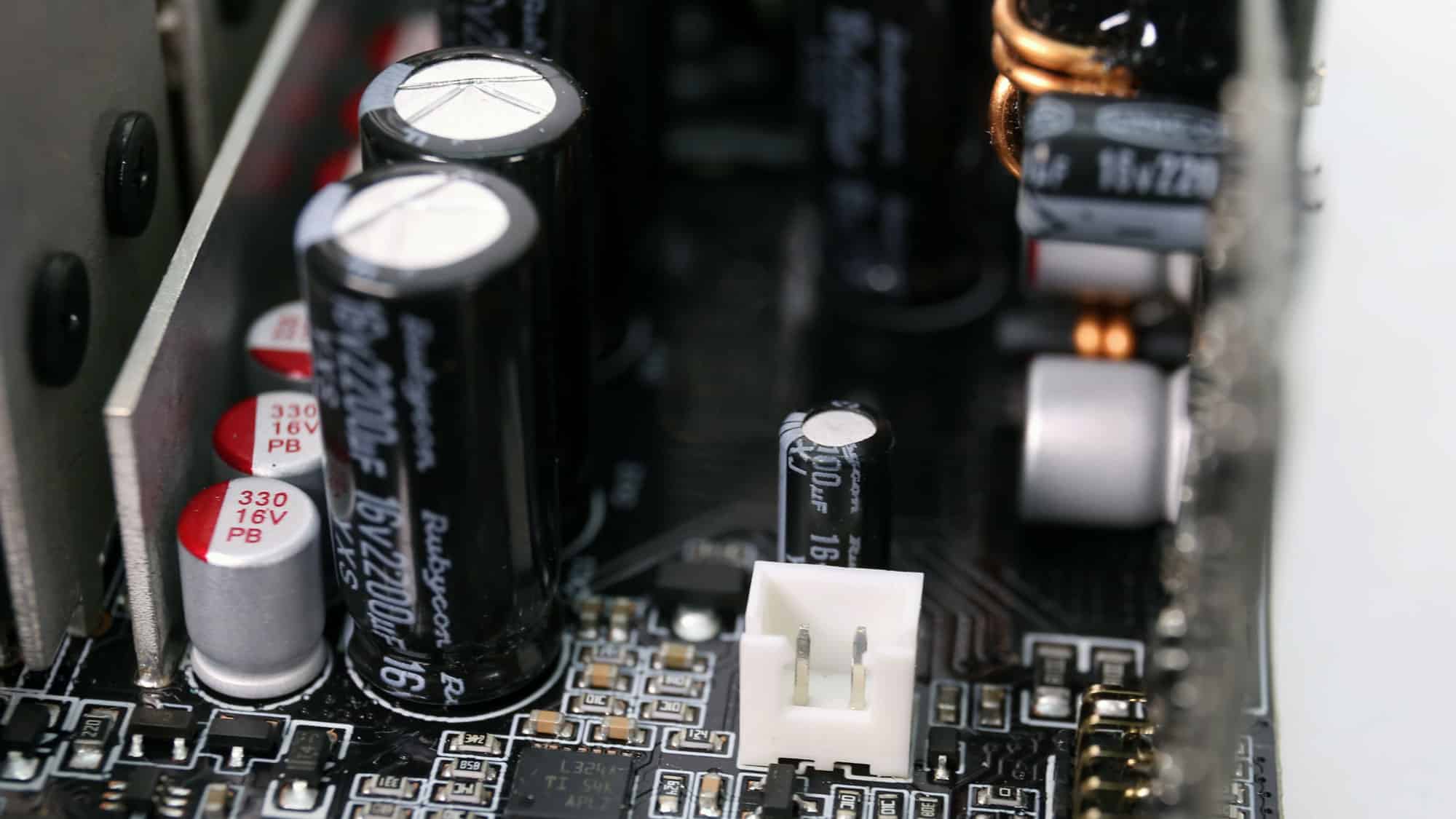
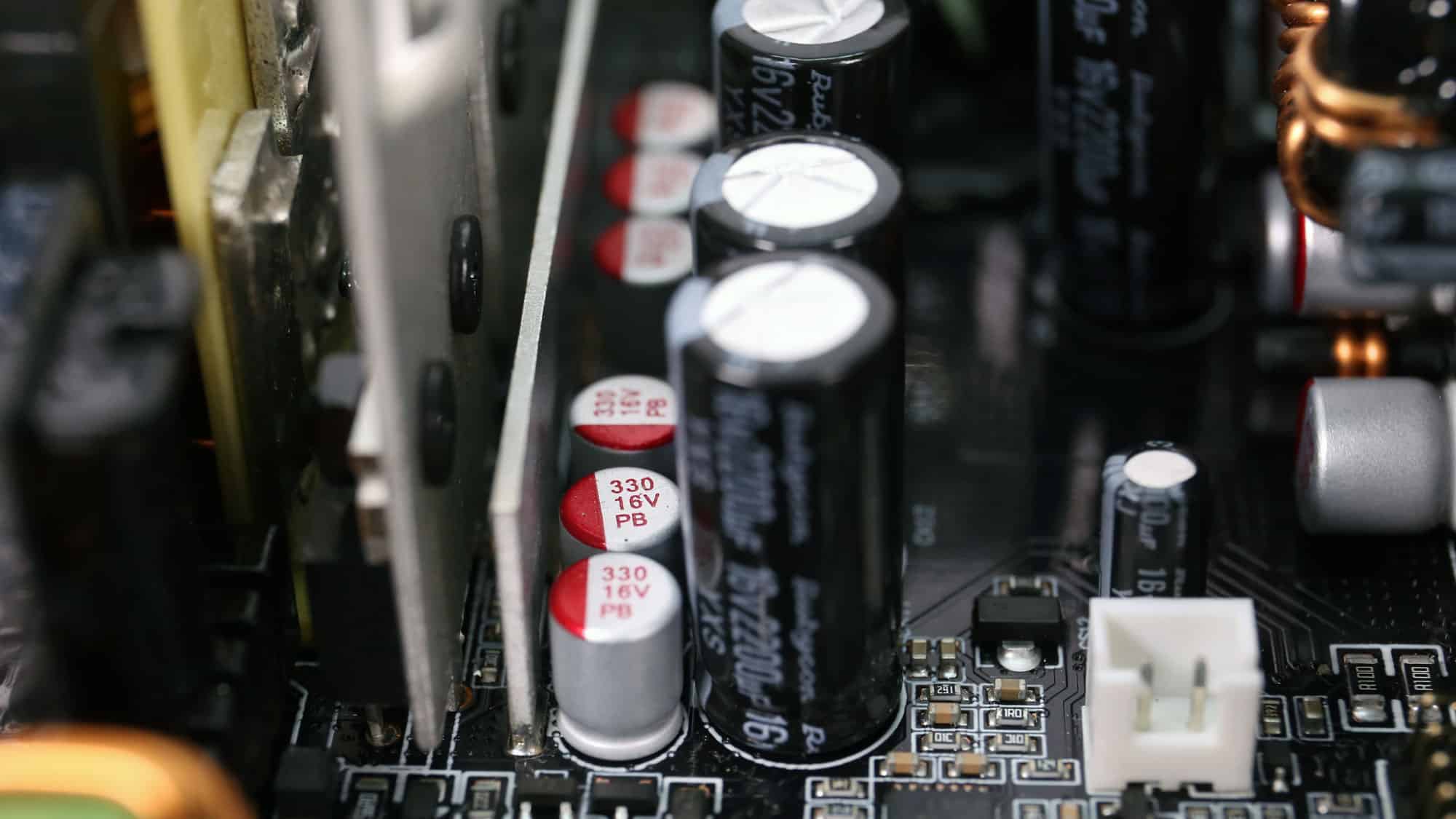
Rubycon and Unicon provide the electrolytic capacitors. Teapo and another brand make the polymer capacitors.
You can find more information about capacitor performance and other specs below:
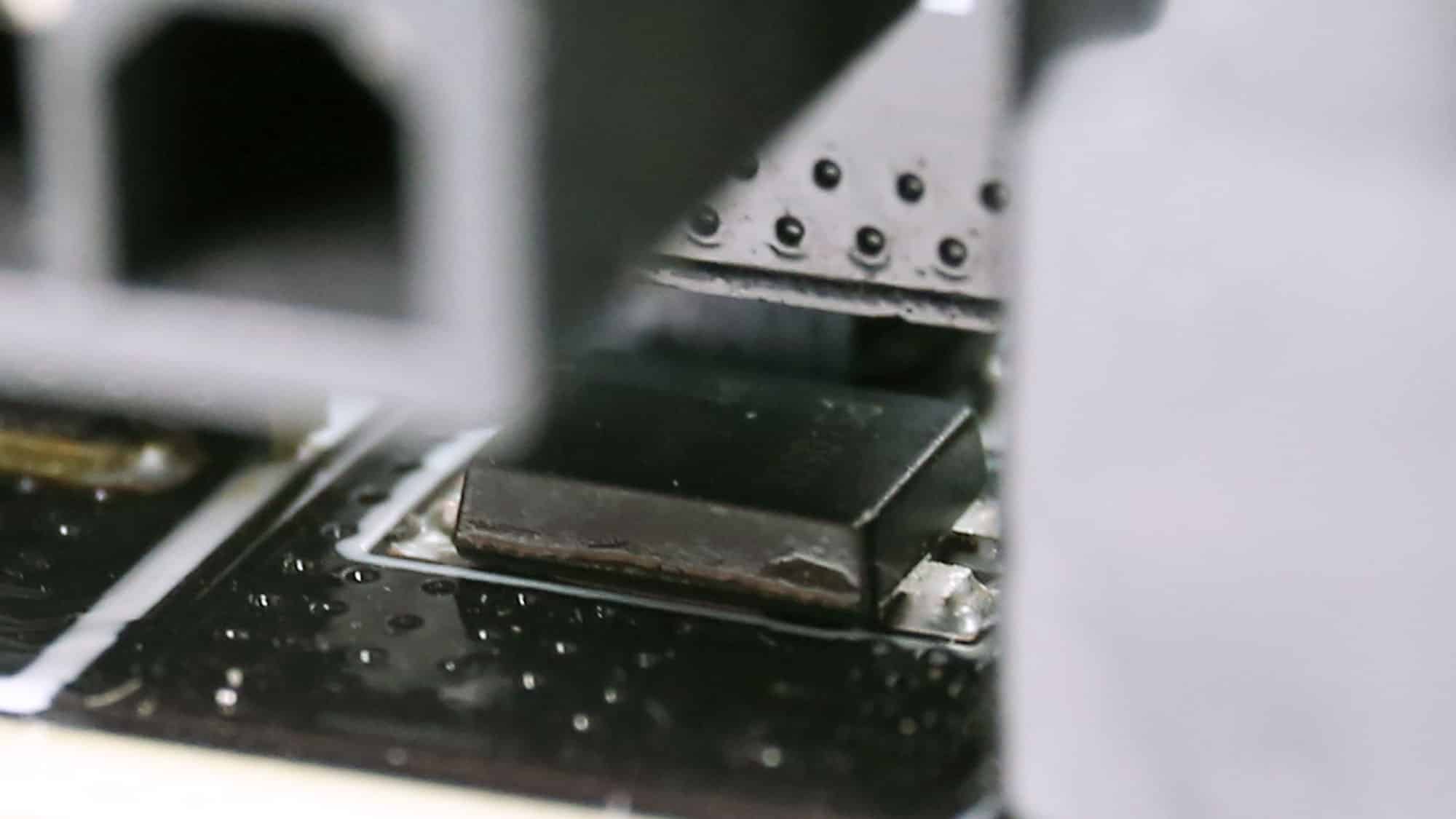
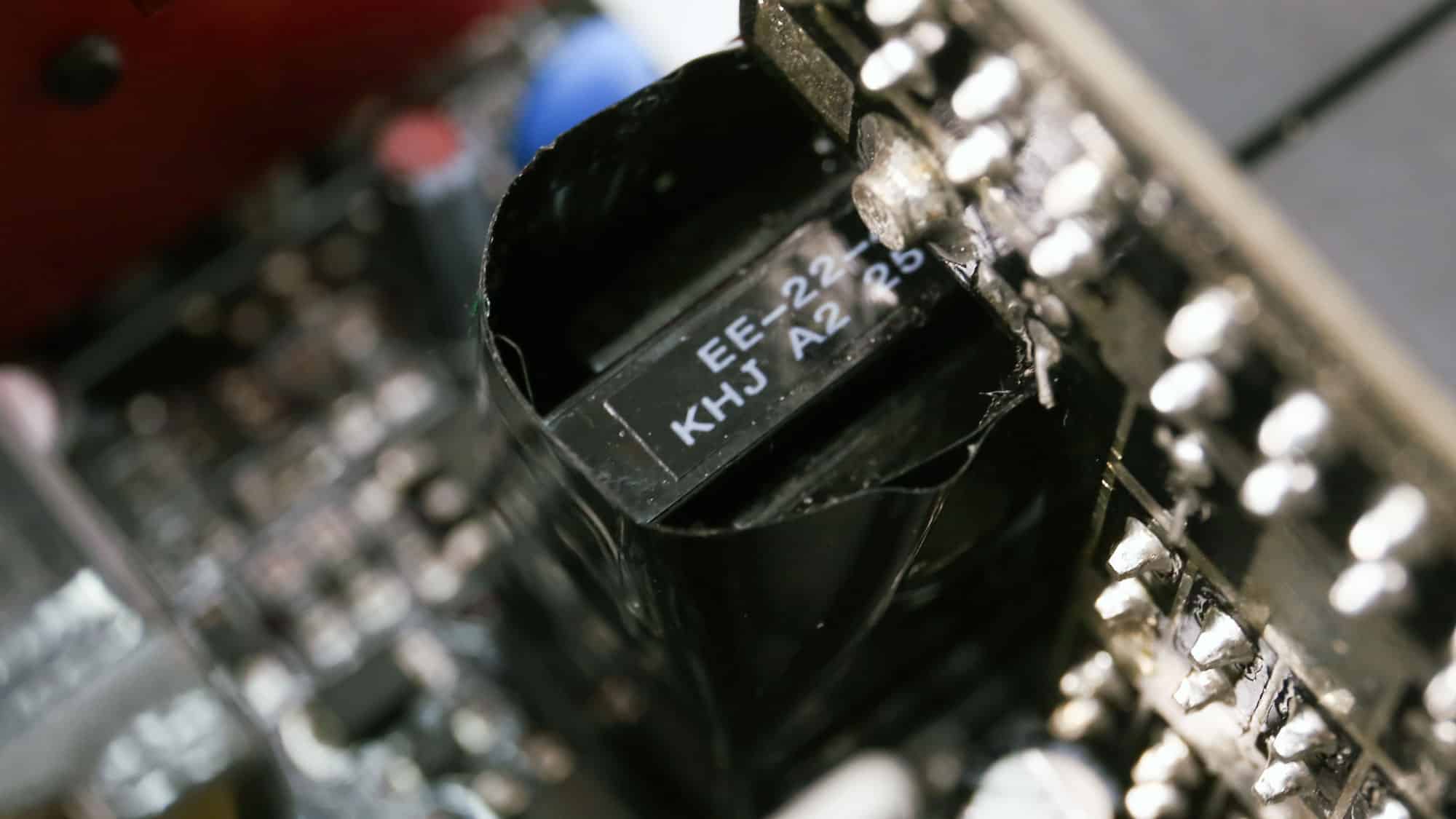
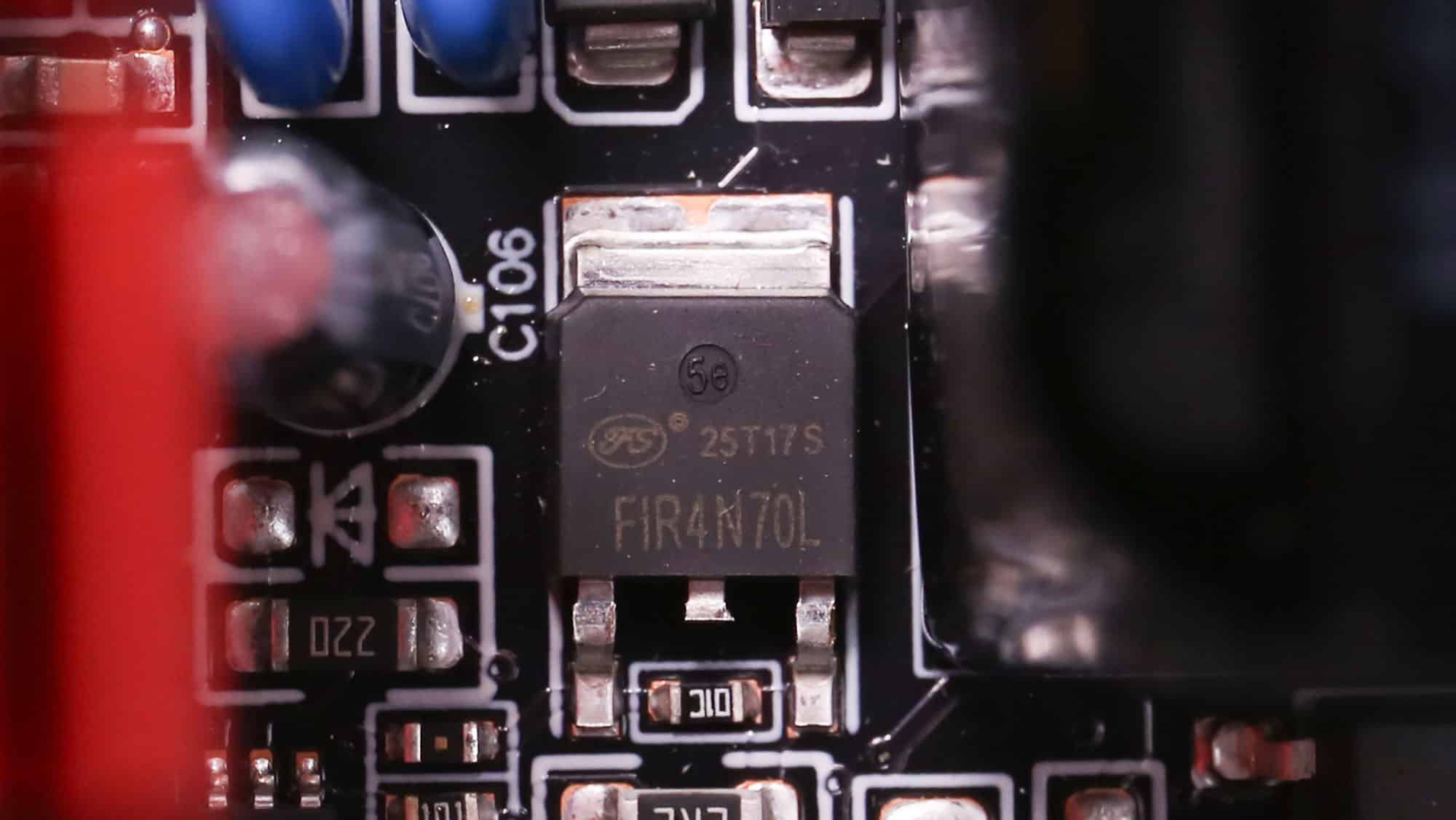
The rectifiers of the standby rail are a First Semiconductor FIR4N70L VDMOSFET and a Pingwei PS1060L
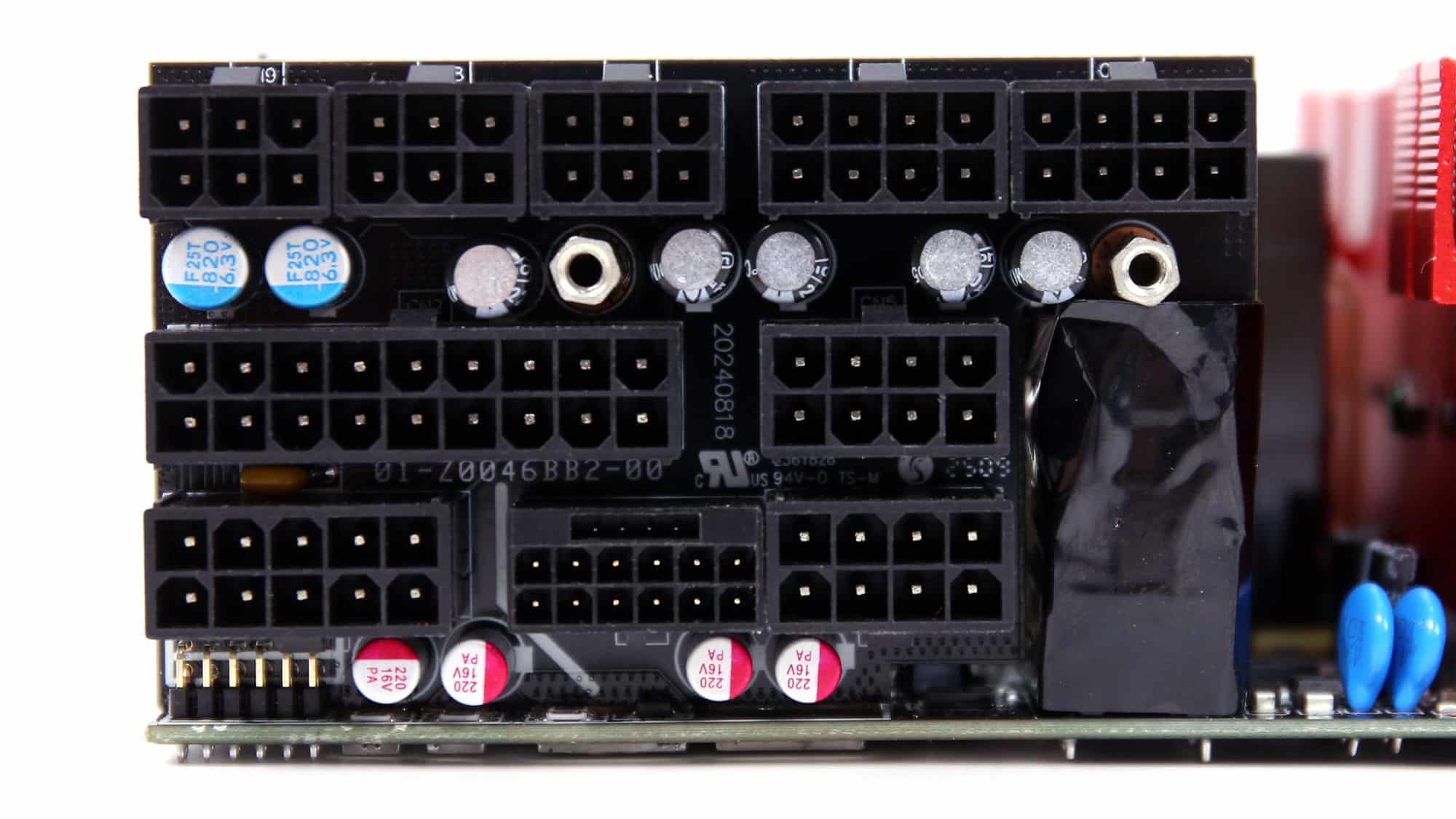
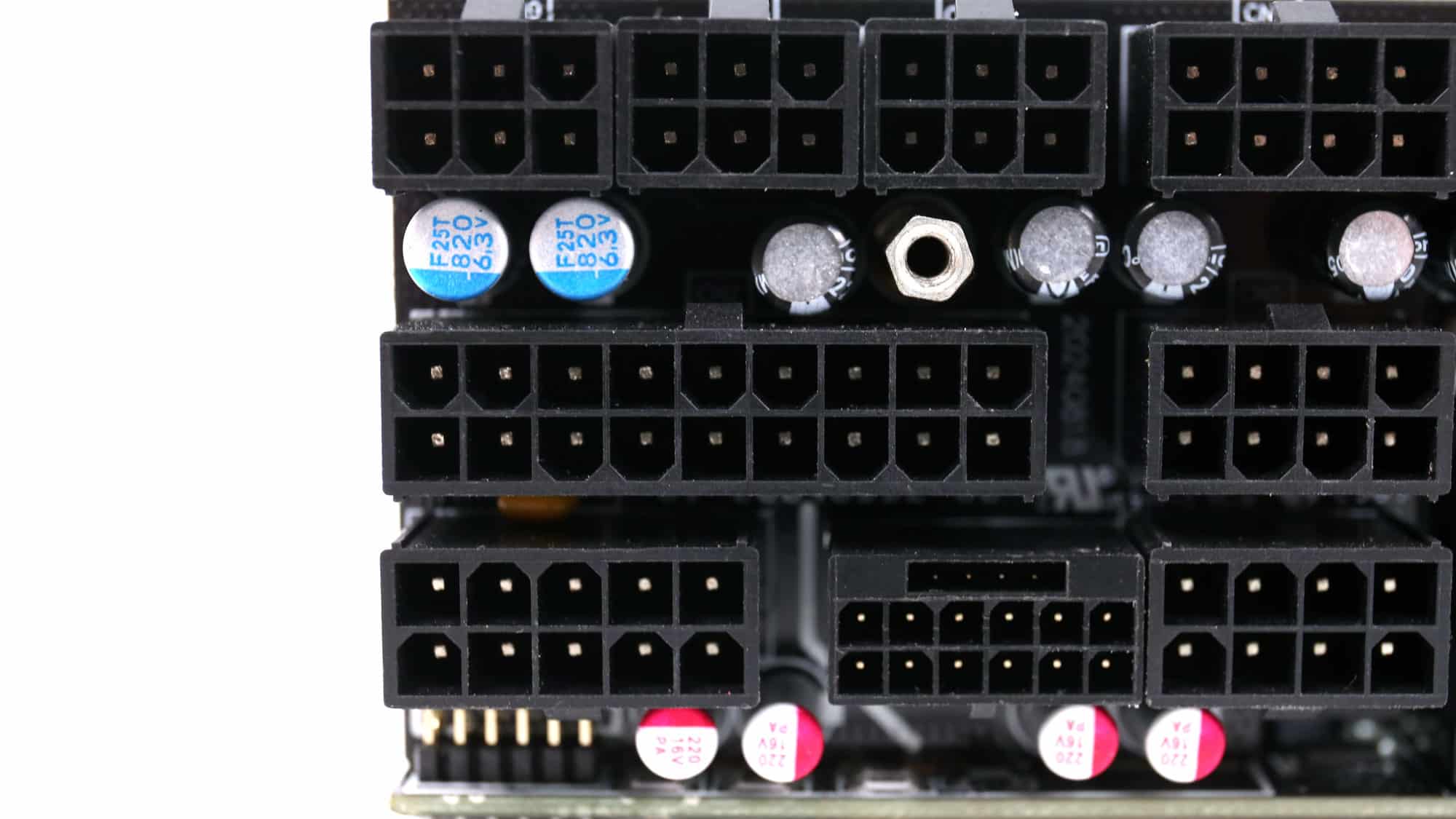
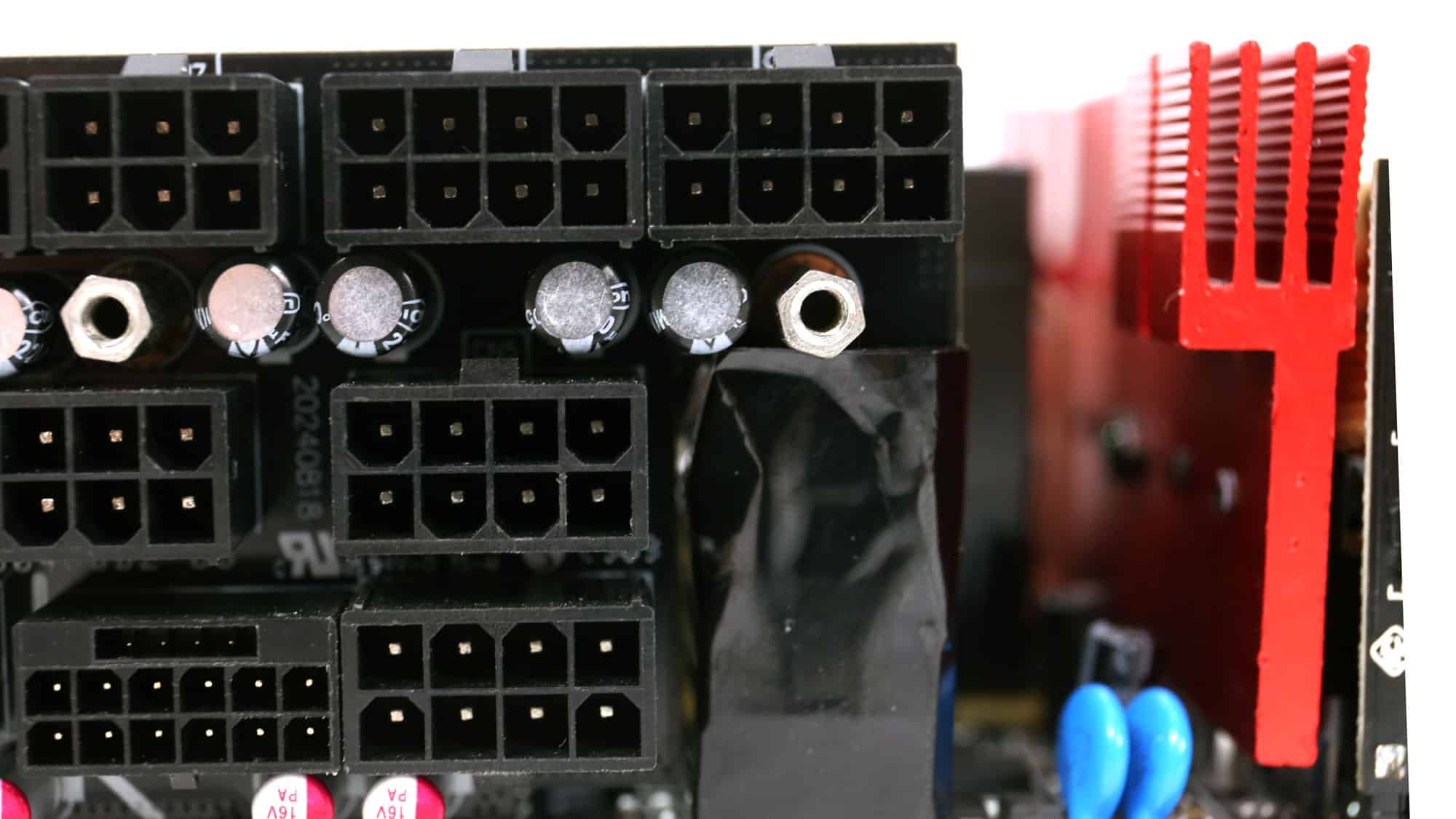
Several polymer and electrolytic caps at the face of the modular panel form an extra ripple-filtering layer.
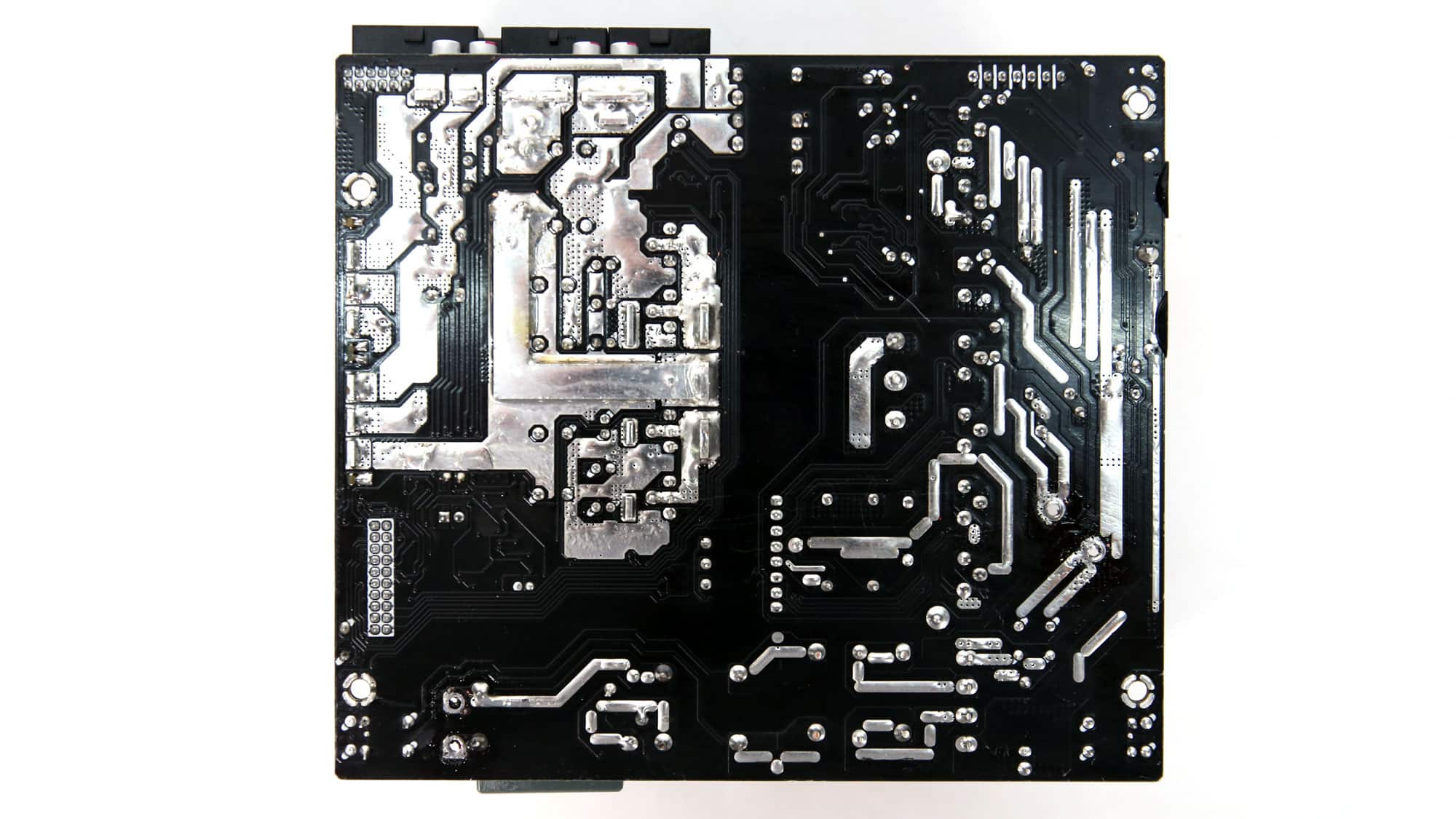
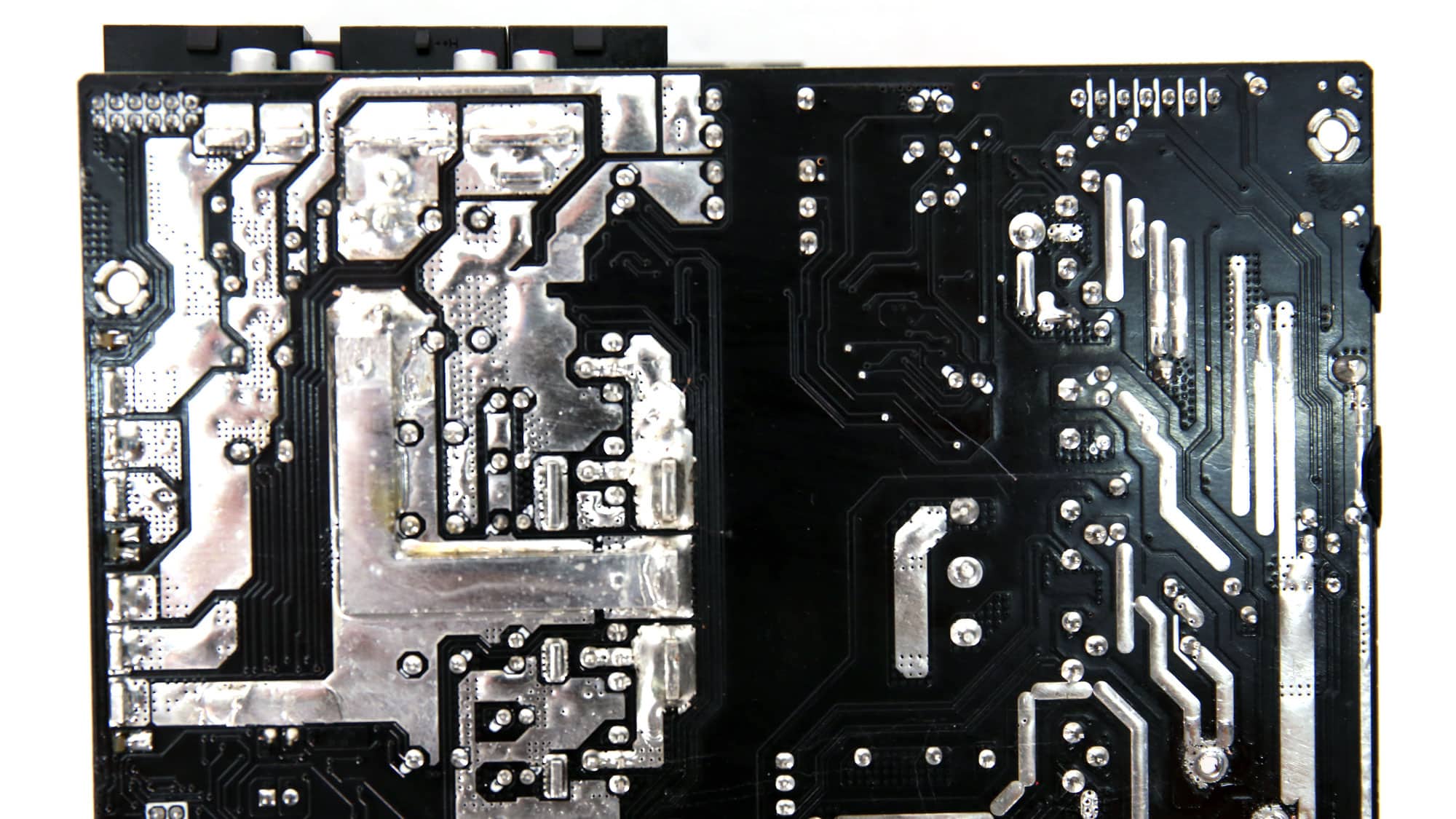
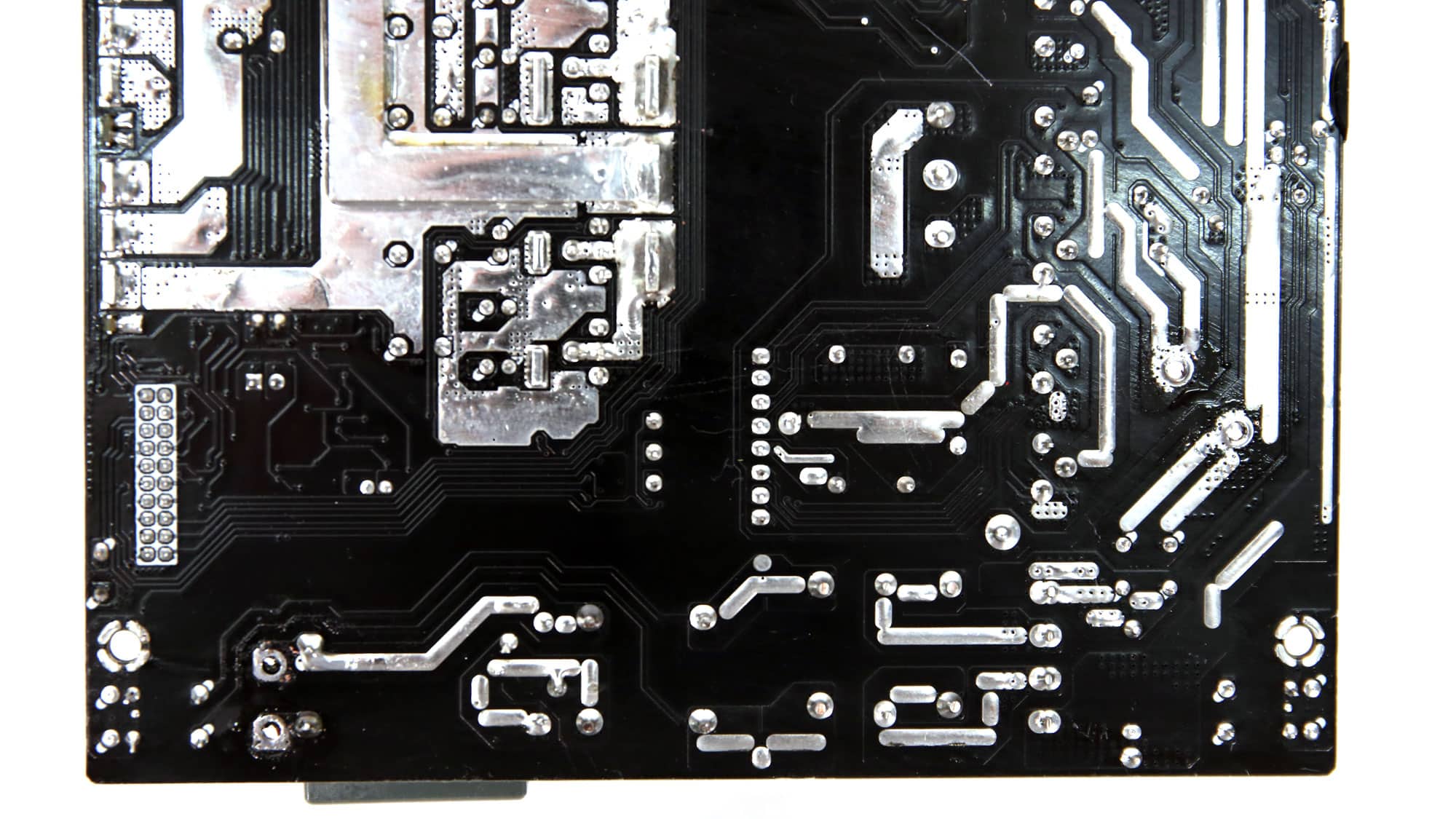
The soldering quality is decent, but there are some parts where it could be better.
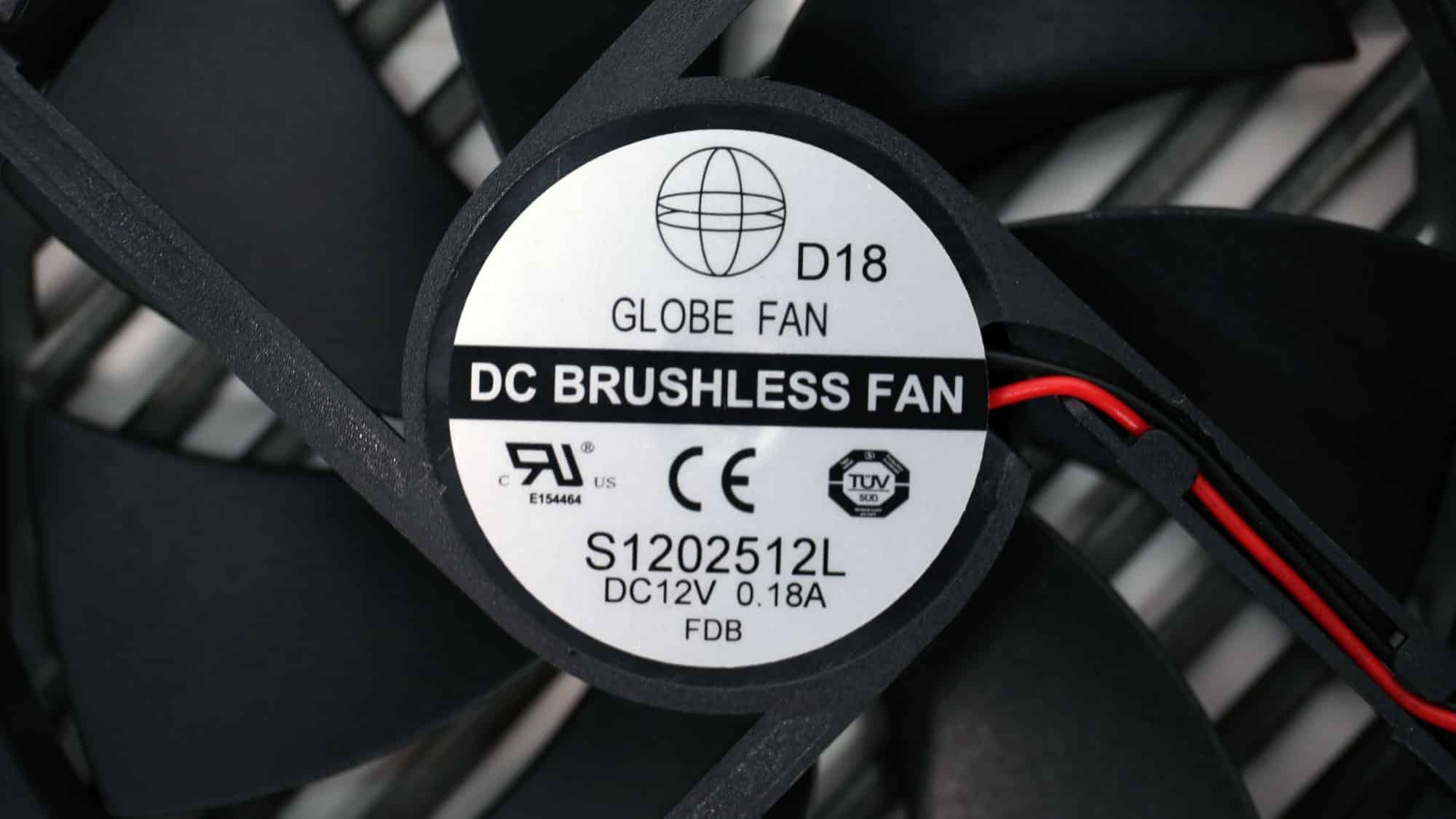

The cooling fan is a Globe Fan S1202512L with a fluid-dynamic bearing.
The Cybenetics report indicates that this power supply is compliant with ATX 3.1; however, the transient testing results show issues on the 3.3 V rail.
Could you clarify how ATX 3.1 pass/fail determinations are defined in your methodology? Specifically, how are transient deviations on secondary rails, such as the 3.3 V rail, evaluated when concluding overall ATX 3.1 compliance?
Reference:
Cybenetics ATX 3.1 PASS Report
https://www.cybenetics.com/evaluations/psus/2971/
Which transient response results are you referring to? The transient response tests with normal loads, which I do, and without capacitors? These are my tests; they are not included in any ATX spec. I have been conducting these for many years now, and they are there to compare all PSUs with load on all rails directly.
The ATX v3.1 uses an entirely different transient response load scheme, which Cybenetics adopts, to check against this standard.
This standard is open, so you can study it and look at what it says about transient report testing.
based on your experience did unicon caps was better than toshin kogyo or similar with nippon chemicon, rubycon or nichicon ?
I don’t think they are better than the well-known caps, especially the last three brands you mention.
so it’s basically same tier as TK ?
I don’t have a clue unless I check enough capacitors from Unicon and TK
but did it basically same as TK, japan caps made in chinese factory ?
Interestingly, SAMA P uses a different RSY platform and shows excellent results.
Hi, Aris, do you have any idea why BeQuiet lists Cybenetics Gold efficiency and Noise A+ in its marketing materials, when all Pure Power 13 M PSUs achieved Platinum and A++?
Did they change anything after your tests or why?
They can always downgrade the badges, but never upgrade them.
…they certainly can, but what’s the point, from a marketing point of view,
…probably none.
Maybe they’re not sure about the manufacturing tolerances, who knows 👀