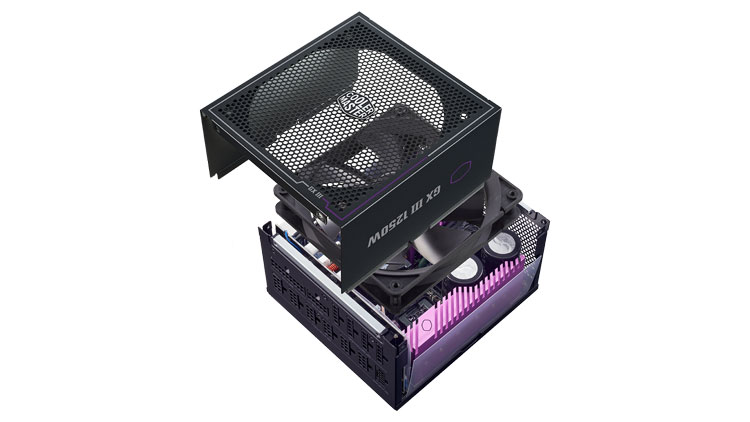
Transient Response
20% Load – 20ms
| Voltage | Before | After | Change | Pass/Fail |
| 12V | 12.053V | 11.965V | 0.73% | Pass |
| 5V | 5.013V | 4.932V | 1.61% | Pass |
| 3.3V | 3.319V | 3.211V | 3.25% | Pass |
| 5VSB | 5.005V | 4.959V | 0.91% | Pass |
50% Load -20ms
| Voltage | Before | After | Change | Pass/Fail |
| 12V | 12.015V | 11.928V | 0.73% | Pass |
| 5V | 4.986V | 4.916V | 1.40% | Pass |
| 3.3V | 3.290V | 3.171V | 3.62% | Pass |
| 5VSB | 4.954V | 4.913V | 0.83% | Pass |
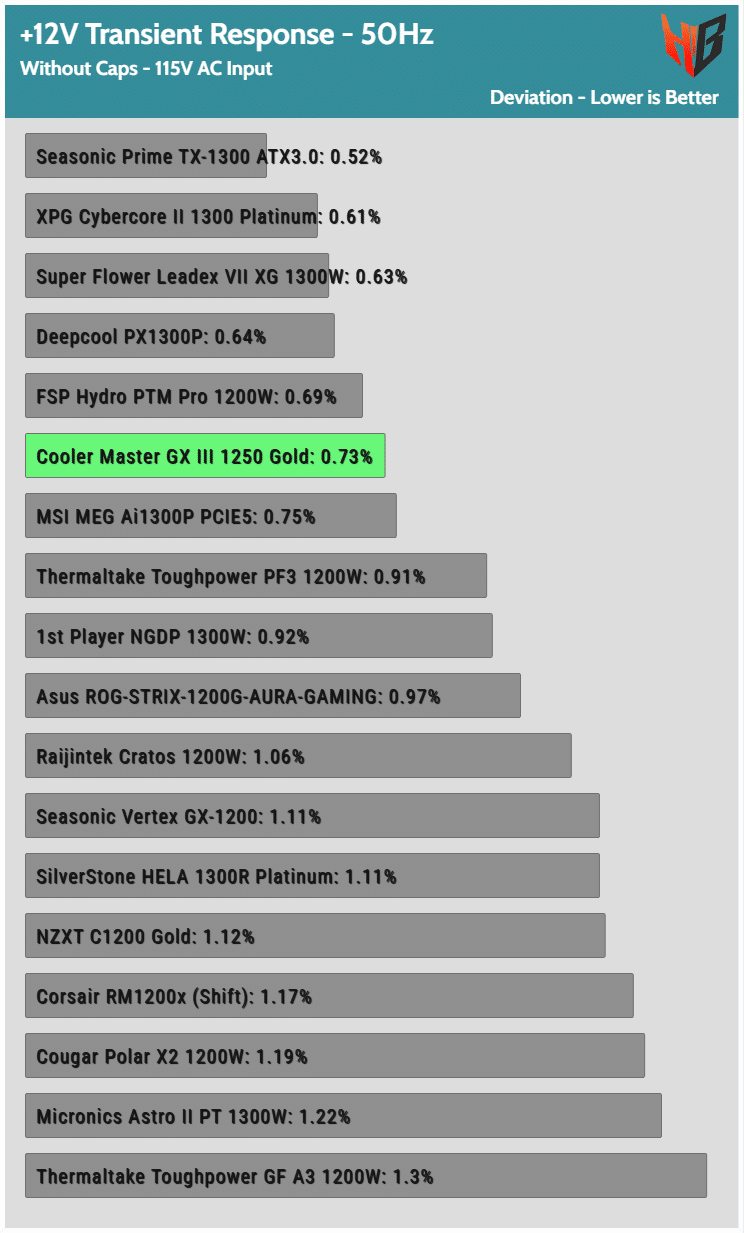
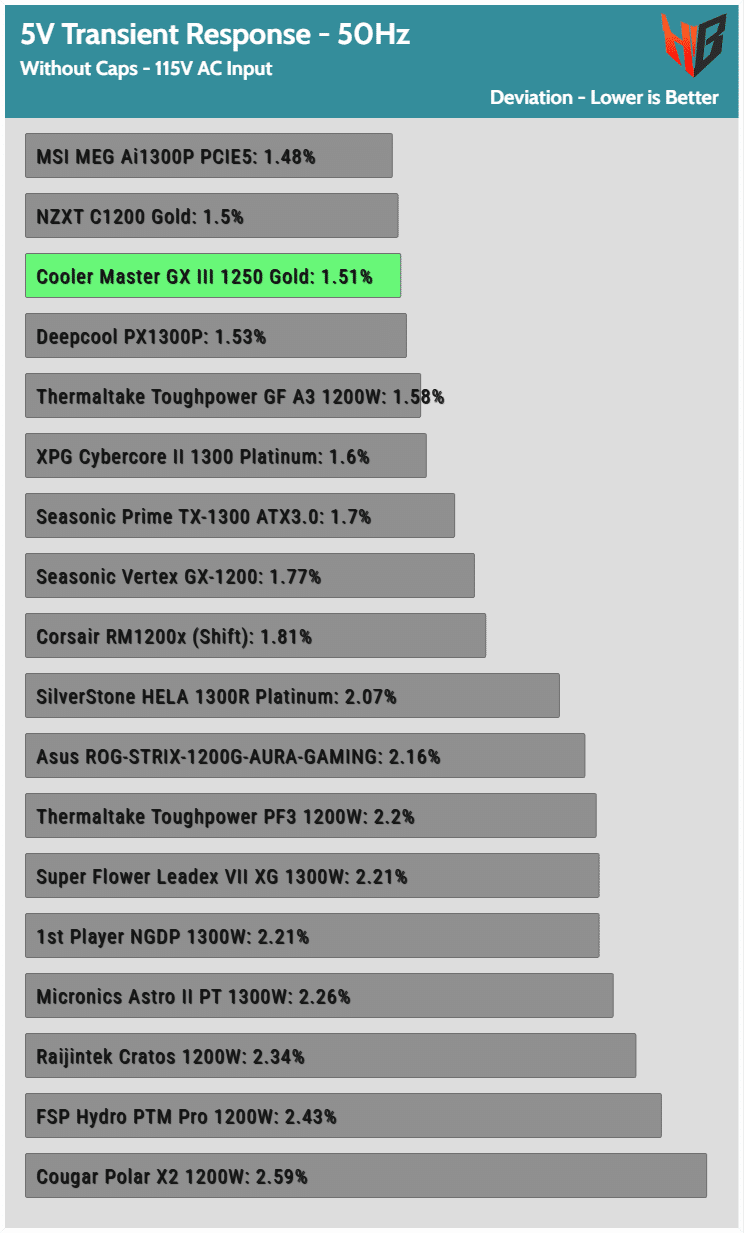

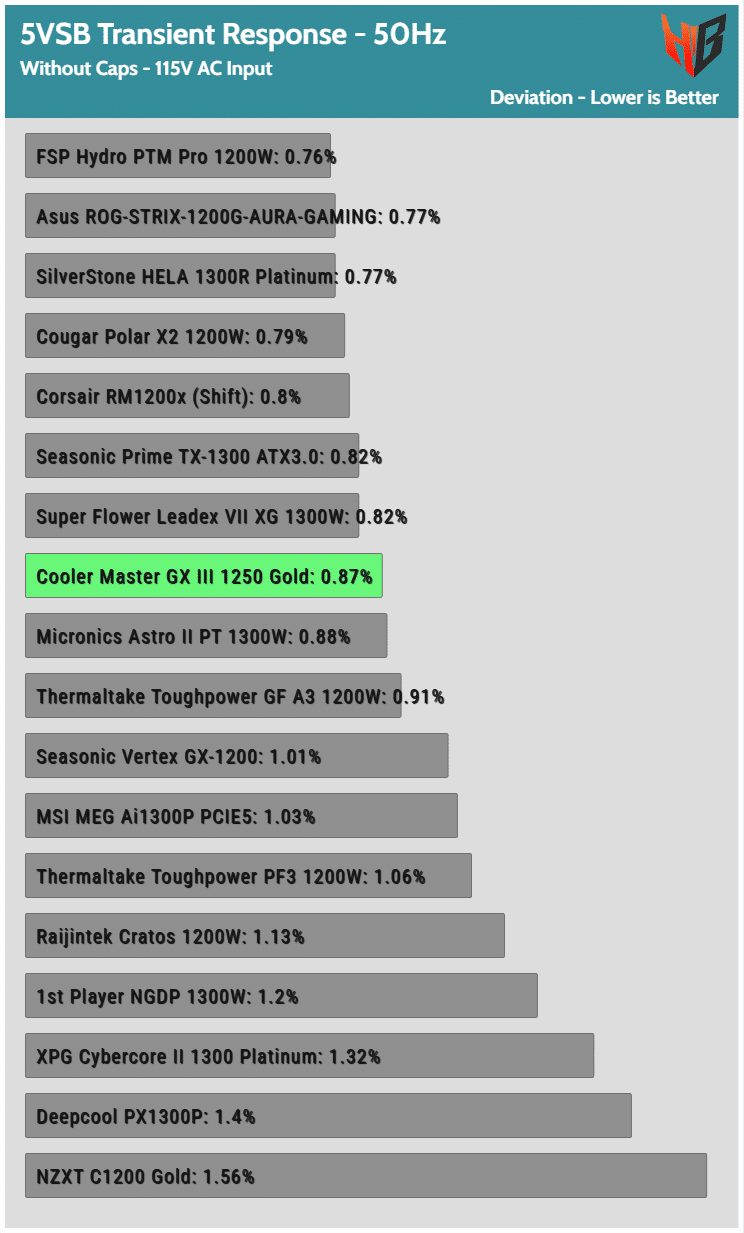
It makes a huge impression that the transient response deviation at 12V is the same at both 20% and 50% starting load. In any case, the average deviation is pretty low. The 5V and 5VSB rails also perform well here, but I cannot say the same for 3.3V, which drops its voltage below 3.2V.
Transient Response ATX v3.0 Tests
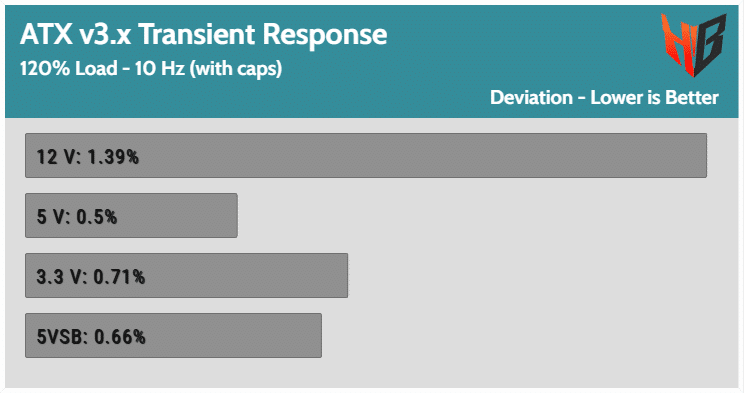


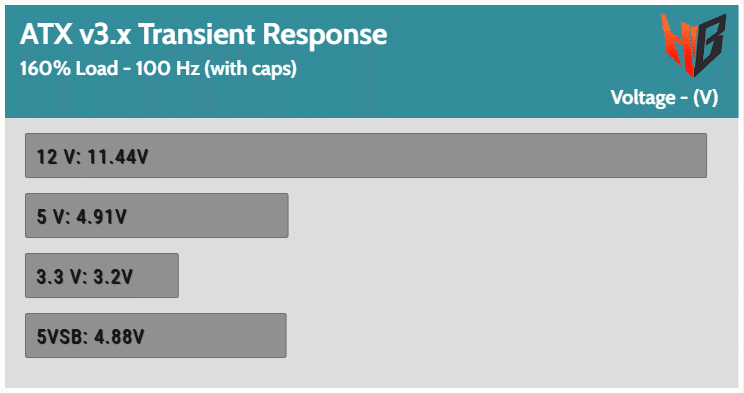

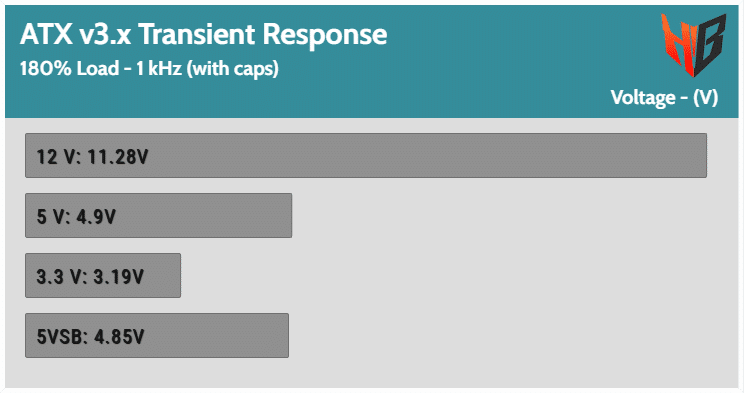
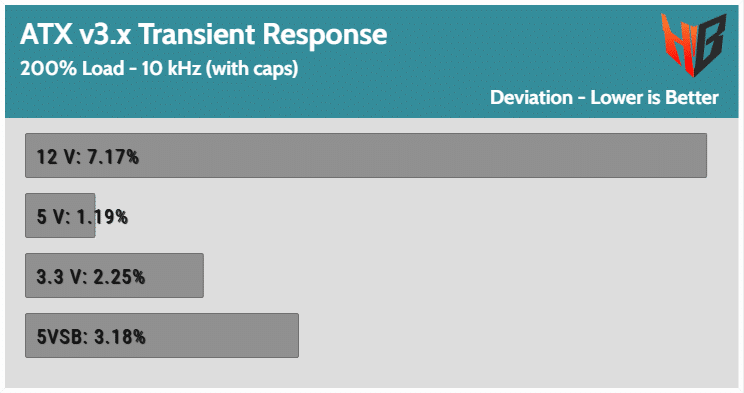
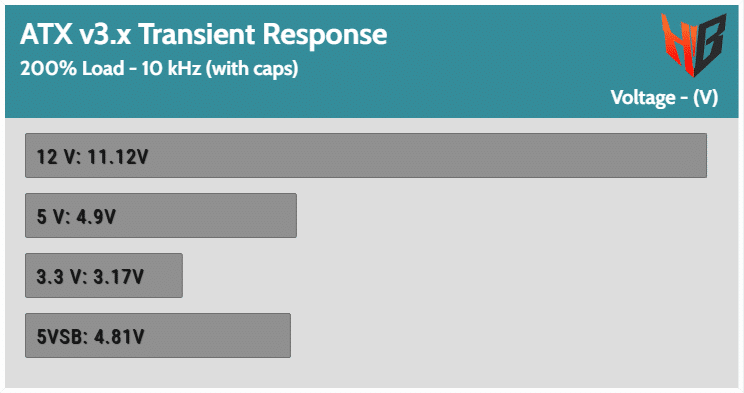
The PSU passes all ATX v3.0 transient response tests.
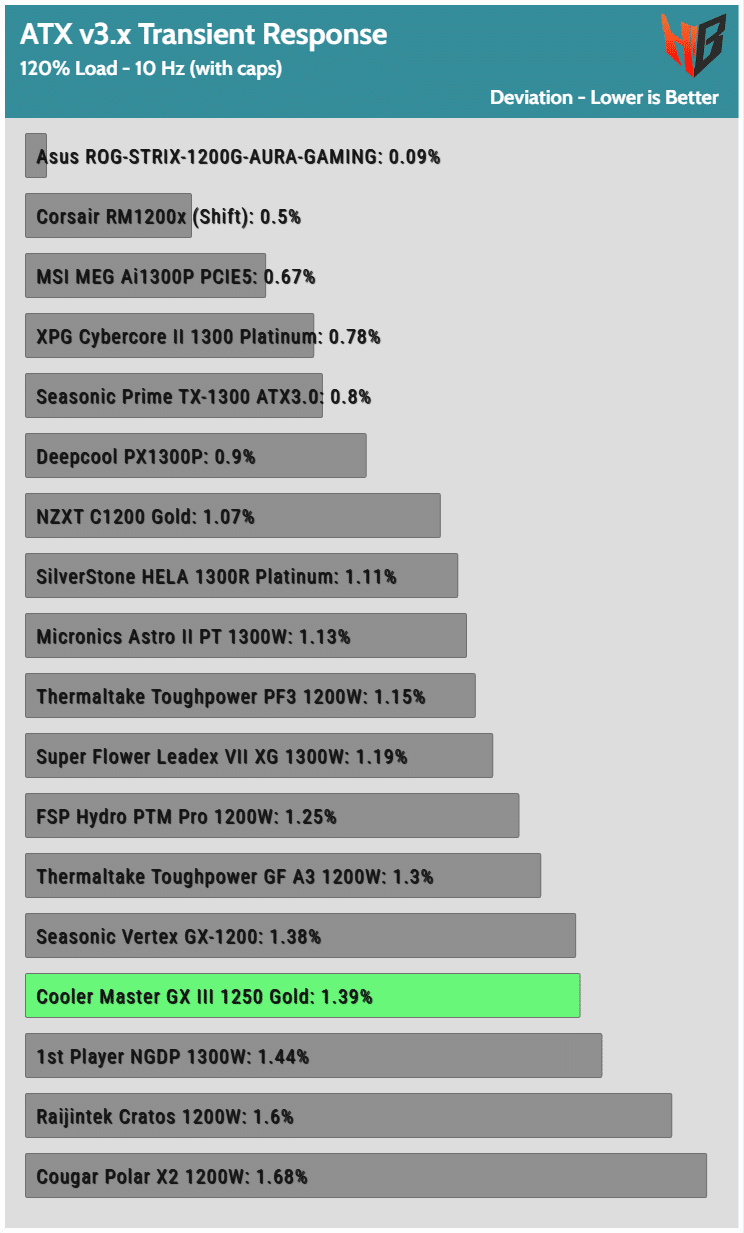
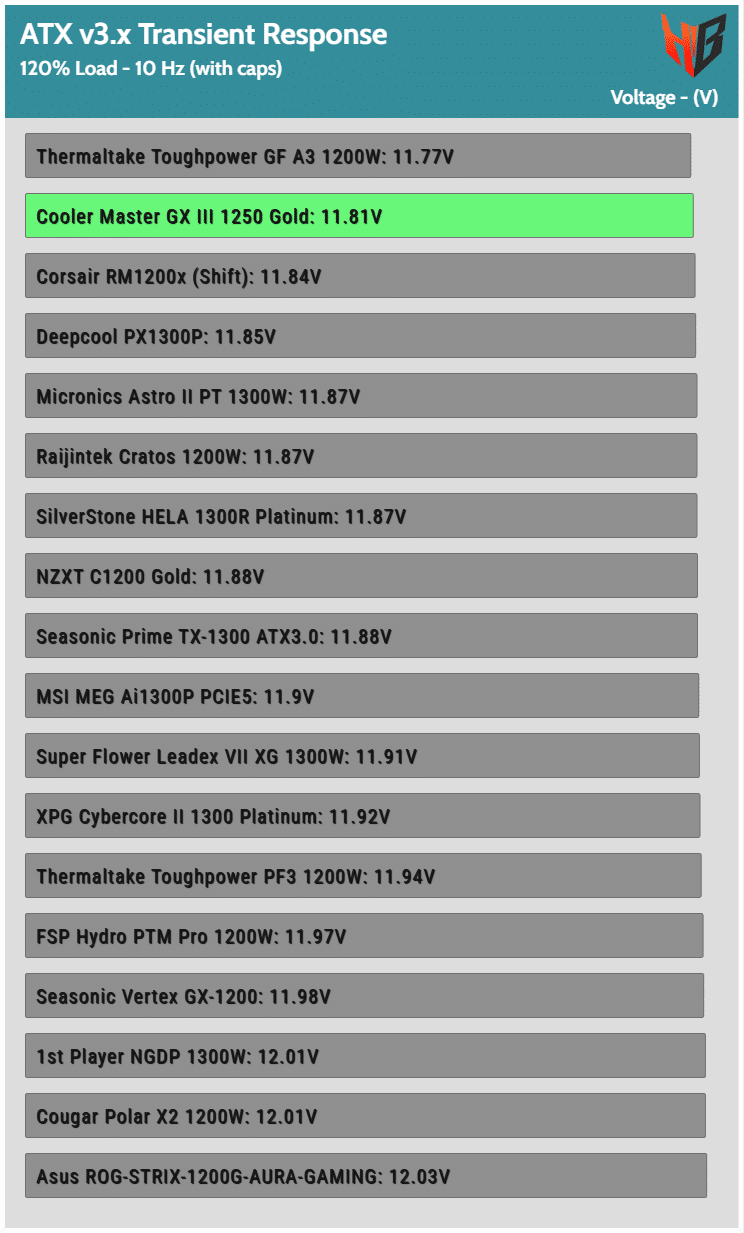

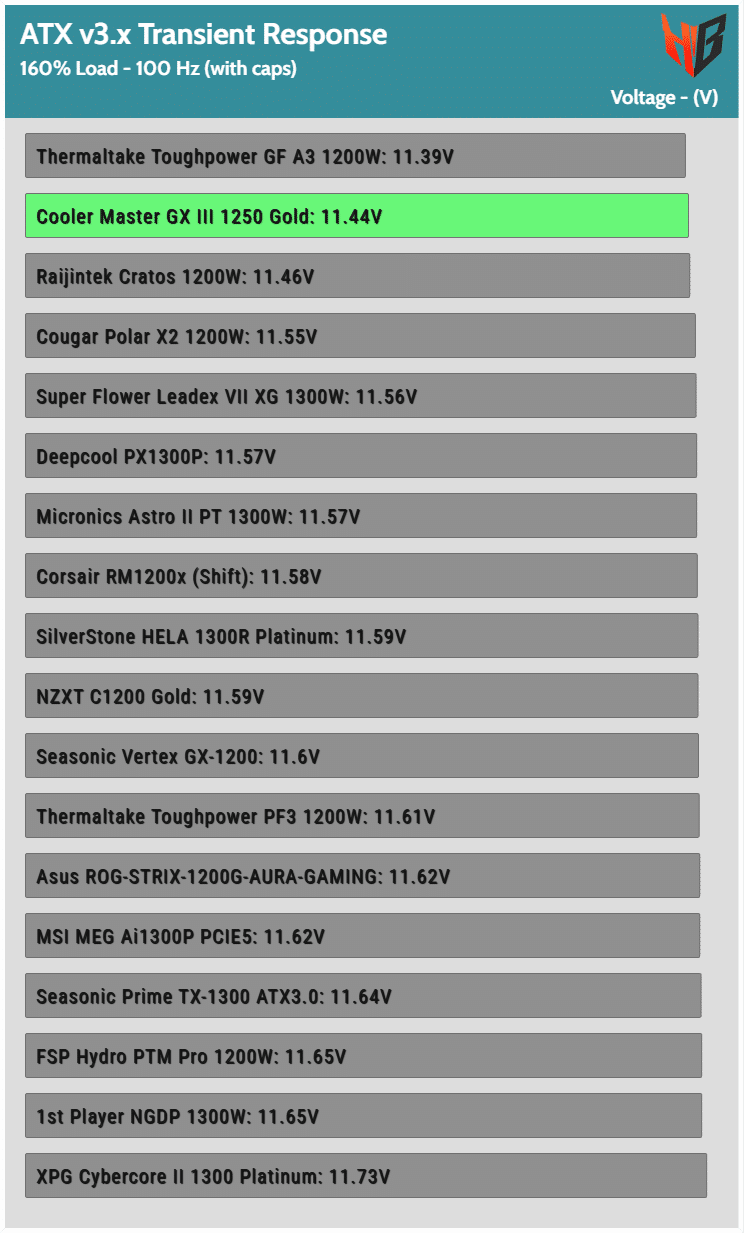
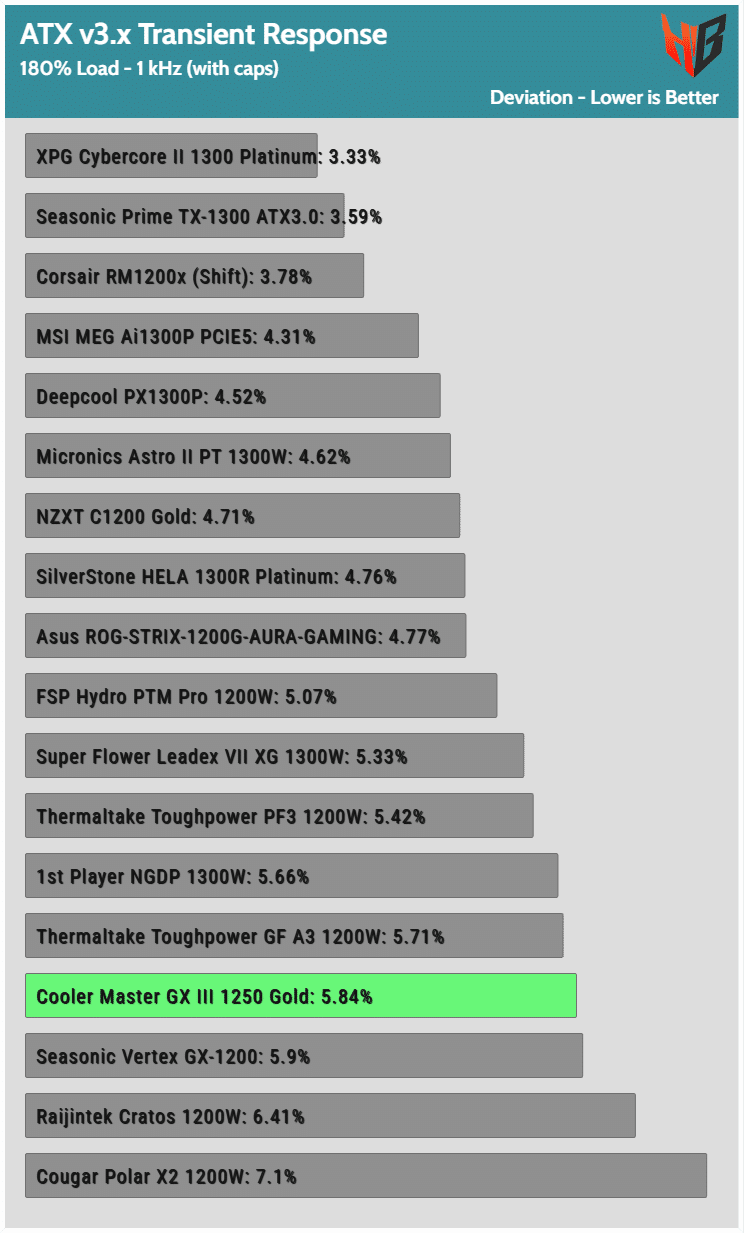
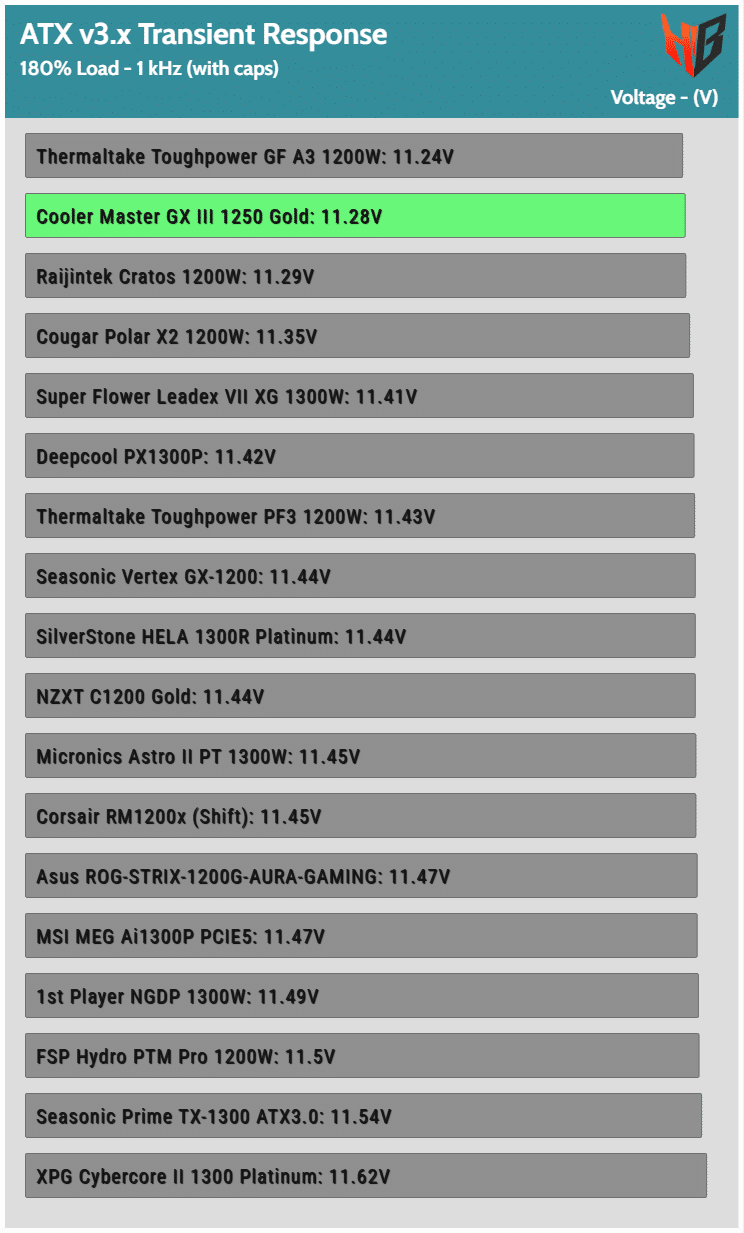


The 12V rail’s level drops too low in the 200% transient load test.
Pages:
I believe the images are not for this PSU in page 3, and instead are from the SeaSonic series. Notice the AC mains connector is using a different connector than the one in Page 2. Also, there is no “purple” anodized heatsinks, everything’s just black. Refer to the GX III 1050W review to see how it should look. Please fix this problem, thank you.
My bad, fixed. Thanks!
Excellent! Checking the review gallery now.
Also a big thanks for your exact component part number listings on page 2 of each variant of this PSU’s family (1250W, 1050W, 850W, 750W), it helped me a great lot to decide exactly which one of them to consider buying. Shame that Cooler Master doesn’t publish this information, but I always prefer to actually do a comparison between the internal components before considering to purchase a product, so as your review are an excellent source of information, thank you!