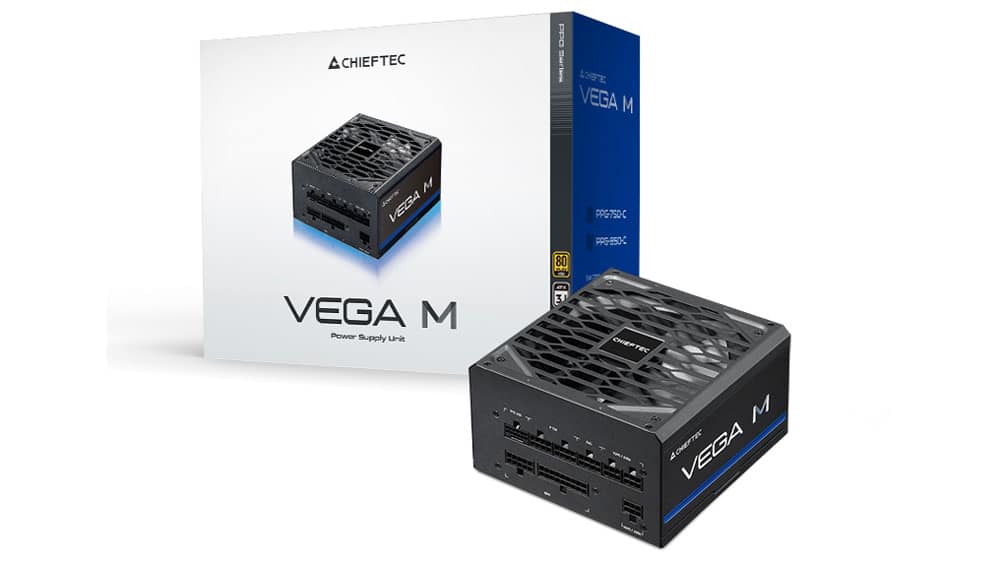
Protection Features
Desktop power supply units (PSUs) include several protection features to safeguard both the PSU itself and the connected PC components (motherboard, CPU, GPU, drives, etc.). These protections prevent damage from electrical faults, overloads, or abnormal conditions.
| OCP (Normal @ 30.4°C) | 12V: 100.00A (141.24%), 11.905V 5V: 25.9A (129.50%), 5.008V 3.3V: 26.1A (130.50%), 3.301V 5VSB: 5.101A (170.03%), 4.97V |
| OCP (Hot @ 42.1°C) | 12V: 91.80A (129.66%), 11.925V 5V: 25.37A (126.85%), 5.01V 3.3V: 25.7A (128.50%), 3.302V 5VSB: 5.001A (166.70%), 4.969V |
| OPP (Normal @ 31.3°C) | 1185.19W (139.43%) |
| OPP (Hot @ 43.7°C) | 1095.17W (128.84%) |
| OTP | ✓ (117°C @ Heat Sink) |
| SCP | 12V to Earth: ✓ 5V to Earth: ✓ 3.3V to Earth: ✓ 5VSB to Earth: ✓ -12V to Earth: ✓ |
| PWR_OK | Proper Operation |
| UVP (Full Load @ 90V) | ✓ |
| UVP (No Damage @ 80V) | ✓ |
| Conducted Emissions EN55032 & CISPR 32 | ✓ |
| NLO | ✓ |
| Fan Failure Protection | ✗ |
| SIP | Surge: MOV Inrush: NTC & Bypass Relay |
The OCP triggering point is high at 12V under normal conditions, but it drops notably lower under high temperatures. The OCP triggering points are conservatively set on the minor rails, and it is good to see a difference between normal and high temperatures. However, it would be nice if the OCP triggering point differences were larger. Moreover, the over power protection is set correctly. The rest of the essential protection features are present and function well, except for fan failure protection, which is not implemented. Manufacturers have to quickly realize that fan failure protection is crucial and start implementing it in their designs.
EMC Pre-Compliance at a Glance
Every electronic device, including PSUs, can be an EMI source, which, depending on the amount of EMI emitted, can affect the proper operation of nearby devices. EMI can, in some extreme cases, even render them unusable. Some standards have been established to minimize electromagnetic interference (EMI) noise. The corresponding standards for IT (Information Technology) products are CISPR 32 and its derivative, EN 55032, which applies to products sold in the EU. In the EU, every product bearing the “CE” marking must comply with the EN 55032 standard. CISPR 32 and EN 55032 standards categorize devices into two classes: A and B. Class B equipment is intended for domestic environments. Hence, its permitted EMI emissions are significantly lower than those of A-class devices.
Our equipment for EMI readings:
- Rohde & Schwarz FPC1500 (loaded with all options)
- Tekbox TBLC08 LISN
- Tekbox TBFL1 transient limiter
- Tekbox EMCview software
| CISPR 32 / EN55032 Limits | ||
| CISRP 32 / EN 55032 Class A Conducted EMI Limit | ||
| Frequency of Emission (MHz) | Conducted Limit (dBuV) | |
| Quasi-peak | Average | |
| 0.15 – 0.50 | 79 | 66 |
| 0.50 – 30.0 | 73 | 60 |
| CISPR 32 / EN 55032 Class B Conducted EMI Limit | ||
| Frequency of Emission (MHz) | Conducted Limit (dBuV) | |
| Quasi-peak | Average | |
| 0.15 – 0.50 | 66 – 56 | 56 – 46 |
| 0.50 – 5.00 | 56 | 46 |
| 5.00 – 30.00 | 60 | 50 |
| CISRP 32 / EN 55032 Class A 10-Meter Radiated EMI Limit | ||
| Frequency of Emission (MHz) | Field Strength Limit (dBuV/m) | |
| 30 – 88 | 39 | |
| 88 – 216 | 43.5 | |
| 216 – 960 | 46.5 | |
| > 960 | 49.5 | |
| CISRP 32 / EN 55032 Class B 3-Meter Radiated EMI Limit | ||
| Frequency of Emission (MHz) | Field Strength Limit (dBuV/m) | |
| 30 – 88 | 40 | |
| 88 – 216 | 43.5 | |
| 216 – 960 | 46.0 | |
| > 960 | 54.0 | |
Please note that the ATX spec allows a 4 dB margin for conducted and radiated emissions. This means that if a PSU exceeds the limits but stays within the 4 dB margin, it meets the corresponding ATX spec requirement (8.1 Emissions).
EMI Results
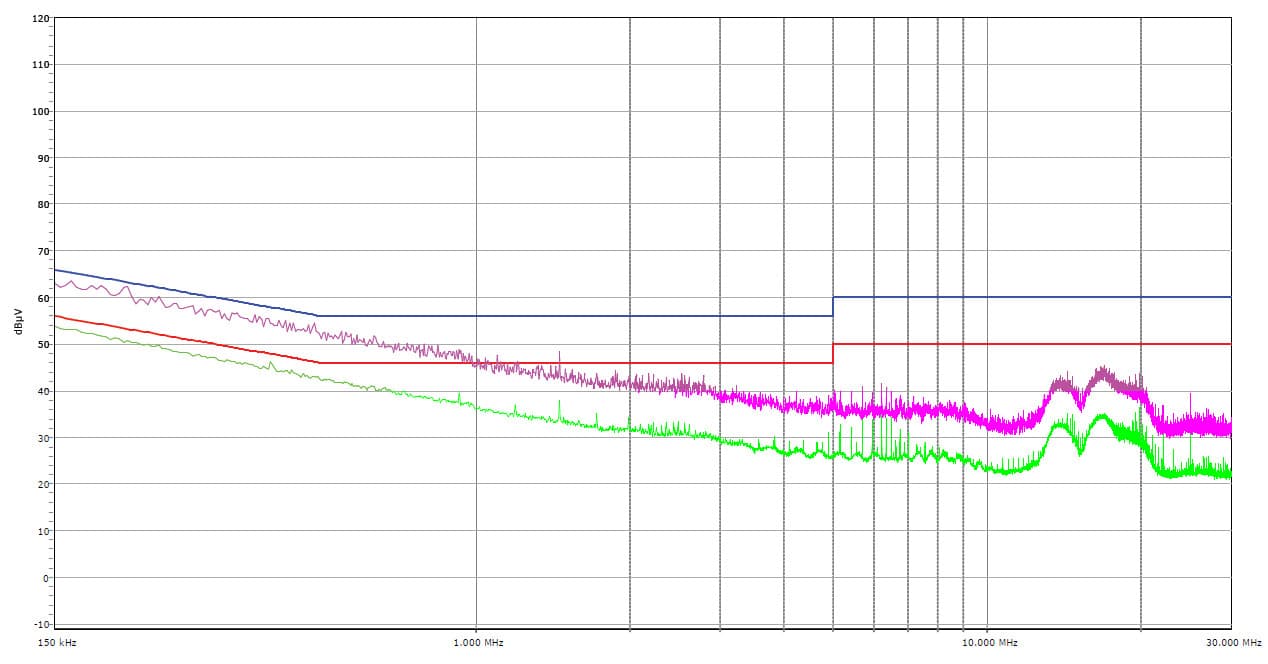
The PSU’s EMI emissions are under control.
Hello which PSU would you recommend if you had to pick from : Chieftec VEGA M PPG-750-C, Corsair RMe Series RM750e , Cooler Master MWE Gold V2 ATX 3.1 750W. They are priced the same and I am looking for a PSU to pair with my 5070 TI…
I would get the one with the better support in the region, because performance differences are not that dramatic among these. Check for their noise output also (average noise) output.
I’m curious how worried should I be for the inrush current this model has. It is quite competitively priced where I live, and I’m inclined to get it if it is not a big deal in terms of long-term reliability or safety on the secondary side.
We changed inrush current testing methodology because there were issues with the previous one. This is most likely ok.
Thank you, Aris!
As I see, the inrush is similar on Cybenetics as well. There is also an option to have the Cougar GEX Pro (650W which is not rated at Cyben) for similar price as well. Although Chieftec’s Vega M seems more reviewed than the Cougar. Which one would you recommend?
PS – It is amazing to get guidance from professionals like you!
Just retested the Chieftec PSU for inrush current, as expected values are way lower. I cannot say about the GEX Pro 650 since I haven’t tested it or at least I don’t remember doing so, my team 🙂
Thank you for your guidance and updated information! I do not have any second thoughts about the Chieftec then! 🙂
Hi
I found one Iranian PSU “GP800A-UK EVO V3.1” https://green.ir/products/power-supply/gp800a-uk-evo-v3.1 and it’s powered by High power No-832H , similar to Chieftec VEGA’s board but it’s High power No-832D.
Is there any PSU that uses No-832H ? Is it higher tier?
This is high quality image : https://green.ir/assets/filemanager/userfiles/green/PSU/UK-EVO-V3.1-Series/Gallery/GP800A-UK-EVO-V3.1/GREEN-GP800A-UK-EVO-V3.1-PSU-G-11.jpg