Hold Up Time
Hold-up time in power supplies is the duration a PSU can maintain a stable output voltage after a power interruption, allowing the system to shut down or ride out brief outages safely. It’s typically measured in milliseconds. A longer hold-up time is better, as it ensures continued operation during power fluctuations, preventing data loss or hardware damage.
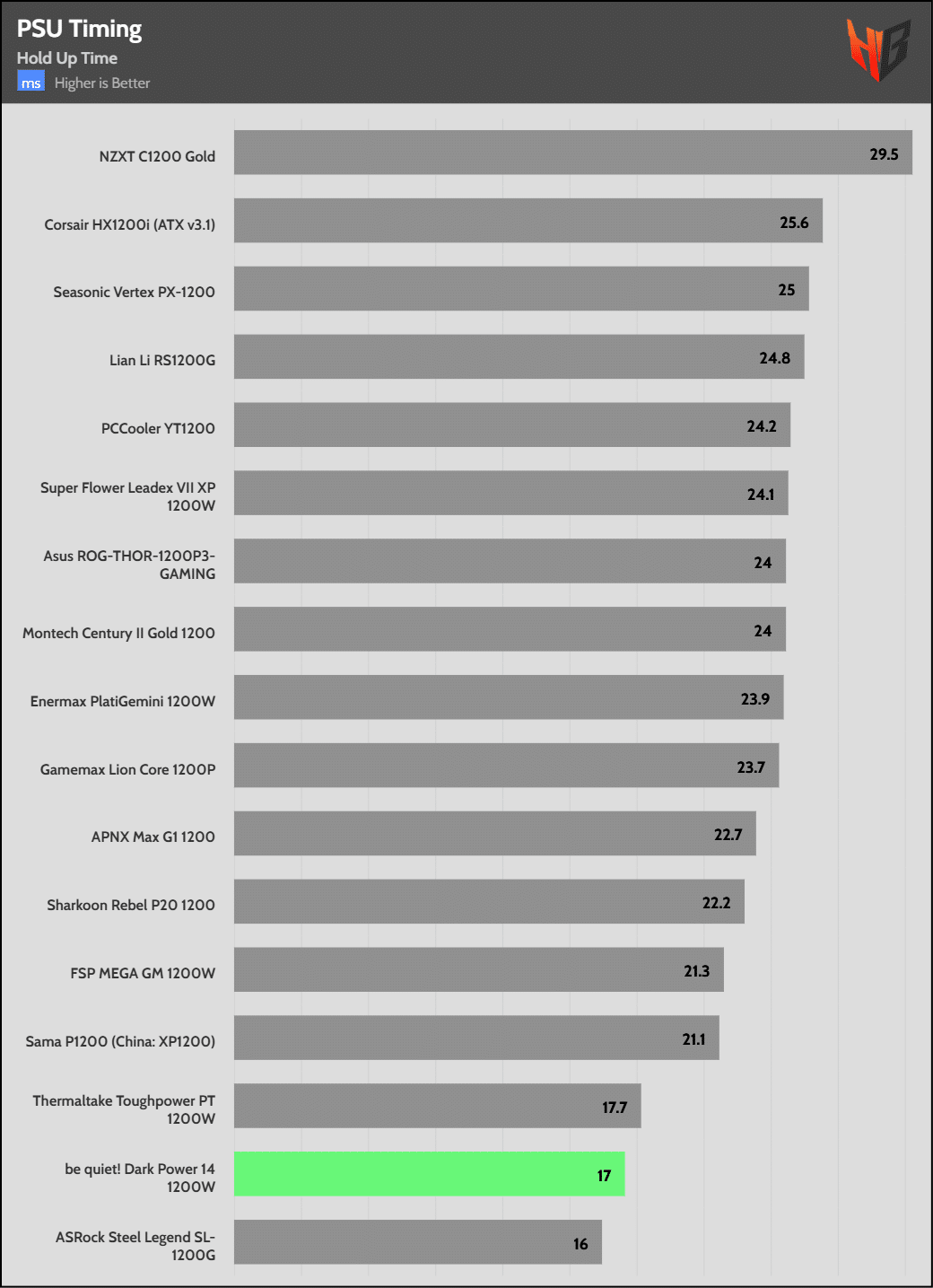
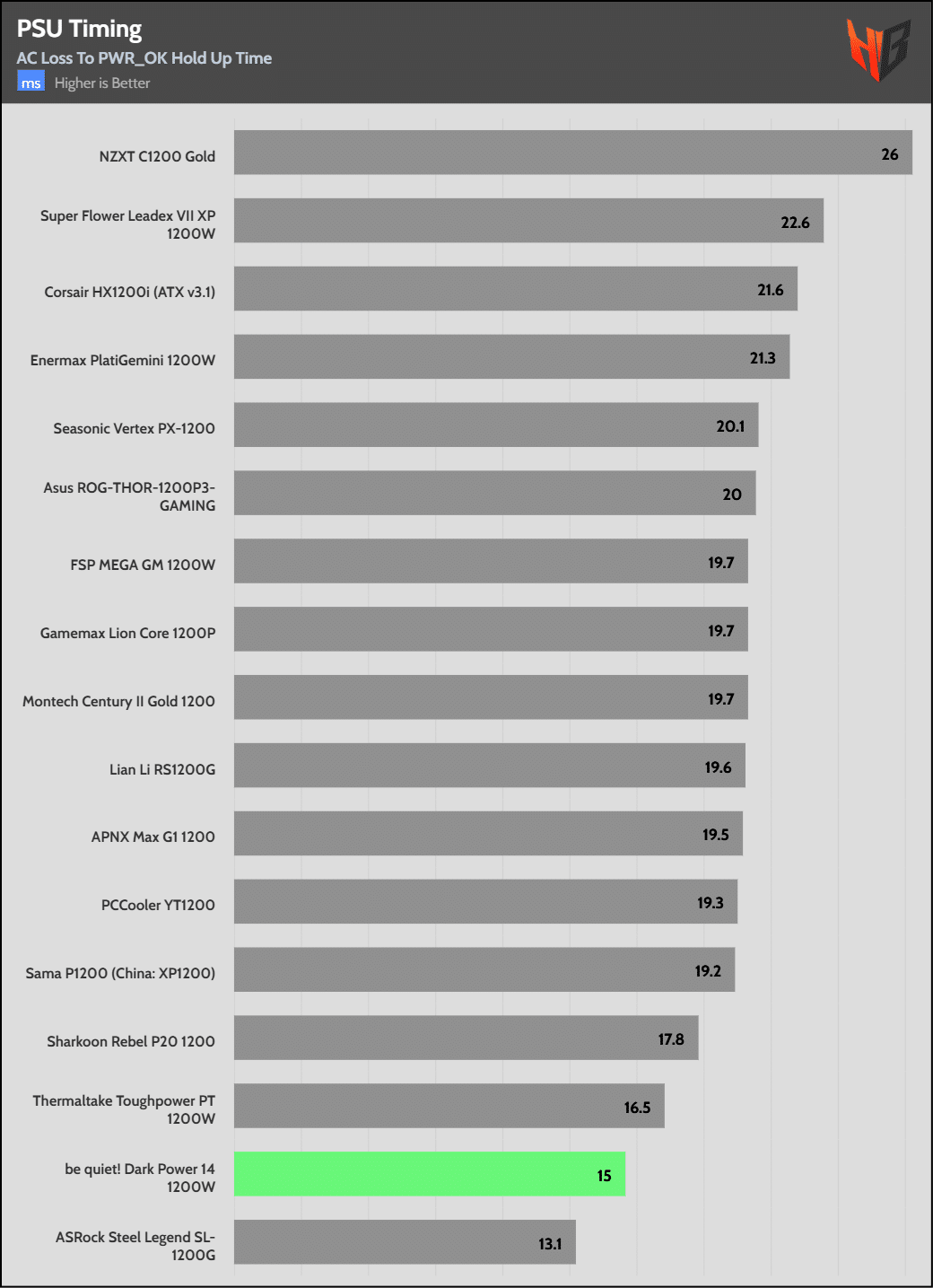
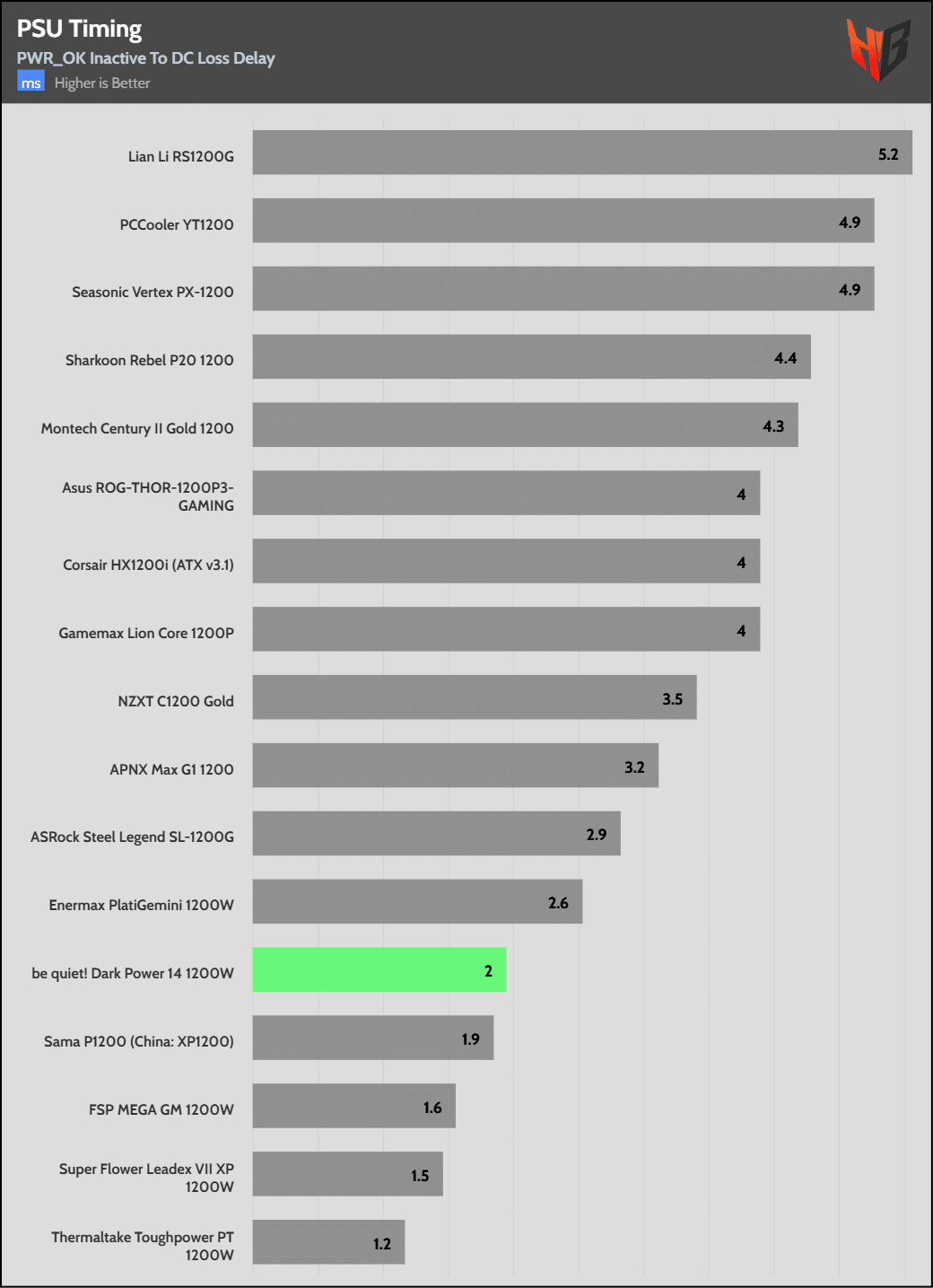
The hold-up time is at 17ms, and the power ok signal is accurate but lower than 16ms. The PSU easily meets the loose requirements of the ATX v3.1 spec (in this section), but still, I would like to see a longer hold-up time, given that this is a flagship model.
Given the high combined capacity (1360 uF) of the bulk caps, I expected better values here. I need to check a second sample to see if the bulk caps of my review sample weren’t in the best shape.
Inrush Current
Inrush current in power supplies is the initial surge of current drawn when a PSU is first powered on, caused by the charging of capacitors and other components. It’s typically much higher than normal operating current and lasts briefly. A lower inrush current is preferable, as high surges can stress components, trip circuit breakers, or cause wear over time.
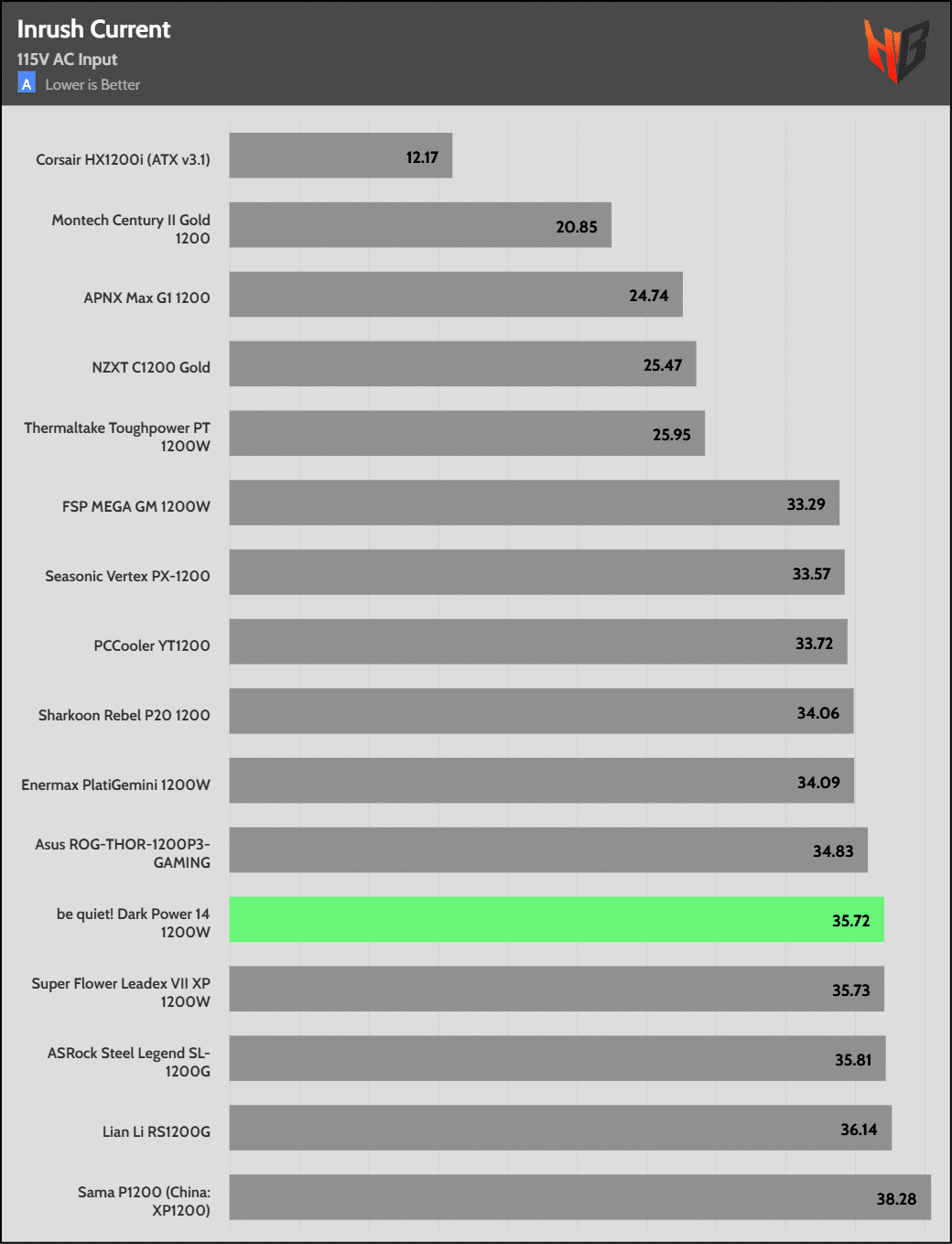
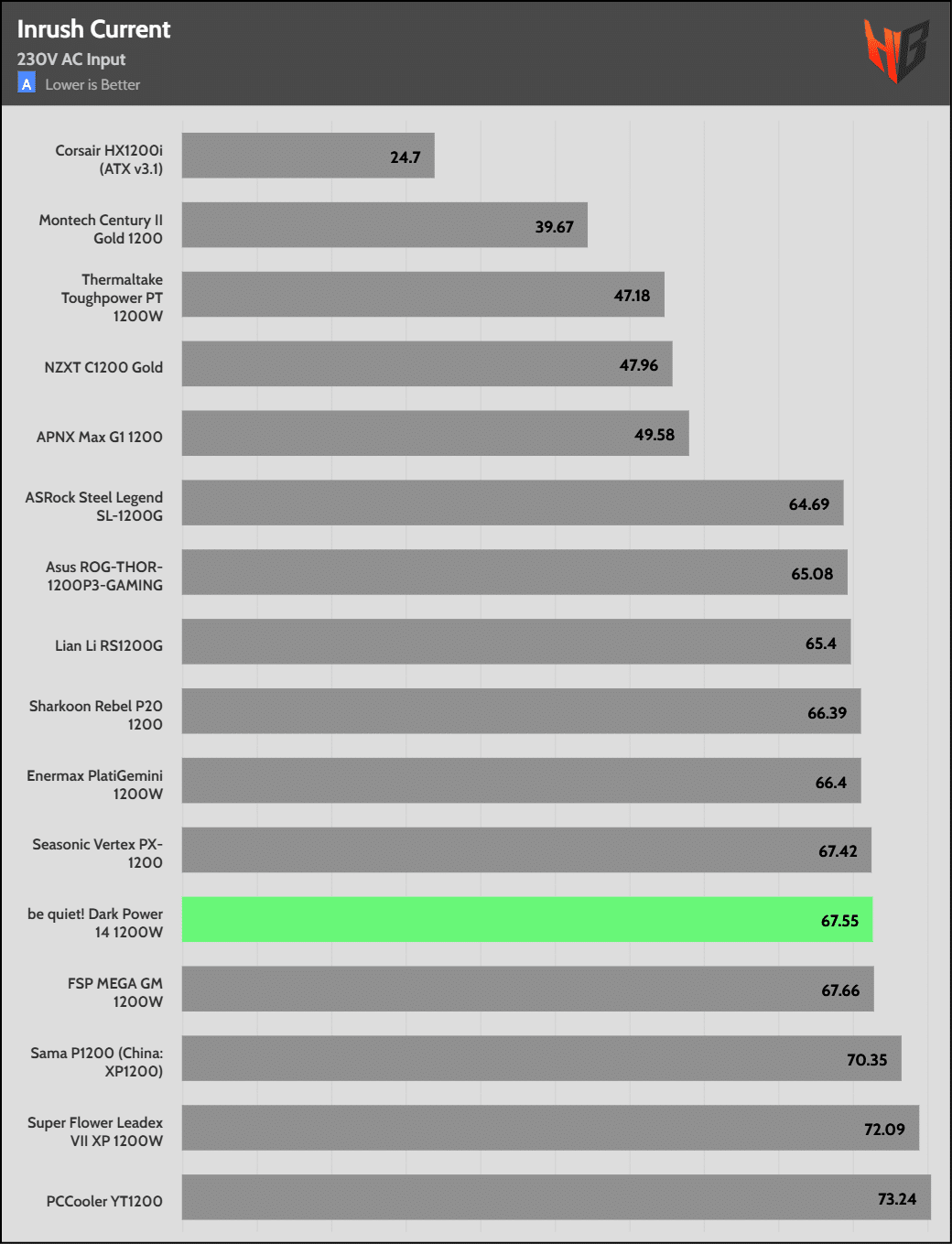
The inrush currents are at the expected levels, given the NTC thermistor’s resistance at normal operating conditions.
Leakage Current
Leakage current refers to the small amount of current that flows through an insulating material or a semiconductor device when it is ideally supposed to be non-conductive. It is typically observed in electronic components, such as transistors, capacitors, and insulators, where current leaks through imperfections or unintended pathways, even when the device is “off.”
Leakage current in power circuits is an alternating current that flows through the earthing conductor, primarily caused by the EMC filter’s Y capacitors (Cy). The more Y capacitors, the higher the leakage current can be!
The IEC 62368-1, which replaces the IEC 60950 OFF (Office Equipment) and IEC 60065 TRON (Electronics, entertainment), defines the limits for maximum leakage (touch) current.
- Normal Condition: Maximum touch current = 3.5 mA
- Single Fault Condition: Maximum touch current = 10 mA
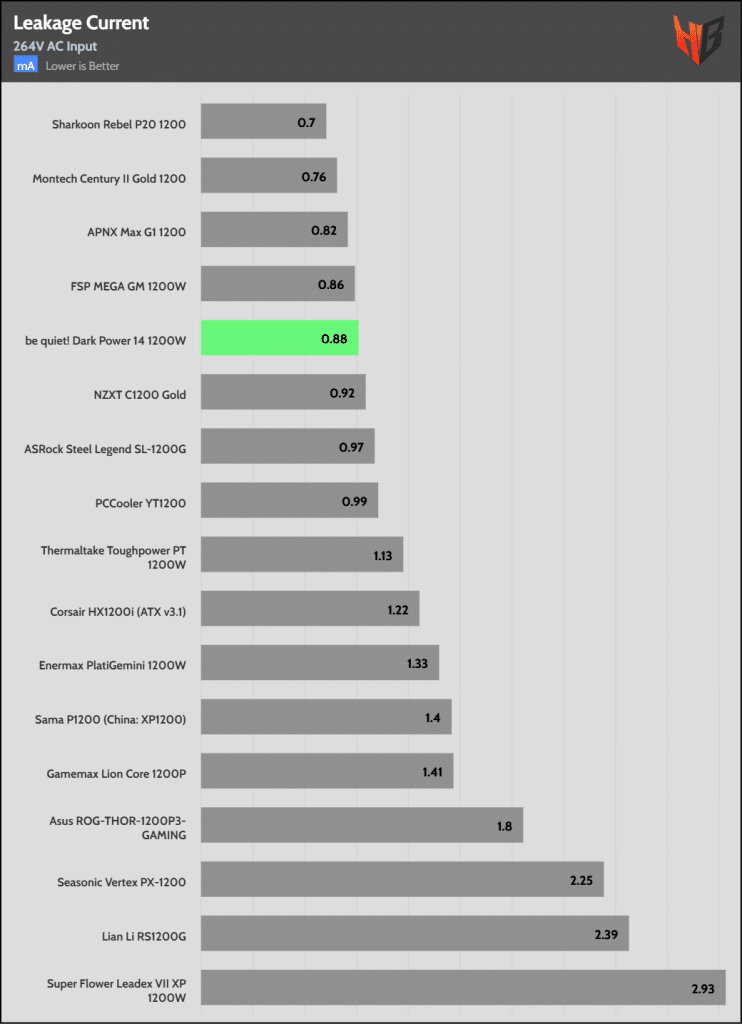
The leakage current is low.
PSU Timings
Desktop PSU timings refer to the specific durations and sequences of electrical signals that a power supply unit (PSU) must maintain to ensure the proper operation of a computer system, as defined by the ATX specification. Proper timings are critical for system stability, preventing crashes or damage by ensuring components receive consistent, timely power.
In desktop power supply units (PSUs), Alternative Low Power Modes (ALPM), as defined in the ATX specification (e.g., ATX v3.1), are designed to improve energy efficiency by reducing power consumption during low-load or idle states, such as when a computer is in sleep or standby mode. These modes are closely tied to the T1 and T3 timings, which are critical for ensuring proper PSU behavior during transitions between power states.
T1 and T3 Timings Explained
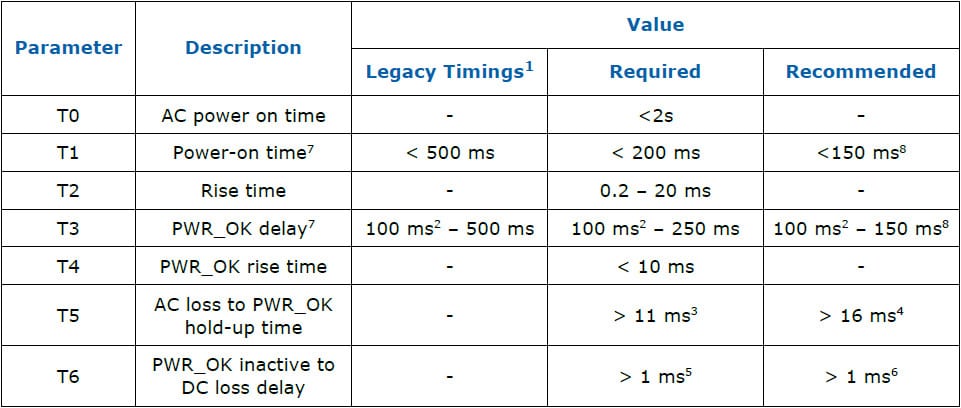
- T1 (Power-On Time): This is the time from when the PSU is turned on (via the PS_ON# signal going low) until the output voltages are stable and within specification and the Power Good (PWR_OK) signal is asserted. Typically, T1 is less than 500 ms, but it must be below 200 ms for ALPM compliance, and Intel recommends a value of below 150 ms. It ensures the system receives stable power quickly during startup or when waking from a low-power state.
- T3 (Power Good Delay): The time interval between when the output voltages reach their nominal levels and when the PWR_OK signal is asserted, typically 100-500 ms. For ALPM compliance, it must be between 100 and 250 ms, with Intel recommending 100-150 ms. T3 ensures the PSU signals the system only when the power output is fully stable.
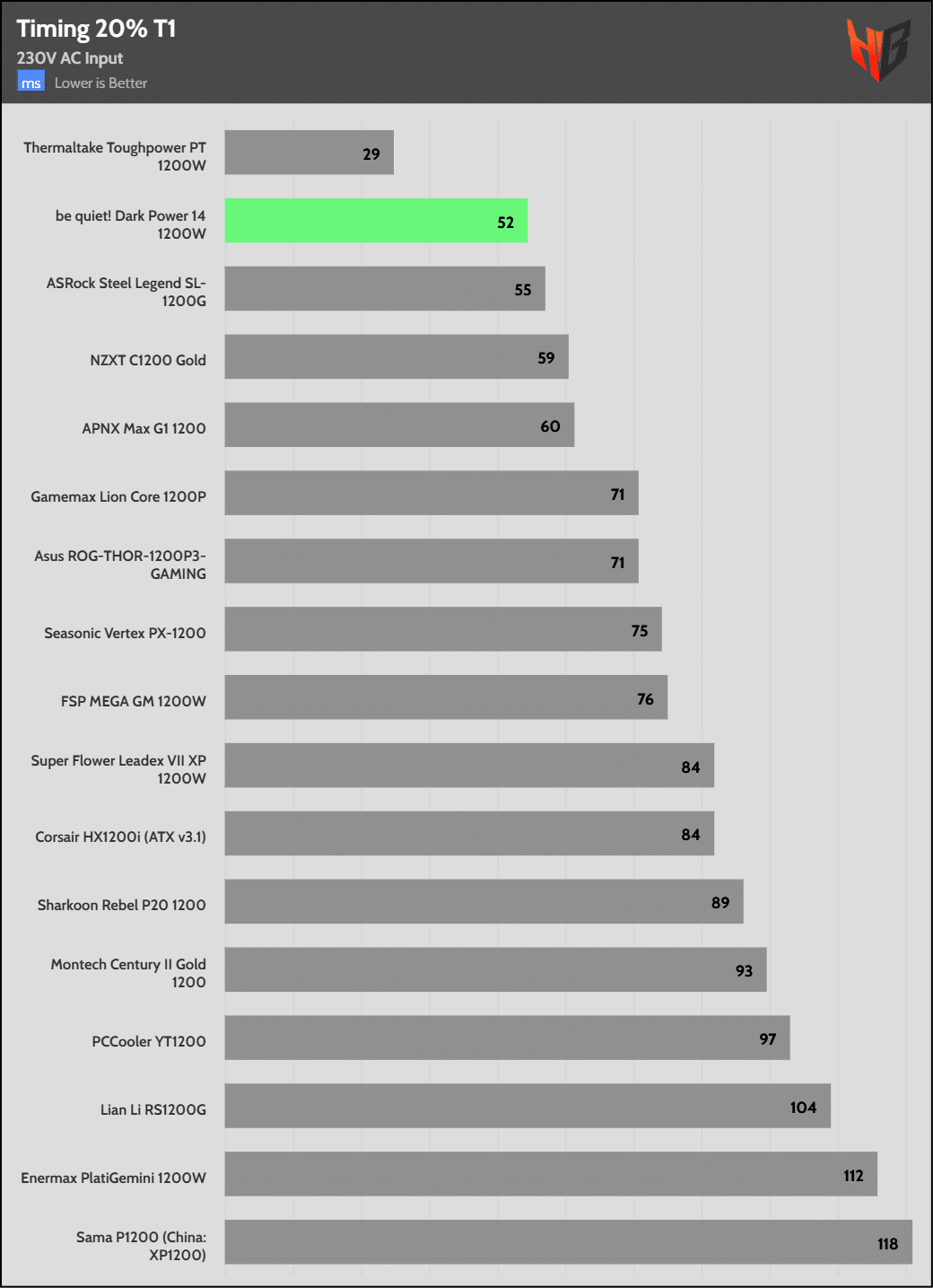
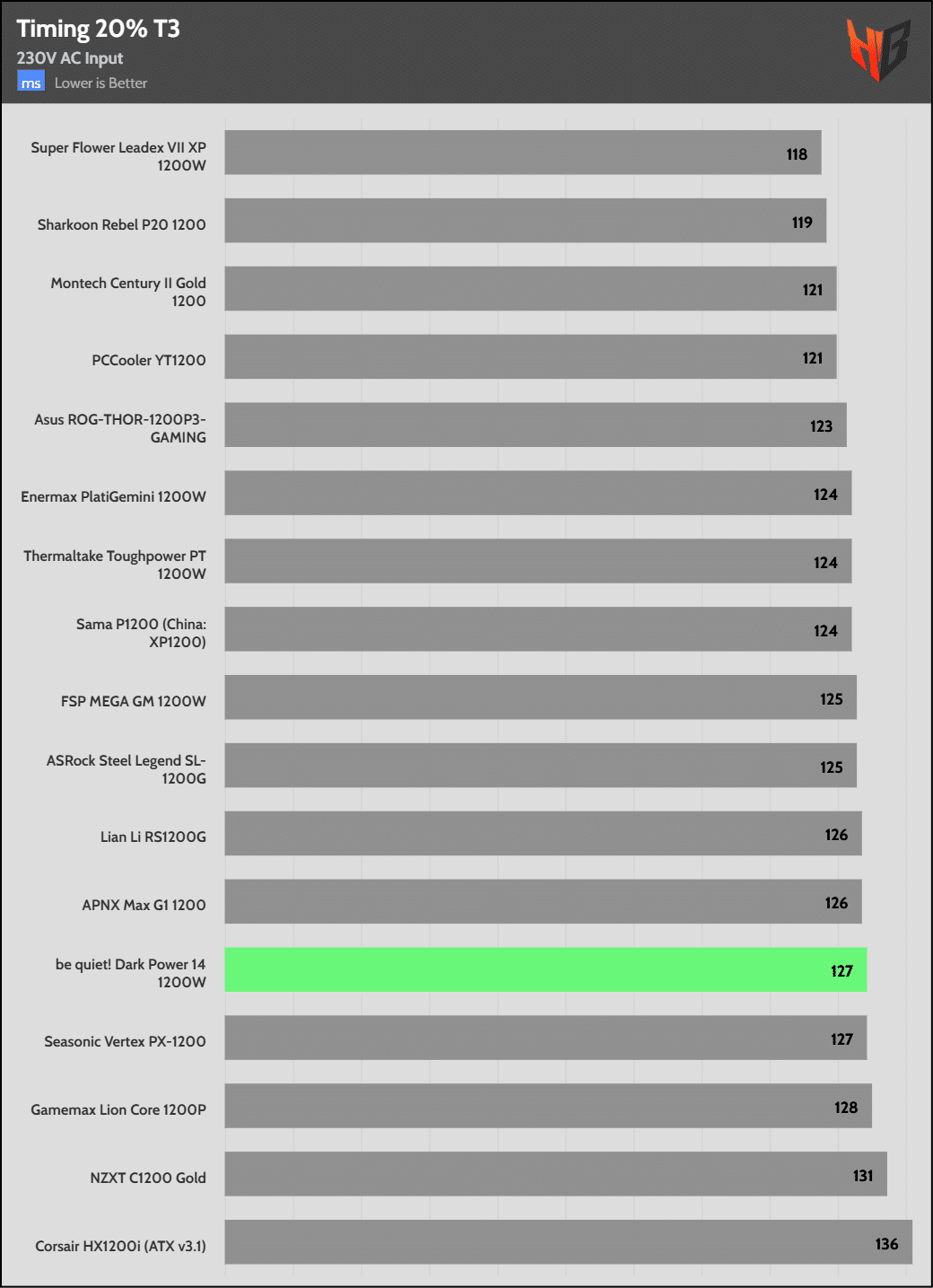
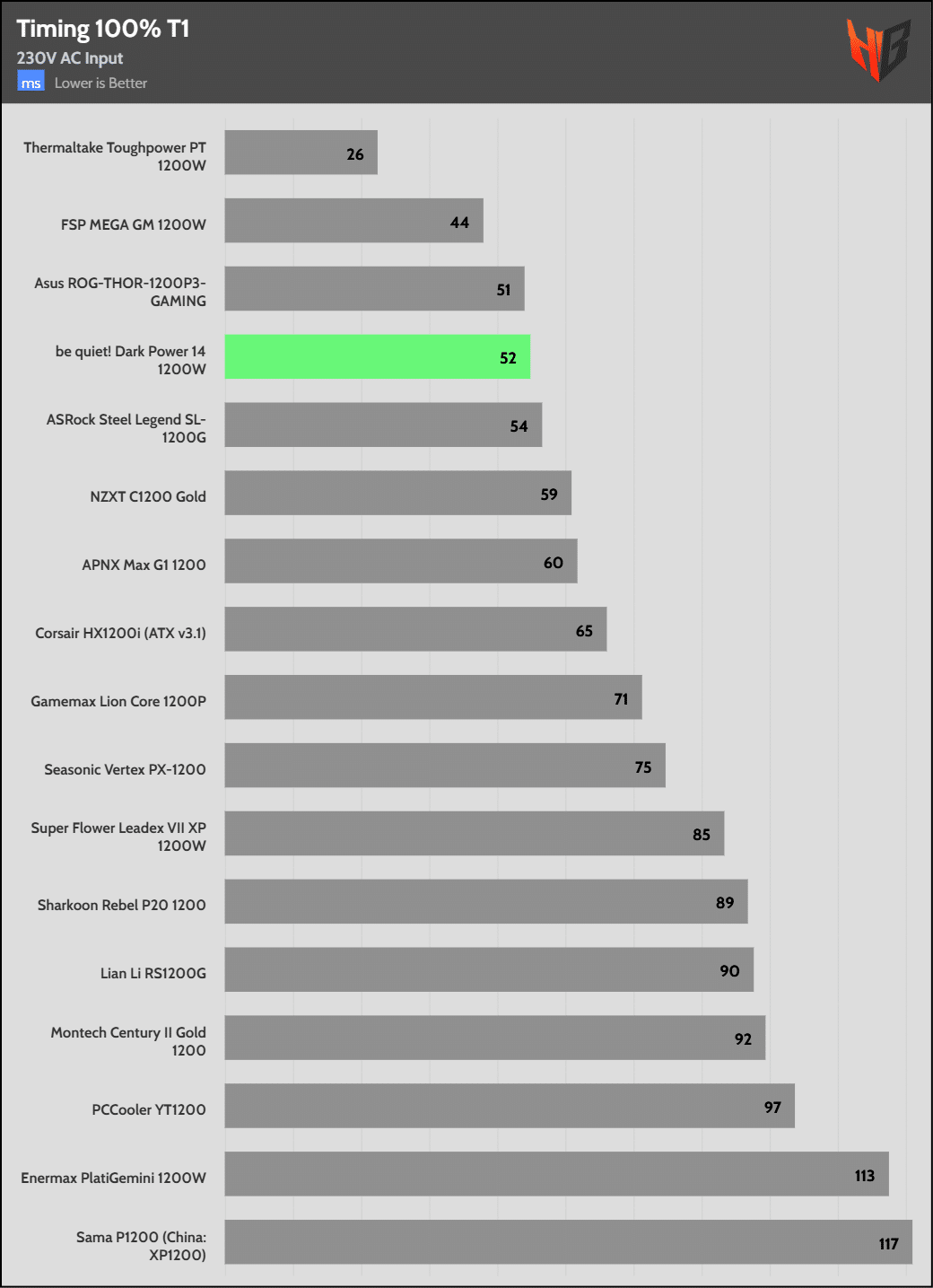
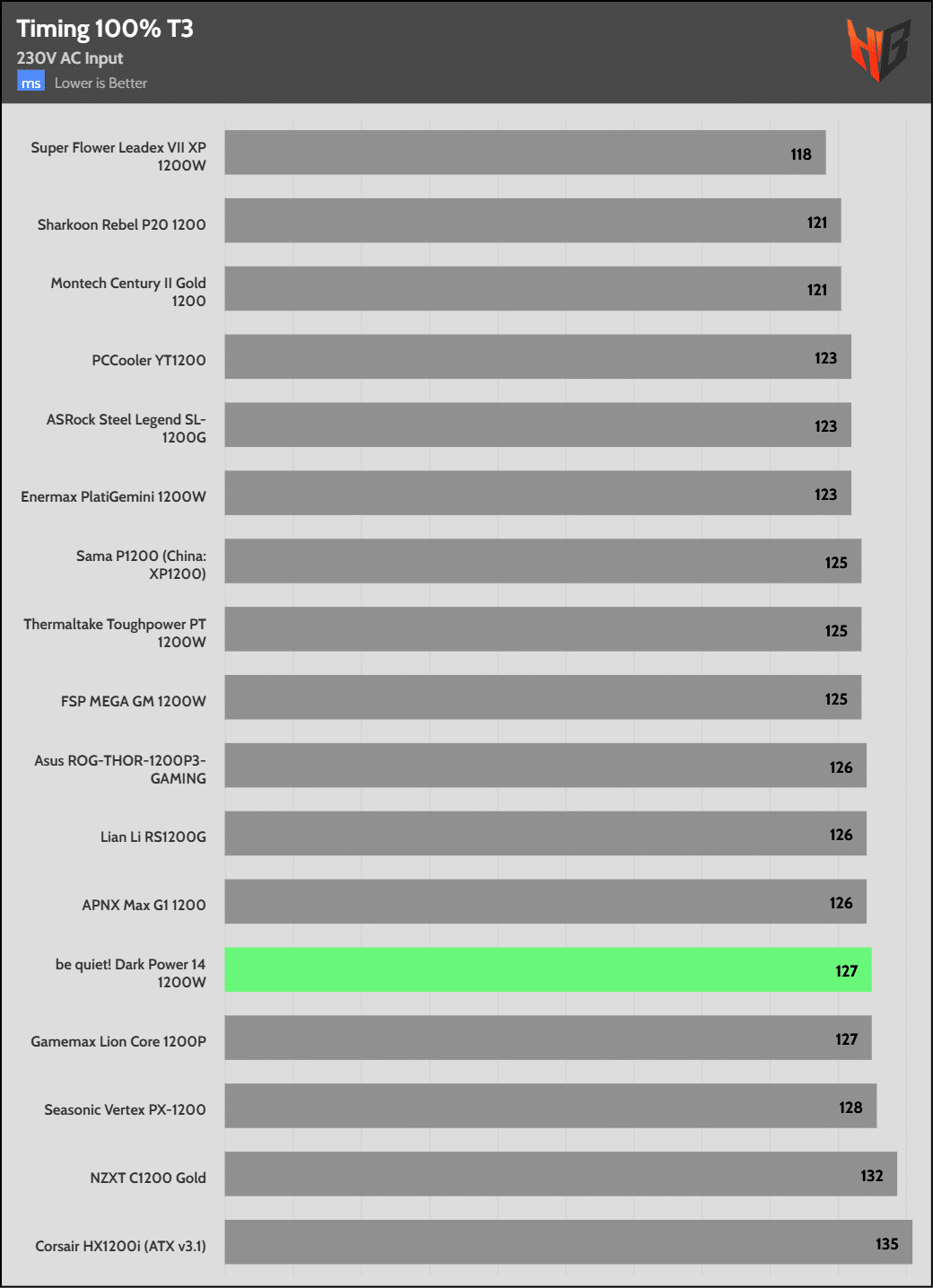
The PSU supports Alternative Low Power Modes.
I have the 1200w Dark power 14, Amazing psu and completely silent too all round.
The addition of a semi-passive fan mode switch was much requested for Be Quiet to implement to there psus and the Dark power 14 delivers that, now the fan doesn’t have to constantly run for complete silence at most normal loads.
My only gripe is the cables could be more flexible but that is a non issue to the performance being so excellent. I just have to wait till I can buy some replacement cables for the psu.
Which components does the aluminium radiator actually touch?
so this PSU was use main caps TK or Rubycon, on the sheet was listed Rubycon but in the photos says it was TK or BeQuiet gonna change their main caps config on a retail product so you just listed in a datasheet usinf Rubycon main caps ?
My mistake sorry. It has TK caps. I don’t know why I left Rubycon in the part analysis. Fixed that.
Since Spain is my home market i want to ask if you know anything about this power supply from a local Brand called UNYKAch. They claim it is cybernetics gold certified but couldn’t find anything about it in the database. https://unykach.com/es/consumo/fuentes-de-alimentacion/fuentes-de-alimentacion-atx/fuente-de-alimentacion-atx-atilius-3-1-750w-gold-uk213750/
Hi! They sent samples for testing to Cybenetics, but they are not tested yet.
Good to know.
Thanks for the review! We’ll see in the 850W,1000W reviews the Pure Power 13 M numbers together but if the lower wattage models are in line with this one then in some areas the Pure Power 13 M is actually better so hard to justify spending this much more for this one. Which one would you pick? Be Quiet is on the right path thats for sure and should be on buyers list performance wise but reliability matters more since we don’t want to burn down the house haha, but you can read horror stories about every brand so who knows which to pick. Hopefully my 2019 Seasonic Focus Gold will hold on for a while.
Even the cables don’t seem to be much more premium, the cables with the Pure Power 13 M are rather stiff some say, would be nice if other than the overall cable quality you would mention flexibility aspect of them, often overlooked quality.
Oh, good timing for this review ;-). Managed to order this psu, for 250€ @Alternate.
It will replace my older BQ DP 12 850W, for more future proof.