Transient Response
Transient response in power supplies refers to how quickly and effectively the PSU stabilizes its output voltage during sudden changes in load demand, such as when a CPU or GPU increases its power draw. It’s measured by the time and voltage deviation during these shifts. A faster, smaller transient response ensures stable power, preventing instability and component damage.
20% Load – 20ms
| Advanced Transient Response 20% - 50 Hz - No Caps | ||||
| Voltage | Before | After | Change | Pass/Fail |
| 12V | 11.992V | 11.929V | 0.52% | Pass |
| 5V | 5.032V | 4.946V | 1.71% | Pass |
| 3.3V | 3.284V | 3.175V | 3.32% | Pass |
| 5VSB | 5.021V | 4.989V | 0.64% | Pass |
50% Load -20ms
| Advanced Transient Response 50% - 50 Hz - No Caps | ||||
| Voltage | Before | After | Change | Pass/Fail |
| 12V | 11.969V | 11.907V | 0.52% | Pass |
| 5V | 5.025V | 4.942V | 1.65% | Pass |
| 3.3V | 3.273V | 3.158V | 3.51% | Pass |
| 5VSB | 4.978V | 4.943V | 0.69% | Pass |


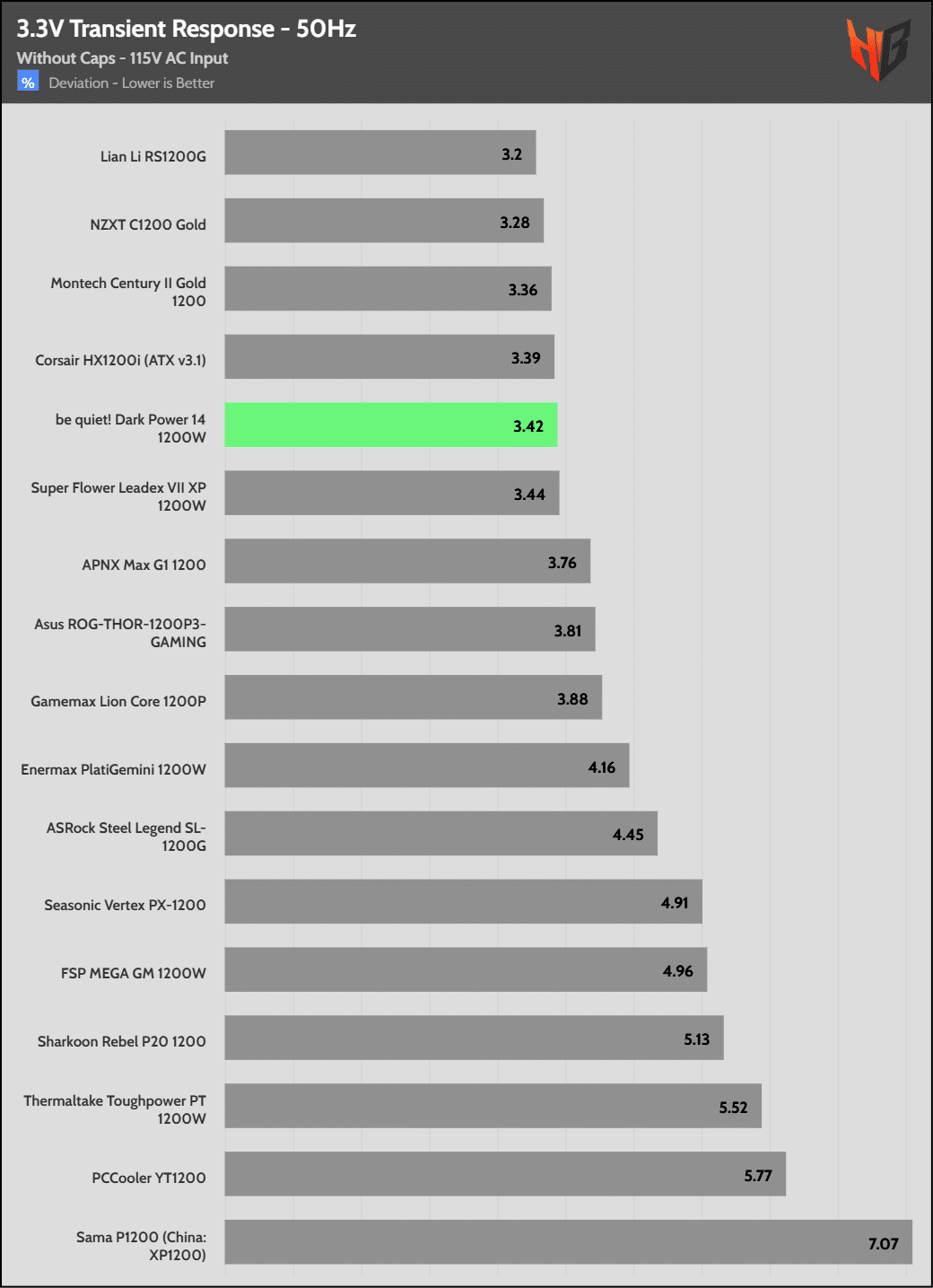
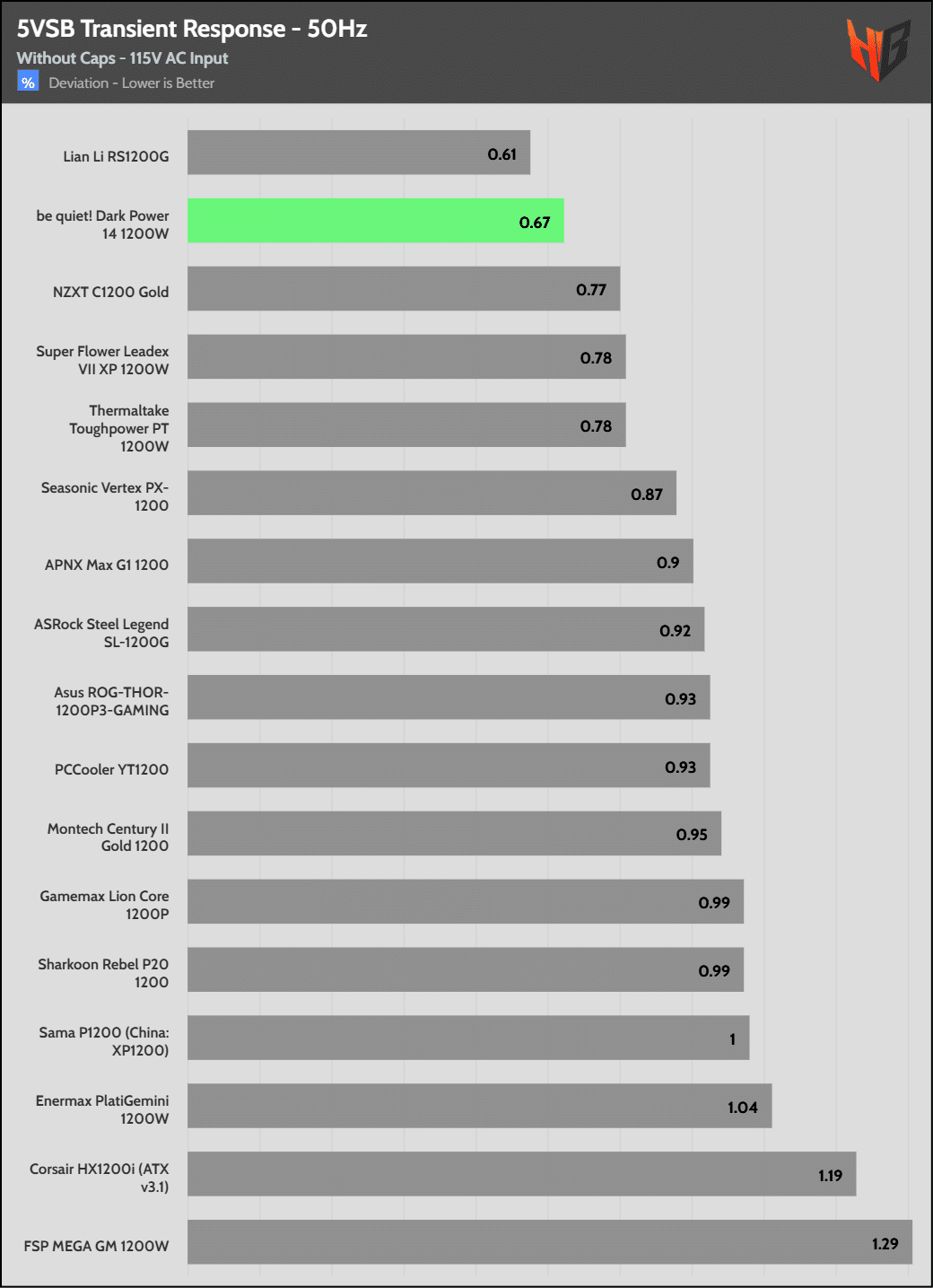
The transient response with normal loads is excellent at 12V and pretty good at 5V. The deviations are low at 3.3V, but because of the low nominal voltage, the voltage level on this rail drops well below 3.2V once the transient load is applied.
Transient Response ATX v3.1 Tests
[Note] For PSUs without a 12+4 pin connector, the maximum applied load for the transient response tests is 150%, rather than 200%.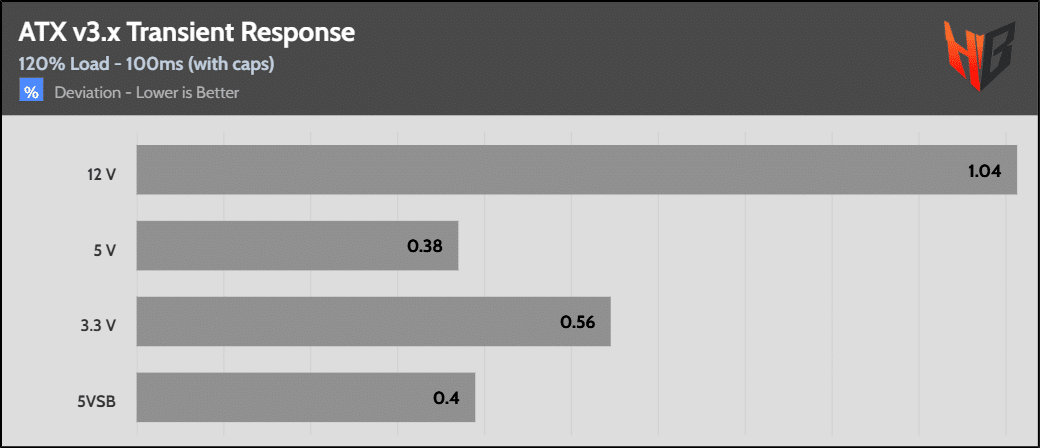

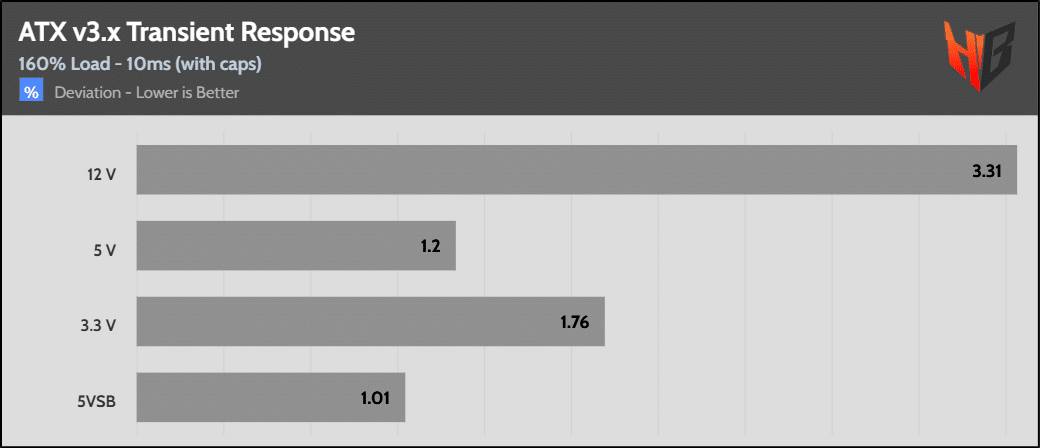


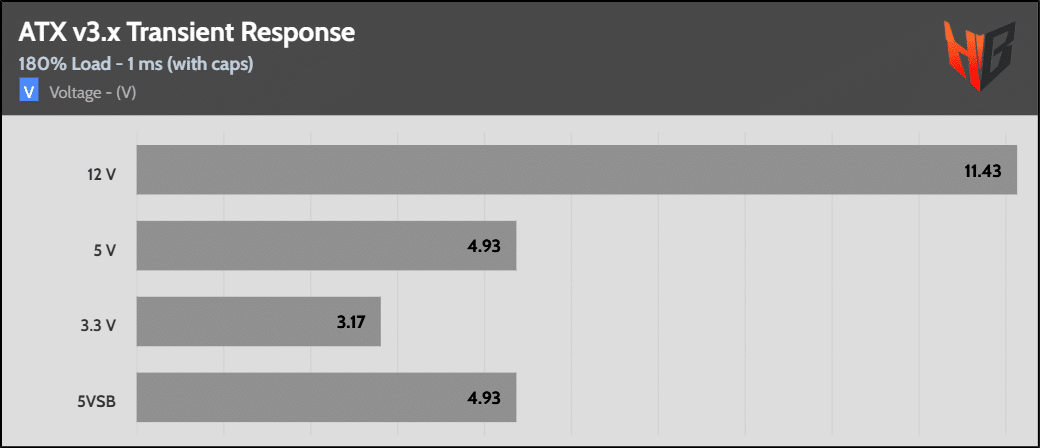

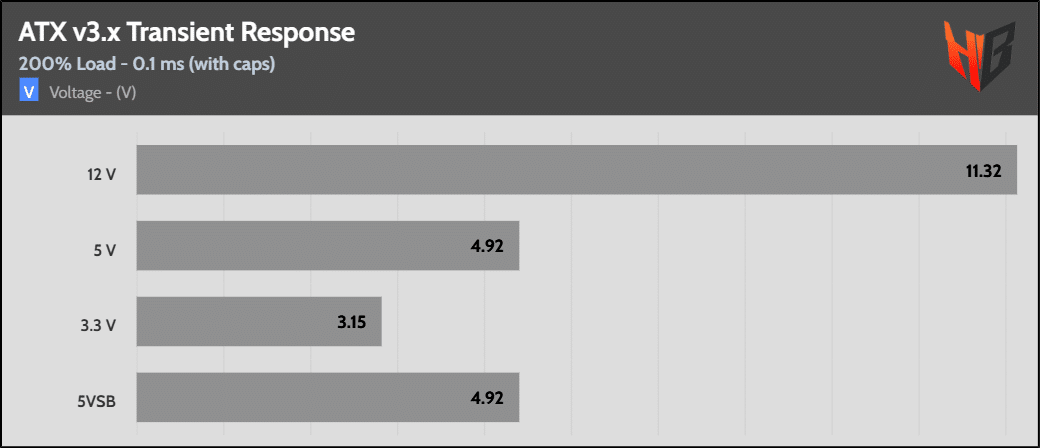
The PSU passes all ATX v3.1 transient response tests, but the 3.3V rails drop low.
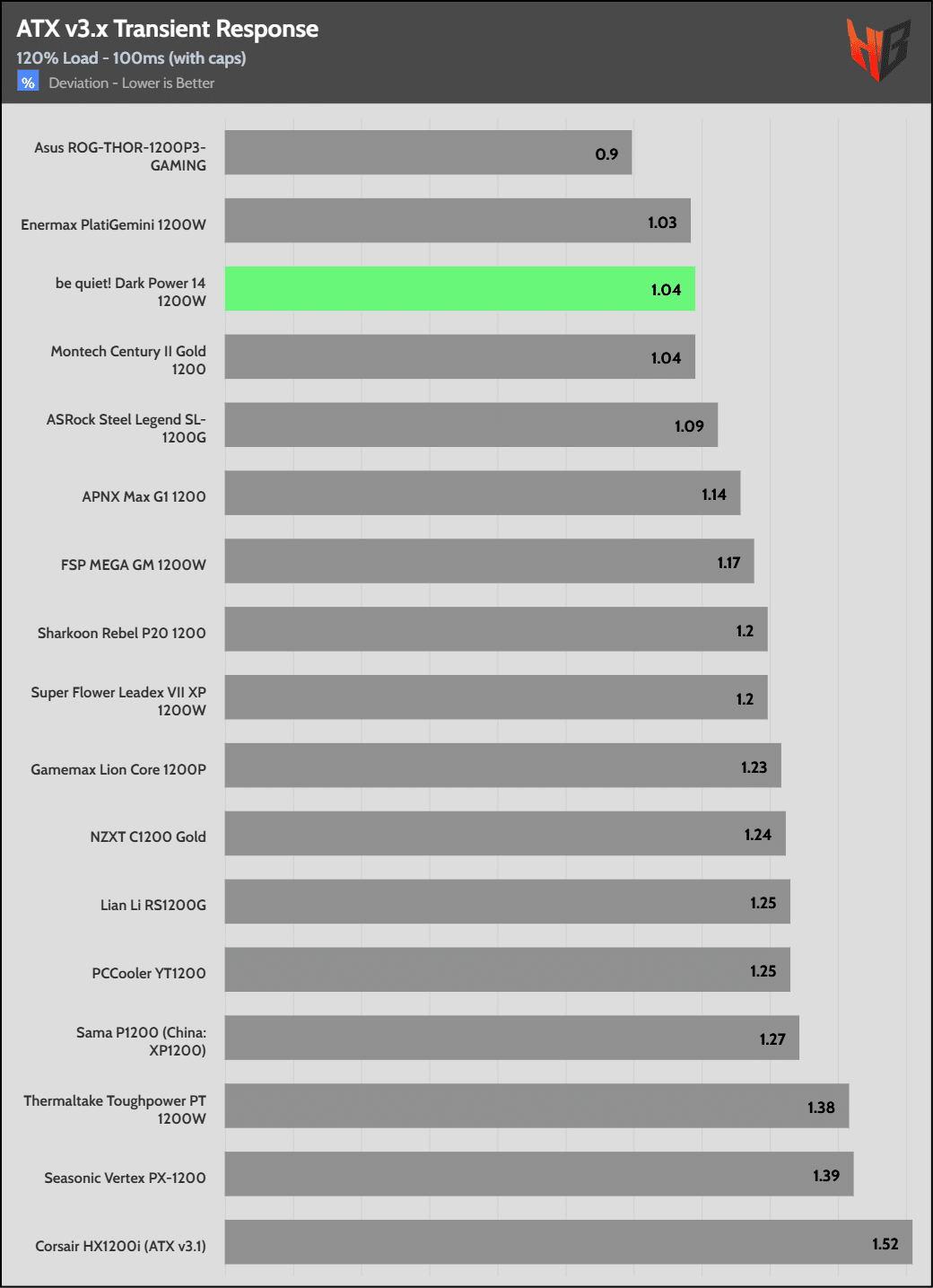
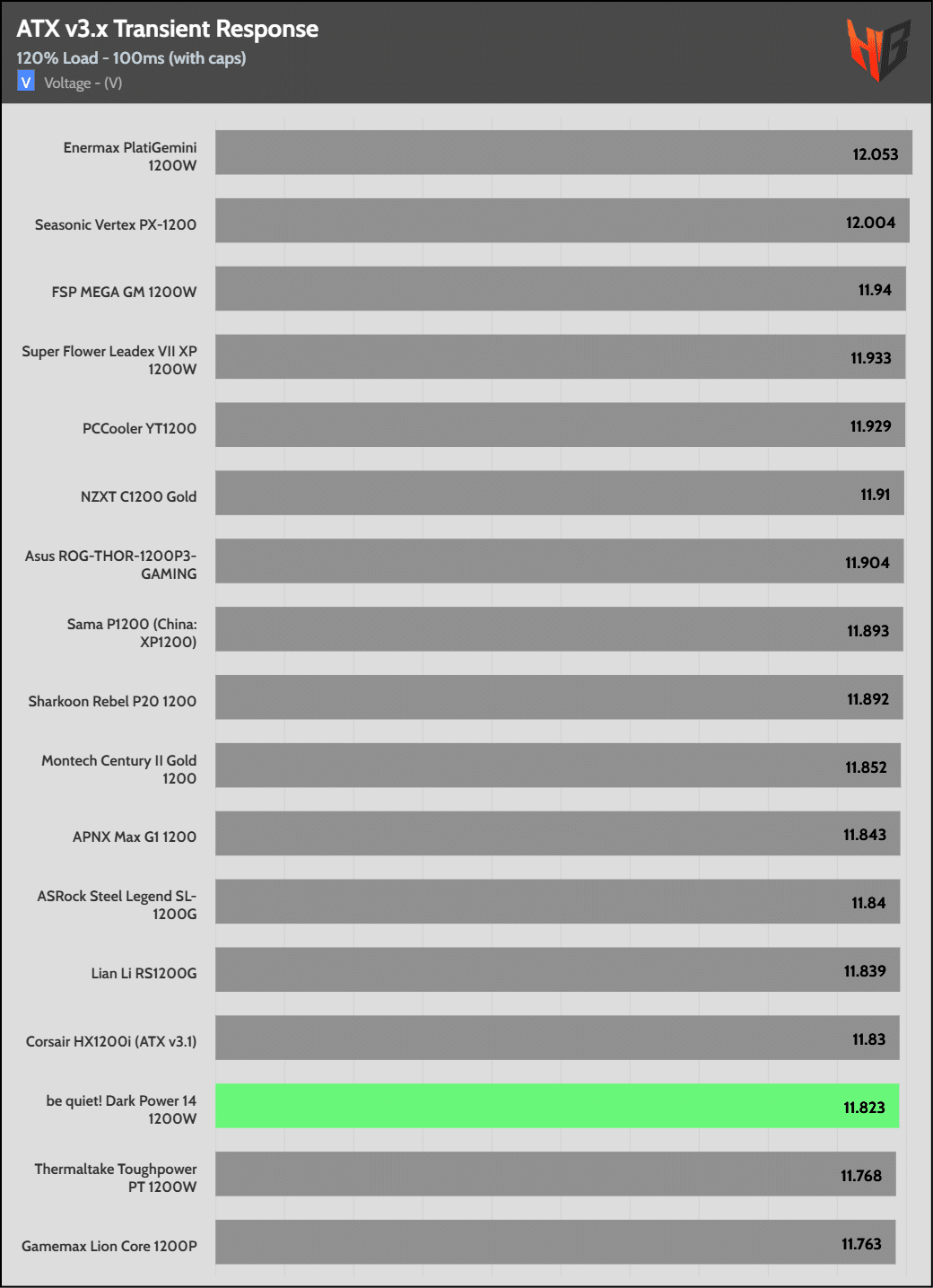
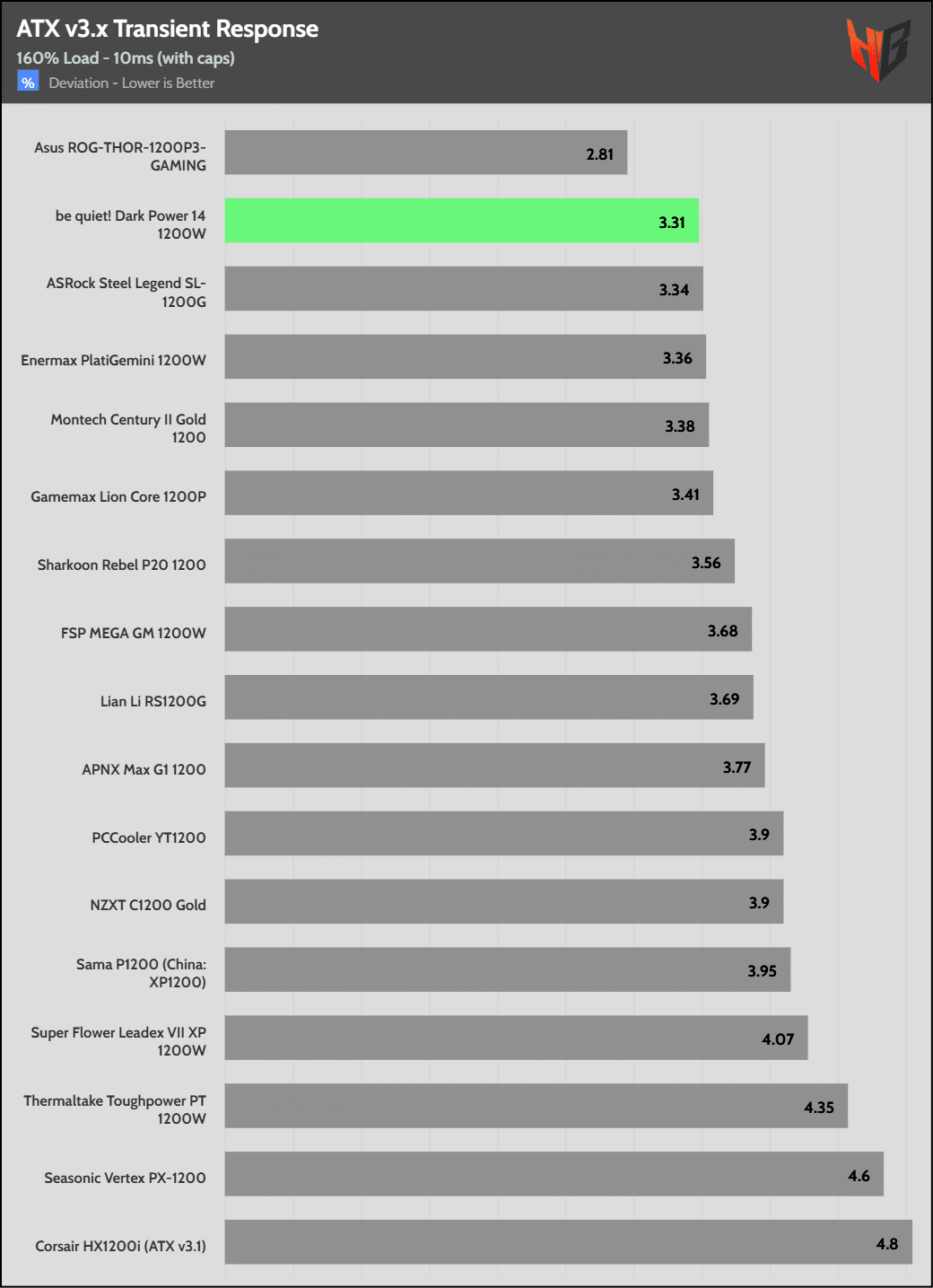

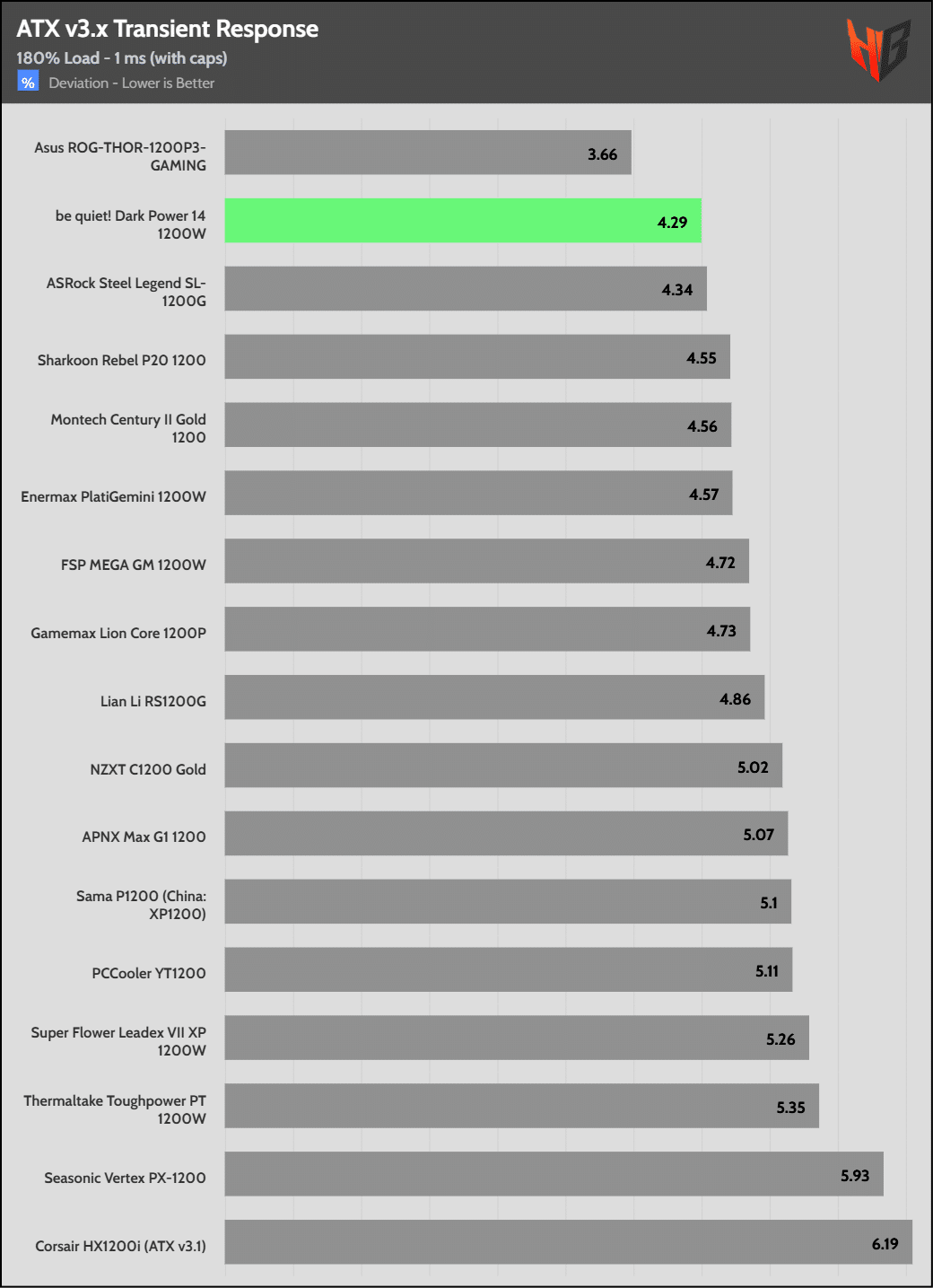
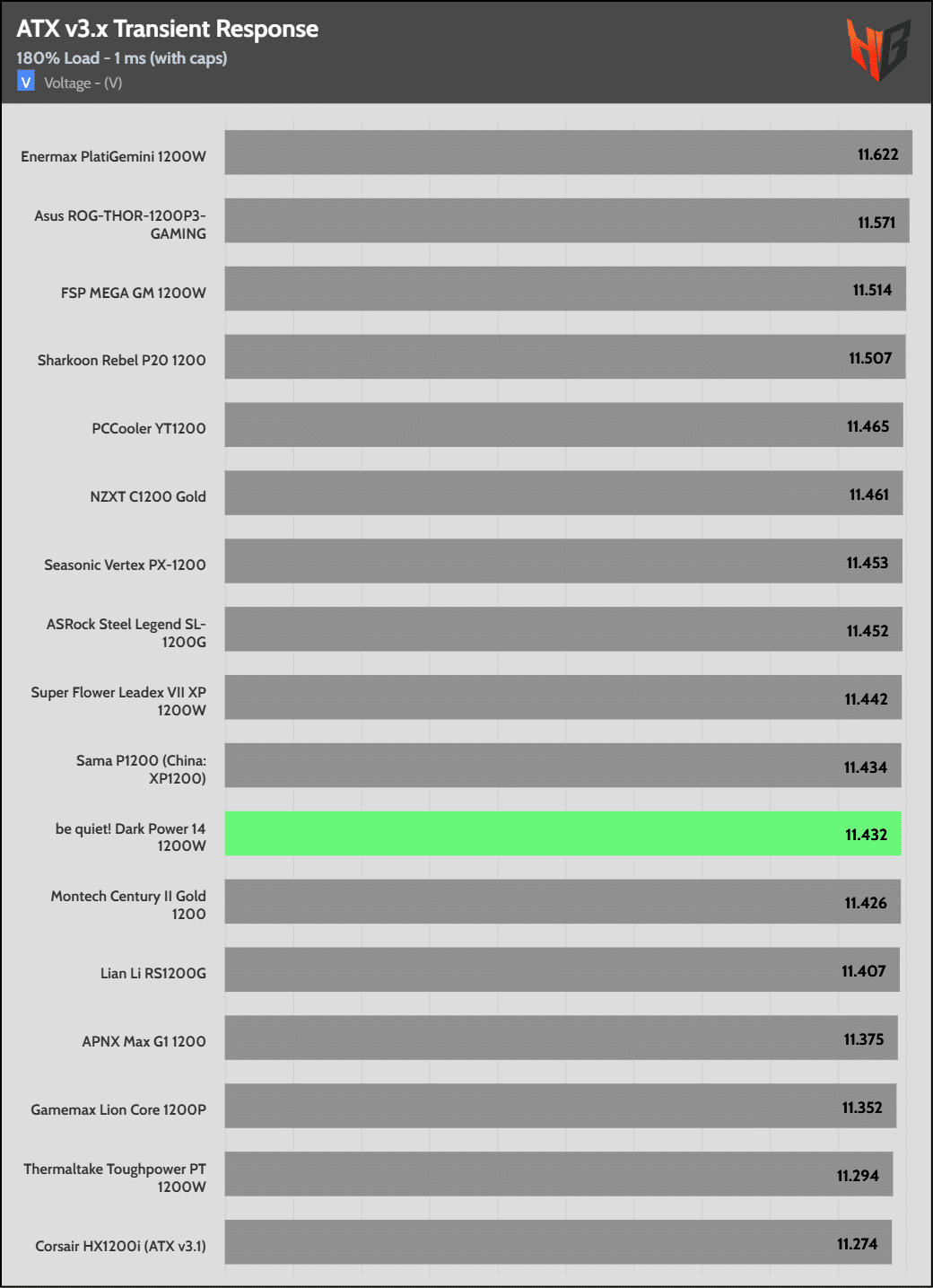
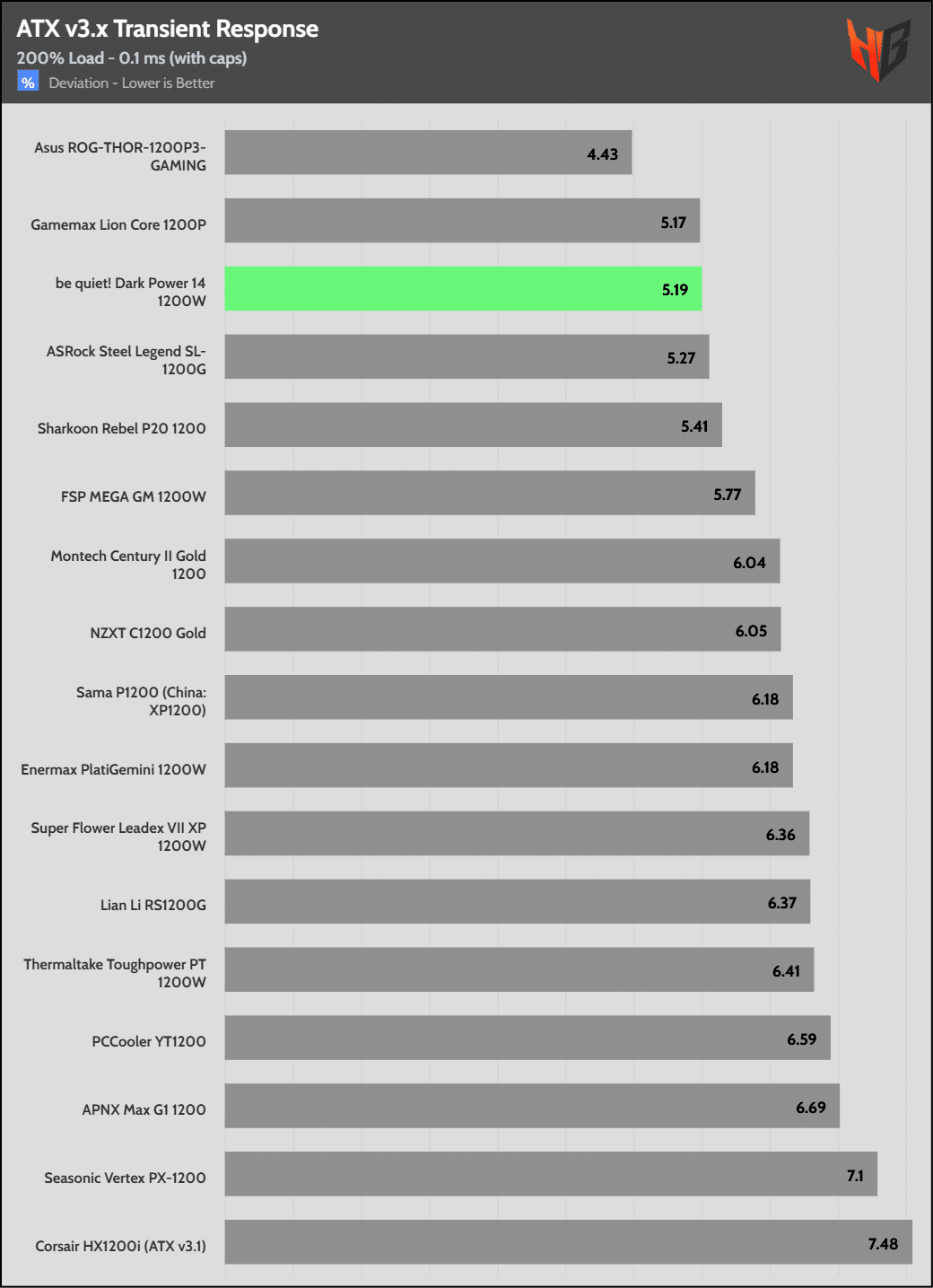
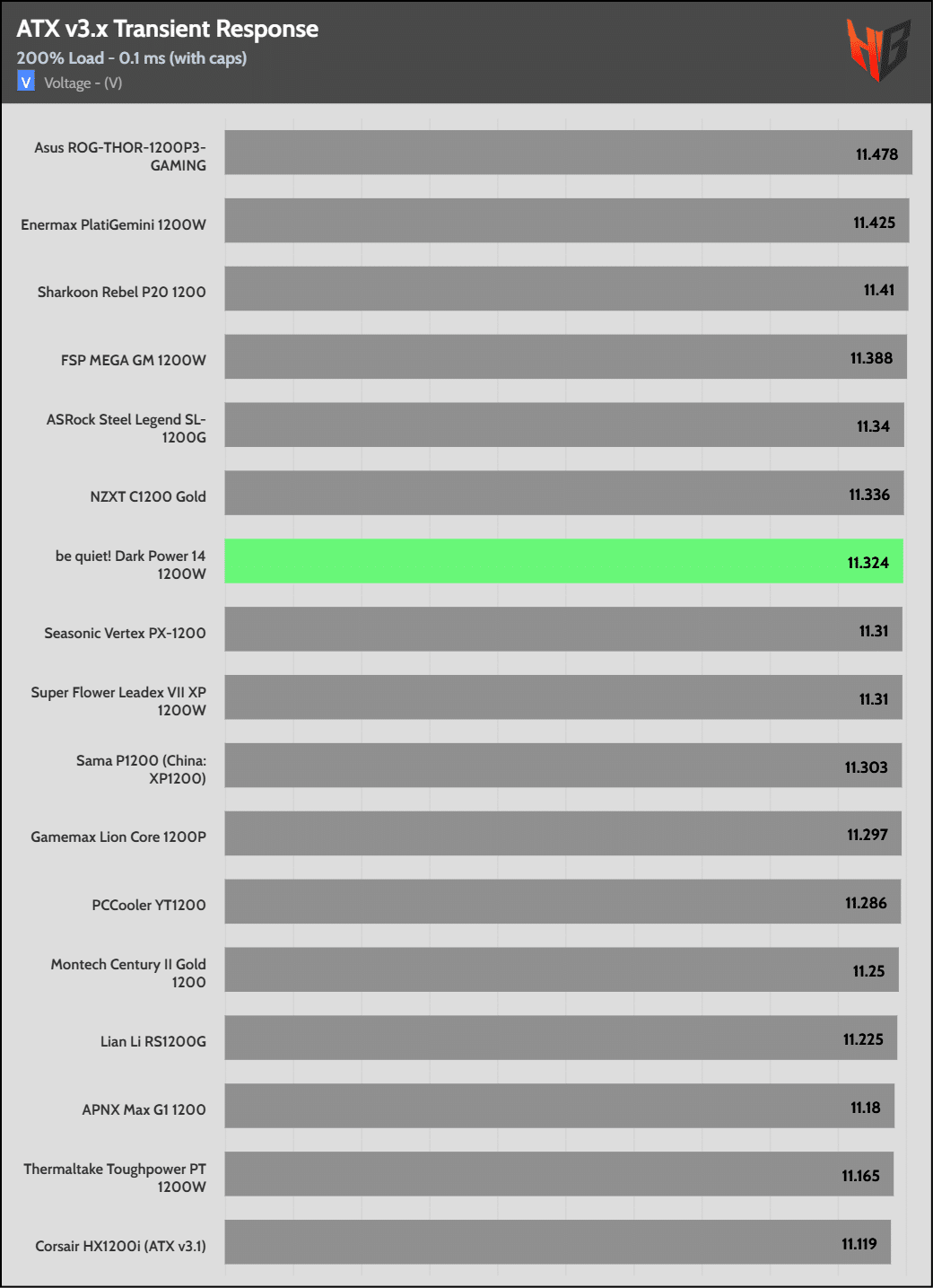
The 12V rail’s performance is good enough in these tests.
I have the 1200w Dark power 14, Amazing psu and completely silent too all round.
The addition of a semi-passive fan mode switch was much requested for Be Quiet to implement to there psus and the Dark power 14 delivers that, now the fan doesn’t have to constantly run for complete silence at most normal loads.
My only gripe is the cables could be more flexible but that is a non issue to the performance being so excellent. I just have to wait till I can buy some replacement cables for the psu.
Which components does the aluminium radiator actually touch?
so this PSU was use main caps TK or Rubycon, on the sheet was listed Rubycon but in the photos says it was TK or BeQuiet gonna change their main caps config on a retail product so you just listed in a datasheet usinf Rubycon main caps ?
My mistake sorry. It has TK caps. I don’t know why I left Rubycon in the part analysis. Fixed that.
Since Spain is my home market i want to ask if you know anything about this power supply from a local Brand called UNYKAch. They claim it is cybernetics gold certified but couldn’t find anything about it in the database. https://unykach.com/es/consumo/fuentes-de-alimentacion/fuentes-de-alimentacion-atx/fuente-de-alimentacion-atx-atilius-3-1-750w-gold-uk213750/
Hi! They sent samples for testing to Cybenetics, but they are not tested yet.
Good to know.
Thanks for the review! We’ll see in the 850W,1000W reviews the Pure Power 13 M numbers together but if the lower wattage models are in line with this one then in some areas the Pure Power 13 M is actually better so hard to justify spending this much more for this one. Which one would you pick? Be Quiet is on the right path thats for sure and should be on buyers list performance wise but reliability matters more since we don’t want to burn down the house haha, but you can read horror stories about every brand so who knows which to pick. Hopefully my 2019 Seasonic Focus Gold will hold on for a while.
Even the cables don’t seem to be much more premium, the cables with the Pure Power 13 M are rather stiff some say, would be nice if other than the overall cable quality you would mention flexibility aspect of them, often overlooked quality.
Oh, good timing for this review ;-). Managed to order this psu, for 250€ @Alternate.
It will replace my older BQ DP 12 850W, for more future proof.