Transient Response
Transient response in power supplies refers to how quickly and effectively the PSU stabilizes its output voltage during sudden changes in load demand, such as when a CPU or GPU increases its power draw. It’s measured by the time and voltage deviation during these shifts. A faster, smaller transient response ensures stable power, preventing instability and component damage.
20% Load – 20ms
| Advanced Transient Response 20% - 50 Hz - No Caps | ||||
| Voltage | Before | After | Change | Pass/Fail |
| 12V | 12.034V | 11.971V | 0.52% | Pass |
| 5V | 5.065V | 4.980V | 1.68% | Pass |
| 3.3V | 3.299V | 3.185V | 3.45% | Pass |
| 5VSB | 5.029V | 5.000V | 0.58% | Pass |
50% Load -20ms
| Advanced Transient Response 50% - 50 Hz - No Caps | ||||
| Voltage | Before | After | Change | Pass/Fail |
| 12V | 12.009V | 11.948V | 0.51% | Pass |
| 5V | 5.061V | 4.980V | 1.61% | Pass |
| 3.3V | 3.293V | 3.174V | 3.60% | Pass |
| 5VSB | 4.986V | 4.954V | 0.64% | Pass |
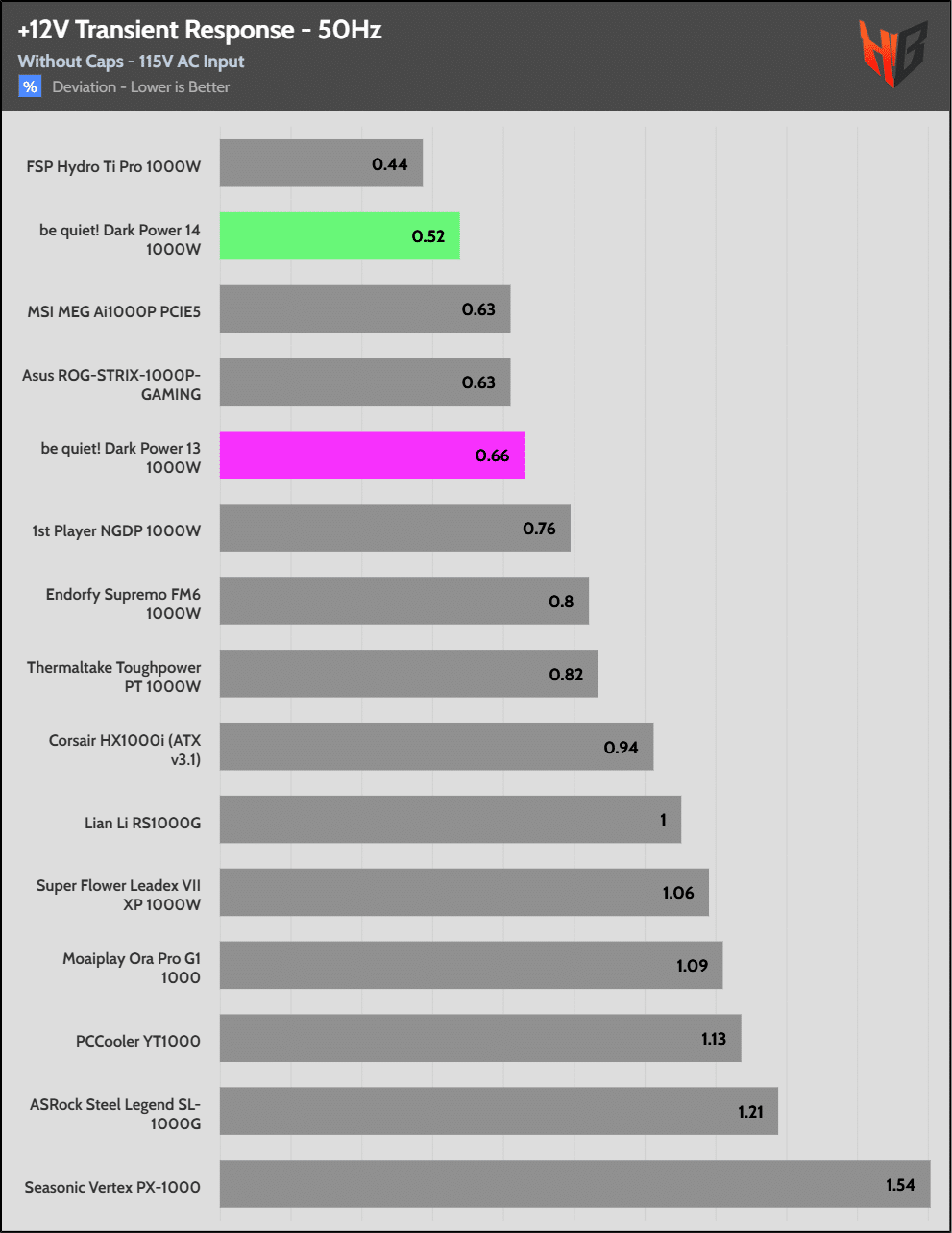
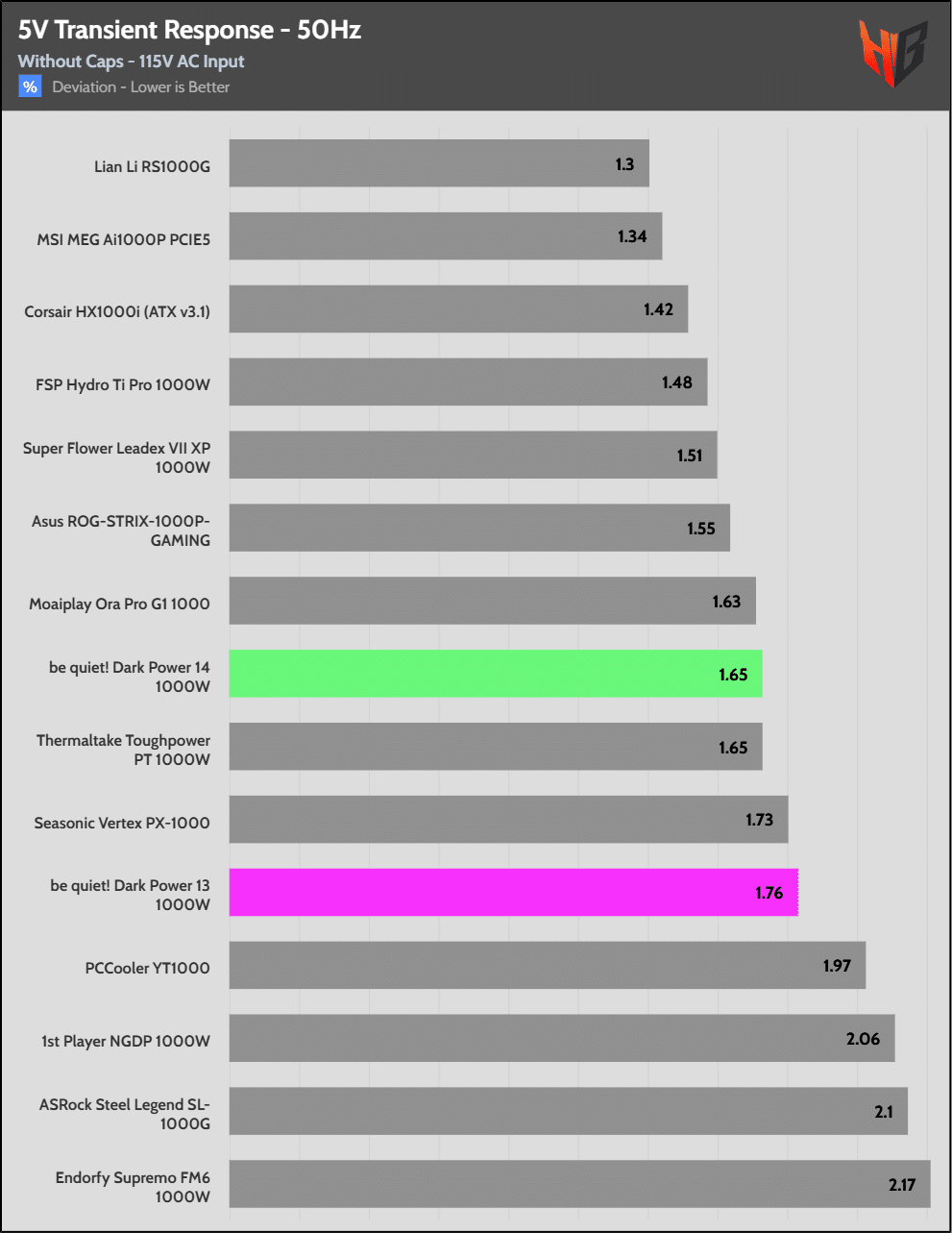
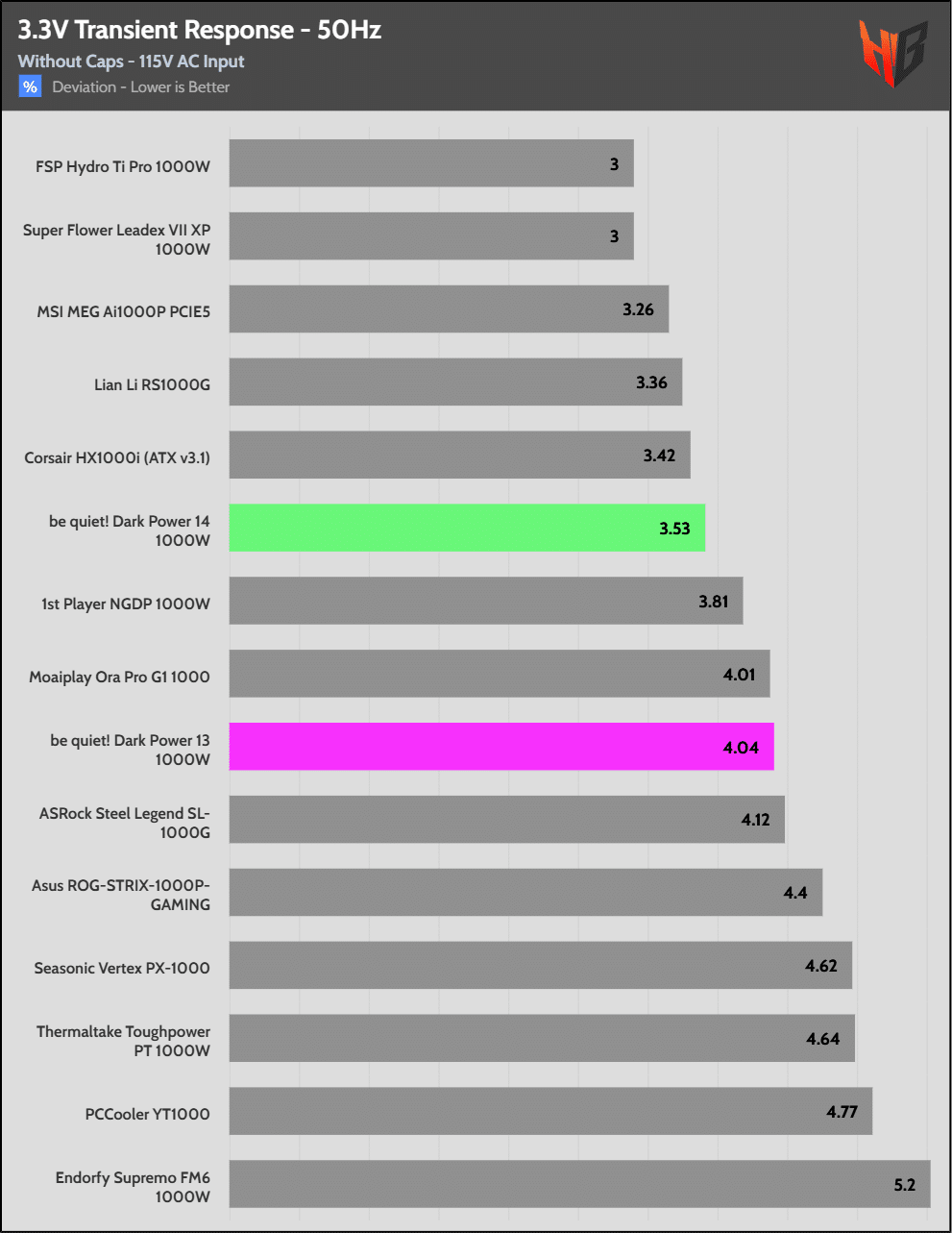
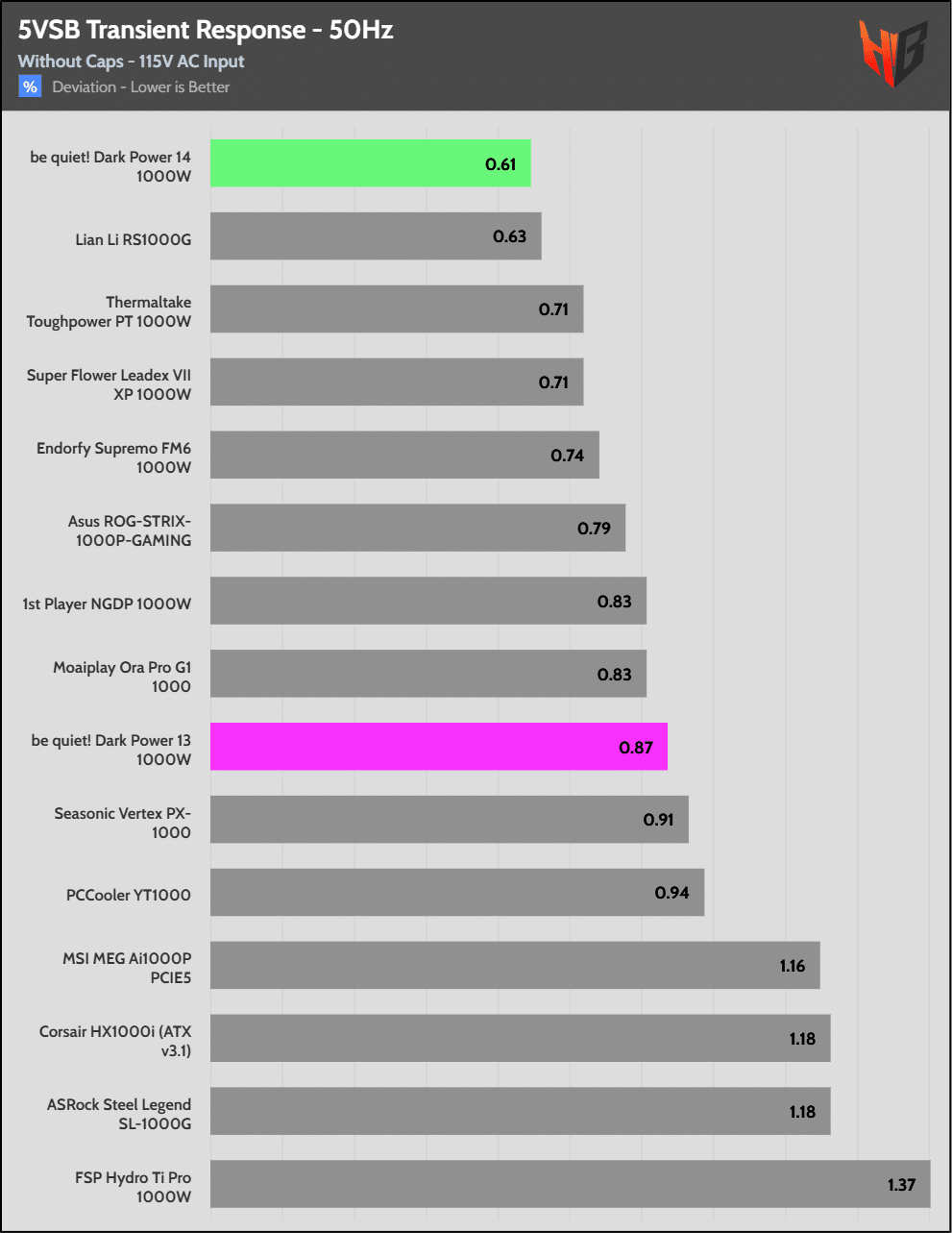
The transient response with normal loads is excellent at 12V and pretty good at 5V. The deviations are relatively low at 3.3V, but because of the low nominal voltage, the rail voltage drops well below 3.2V once the transient load is applied.
Transient Response ATX v3.1 Tests
[Note] For PSUs without a 12+4 pin connector, the maximum applied load for the transient response tests is 150%, rather than 200%.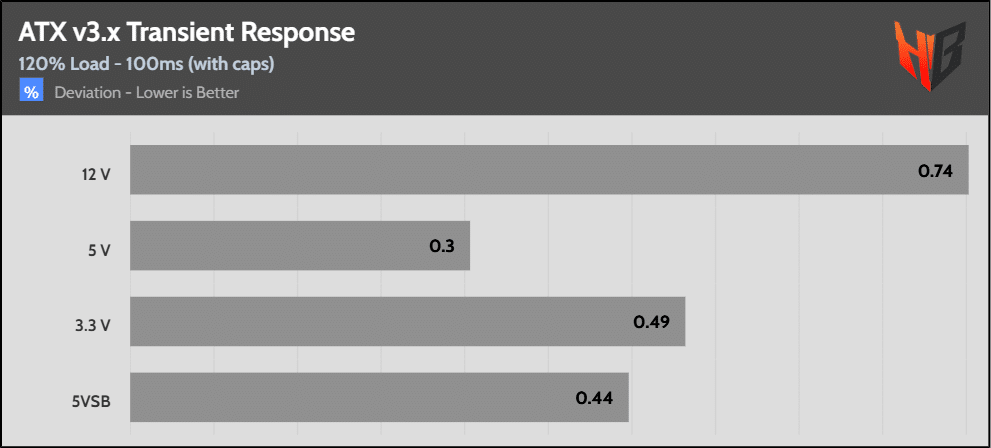
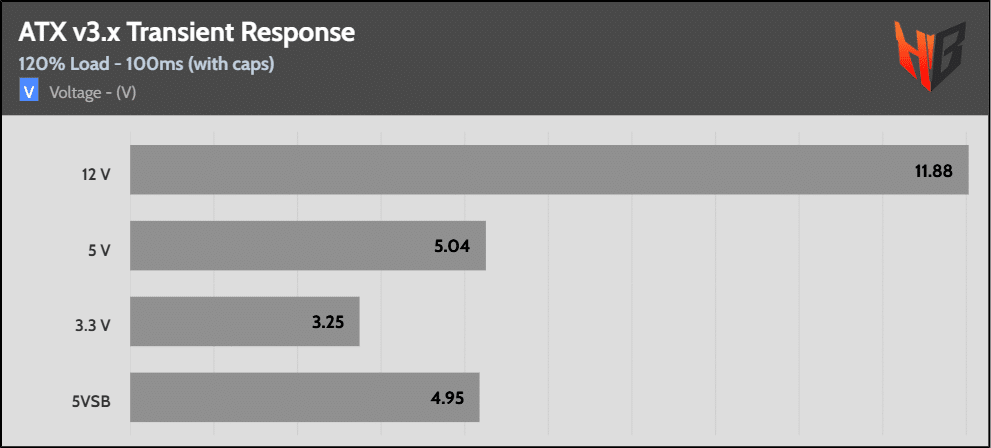
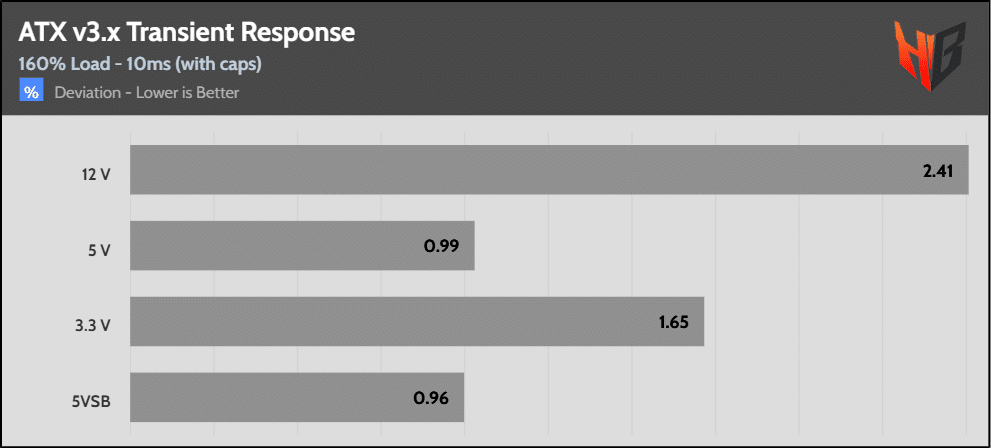
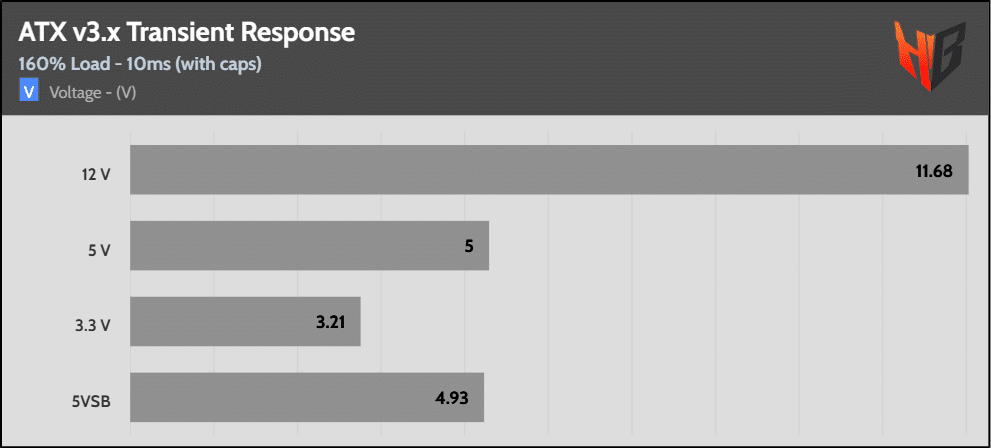
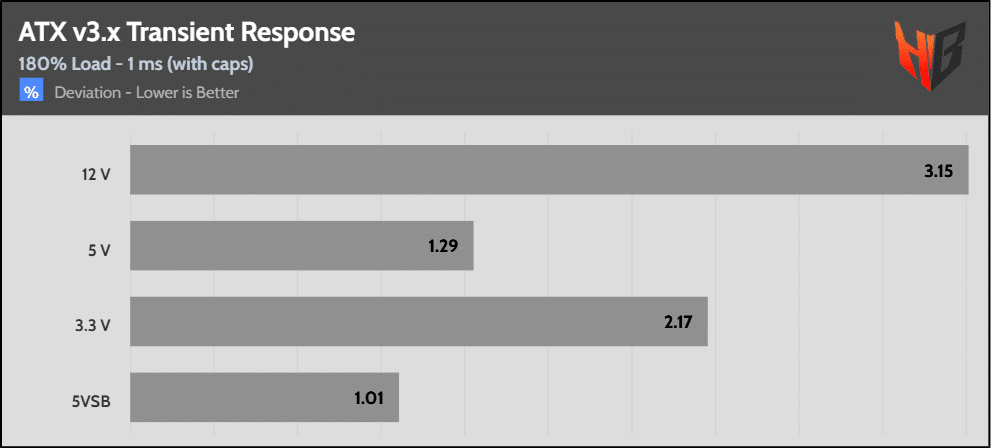
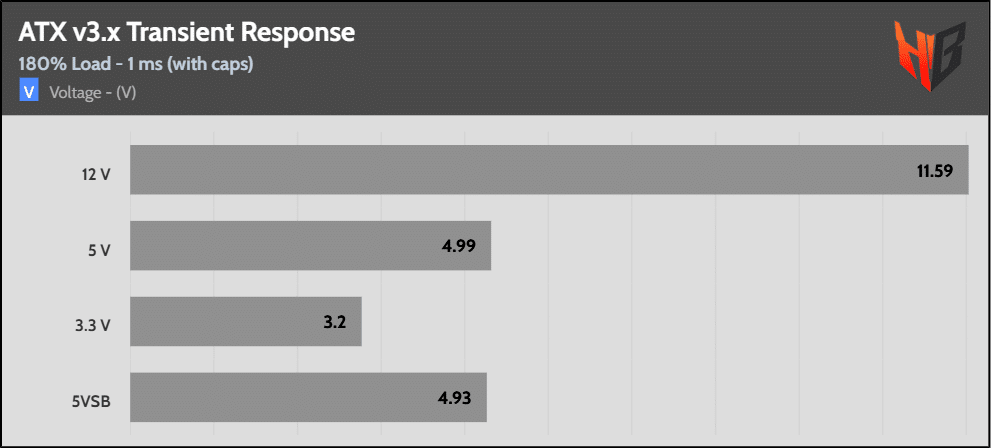
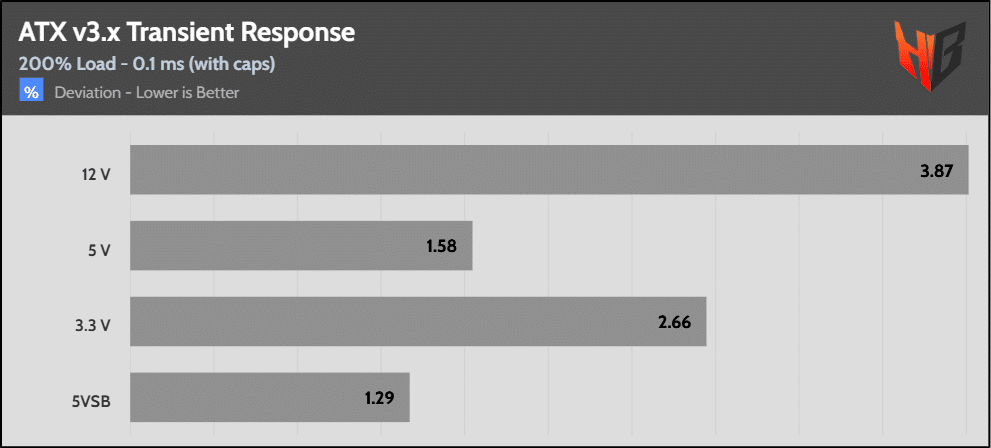
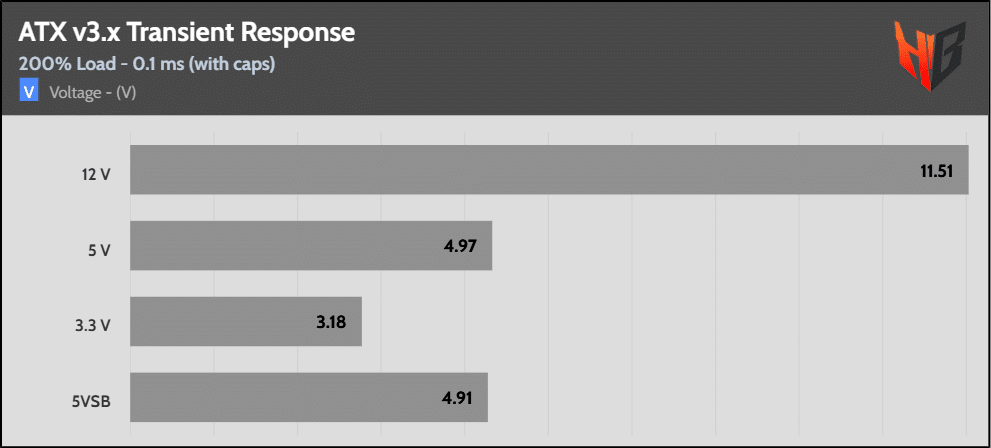
The PSU passes all ATX v3.1 transient response tests, but the 3.3V rails drop low.
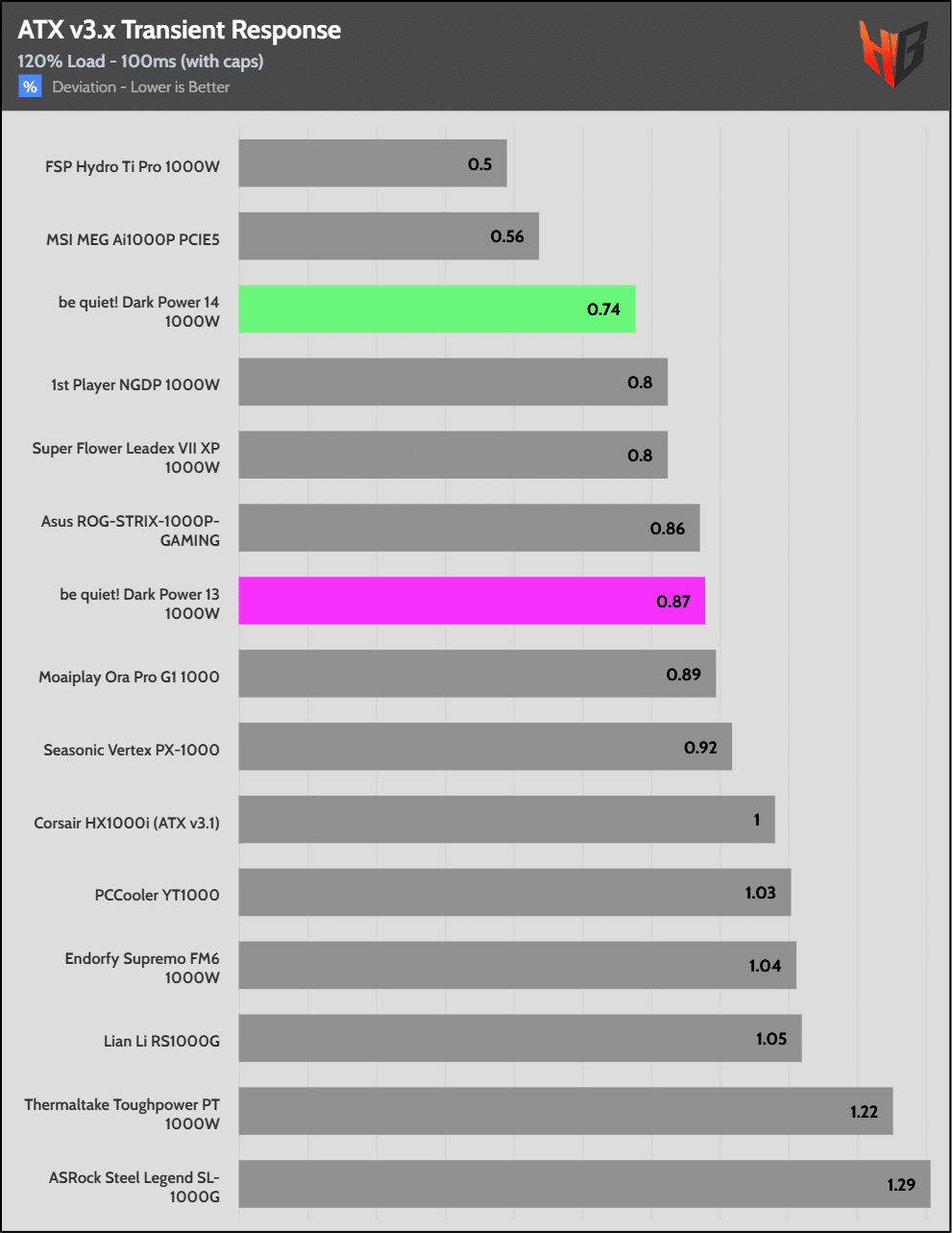
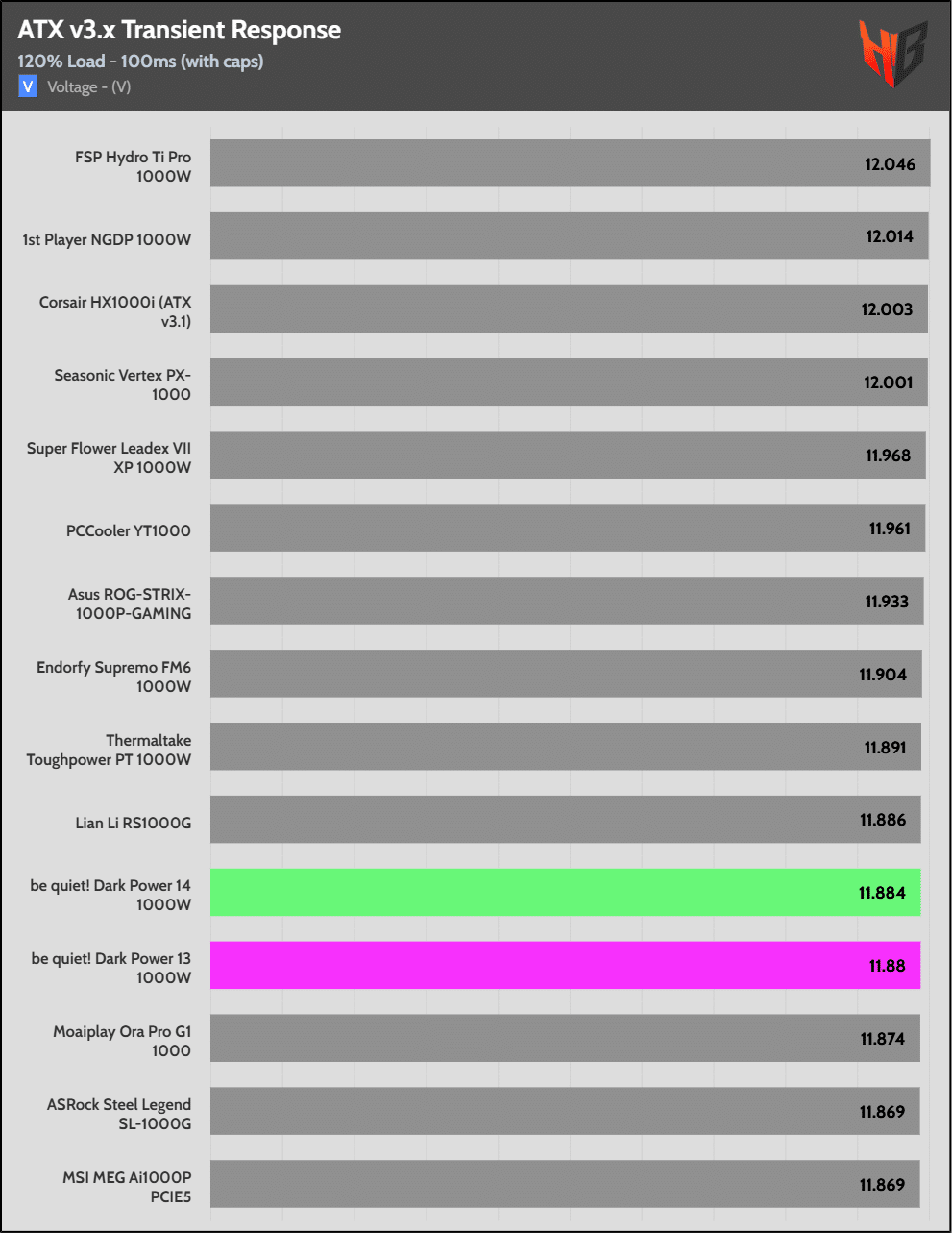
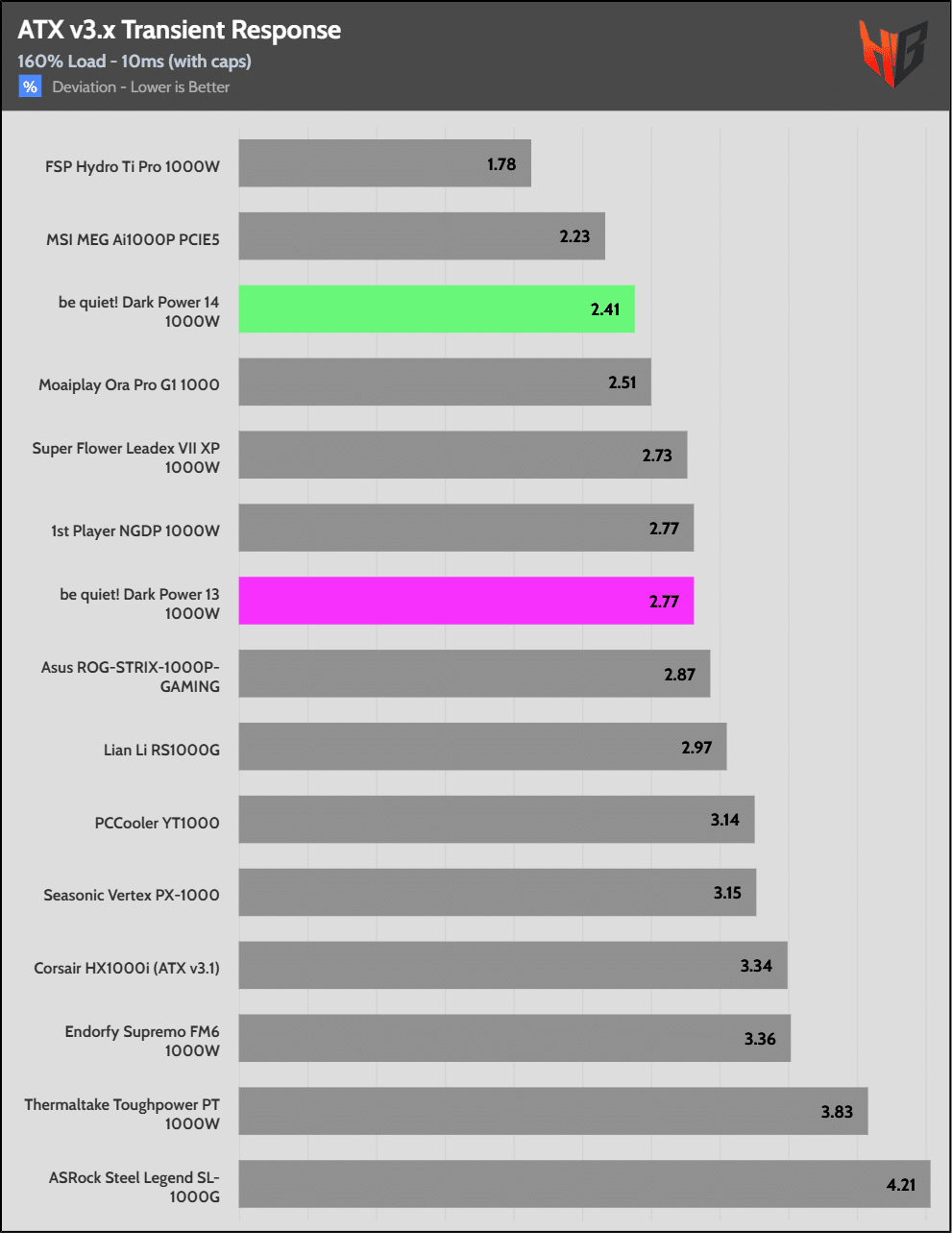
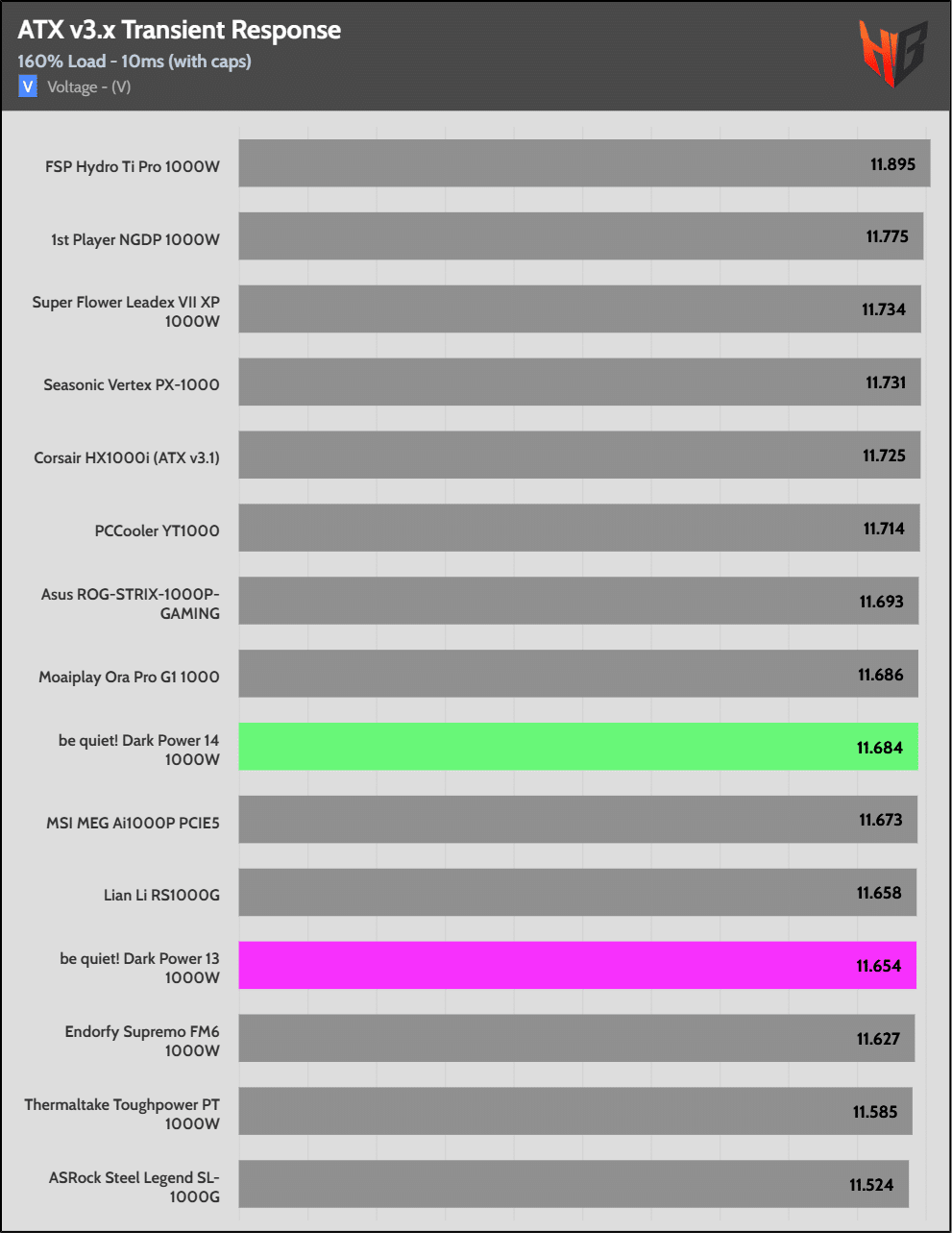
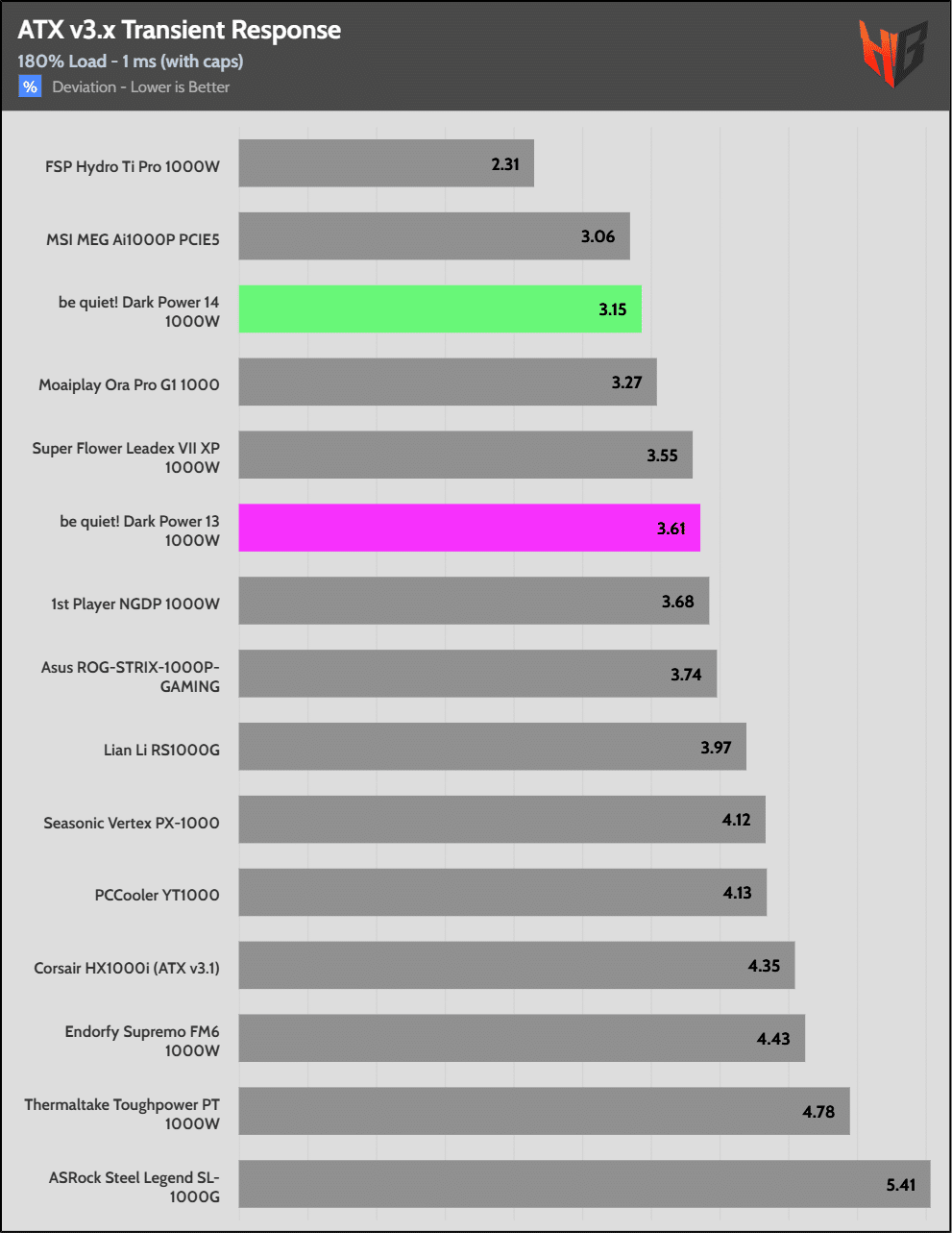
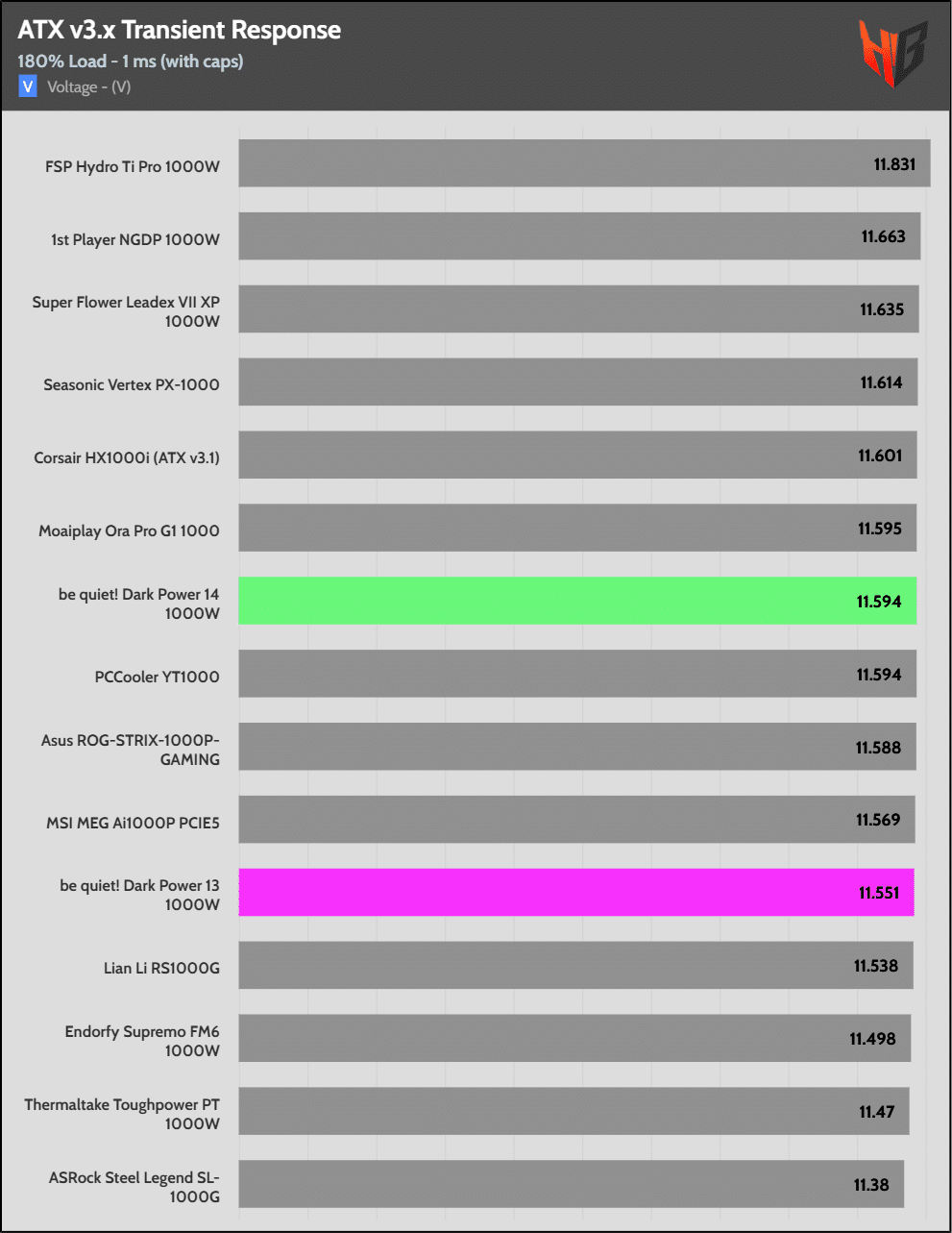
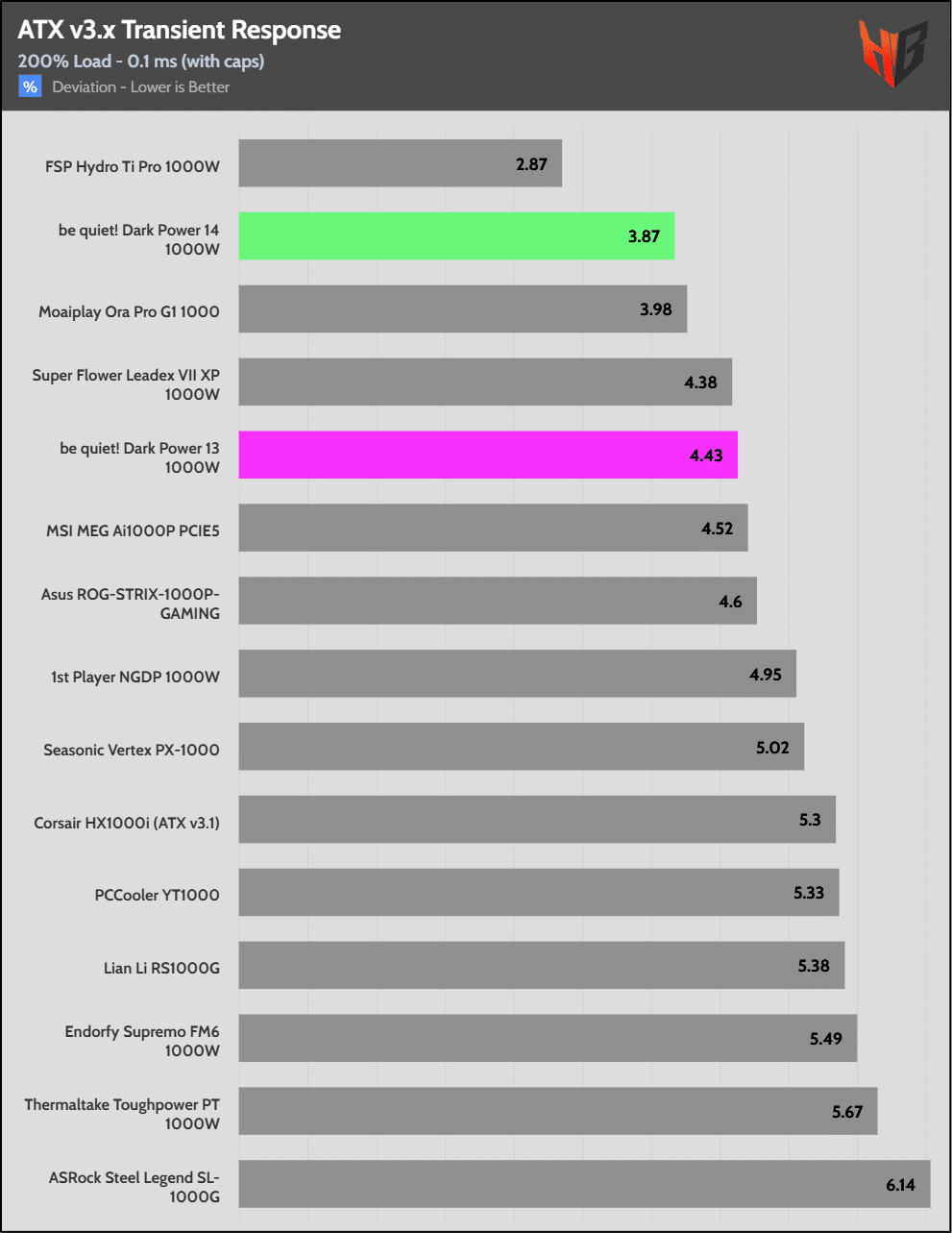
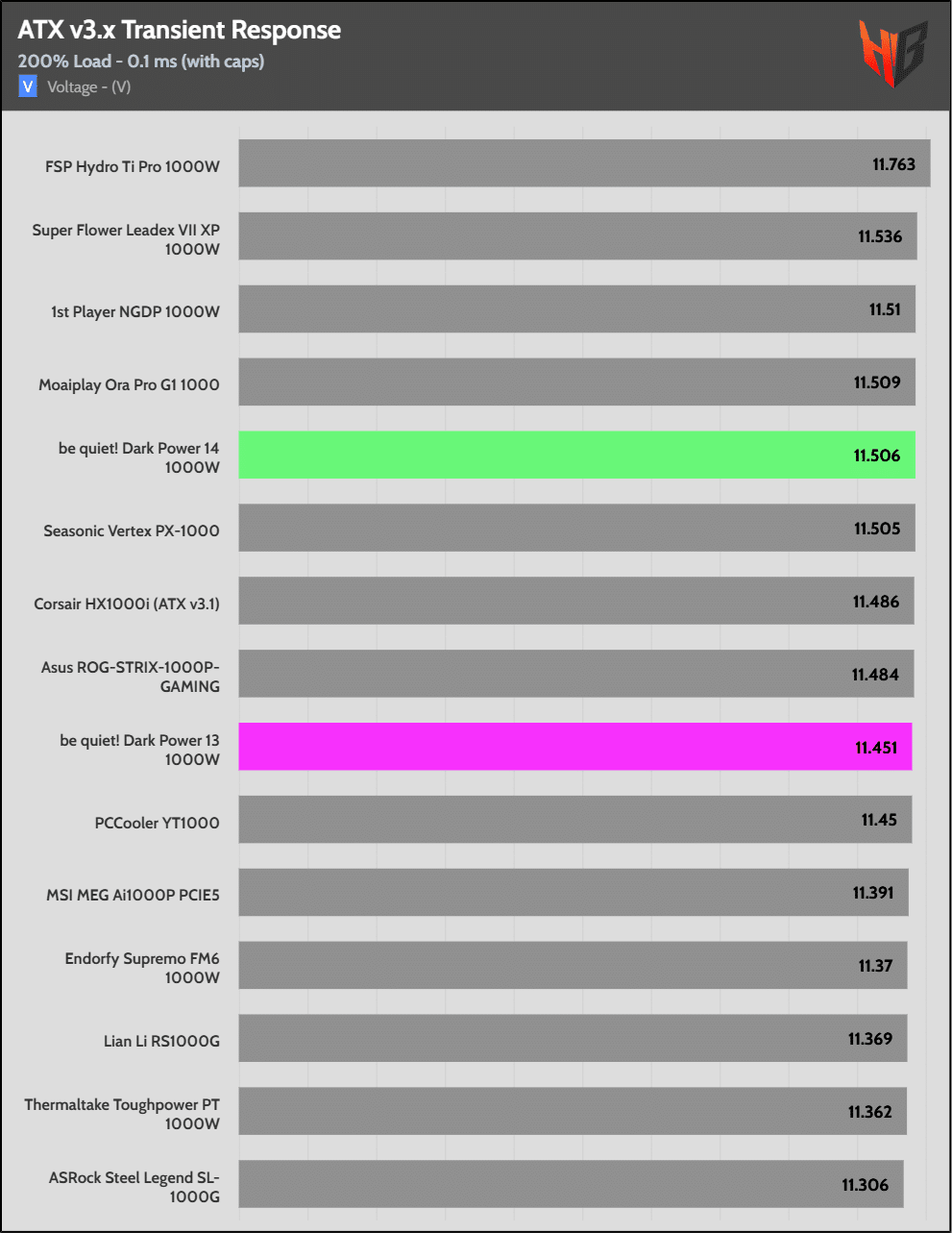
The 12V rail’s performance is good enough in these tests. Only the FSP Hydro Ti is far away from the pack!
Thanks for the review, only the 850W has left. Would you say that the Pure Power 13 M is a better choice? Dark Power 14 does not seem to be as much better as the price increase would suggest.
Aris, when you ill add the certification of husky 1200w on database?!
We have them in the pipeline but we also have around 40x samples in front of it so it will take some time