A brief flash of visible light may soon replace complex chemicals in medical and wearable electronics. Researchers in Sweden have developed a method that allows conductive electrodes to be printed directly onto skin, fabric, or glass, safely, precisely, and without toxic materials.
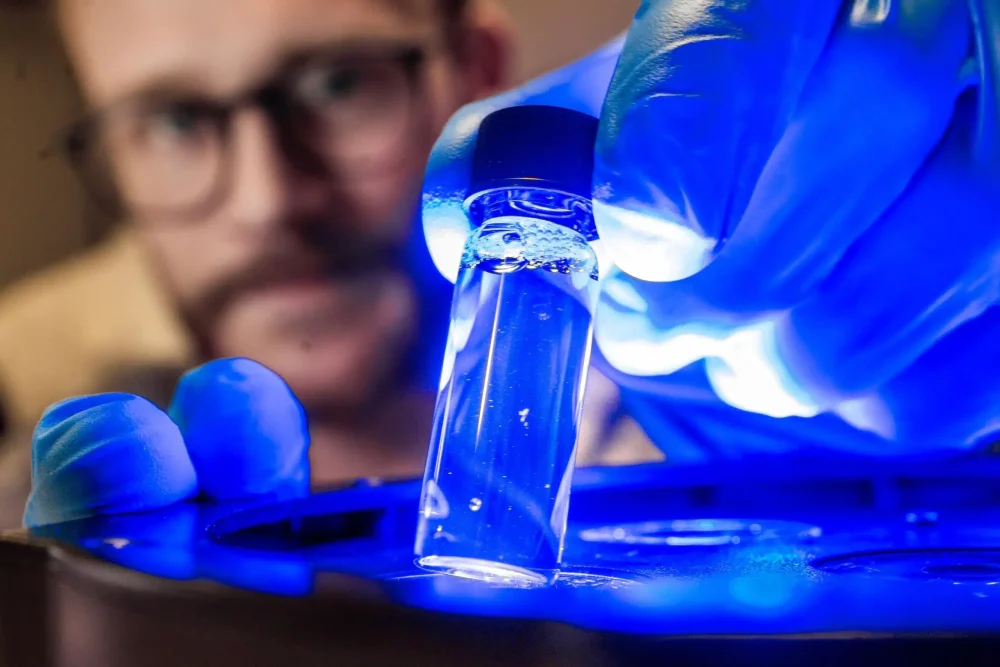
The breakthrough comes from scientists at Linköping University and Lund University, who designed special water-soluble monomers that turn into conductive plastic when exposed to visible light. Unlike traditional polymerization, the process avoids hazardous chemicals, UV radiation, and expensive manufacturing equipment.
Using a laser or focused light source, researchers can “draw” electrode patterns directly onto a surface. Any unreacted material is simply rinsed away, leaving behind soft, flexible, high-performance electrodes.
What makes the technology especially promising for healthcare is the material itself. The conductive polymer can carry both electronic and ionic signals, allowing it to interact with biological tissue more naturally than metal electrodes. Its gentle chemistry also makes it well tolerated by skin.
In early tests, the team successfully printed electrodes directly onto the skin of anesthetized mice. The result was clearer low-frequency brain signal recordings compared to conventional metal EEG electrodes, an important improvement for neurological monitoring.
Beyond medical sensing, the technique could enable electronics integrated into clothing, skin-mounted health monitors, and large-scale manufacturing of organic circuits without dangerous solvents.
By turning light into a tool for printing electronics on living tissue, the researchers may have opened the door to a new generation of safer, softer, and more human-friendly devices.