Google’s long-running “moonshot” mindset is heading toward actual space. CEO Sundar Pichai now says the company is preparing to launch its first AI hardware into orbit in 2027, and that within about ten years, data centers in space will feel like a regular part of the cloud industry.
In a Sunday interview with Fox News, Pichai laid out Google’s most ambitious energy and compute plan yet: Project Suncatcher, an effort to build AI-focused data centers in orbit powered by uninterrupted solar energy.
To The Moon
“One of our moonshots is: How do we one day have data centers in space so that we can better harness the energy from the sun, which is 100 trillion times more than what we produce on Earth today?” Pichai said.
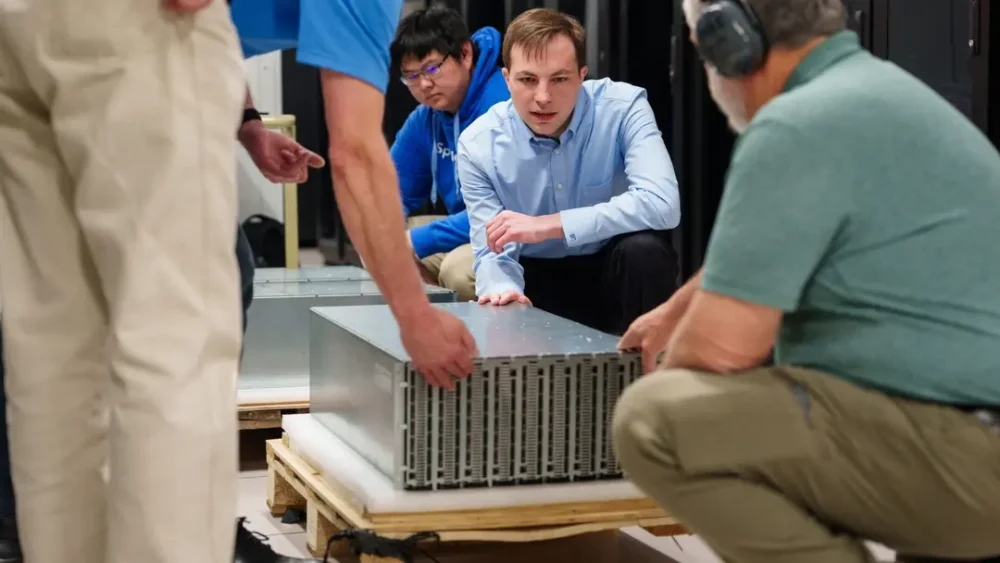
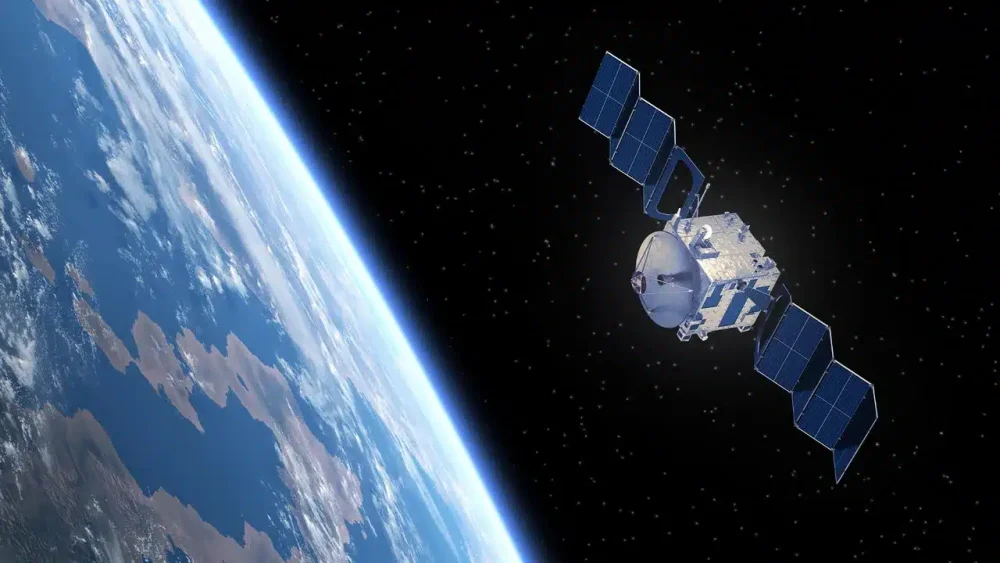
The plan begins small. In early 2027, Google and satellite-imagery partner Planet will launch two pilot satellites carrying miniature TPU-based compute racks. These prototypes will test how AI hardware performs in orbit, communicating via laser links instead of fiber.
If successful, Google envisions dense clusters of satellites, essentially orbital data halls, operating at near-constant solar power, free from earthly grid constraints and thermal limits.
Pichai expects the concept to scale quickly: “There’s no doubt to me that a decade or so away we’ll be viewing it as a more normal way to build data centers.”
AI Out Of Earth
The timing is no accident. The AI boom is pushing terrestrial infrastructure to the breaking point.
- A Lawrence Berkeley National Laboratory report shows U.S. data centers already consume 4.4% of the nation’s electricity, potentially rising to 12% by 2028.
- McKinsey estimates $6.7 trillion in global data center capex by 2030, with $5 trillion dedicated to AI-ready facilities.
- Google’s own electricity use has more than doubled over the past five years, reaching 30.8 million MWh in 2024.
Even as Google invests $40 billion into massive new Texas data campuses, it’s clear that the “just build another region” strategy is approaching physical and political limits.
Space-based data centers offer an escape hatch:
• near-continuous sunlight
• dramatically improved cooling via the cold vacuum of space
• no land use issues
• no local grid stress or environmental backlash
Launch costs are dropping rapidly, and Google believes the cost curve for orbital infrastructure could cross that of Earth-based alternatives within a decade.
Space Race: AI Edition
Google isn’t alone. The idea of off-world computing has seized the imagination of the tech industry’s top leaders:
- Marc Benioff calls space “the lowest-cost place for data centers.”
- Elon Musk is promoting orbital AI clusters potentially powered by hundreds of gigawatts.
- Jeff Bezos predicts space data centers in 10–20 years.
- Sam Altman has mused about putting data centers in orbit, “maybe even a Dyson sphere.”
YC- and Nvidia-backed Starcloud has already deployed an AI-capable satellite and claims orbital compute could slash emissions by 10×, even accounting for rocket launches.
In this race, Mars is irrelevant. The target is the cheapest, cleanest marginal megawatt of power you can point at a model.
Huge Promise, Huge Risks
Google’s Suncatcher effort could become a generational breakthrough, or a spectacularly expensive science experiment.
McKinsey warns that hyperscalers risk overbuilding in a frenzy to stay ahead of the AI boom, potentially leaving trillions of dollars in assets stranded. At the same time, underbuilding means falling behind in a compute arms race where leadership can shift in months.
And environmental concerns remain unresolved. The UN Environment Programme warns that AI’s energy footprint is growing too fast to model accurately: “We need to make sure the net effect of AI on the planet is positive,” a UNEP statement emphasized.
A Decade to Lift Off
Google is betting that when Earth runs out of grid, land, patience, and power, space will be the next logical frontier for AI compute.
The first test satellites are scheduled to lift off in 2027. If the physics and economics align, by the 2030s, the cloud may not just scale across continents, but across orbits.