Rising DDR5 memory prices are becoming a serious problem for data centers, driven largely by booming demand from AI workloads. To reduce costs and ease supply pressure, hyperscalers are increasingly turning to an unexpected solution: reusing vast pools of older DDR4 memory with the help of CXL (Compute Express Link).
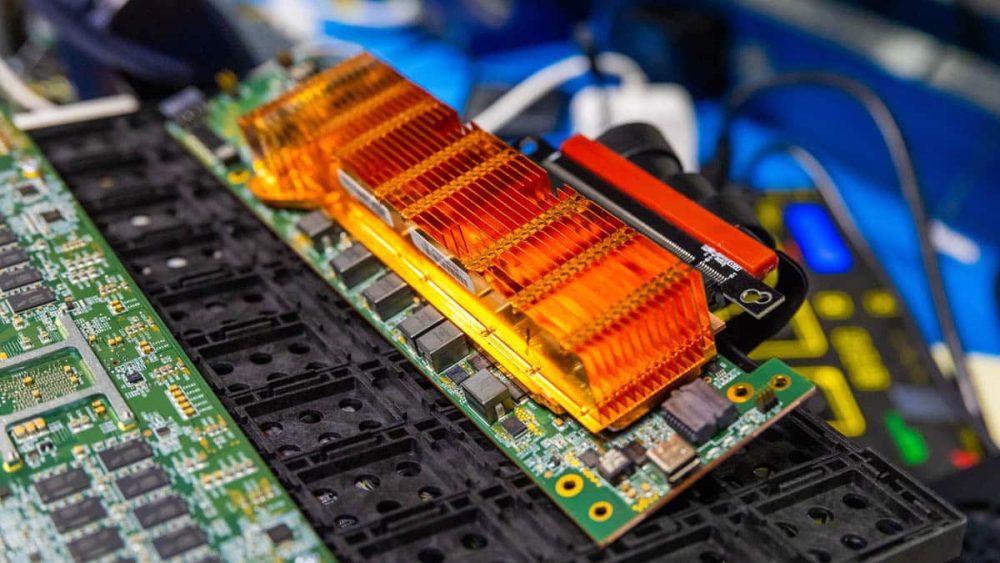
Marvell showcased its Structera X CXL memory expansion chips, which allow data centers to connect external memory over PCIe rather than relying solely on a CPU’s built-in memory slots. The most cost-focused model enables operators to reuse DDR4 modules pulled from retired servers, turning what would normally be discarded hardware into a valuable resource.
Using a single Structera controller, hyperscalers can attach up to 12 DDR4 memory modules, delivering as much as 1.5TB of physical memory per device. Even more striking, Marvell adds real-time LZ4 compression directly in hardware, effectively doubling usable capacity. In practice, this can turn 1.5TB into nearly 3TB of usable memory at a much lower cost per gigabyte than new DDR5.
For environments that need higher performance, Marvell also offers a DDR5-based version, which expands memory while adding bandwidth without consuming CPU memory channels. This helps systems scale beyond traditional limits while reducing dependence on scarce DDR5 supplies.
Beyond cost savings, the approach also has environmental benefits. Reusing existing DDR4 modules reduces electronic waste and lowers the carbon footprint tied to manufacturing new memory.
However, one key question remains unanswered: latency. CXL memory introduces extra delay compared to direct-attached RAM, and compression adds another variable. Until independent testing confirms performance under real-world workloads, especially those with random memory access, CXL expansion remains a promising but not risk-free solution.
Still, as memory prices climb and AI demand grows, CXL-based reuse of older memory is quickly emerging as one of the most practical ways for hyperscalers to stretch capacity, control costs, and reduce supply-chain pressure.