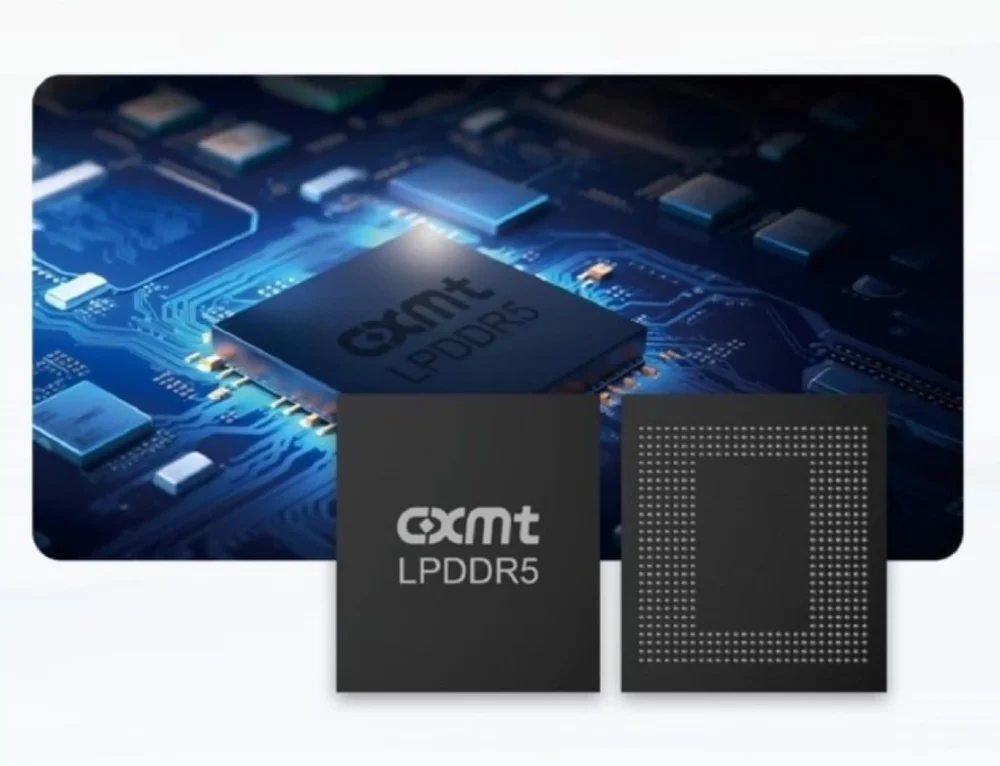
China’s largest domestic memory chipmaker, ChangXin Memory Technologies (CXMT), is preparing a major IPO in Shanghai, aiming to raise about 29.5 billion yuan ($4.2 billion) as global demand for DRAM continues to surge.
The state-backed company plans to sell 10.6 billion shares, using the proceeds to upgrade fabrication lines, expand capacity, and fund next-generation DRAM and high-bandwidth memory (HBM) development. The timing is deliberate: DRAM prices are rebounding sharply, driven by AI infrastructure, cloud services, and data-center expansion.
Founded in 2016, CXMT has quickly become China’s spearhead in the global memory race, challenging Samsung, SK Hynix, and Micron. It now operates three 12-inch DRAM fabs and holds roughly 4% of the global DRAM market, according to Omdia. While that’s small compared to the “big three,” it makes CXMT the world’s fourth-largest DRAM producer by volume.
Financially, the company is still in recovery mode. CXMT posted heavy losses between 2022 and 2024 but expects revenue growth of up to 140% in 2025, helped by rising memory prices and higher shipments. The firm says it could return to profitability as early as 2026, depending on pricing and wafer output.
Part of the IPO pitch centers on HBM, a high-value form of DRAM critical for AI accelerators such as Nvidia GPUs. CXMT aims to begin production at a new HBM back-end packaging facility in Shanghai by the end of 2026, signaling its intent to move beyond commodity memory.
For the wider market, CXMT’s expansion is a double-edged sword. In the long term, more capacity and competition could help stabilize prices. In the short term, however, new fabs take years to deliver meaningful output, while AI-driven demand keeps climbing. Memory makers, including CXMT, are also prioritizing high-margin customers over low-cost consumer RAM, limiting near-term relief for PC buyers.
The bottom line: CXMT’s IPO won’t end the DRAM shortage, but it marks a significant step in China’s push to become a serious force in memory manufacturing. For consumers, cheaper RAM isn’t imminent, but the long-term supply picture is slowly, cautiously improving.