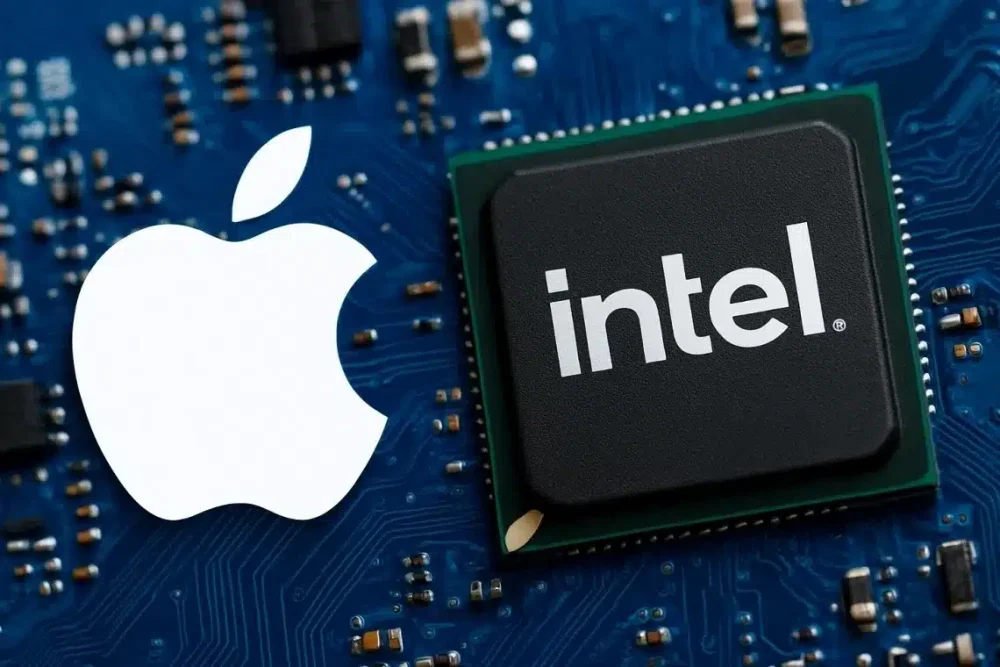
Apple’s long, complicated relationship with Intel might be heading into a new chapter, and this time, the iPhone is part of the plan.
Fresh reports suggest that Intel could soon manufacture Apple’s A-series chips, ending TSMC’s long-standing monopoly and marking one of the most surprising shifts in Apple’s hardware strategy in years.
Intel-Made iPhone Chips Could Arrive by 2028
According to analyst Jeff Pu, Apple may tap Intel to produce its non-Pro iPhone processors starting in 2028.
This aligns with earlier reporting from Ming-Chi Kuo, who said Intel would begin fabricating Apple’s baseline M-series chips for Macs and iPads as early as 2027.
If Apple maintains its current naming pattern, Intel’s involvement would likely begin with the A22 chip, expected to power devices such as the future iPhone 20 and iPhone 20e.
Important to note:
- Apple will still design every part of the A-series chips internally.
- Intel would only manufacture the chips — similar to how TSMC currently handles production.
- TSMC would still produce Apple’s high-performance Pro-grade iPhone chips.
Intel’s production would use its upcoming 14A manufacturing process, while future Mac chips are expected to be built on Intel’s even more advanced 18A node.
Why Apple Is Expanding Beyond TSMC
Apple remains deeply invested in its partnership with TSMC, but the company is equally determined to diversify its supply chain. Several factors are at play:
1. Reducing Risk
Taiwan is central to Apple’s chip production, and also a geopolitical hotspot. Even for a company as large as Apple, relying on a single region for nearly all advanced node manufacturing is a long-term vulnerability.
2. Strengthening U.S. Manufacturing
Intel’s 14A and 18A processes are part of an aggressive push to regain leadership in semiconductor fabrication, heavily backed by U.S. government incentives.
For Apple, shifting part of its chip production to American soil improves supply-chain resilience and aligns with political pressure to onshore critical technologies.
3. Intel Needs the Win
After years of losing ground to TSMC and Samsung, securing Apple as a manufacturing client would be a major victory for Intel’s foundry business, especially as it tries to prove its competitiveness in sub-2nm technologies.
Future iPhones
If Intel successfully joins Apple’s production lineup in 2028:
- Base iPhones and the “e” lineup may use Intel-fabricated chips.
- Pro models would likely continue using cutting-edge TSMC nodes.
- Apple may gain more flexibility in pricing, supply capacity, and launch timelines.
But it’s worth remembering: this has nothing to do with Intel-designed chips of the old Mac era. Apple will continue designing its own ARM-based silicon — Intel will simply be the factory.
A Full Circle Moment for Apple and Intel
From powering every Mac for over a decade, to being fully removed from Apple’s hardware roadmap, and now possibly returning as a manufacturing partner — Intel’s journey with Apple has been anything but dull.
If these reports hold true, 2027–2028 will mark:
- Intel’s return into Apple’s ecosystem
- Apple’s biggest supply chain expansion in years
- A reshaping of the global chip industry’s power dynamics