Normalized Noise Tests
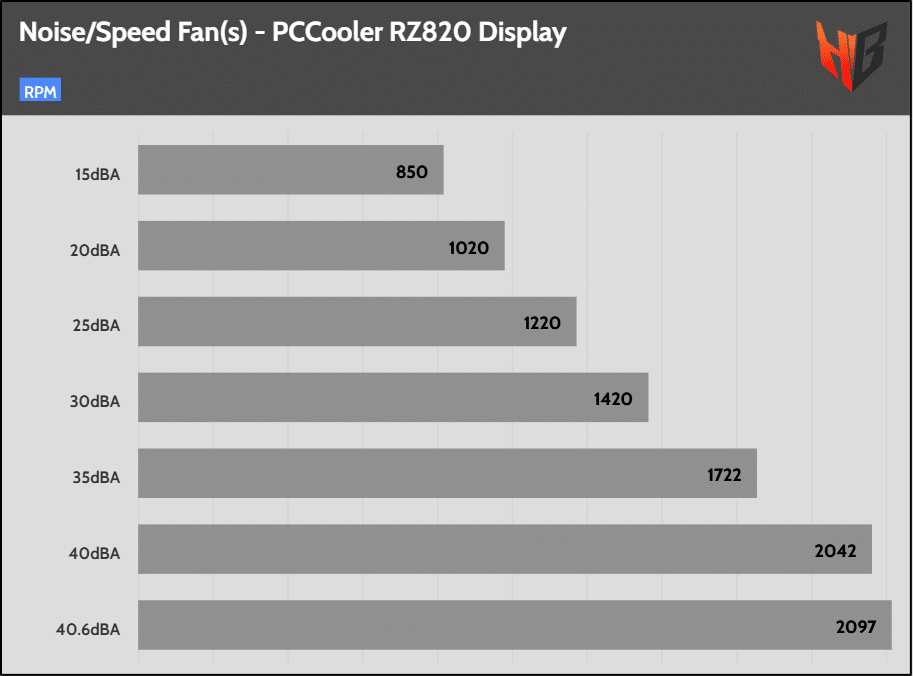
For these tests, I set the cooler’s fan(s) to speeds with noise output at the following predefined levels: 20/25/30/35/40 dBA. I skip the corresponding tests if the cooler’s fan(s) cannot reach some noise levels. Finally, I include a test where the cooler’s fan(s) spin at full speed.
AMD Results
CPU Temperature
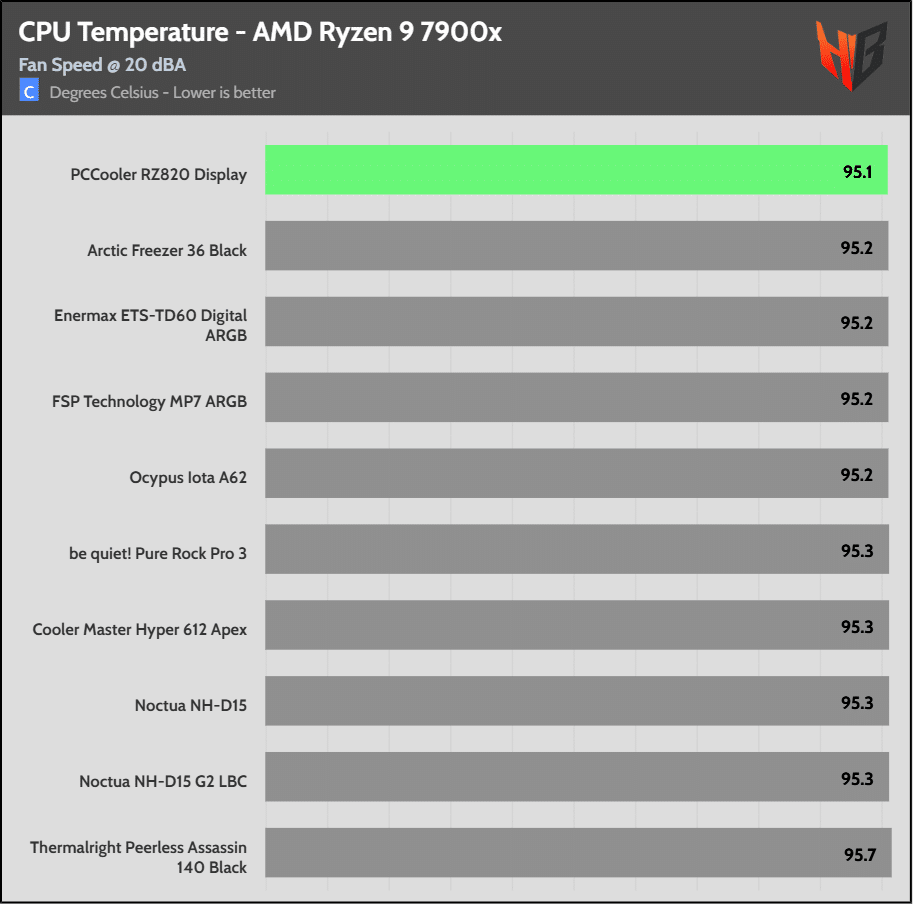
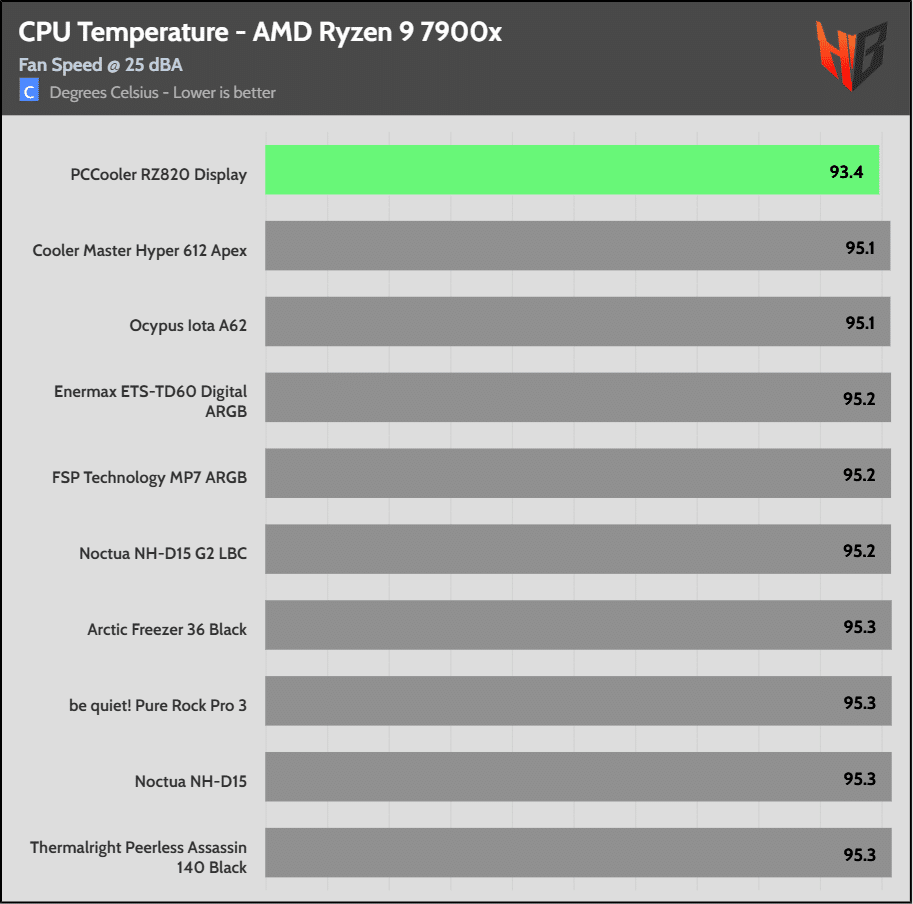
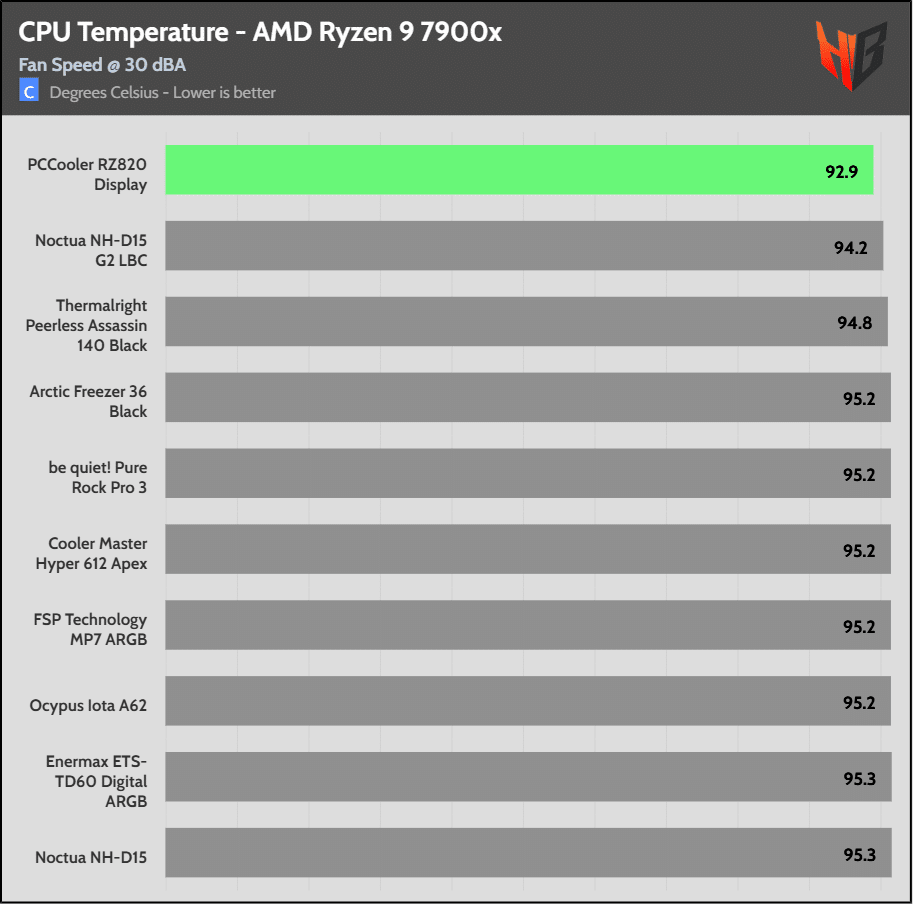
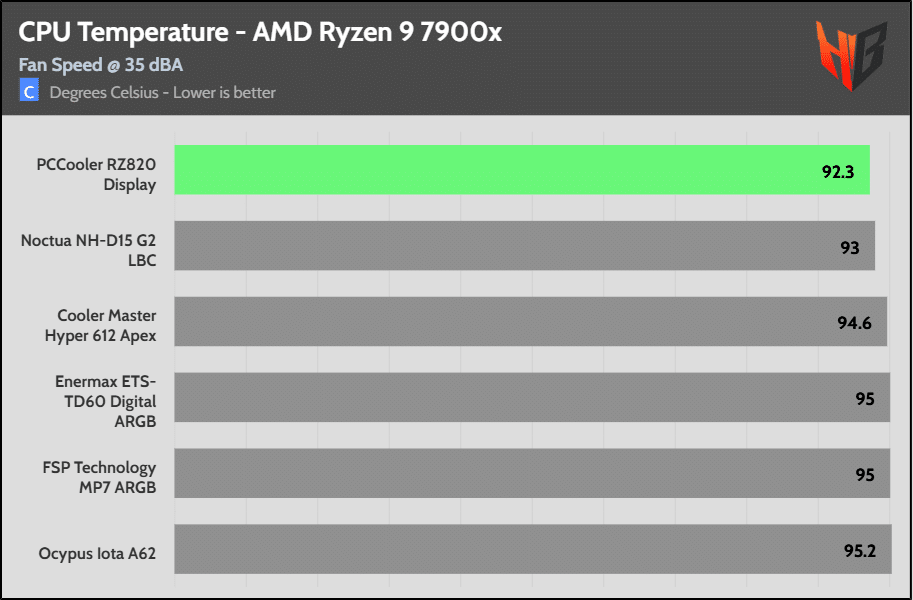
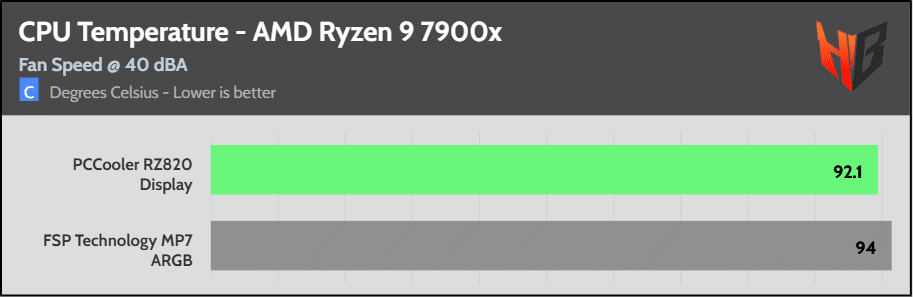
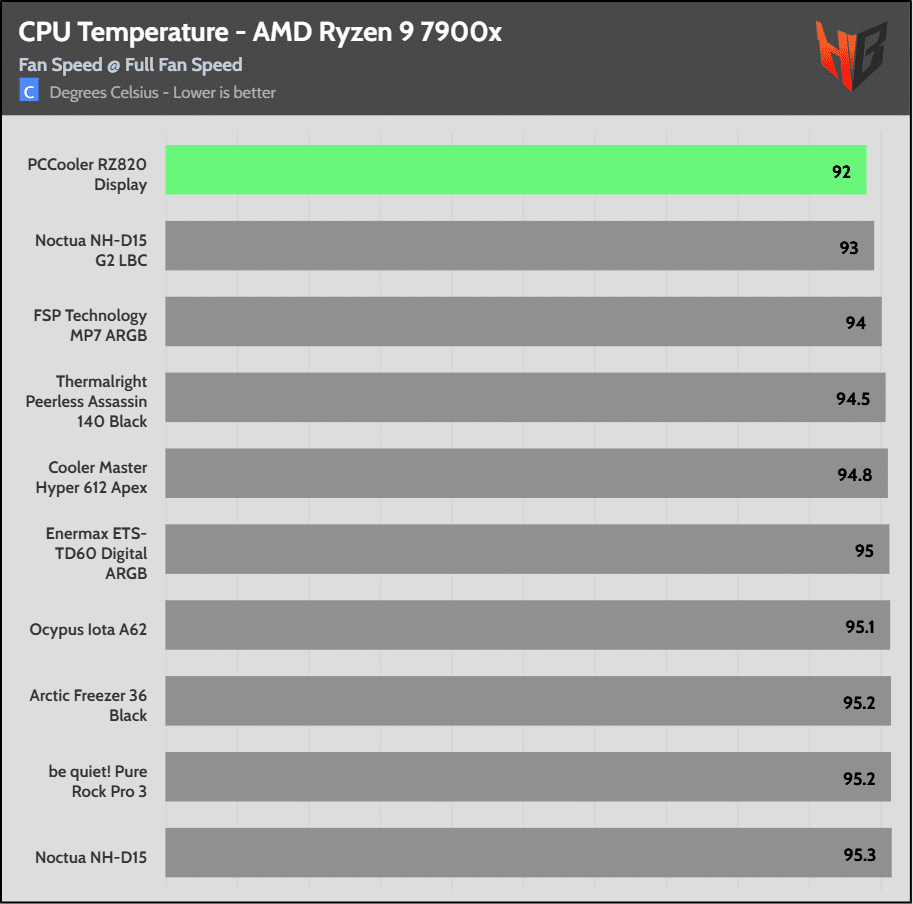
The AMD CPU temperatures are among the lowest we’ve seen compared to other air coolers we have tested so far. The differences are low, though, because this is how this platform typically operates. It pushes the CPU to the maximum allowed temperature, adjusting power consumption and frequency accordingly to keep operating temperatures under control.
CPU Frequency
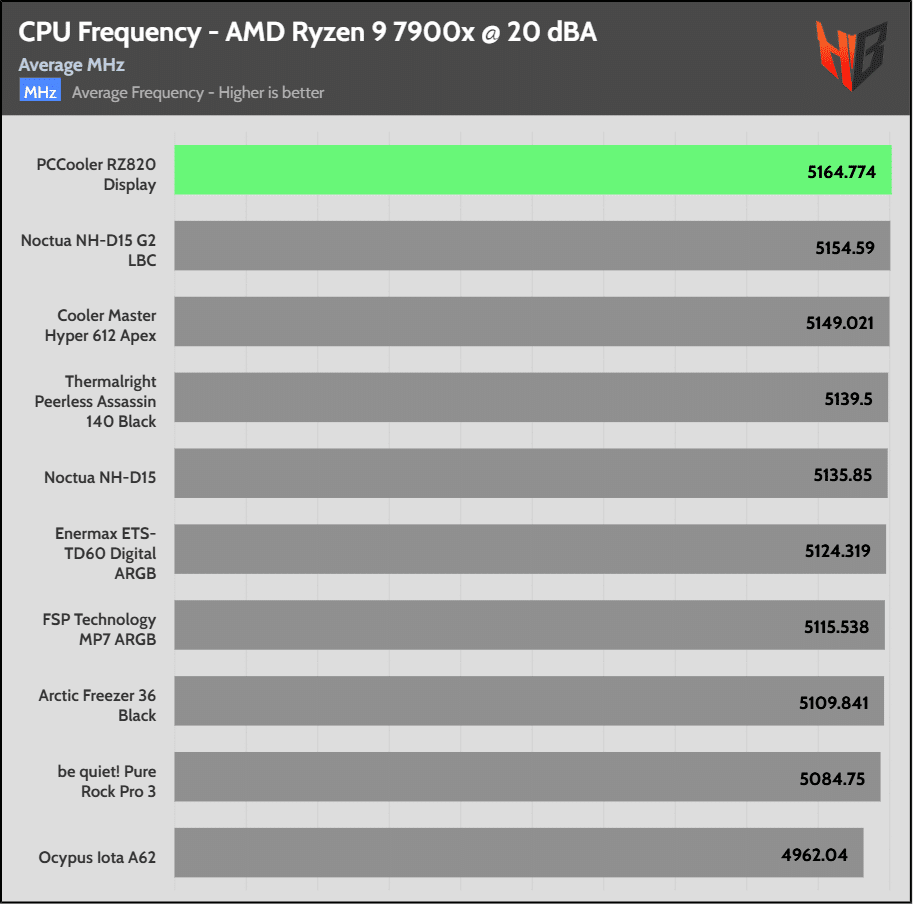
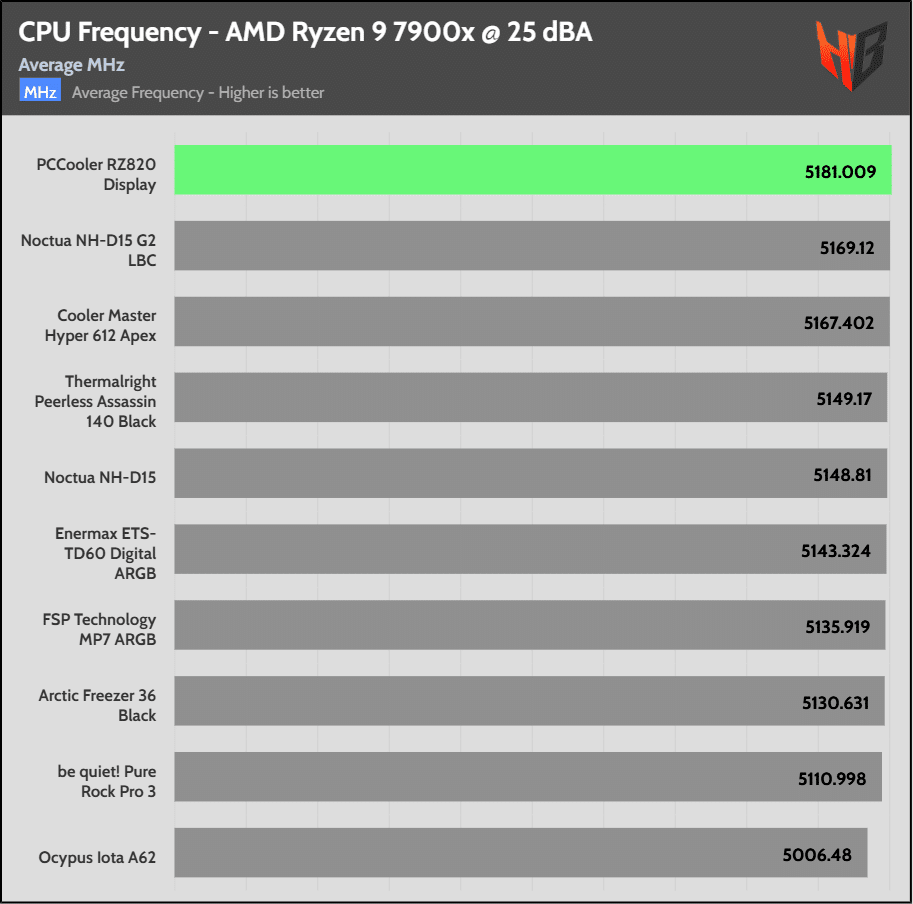
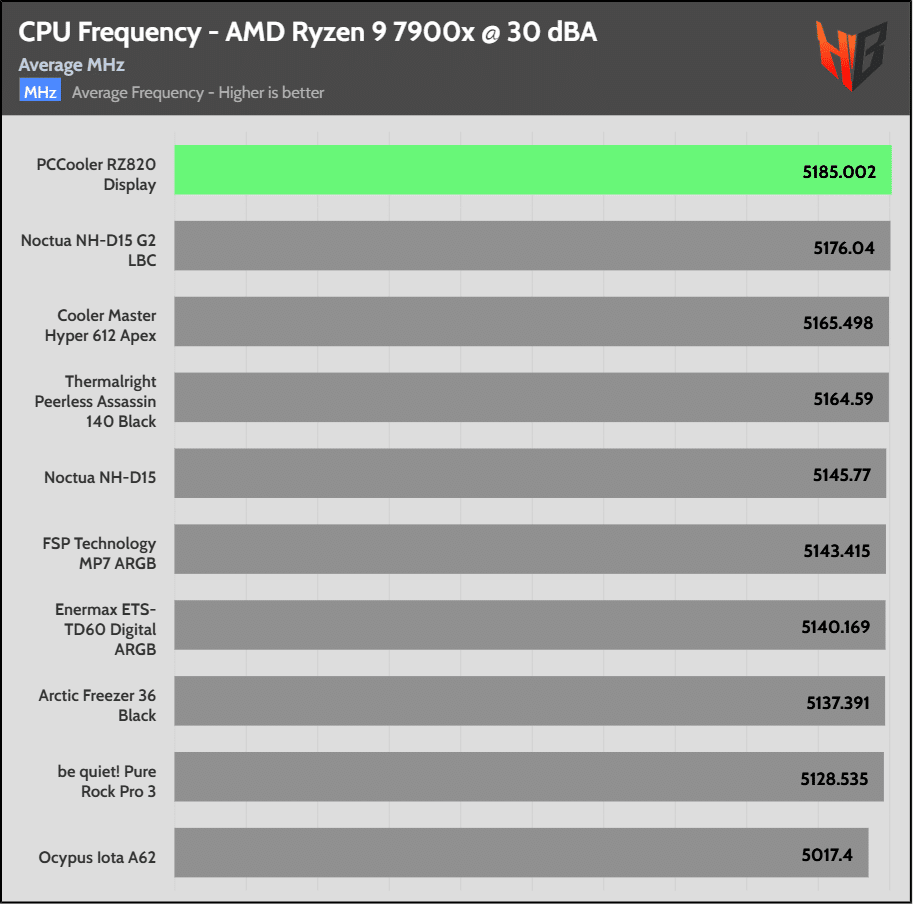
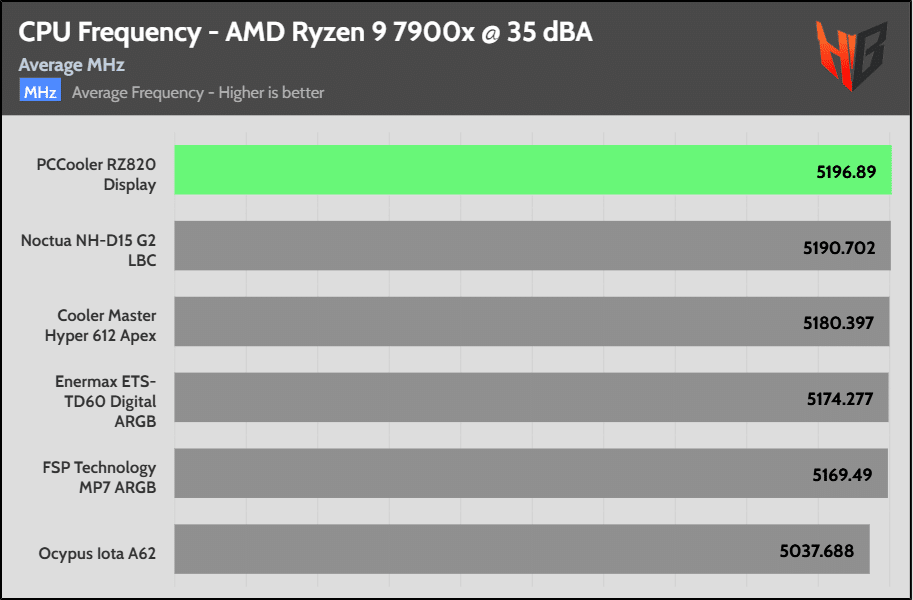
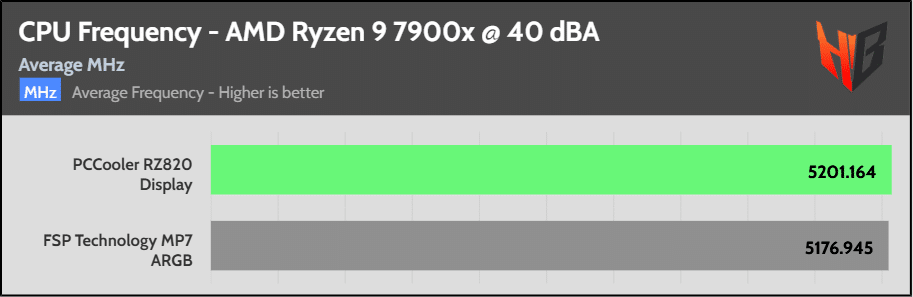
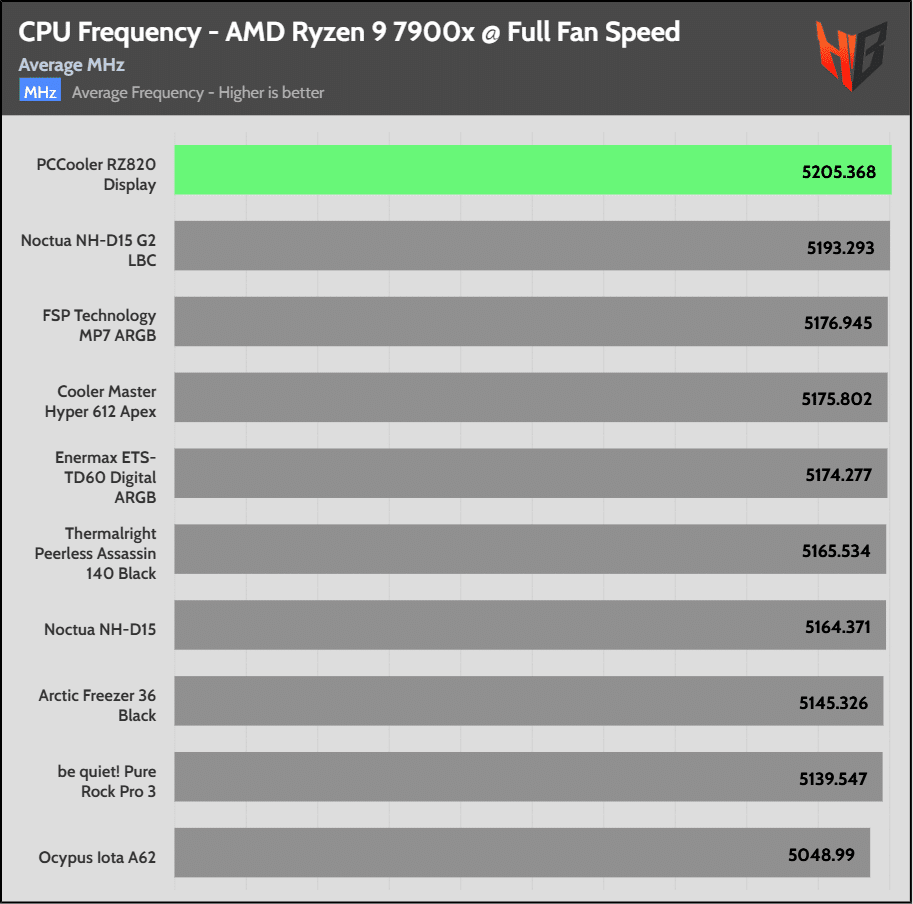
First place in the average CPU frequency.
CPU Wattage
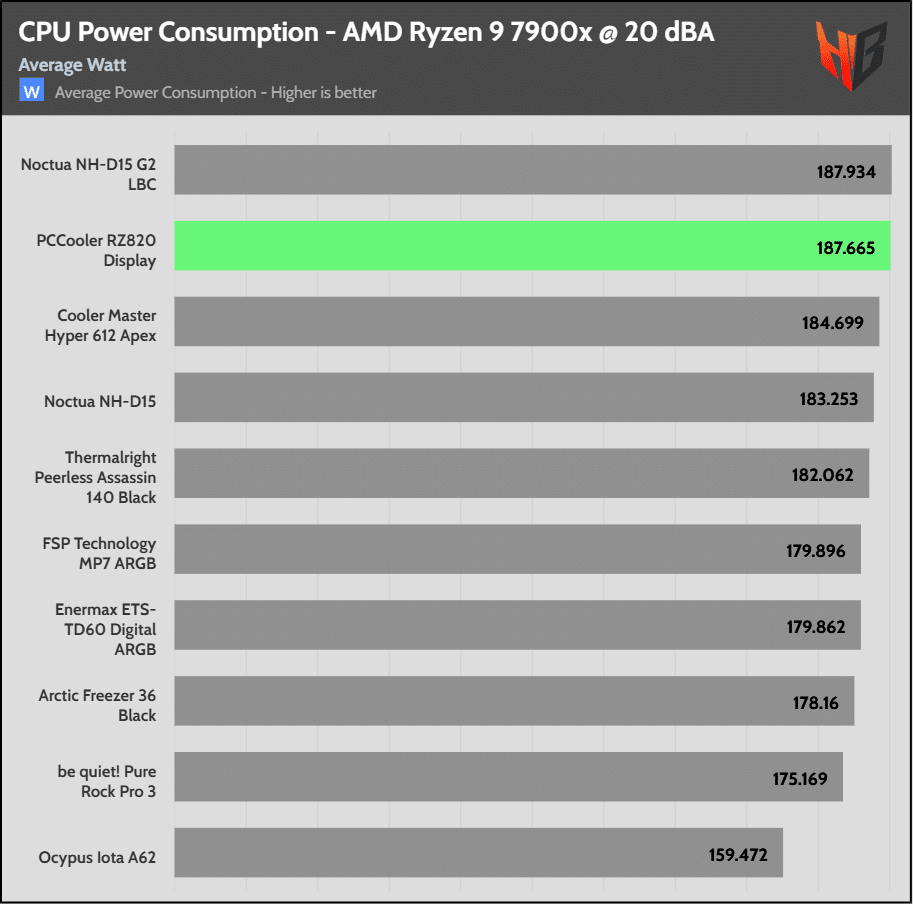
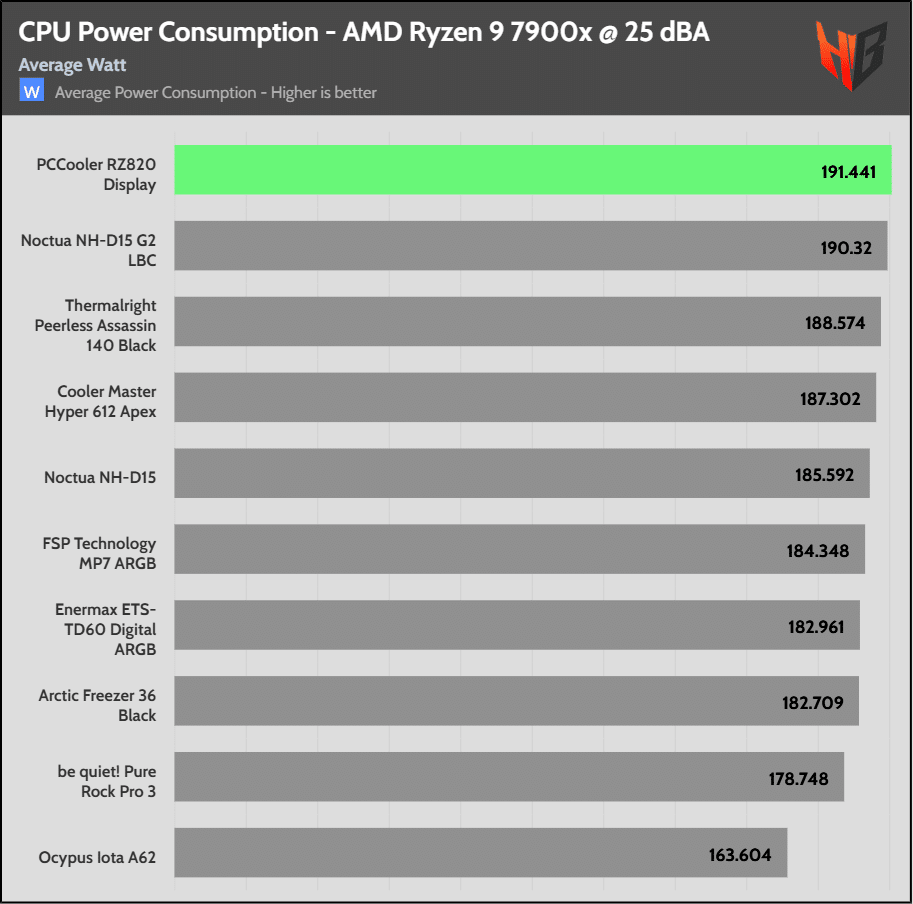
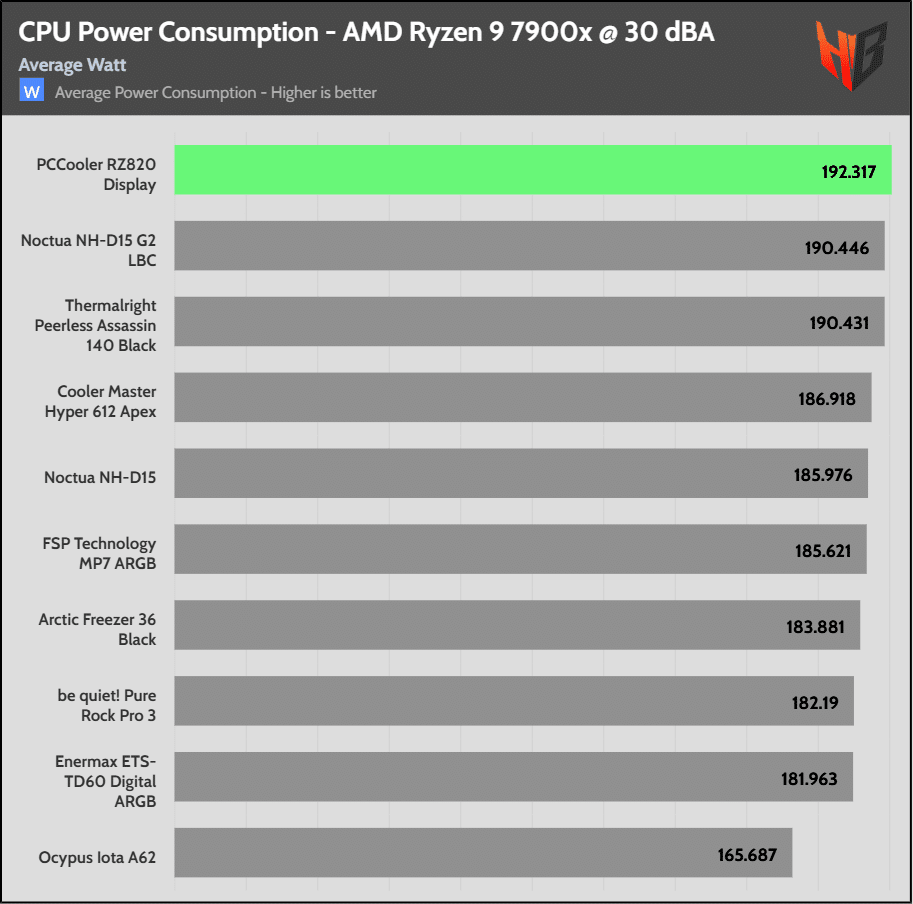
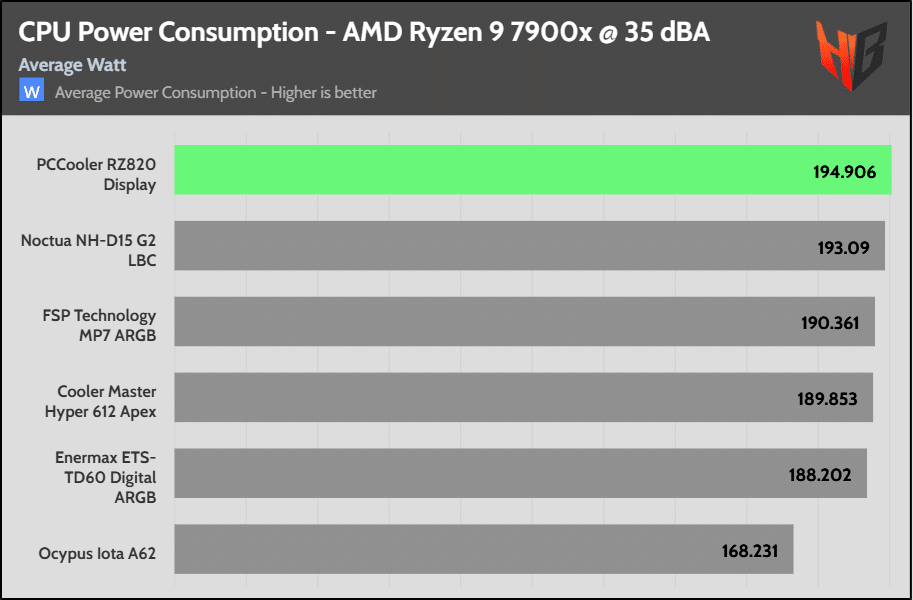
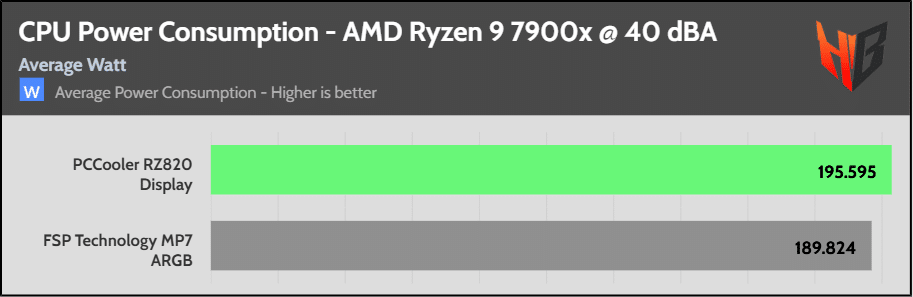
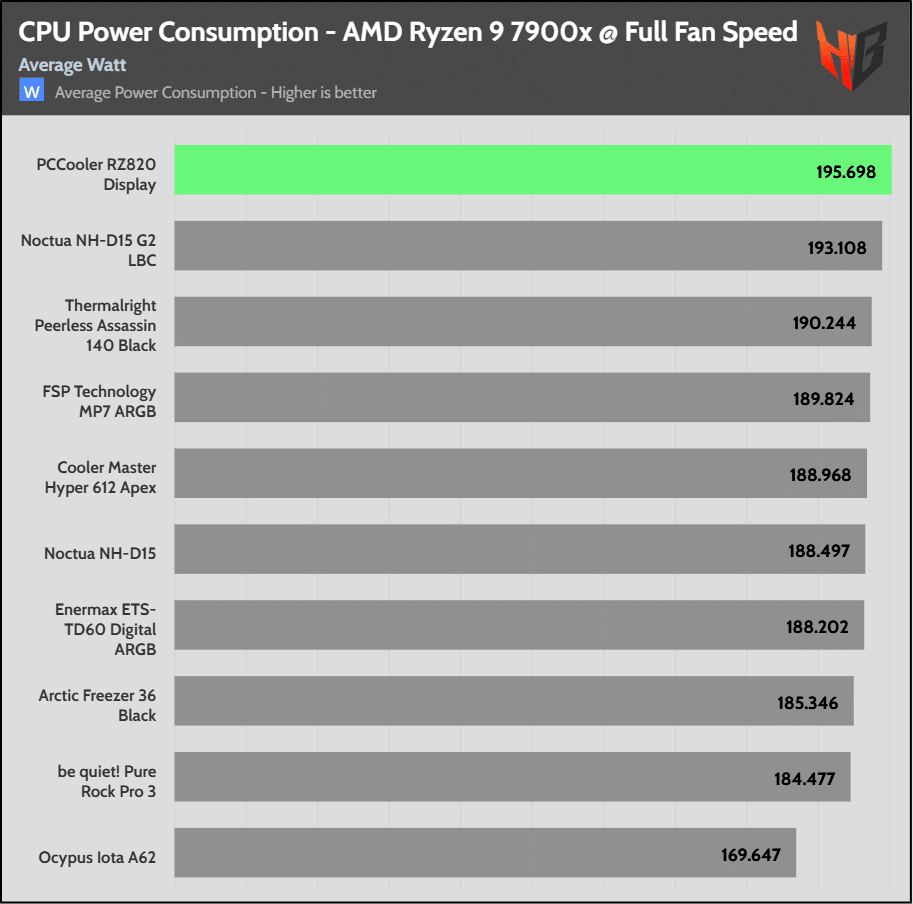
The cooler allows for high-power-consumption readings from the CPU.
High CPU power consumption indicates that the cooler is effective, allowing for a higher CPU thermal limit, which in turn results in a higher energy draw from the CPU.
Cooler Exhaust Temperature
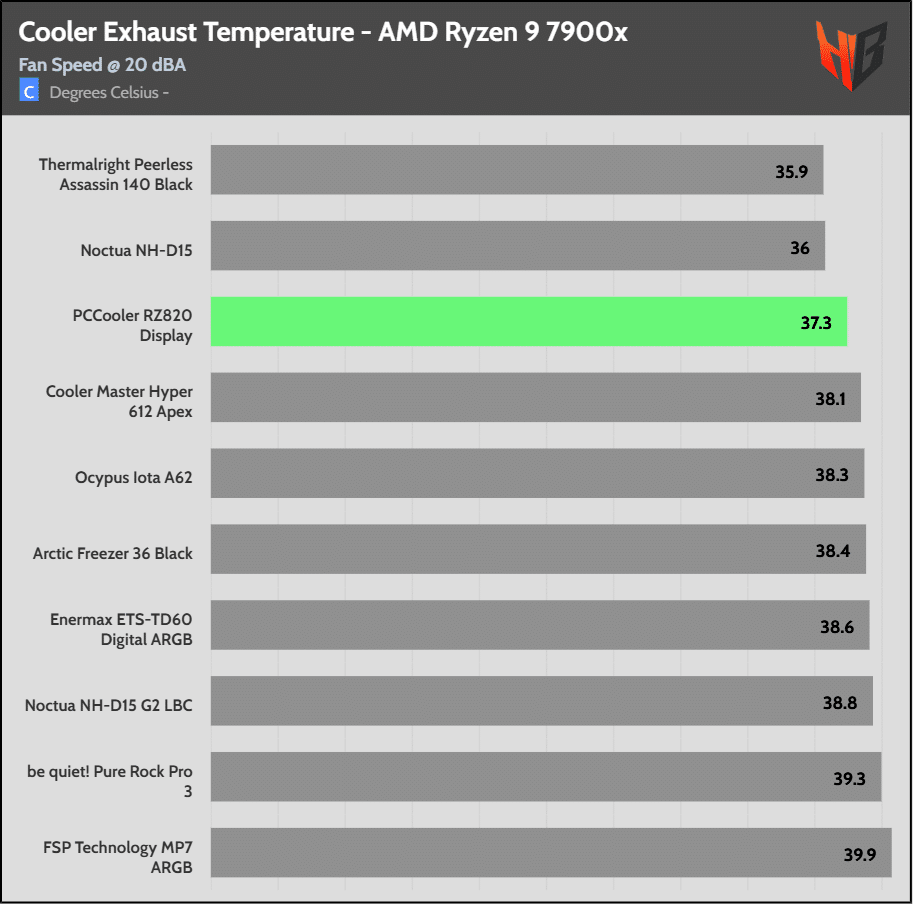
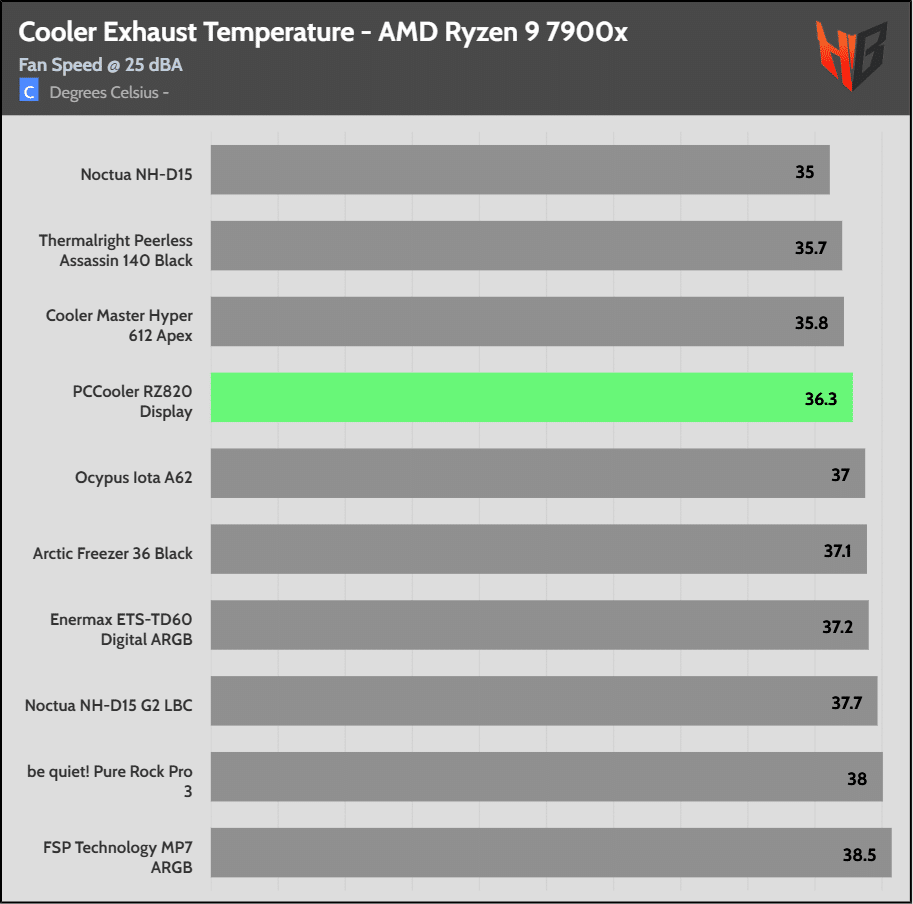
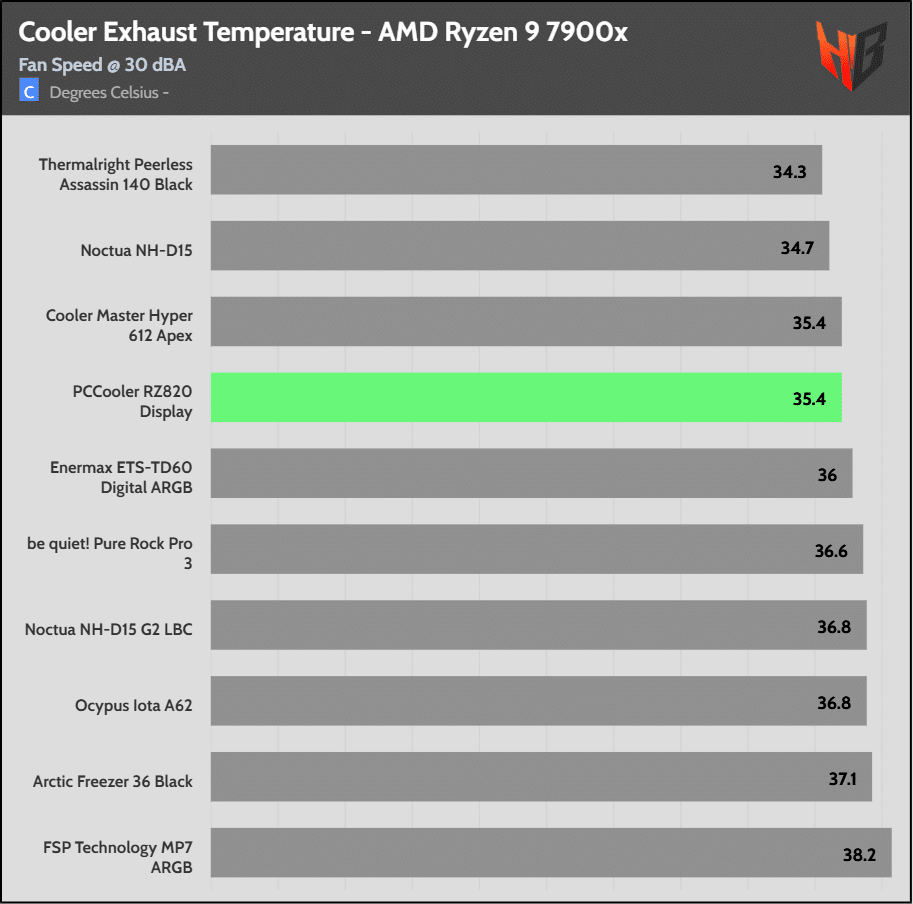
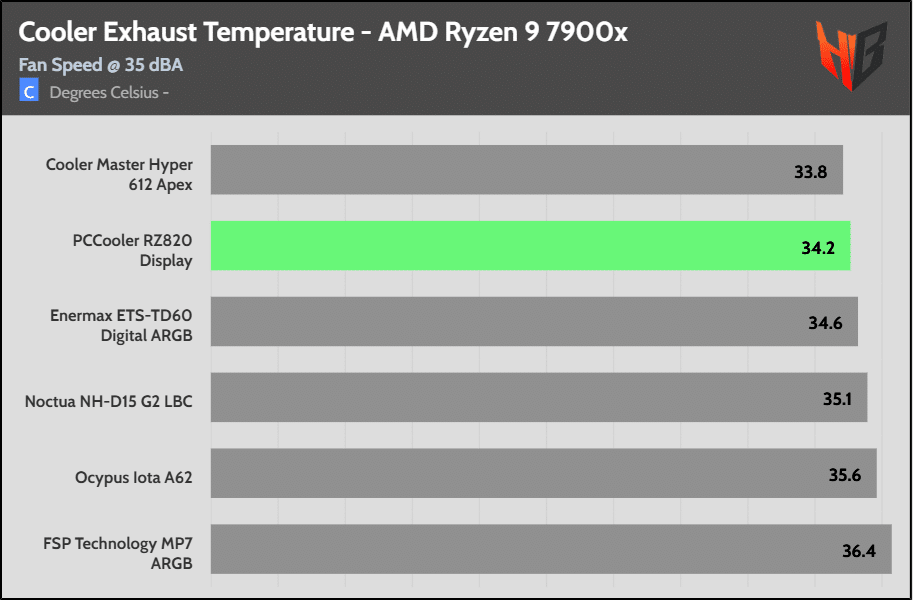
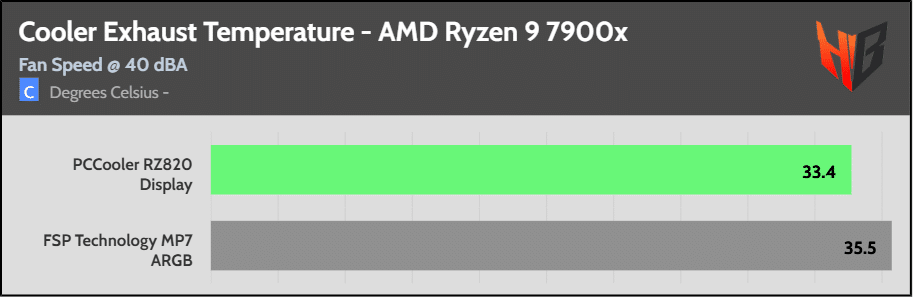
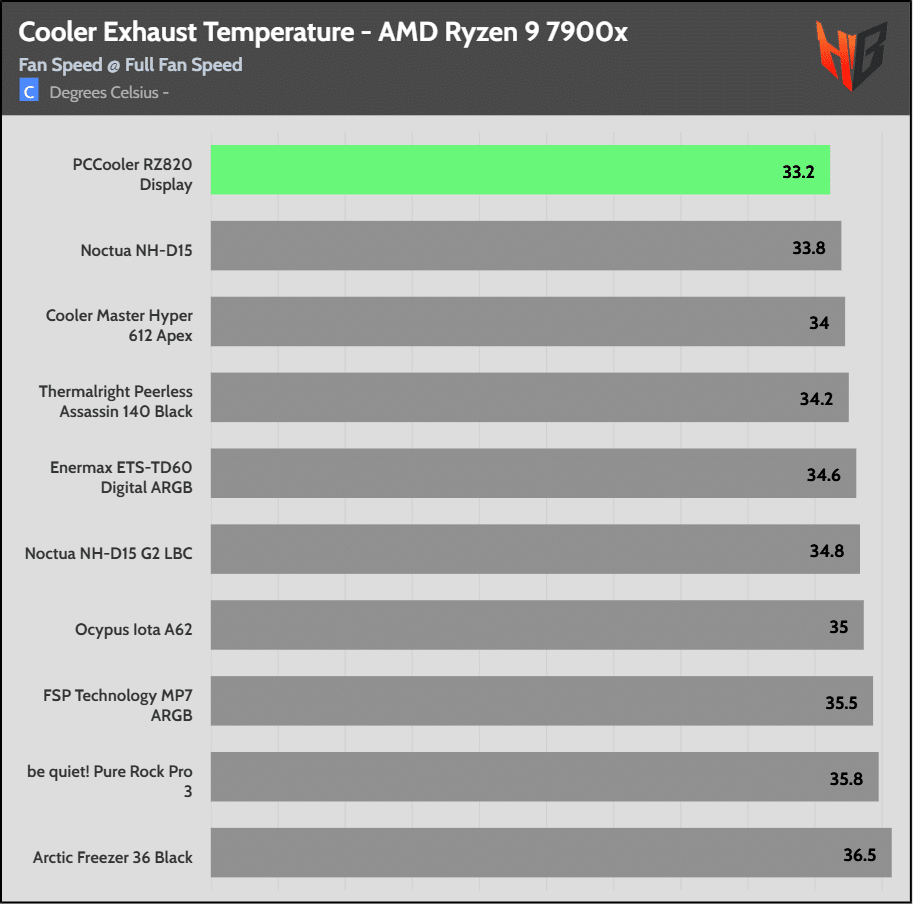
I measure the temperature at the exhaust side of the cooling solution.
Intel Results
CPU Temperature
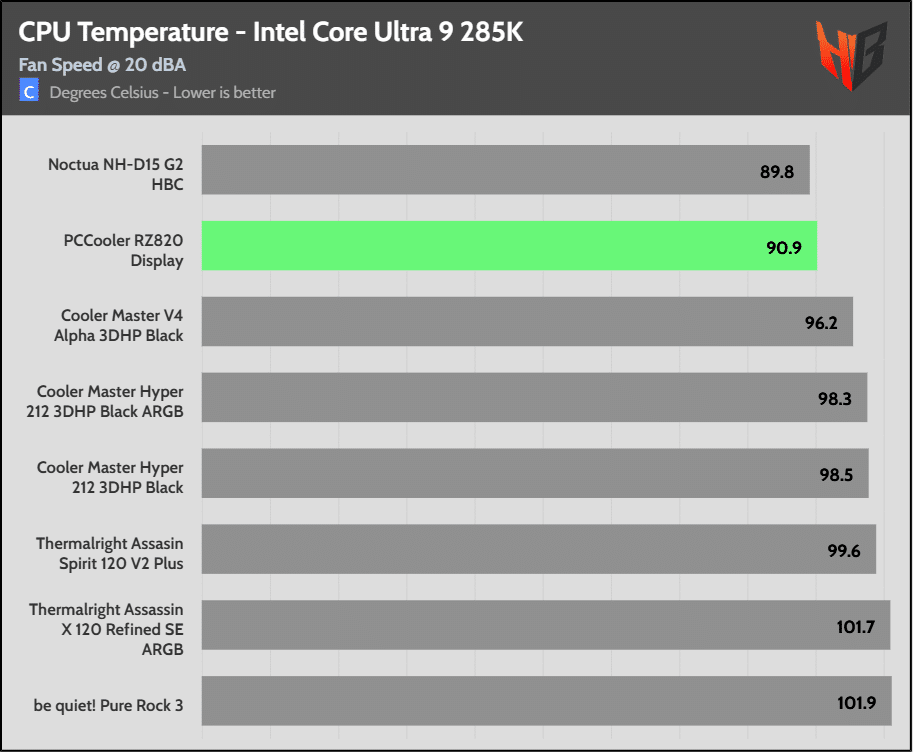
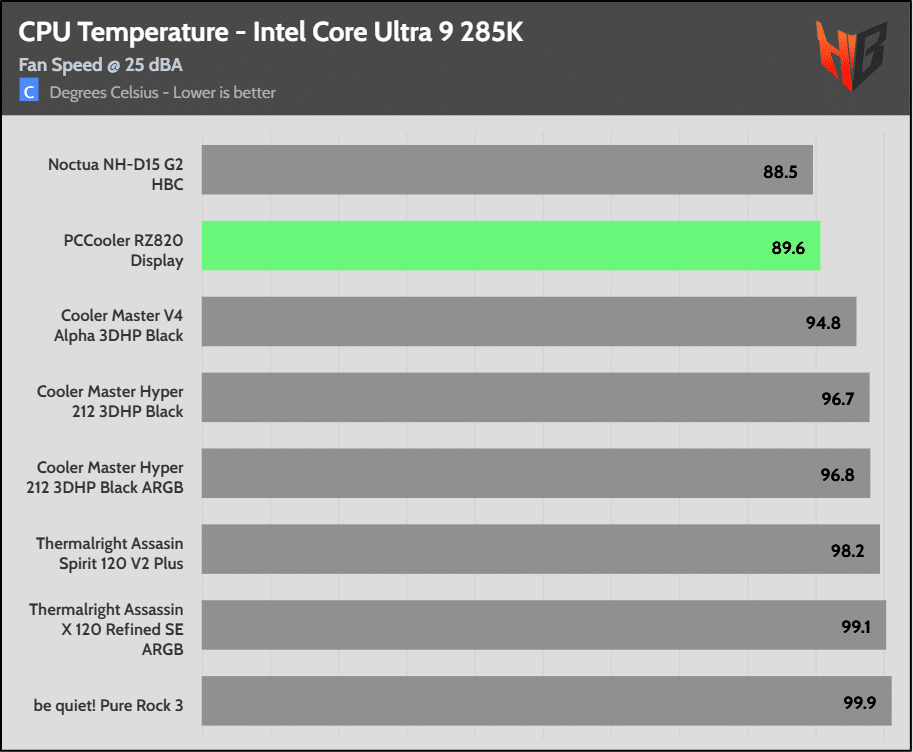
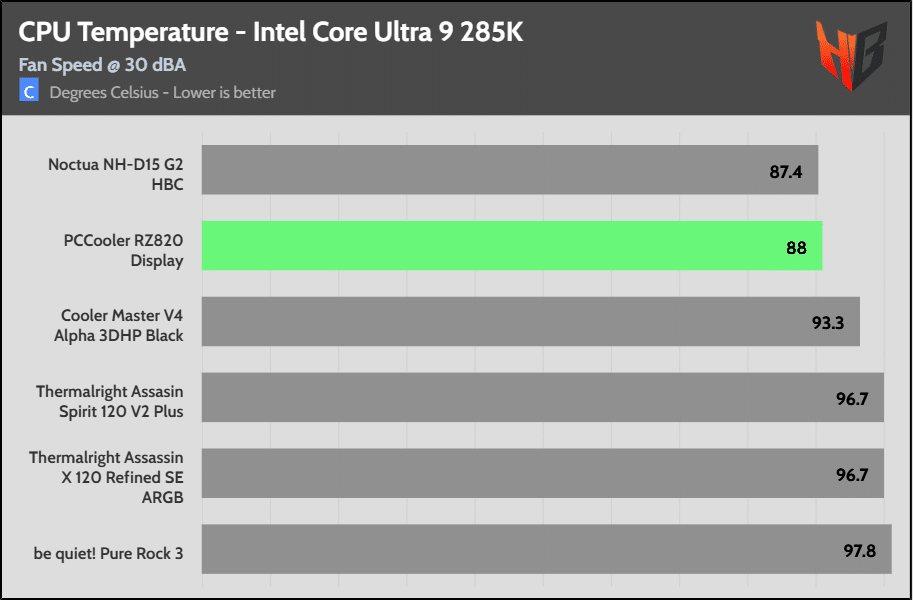
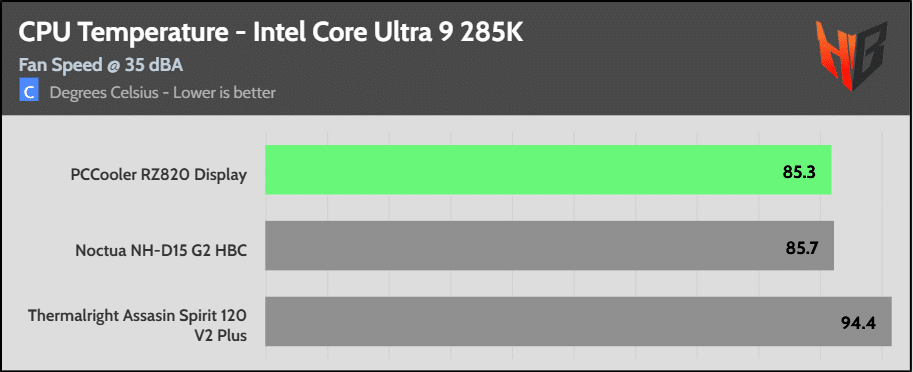
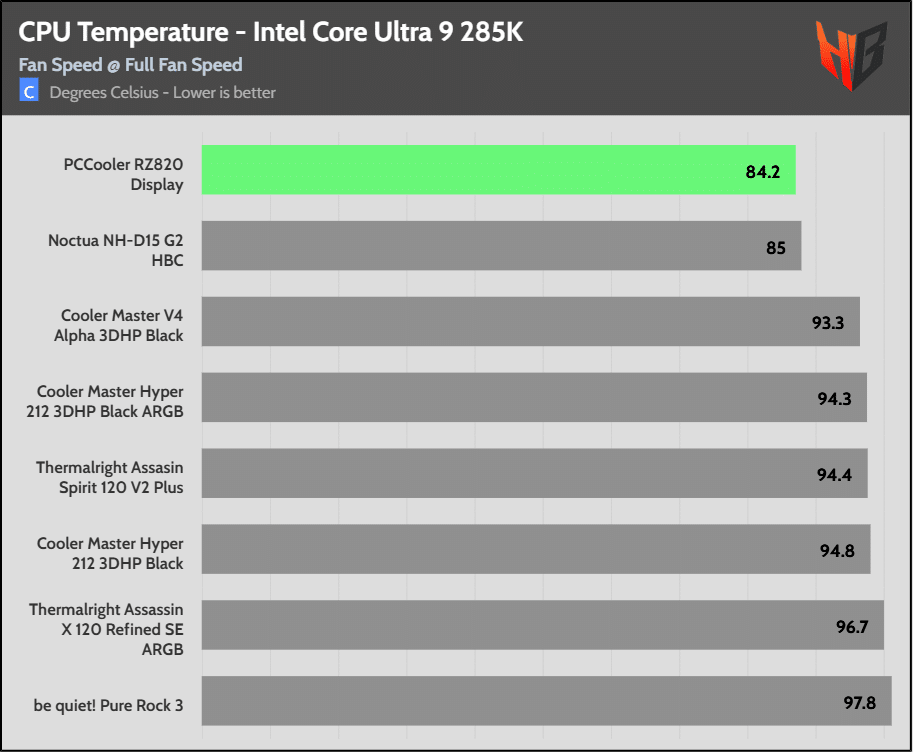
On the Intel platform the super-expensive NH-D15 G2 HBC leads the pack in temperatures, but the difference is relatively low.
CPU Frequency
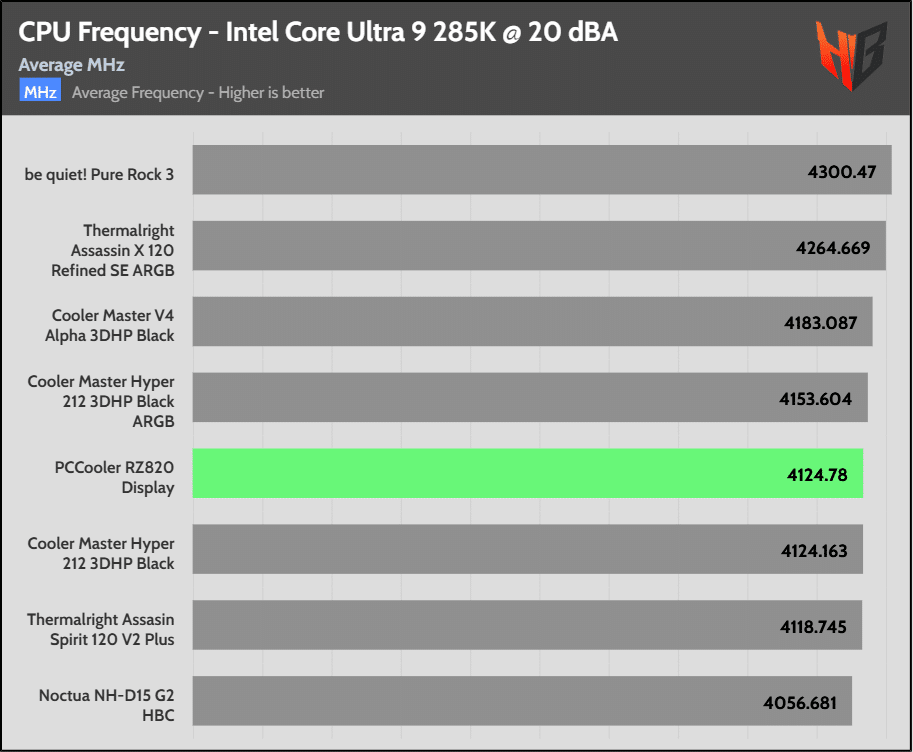
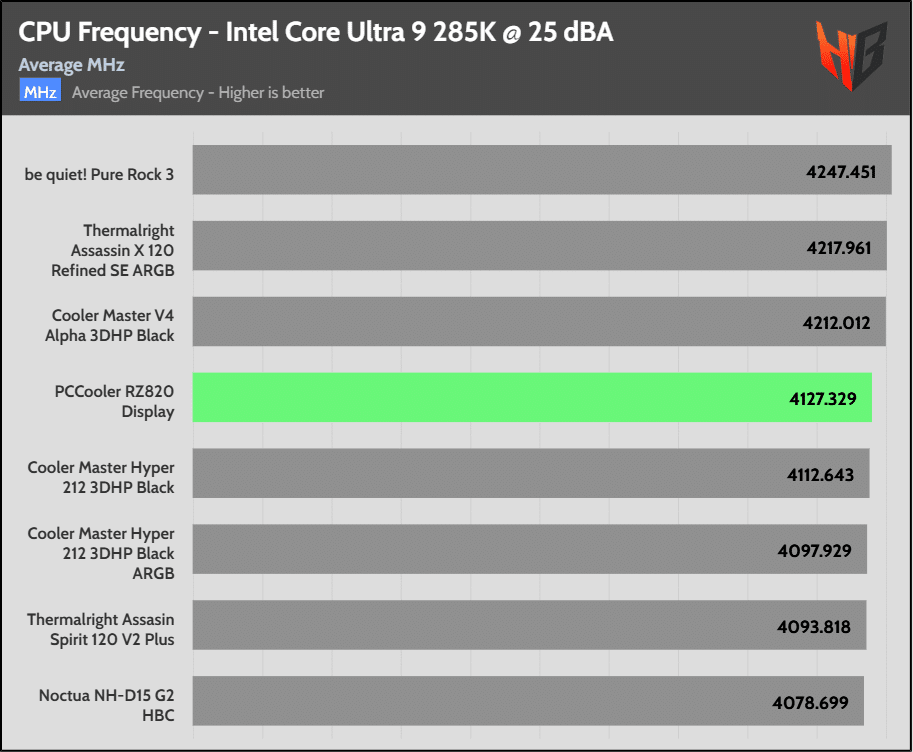
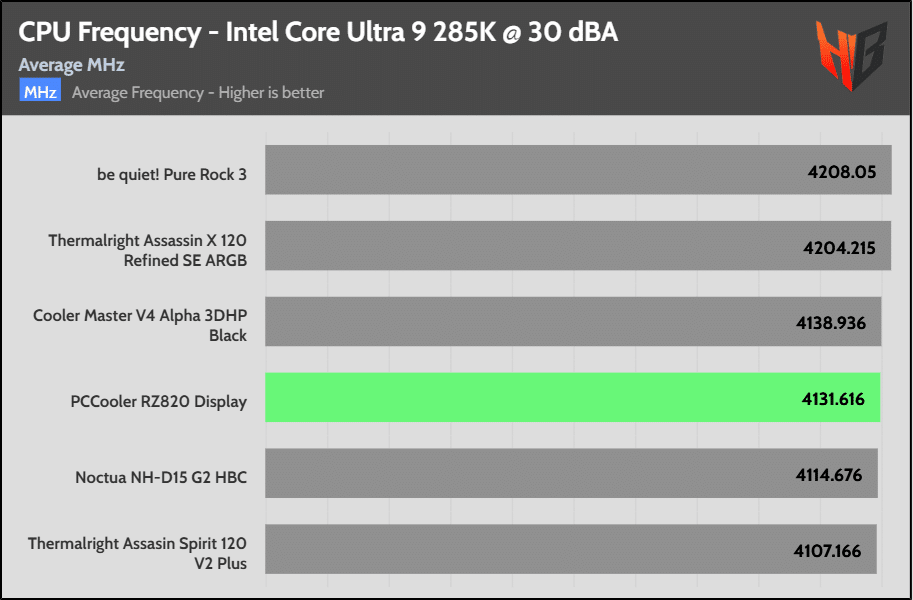
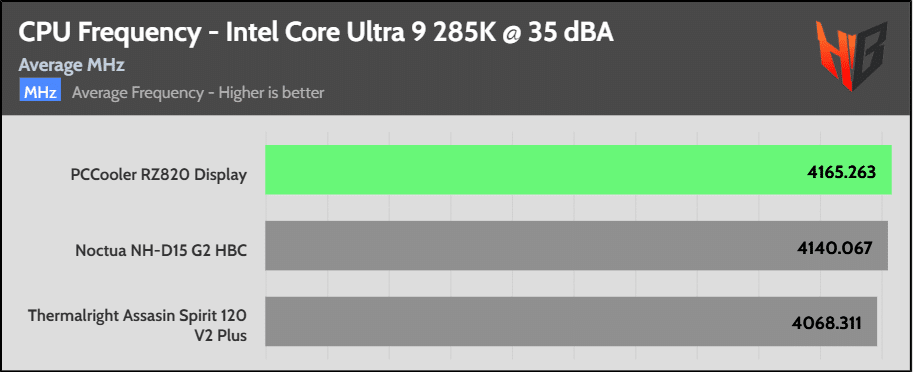
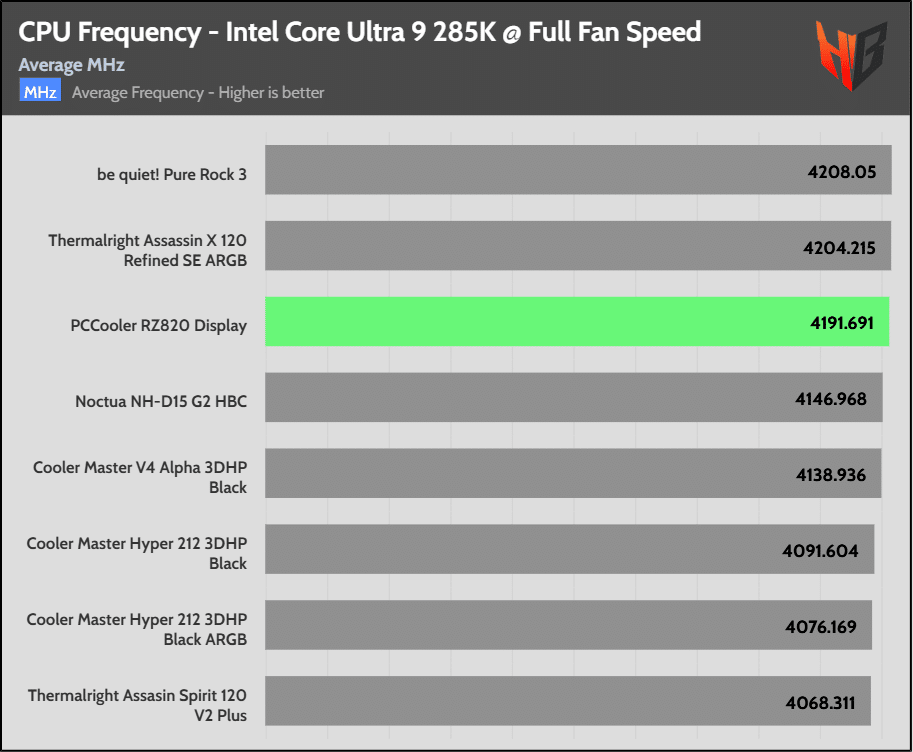
Strangely enough, CPU frequencies are not that high. Moreover, I noticed a pattern in these graphs, that at higher fan speeds, the frequencies actually drop in some coolers instead of increasing! This can be partially explained by the fact that at lower fan speeds, temperatures are notably higher than at higher speeds, providing more room for a frequency increase, most likely.
CPU Wattage
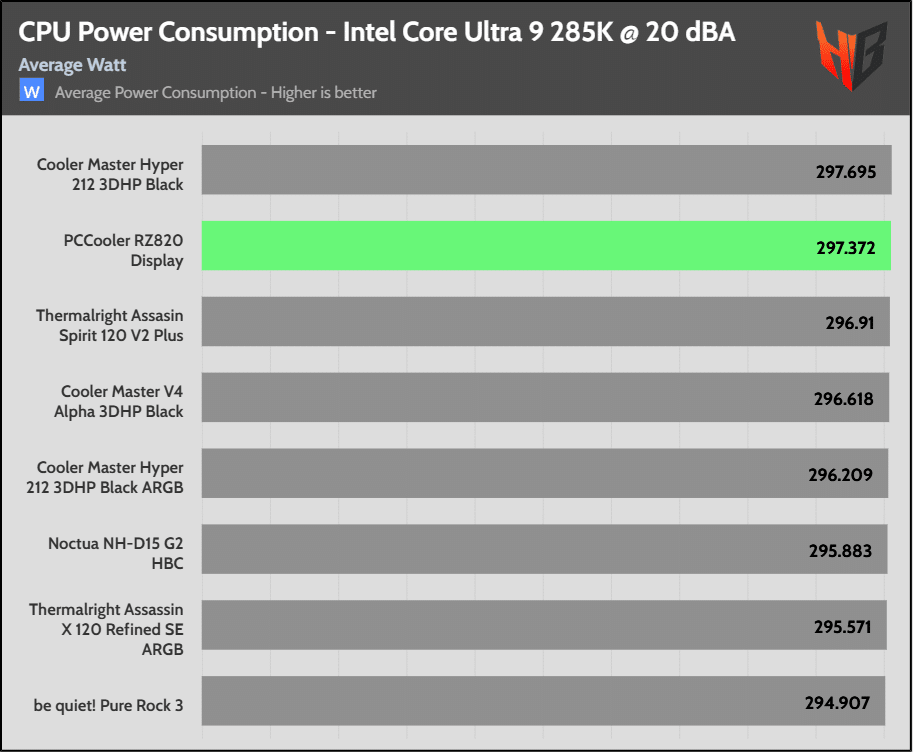
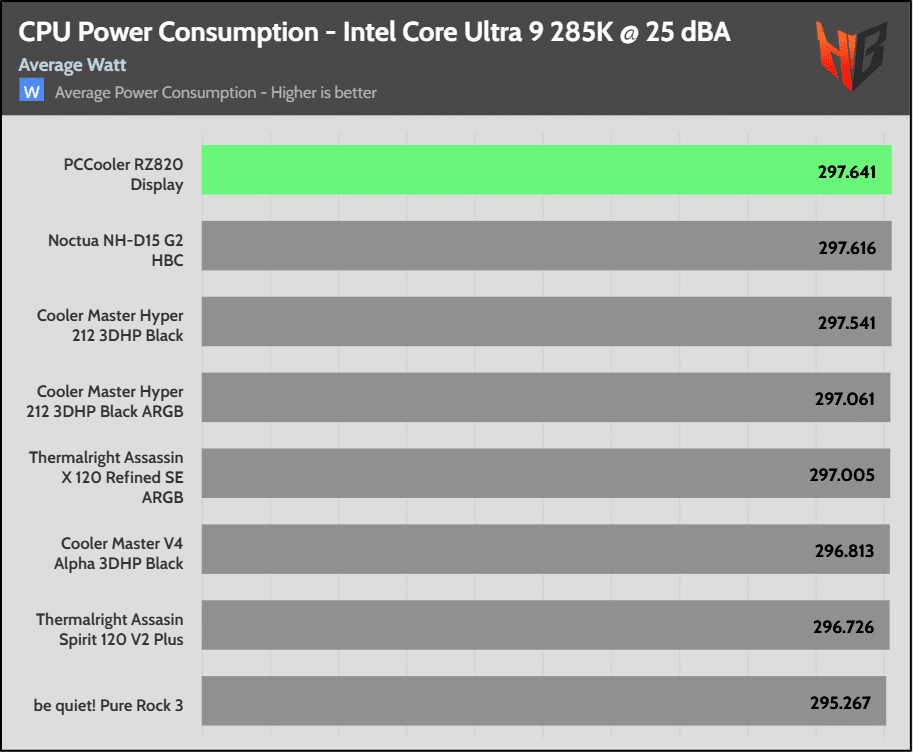
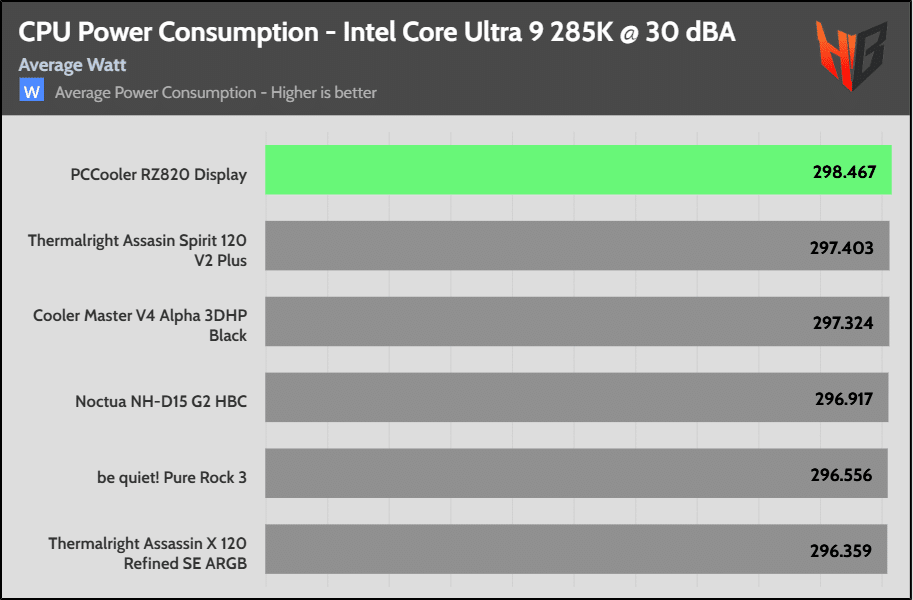
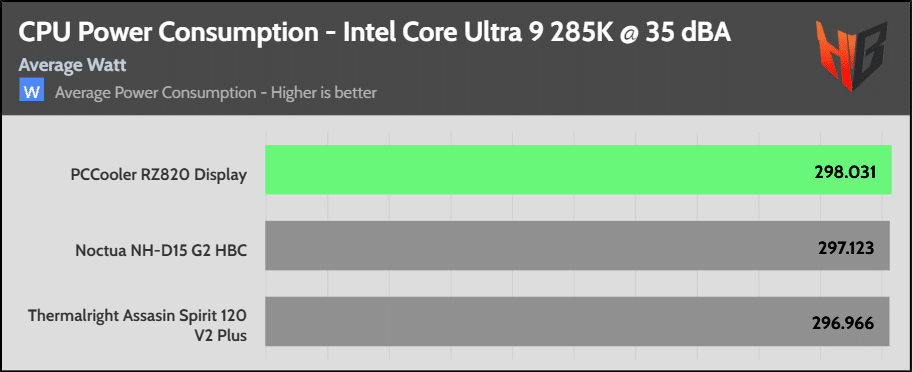
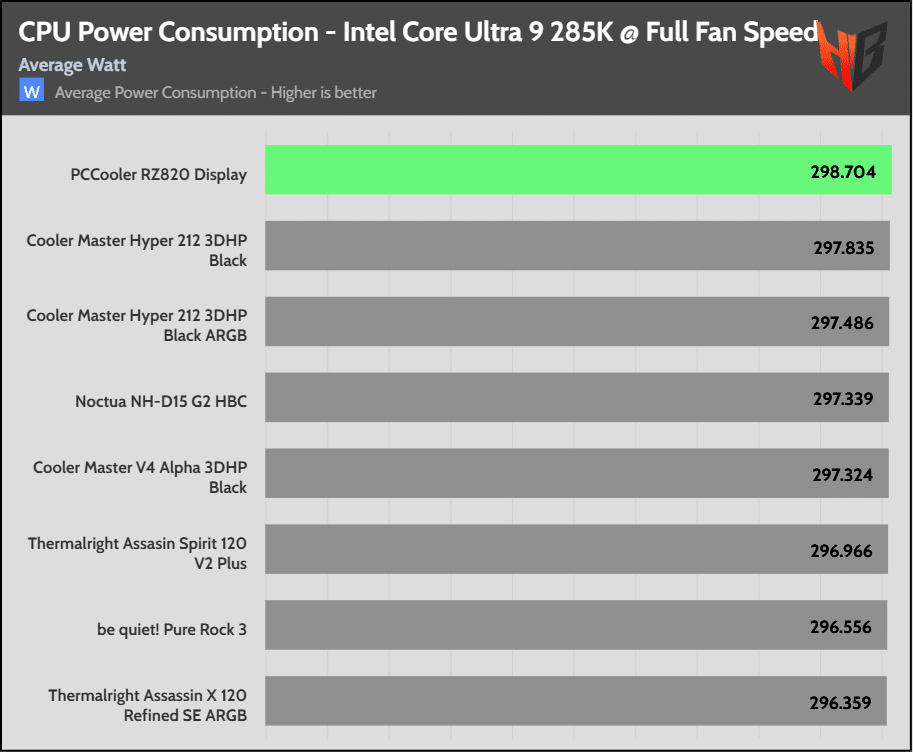
Seeing close to 300W real power consumption from the CPU alone is something weird, right? But this is the case with Intel CPUs, and it can be easier above 400W if I remove all limits.
High CPU power consumption indicates that the cooler is effective, allowing for a higher CPU thermal limit, which in turn results in a higher energy draw from the CPU.
Cooler Exhaust Temperature
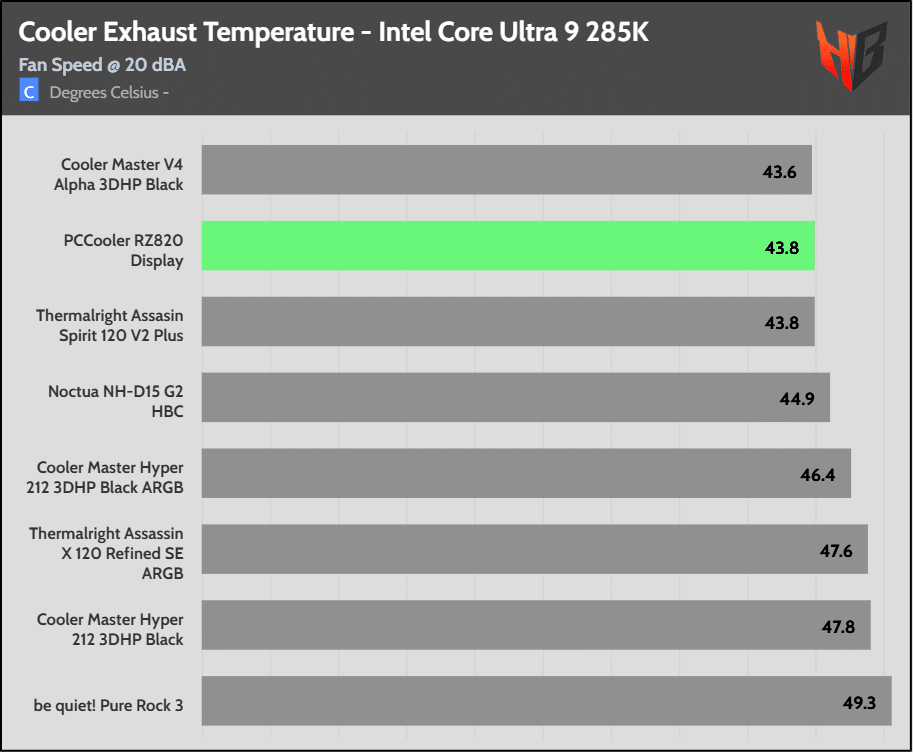
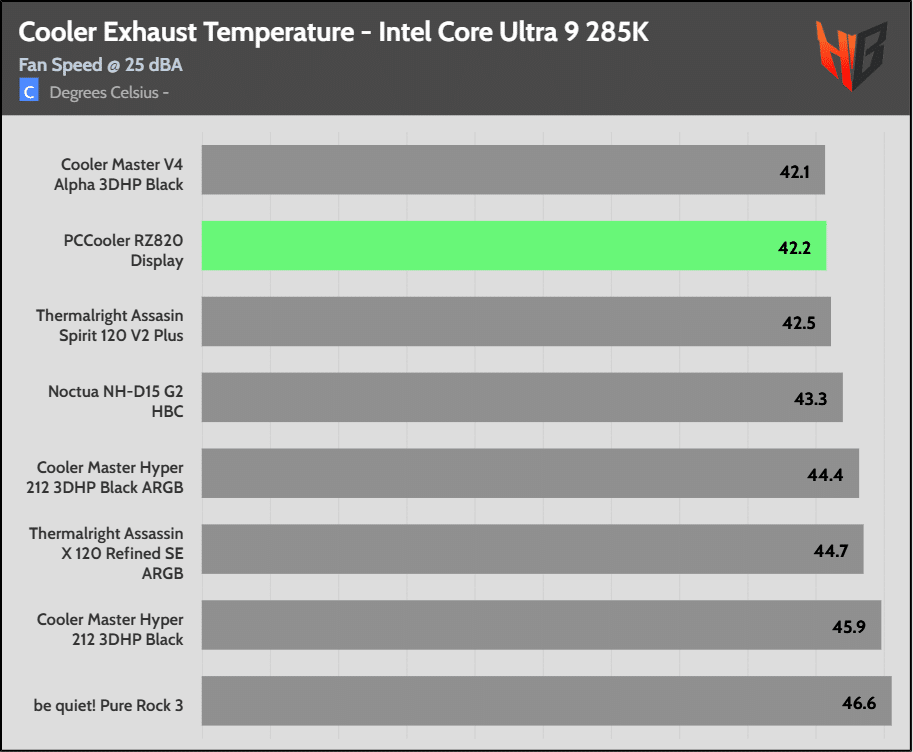
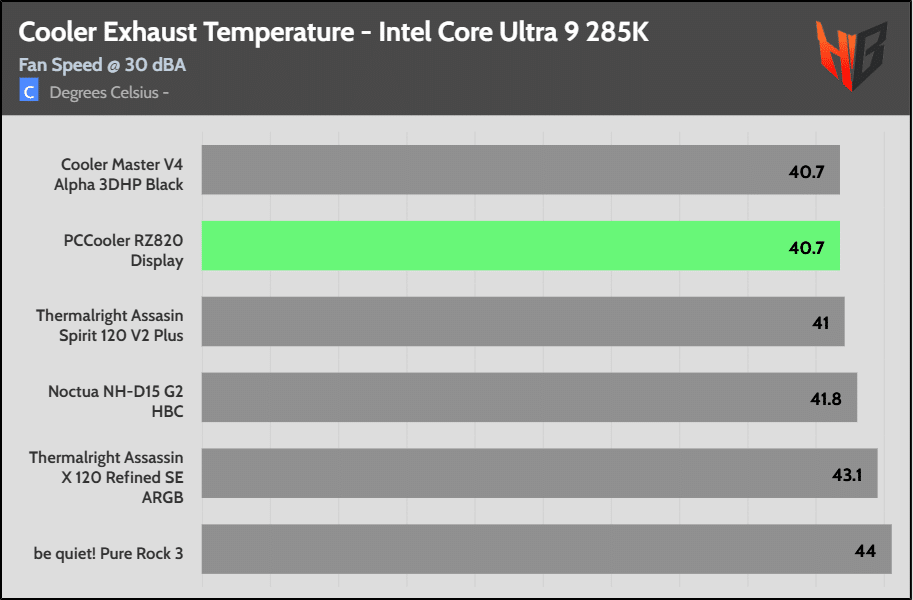
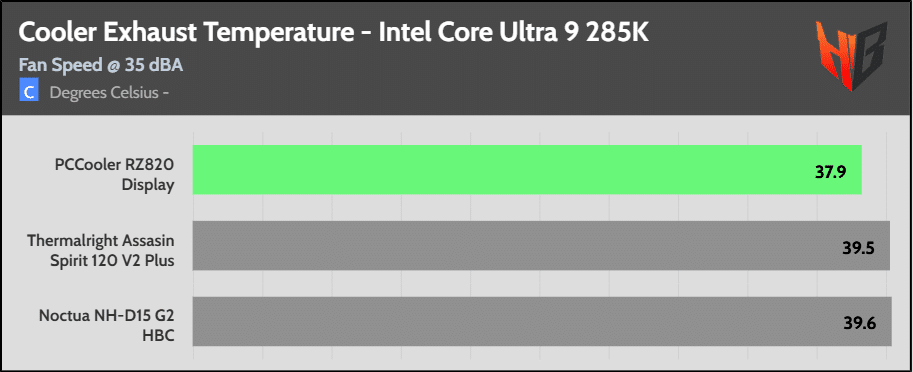
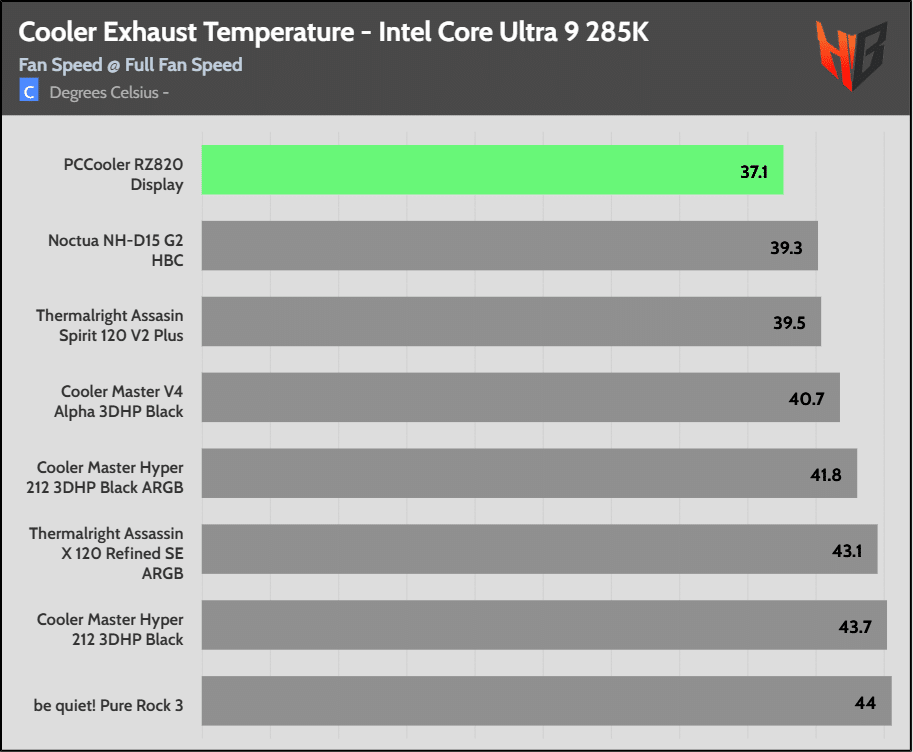
I measure the temperature at the exhaust side of the cooling solution.