Researchers in Japan have made a critical breakthrough in fusion energy research, identifying a long-hypothesized phenomenon called “mediator turbulence” as the source of sudden, unexplained heat loss in plasma reactors, a discovery that could bring us closer to stable, efficient fusion power.
What Happened Inside the Reactor
For decades, physicists believed heat in plasma reactors escaped slowly and steadily from the core outward. But mysterious, rapid heat loss events, where energy seemed to “jump” from the hot center to the cooler reactor walls, puzzled scientists and hurt reactor efficiency.
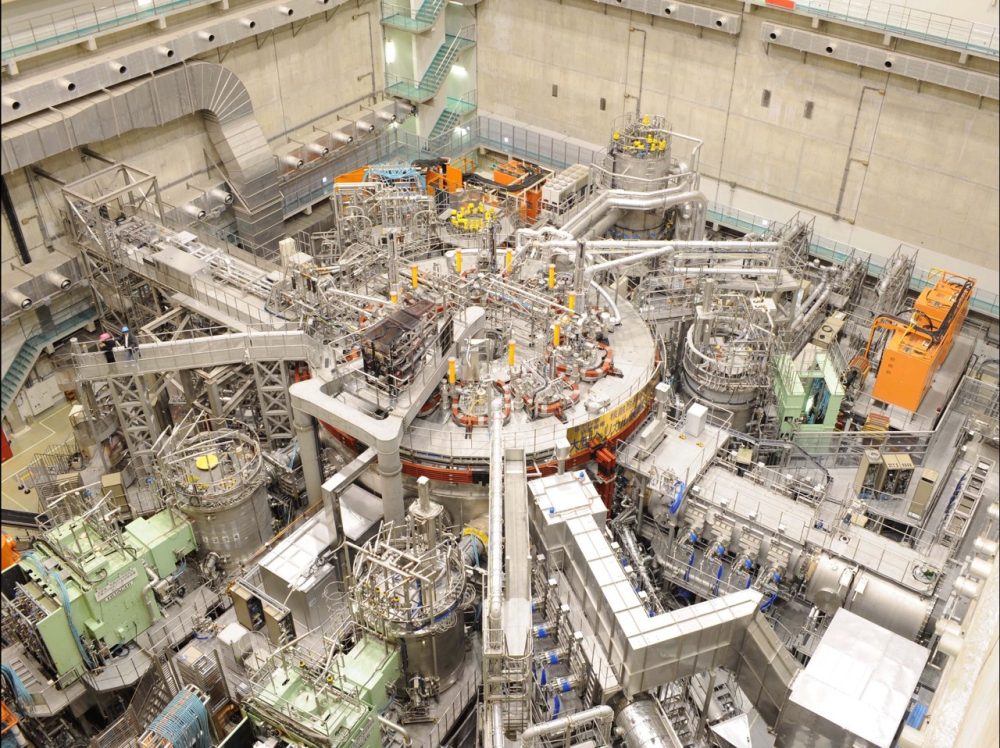
Using the Large Helical Device, a massive magnetic fusion experiment, a team from Japan’s National Institute for Fusion Science (NIFS) finally observed how these jumps happen.
“Mediator Turbulence”
The team found that mediator turbulence creates “long-range links” between distant parts of the plasma. This allows heat to travel across large distances in just one ten-thousandth of a second, far faster than traditional heat diffusion.
In experiments, researchers applied short heating pulses to the plasma and measured its response. They discovered that longer pulses could suppress turbulence and keep heat contained near the core.
Fusion Energy
Fusion power promises clean, nearly limitless energy with no long-lived radioactive waste. But containing and controlling ultra-hot plasma has been one of its biggest challenges.
Understanding, and eventually controlling, mediator turbulence means scientists can:
- Reduce unexpected heat loss
- Improve reactor efficiency and stability
- Move closer to net energy gain in experimental reactors
The Future
This discovery provides the “first unambiguous experimental evidence” for a phenomenon only theorized until now. The findings will help physicists design better plasma confinement strategies, bringing commercial fusion power one step closer to reality.
The Bigger Picture
While fusion energy is still years, likely decades, from being commercially viable, each breakthrough like this one helps tackle a fundamental barrier. With continued research, fusion could one day deliver safe, carbon-free, abundant electricity without the intermittency of wind and solar.