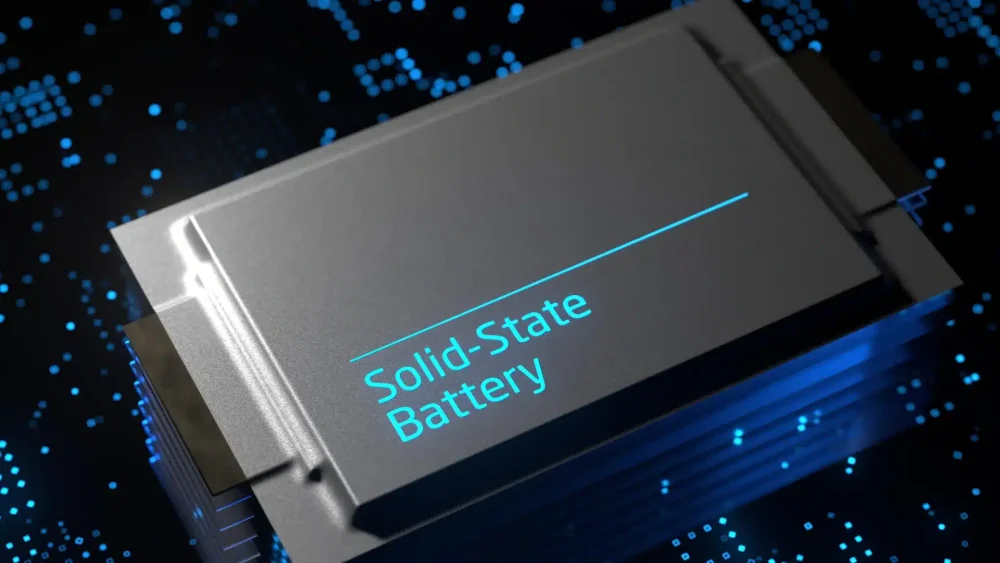
The race to commercialize solid-state batteries is heating up, with promises of safer, longer-range, and faster-charging energy storage. Three names stand out: QuantumScape, a U.S. pioneer backed by Volkswagen; China’s CATL, the world’s largest battery maker; and the enigmatic Finnish startup Donut Lab. Each has a different approach, different claims, and a different timeline. Let’s break down who’s ahead, and who’s still facing fundamental hurdles.
QuantumScape: The Silicon Valley Challenger
Technology: QuantumScape is developing a lithium-metal solid-state battery with a proprietary ceramic solid electrolyte. Their key innovation is an in-situ formed lithium-metal anode, which eliminates dendrite formation and enables high energy density without flammable liquid electrolytes.
Key Claims & Progress
- Target energy density: 800–1000 Wh/L (volumetric), which could push EV range to 400–500 miles.
- Fast-charging capable (0–80% in ~15 minutes under optimal conditions).
- Multi-layer cells delivered to automotive partners for testing.
- Cobra process aims to scale ceramic separator production.
Partnerships: Volkswagen’s PowerCo (investment and JV), Corning (manufacturing).
Status: B-sample stage with automotive OEMs.
Strong on patents, deep-pocketed partners, and clear automotive roadmap, but still unproven at mass scale.
CATL: The Volume Giant’s Cautious March
Technology: CATL is pursuing a dual-track strategy: semi-solid-state batteries for nearer-term adoption, and all-solid-state for the long term. Their approach is incremental, leveraging existing manufacturing where possible.
Key Claims & Progress
- Prototype all-solid-state cells have reached up to 500 Wh/kg in the lab.
- A 10Ah all-solid-state platform is under validation.
- Targeting small-scale production around 2027.
- Recently denied rumors of a 2,000 km (1,240 mi) solid-state battery entering mass production in 2027, signaling realistic timelines.
Partnerships: Supplies nearly every major automaker; has R&D partnerships across the supply chain.
Status: Still in R&D and validation; likely to commercialize semi-solid first.
Not rushing. CATL is using its scale and supply chain advantage to advance solid-state while keeping today’s lithium-ion business running. They’re in it for the long game.
Donut Lab: The Fast-Charging Wildcard
Technology: Largely undisclosed, but claims an all-solid-state battery with exceptional power performance.
Key Claims & Progress
- 400 Wh/kg energy density.
- 5-minute full recharge.
- 100,000-cycle lifespan.
- Already powering vehicles like the Verge electric motorcycle.
- No independent test data or detailed chemistry shared publicly.
Partnerships: Early commercial deployments in niche vehicles; no announced automotive OEM partnerships.
Status: Small-scale production for specific applications; not yet automotive-grade validated.
Exciting if true, but lacks third-party verification and faces fundamental physics trade-off questions. Likely a high-power hybrid battery-capacitor suited for light EVs, not yet a general-purpose automotive cell.
Comparison at a Glance
|
Aspect |
QuantumScape |
CATL |
Donut Lab |
|
Technology |
Lithium-metal, ceramic electrolyte |
Semi-solid & all-solid-state R&D |
All-solid-state (undisclosed) |
|
Energy Density Goal |
800–1000 Wh/L |
Up to 500 Wh/kg (lab) |
~400 Wh/kg |
|
Charging Claim |
~15 minutes (0–80%) |
Not specified for SSB |
5 minutes (full) |
|
Stage |
B-sample, automotive testing |
R&D / validation |
Early commercial (niche vehicles) |
|
Auto Partners |
Volkswagen, others |
Multiple global OEMs |
None announced |
|
Transparency |
High (published data, partner updates) |
Moderate (selective disclosures) |
Low (limited public data) |
|
Scalability Timeline |
Late 2020s |
Post-2027 for all-solid-state |
Unclear |
Who’s Really Ahead?
QuantumScape holds the most credible automotive pathway, thanks to Volkswagen’s deep integration and clear validation milestones. Their ceramic electrolyte is innovative, but cost and yield in mass production remain unproven.
CATL is the strategic tortoise. They have the capital, scale, and customer base to incrementally evolve solid-state without risking their core business. Their semi-solid-state transition could dominate the market before all-solid-state even arrives.
Donut Lab is the high-risk, high-reward outlier. Their specs defy today’s trade-offs, which either means they’ve cracked the code — or they’re optimizing for a specific niche. Without independent verification, they remain in the “watch and see” category.
The Path Forward
The solid-state battery race won’t be won overnight. Each player is tackling a different piece of the puzzle:
- QuantumScape is betting on breakthrough chemistry with automotive-grade rigor.
- CATL is betting on evolutionary manufacturing and scale.
- Donut Lab is betting on extreme performance in a niche, possibly sidestepping the hardest automotive requirements.
For EVs, QuantumScape and CATL are on more realistic paths, but mass-market solid-state cars are still 5–10 years away. Donut Lab could carve out a role in light electric transport, drones, or energy buffer systems much sooner.
The biggest takeaway? The battery of the future is still being built, and it won’t come from just one lab. Collaboration, investment, and healthy skepticism will separate the real breakthroughs from the hype.