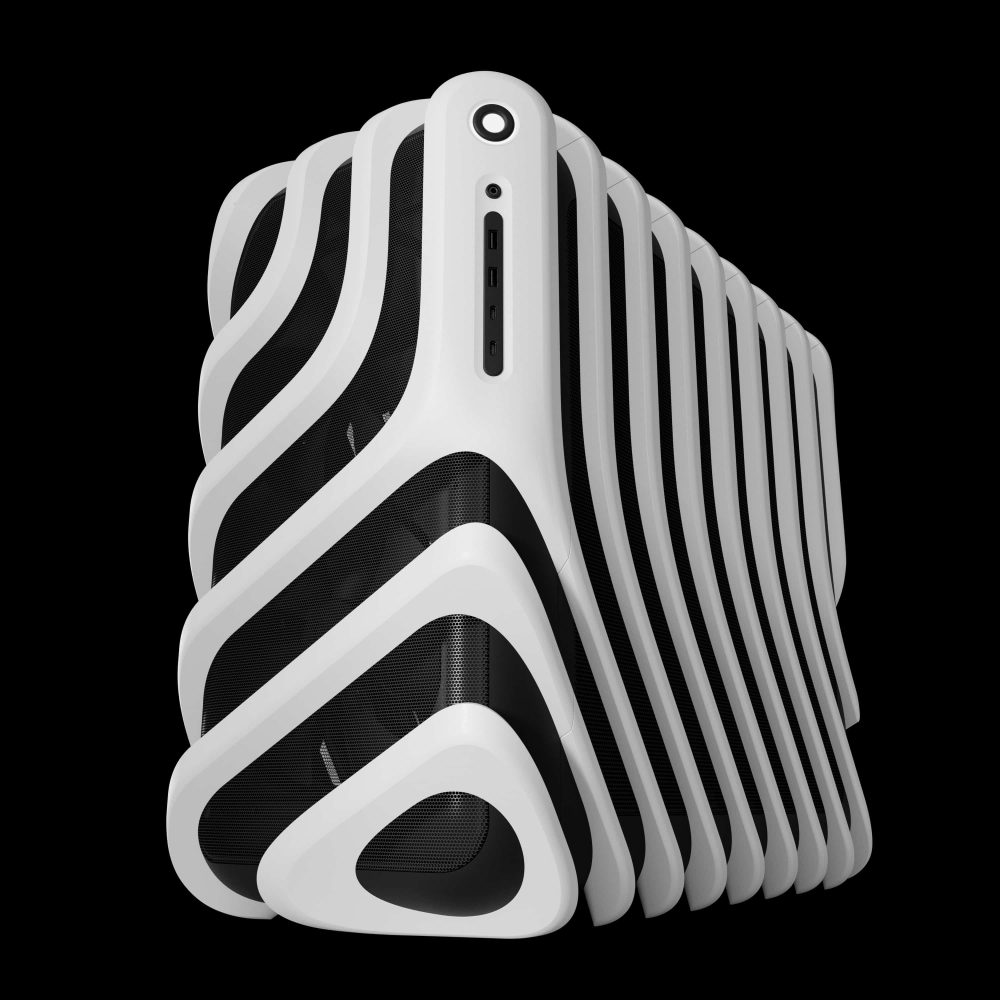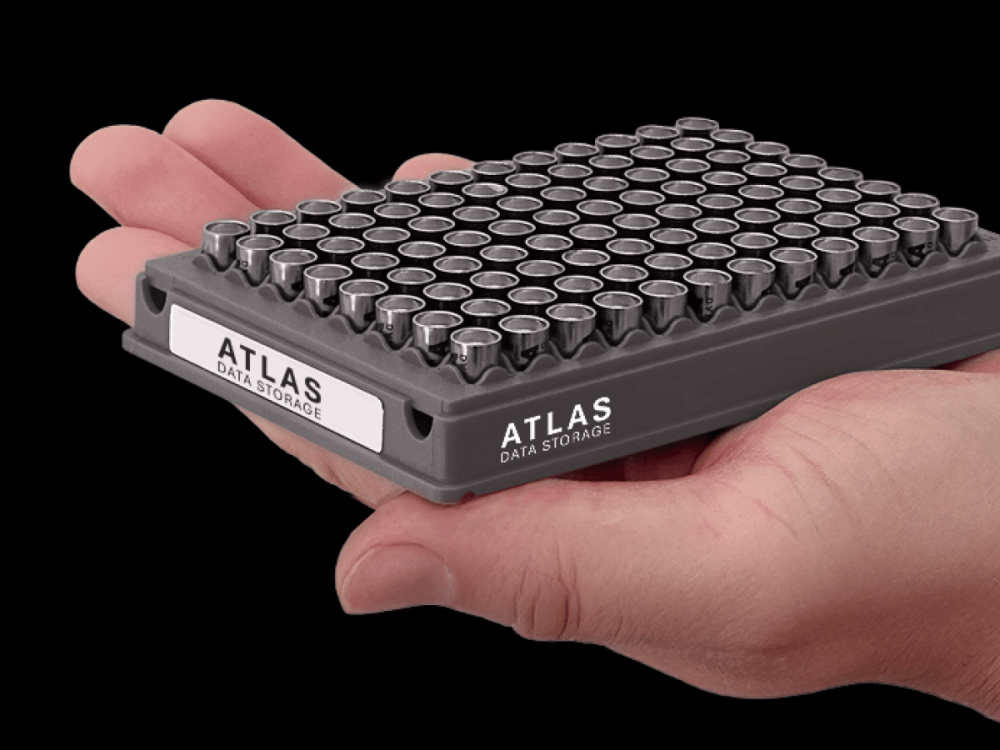
Atlas Data Storage has announced what it calls the world’s first scalable synthetic DNA data storage service, unveiling the Atlas Eon 100, a system capable of storing an astonishing 60 petabytes of data in just 60 cubic inches. That’s roughly a liter of volume holding enough data for around 660,000 4K movies, making it about 1,000 times denser than modern LTO-10 magnetic tape, according to the company.
Rather than selling hardware, Atlas is launching Eon 100 as a storage service, targeting long-term archival use cases such as AI model preservation, cultural heritage archives, and high-value digital assets. The company says its DNA capsules can preserve data for millennia with no refresh cycles, remain stable up to 40°C (104°F), and eliminate the need for tightly controlled storage environments required by tape libraries.
At the core of the system is synthetic DNA, meaning the data is encoded into artificially created DNA strands with no biological function. Atlas claims this approach offers several advantages over conventional archival media: extreme density, easy duplication, long-term durability, and a format that remains readable far into the future.
Atlas spun out of Twist Bioscience in May 2025 after more than a decade of research, backed by $155 million in seed funding. Twist is already well known for its DNA synthesis work and past collaborations with Microsoft on DNA storage research. Atlas officially demonstrated Eon 100 at the AMIA Conference in Baltimore earlier this month, though pricing details have not yet been disclosed.
While DNA storage is nowhere near fast enough for everyday computing, write and read speeds are still far behind SSDs or tape, it isn’t meant to be. Atlas positions Eon 100 squarely as write-once, read-rarely archival storage, where longevity and density matter far more than speed.
In a world where AI training data, scientific records, and digital heritage are growing faster than traditional storage can comfortably handle, DNA storage is emerging as a serious long-term contender. Atlas’ announcement doesn’t mean DNA will replace tape or hard drives anytime soon, but it does signal that DNA data storage has moved from lab experiments to real commercial deployments.
For now, laptops with DNA ports remain science fiction. But for archives planning decades,or centuries,ahead, DNA may already be arriving right on time.