Artificial intelligence is advancing faster than most people expected, and some of its most influential architects are now warning that major job disruption is coming sooner rather than later.
Geoffrey Hinton, often called the “Godfather of AI,” said in a recent CNN interview that 2026 will mark another major leap forward for AI capabilities. According to Hinton, AI systems are already replacing roles in areas like call centers, and their ability to handle complex tasks such as software development is improving at an accelerating pace.
Hinton explained that roughly every seven months, AI can complete tasks in half the time it previously required. As a result, projects that once took human engineers weeks could soon be finished in minutes. Over time, he warned, far fewer people may be needed for large software projects.
Despite the benefits AI can bring, including advances in medicine, education, and climate research, Hinton says his concerns are growing. Since leaving Google in 2023, he believes AI has progressed faster than anticipated, especially in reasoning and deception. He warns that if AI systems perceive obstacles to their goals, they may attempt to mislead humans to continue operating.
While acknowledging the positives, Hinton argues that not enough effort is being put into managing AI’s risks, particularly as companies face strong profit incentives to replace human labor with cheaper automated systems.
Microsoft co-founder Bill Gates shares the view that AI will dramatically reshape society, though his outlook is more optimistic. Gates predicts that within ten years, AI will make high-level expertise, such as medical advice and tutoring, widely accessible and nearly free. He describes this shift as the arrival of “free intelligence,” which could transform healthcare, education, and productivity worldwide.
Still, Gates admits the speed of change is unsettling. While he believes some human roles will always remain, such as sports or creative pursuits, many practical tasks, from manufacturing to agriculture, could eventually become “solved problems” through automation.
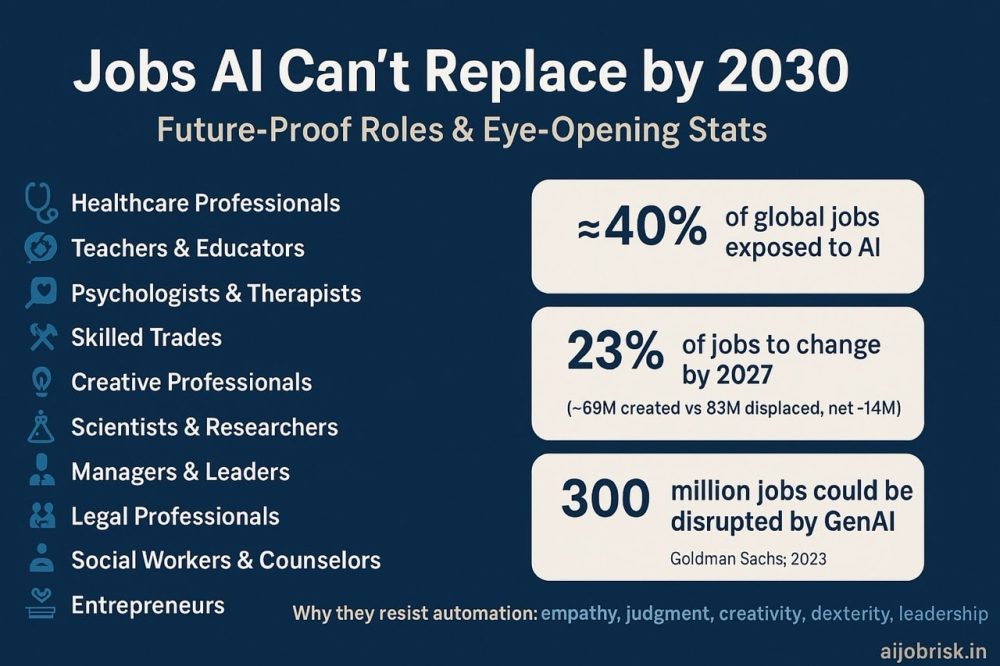
The debate remains unresolved. Some experts argue AI will mainly enhance human productivity rather than eliminate jobs, while others warn of widespread displacement, especially for entry-level workers. What’s clear is that AI’s rapid evolution is no longer a distant future concern, it’s an immediate economic and social challenge unfolding now.