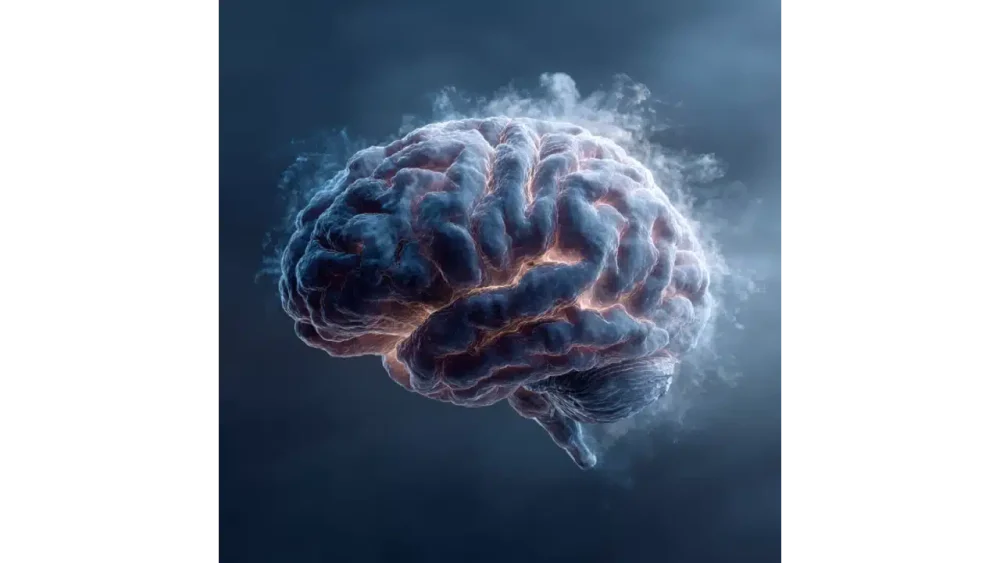
Inside Japan’s Fugaku supercomputer, housed on an artificial island in Kobe, something remarkable is happening. Ten million digital neurons begin to fire. Electrical signals ripple through billions of connections. Activity spreads across dozens of interconnected regions.
This is not an animation. It is a fully digital reconstruction of a mouse cerebral cortex, running according to the same physical and electrical rules as a living brain.
In a peer-reviewed paper published in the ACM Proceedings of the International Supercomputing Conference (SC), researchers demonstrated that it is now technically possible to reproduce an entire cerebral cortex, down to the behavior of individual neurons, inside one of the world’s fastest computers. Using detailed biological data from the Allen Institute, scientists rebuilt the mouse cortex layer by layer, cell type by cell type, and brought it to life on Fugaku, a system capable of performing roughly 400 quadrillion calculations per second.
The result is the most biologically realistic brain simulation ever created.
Biologically Faithful
According to Anton Arkhipov, PhD, an investigator at the Allen Institute and coauthor of the study, the real breakthrough is not scale alone. What matters is biological fidelity.
Smaller models can sometimes reproduce brain-like activity patterns, but for the wrong reasons. This simulation preserves how real neurons connect, interact, and influence one another across the cortex. In other words, it behaves like a brain for the right physical reasons.
“The key point of this result is demonstrating that it is technically feasible to reproduce the cerebral cortex of a mouse on a computer at this spatiotemporal resolution,” Arkhipov says. “Therefore, it is much more than just an animation.”
When the digital cortex runs, its activity neither collapses into silence nor explodes into chaos. Instead, it settles into stable rhythms that closely resemble those measured in real mouse brains.
A Rewind Button For The Brain
One of the model’s most powerful features is visibility. Researchers can pause the simulation, rewind it, alter connections, and run it again. They can zoom in on individual synapses or observe coordinated activity across 86 brain regions, something impossible in living animals.
This creates an unprecedented window into brain dynamics. Scientists can watch how perceptions, decisions, and internal states unfold across the cortex, step by step, without invasive procedures.
That capability has immediate medical implications.
A New Tool For Understanding Disease
Arkhipov says the simulation is especially valuable for studying neurological disorders such as Alzheimer’s disease, epilepsy, and autism.
“In real brains, early changes can be subtle, maybe certain cell types disappear or connectivity shifts slightly,” he explains. “We can implement those changes in the simulation and ask what effect they have.”
Tiny alterations that might go unnoticed in patients can be amplified and studied in the digital cortex, helping researchers identify which changes truly matter, and which ones might be early targets for treatment or intervention.
For now, this practical, mechanistic use is the project’s core purpose.
But it may not be the end of the story.
Could Silicon Ever Think?
Because the model runs on the same biophysical principles as a living brain, neurons firing, signals propagating, networks stabilizing, it inevitably raises deeper questions.
Could a sufficiently detailed digital brain become aware?
“I would think it is entirely possible for a piece of hardware to be a thinking, feeling entity,” Arkhipov says. “I am not aware of any law of nature that requires [consciousness] to arise only in biological systems.”
He emphasizes, however, that not all hardware is equal. Two systems might show identical neural activity patterns, yet only one could possess the right causal architecture to generate conscious experience. In many leading theories of consciousness, standard computing hardware, like the processors running Fugaku, would remain entirely unconscious, even if they perfectly mirrored brain activity.
In that sense, a simulated cortex could look like a brain and behave like a brain, yet still have no inner experience at all.
Skepticism Remains
Not everyone is convinced that digital brains can escape biology.
Peter Coppola, PhD, a visiting neuroscience researcher at the University of Cambridge, argues that consciousness may require more than a cortex alone.
“We do not have a conclusive measure of consciousness,” Coppola says. “No test can tell us that a system was experiencing something.”
He also points out that the current model lacks key biological features, including plasticity (how neurons change with experience) and neuromodulation (the chemical systems that tune brain activity). Other missing elements include the subcortex and the body itself, which some theories suggest are essential for conscious experience.
“All models are wrong, but some are useful,” Coppola notes, quoting statistician George E. P. Box.
A Bridge To Deeper Understanding
Arkhipov does not dismiss these concerns. Instead, he sees the simulation as a stepping stone — a way to rigorously test theories about how brains work, and perhaps, one day, how awareness arises.
For now, the digital mouse brain remains grounded in reality: studying disease, testing interventions, and revealing the hidden mechanics of neural life. Whether it ever crosses the boundary into genuine awareness is an open question.
But even without that leap, the achievement is profound.
By turning the brain into something we can pause, probe, and replay, scientists have created a bridge between biology and computation, one that may reshape how we understand intelligence, disease, and the nature of the mind itself.